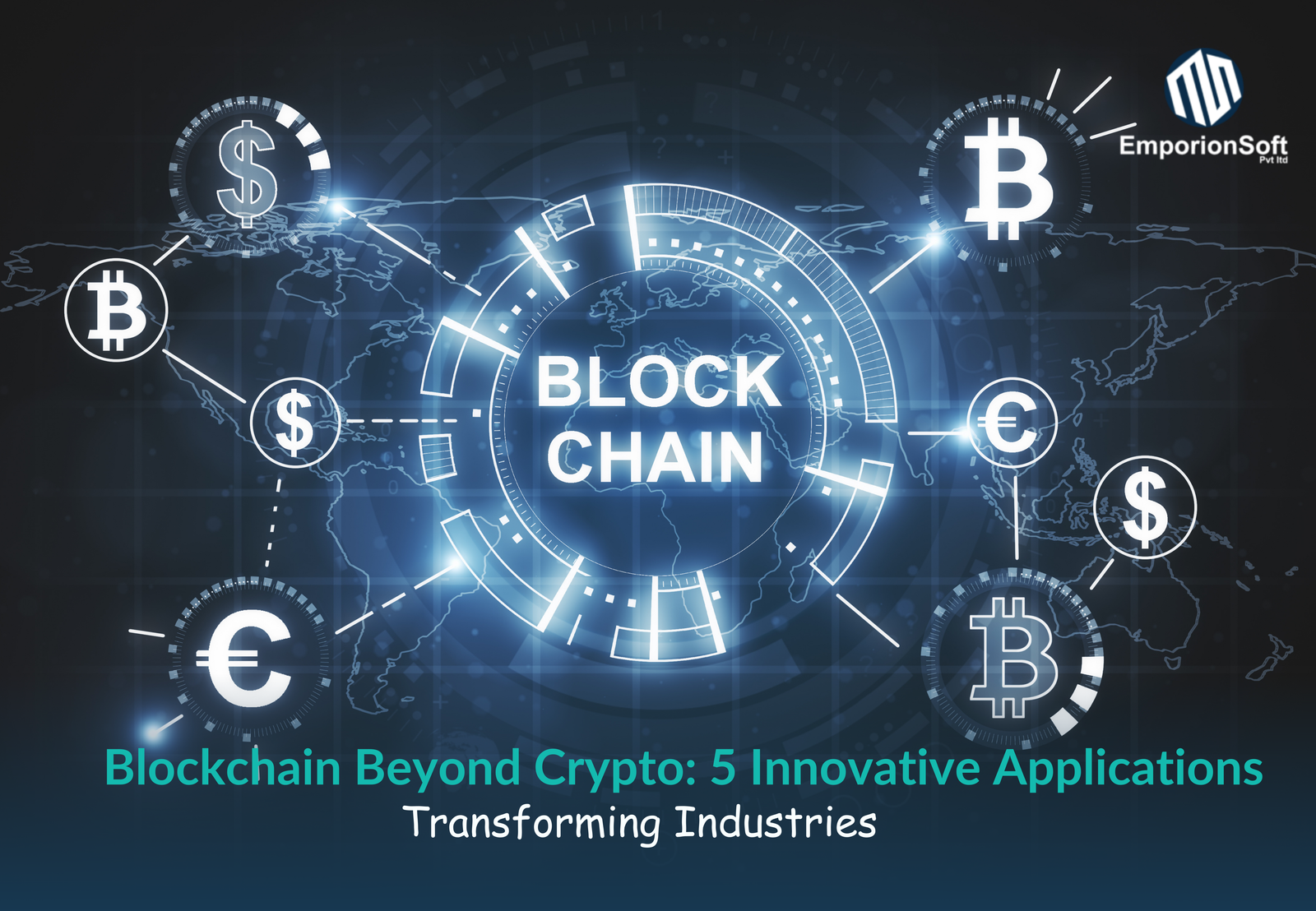
When most people hear the term “blockchain,” their minds instantly jump to Bitcoin, Ethereum, or other cryptocurrencies. Yet, the true potential of blockchain technology extends far beyond crypto, promising revolutionary transformations across multiple industries. This article explores how blockchain beyond crypto is reshaping our world, from enhancing transparency in supply chains to revolutionising healthcare systems, redefining digital identities, optimising real estate transactions, and empowering the Internet of Things (IoT).
Blockchain Beyond Crypto isn’t merely a catchy buzzword—it’s a powerful innovation with tangible applications that address pressing challenges faced by global industries today. Unlike traditional systems that rely on centralised databases susceptible to hacks and fraud, blockchain offers decentralised, secure, and transparent solutions. Businesses worldwide are gradually acknowledging that blockchain technology’s value proposition surpasses speculative digital assets, opening doors for real-world, impactful use cases.
This shift in perception has sparked an explosion of innovative blockchain applications that deliver real benefits, including improved efficiency, cost reduction, enhanced security, and unprecedented trust between stakeholders. Whether it’s maintaining immutable records of goods across international borders, ensuring accurate patient health records, or simplifying complex property transactions, blockchain applications are now integral to enhancing operations in numerous sectors.
Industries as diverse as healthcare, logistics, real estate, cybersecurity, and manufacturing recognise that integrating blockchain technologies can lead to greater accountability, security, and streamlined processes. Forward-thinking enterprises are no longer asking if they should adopt blockchain—they’re actively exploring how quickly they can leverage its advantages. Consequently, understanding these innovative blockchain applications becomes vital for businesses aiming to maintain a competitive edge.
In this comprehensive exploration, we’ll delve deeply into five groundbreaking ways blockchain beyond crypto is transforming traditional industries:
-
Supply Chain Management: How blockchain ensures transparency, efficiency, and accountability across global supply chains.
-
Healthcare Systems: Enhancing patient care and operational effectiveness with blockchain in healthcare.
-
Digital Identity and Security: Revolutionising personal data management and identity verification processes.
-
Real Estate Transactions: Simplifying complex processes and enhancing transparency with real estate blockchain solutions.
-
IoT and Smart Devices: Strengthening connectivity, data security, and operational trust through IoT blockchain applications.
Each section provides clear, real-world examples, case studies, and actionable insights to illustrate blockchain’s practical impact, moving beyond theoretical discussions. Moreover, we’ll address the tangible benefits businesses experience when adopting blockchain solutions, such as enhanced trust, reduced operational friction, and improved regulatory compliance. Equally important, we’ll also discuss how businesses can effectively navigate and overcome common blockchain implementation challenges, such as technical integration, scalability, and stakeholder buy-in.
By exploring these innovative blockchain applications, readers will discover a clear path towards leveraging this powerful technology to solve their own operational problems. Blockchain beyond crypto is no longer a distant technological promise; it’s a present-day reality reshaping the competitive landscape.
Are you ready to uncover how blockchain beyond crypto can propel your business to the forefront of innovation? Keep reading to explore transformative insights that could redefine your organisational strategy and operational effectiveness.
Understanding Blockchain Technology
At its core, blockchain technology is a decentralised digital ledger that securely records transactions across multiple computers or nodes. Think of it as a digital chain of blocks, where each “block” contains a batch of verified transactions. Instead of one central authority controlling the data, blockchain spreads the responsibility across an entire network, making the system more robust, transparent, and secure.
Blockchain technology first gained widespread attention through Bitcoin and other cryptocurrencies. Initially, people viewed blockchain as a platform strictly designed for crypto. However, as the underlying potential became clearer, businesses realised blockchain’s innovative applications could revolutionise industries beyond finance, hence the rapid rise of the term blockchain beyond crypto.
To fully appreciate blockchain’s transformative power, let’s explore its key characteristics:
Decentralisation
Blockchain operates without a central authority or a single controlling entity. Instead, data is distributed across numerous independent nodes, all working collaboratively. This decentralised structure ensures that no single party can manipulate or control the data, reducing risks of corruption, fraud, and censorship. For instance, in blockchain in supply chain, decentralisation helps various stakeholders—from manufacturers and distributors to retailers—share data transparently, creating a trustworthy ecosystem without intermediaries.
Transparency
Blockchain provides unparalleled transparency. Every transaction recorded on a blockchain is visible to network participants, fostering trust and accountability. Since all records are openly accessible and consistently updated in real-time, blockchain eliminates information silos and fosters collaboration across businesses. This transparency is particularly beneficial in sectors like blockchain in healthcare, where accurate patient records and reliable data-sharing can significantly enhance patient care and operational efficiencies.
Immutability
Once information is recorded on a blockchain, it’s nearly impossible to alter or delete. This characteristic, known as immutability, guarantees that transaction histories remain permanent and tamper-proof. By providing an indelible audit trail, blockchain strengthens data integrity and builds trust among stakeholders. Consider real estate blockchain solutions, where immutable records streamline transactions by securely storing contracts, deeds, and property histories, drastically reducing disputes and fraud risks.
Security
Blockchain technology utilises advanced cryptographic techniques to protect data. Each transaction is encrypted and linked to previous transactions, creating a secure digital chain. The distributed nature of blockchain makes it resilient to cyber-attacks and data breaches. In applications like digital identity blockchain, enhanced security enables individuals and organisations to safely store and share personal information without compromising privacy or exposing sensitive data to vulnerabilities.
Why Blockchain Expanded Beyond Crypto?
Initially popularised through cryptocurrencies, blockchain’s fundamental attributes soon revealed immense potential for solving real-world business challenges. Companies realised they could leverage blockchain to improve transparency, increase operational efficiency, reduce transaction costs, and strengthen security—achieving practical outcomes far beyond digital currencies alone.
Today, the innovative blockchain applications extend to diverse areas such as supply chains, healthcare, digital identity, real estate, and IoT (IoT blockchain applications). Businesses increasingly adopt blockchain not just to remain competitive but to gain strategic advantages, foster transparency, and drive digital innovation.
To harness these transformative benefits, organisations often partner with blockchain specialists like EmporionSoft Pvt Ltd, who provide tailored services and solutions to ensure successful blockchain implementation and integration.
Now, let’s delve deeper into how blockchain beyond crypto is transforming critical industries, unlocking opportunities previously thought impossible.
Innovative Application 1: Blockchain in Supply Chain Management
Supply chains have long faced issues like inefficiencies, lack of transparency, and vulnerability to fraud and counterfeiting. Blockchain technology offers groundbreaking solutions to these challenges, making supply chain management one of the most promising applications of blockchain beyond crypto.
How Blockchain Enhances Supply Chain Management
Blockchain in supply chain enables a decentralised, transparent record of all transactions, movements, and transformations of goods from manufacturers to end consumers. Every stakeholder—manufacturers, suppliers, distributors, and retailers—has access to real-time data. Transactions are timestamped, tamper-proof, and securely stored on a blockchain network, enhancing accountability and transparency at every step.
Real-World Applications of Blockchain in Supply Chain
Leading global corporations have recognised blockchain’s value, successfully implementing blockchain in their supply chain processes:
1. Walmart and IBM’s Food Trust
In collaboration with IBM’s blockchain solutions, Walmart implemented blockchain technology to trace the journey of fresh produce, ensuring transparency and safety. Before blockchain, tracing a product from store shelves to farm origin took approximately a week. Now, using blockchain in supply chain, Walmart achieves this in seconds, significantly improving traceability and rapidly responding to potential contamination outbreaks.
2. Maersk and TradeLens
Global shipping giant Maersk, in partnership with IBM, introduced TradeLens—a blockchain-based platform aiming to streamline international shipping. This blockchain solution digitises the entire shipping process, providing real-time tracking of containers. The system reduces paperwork, lowers administrative costs, and significantly decreases the likelihood of errors and fraud, creating a secure and transparent global trade ecosystem.
3. De Beers Diamond Supply Chain
Luxury diamond company De Beers utilises blockchain technology with its platform, Tracr, to enhance authenticity and ethical sourcing of diamonds. Blockchain records each diamond’s unique attributes and movements across the supply chain, assuring customers that their diamonds are conflict-free and ethically sourced. This transparent approach boosts consumer confidence and reduces fraudulent activities.
Key Benefits of Blockchain in Supply Chain Management
Businesses adopting blockchain technology in their supply chains experience tangible and strategic advantages:
-
Enhanced Transparency:
Blockchain provides a single source of truth, allowing all stakeholders to access verified, immutable data instantly. Enhanced transparency builds trust, simplifies audits, and reduces disputes related to data discrepancies. -
Improved Tracking and Traceability:
With blockchain, companies precisely track goods at every stage, from origin to destination. This detailed tracking helps quickly identify bottlenecks, inefficiencies, or contamination issues, enabling swift corrective actions. -
Reduced Fraud and Counterfeiting:
Blockchain’s immutability makes altering supply chain records nearly impossible. It significantly reduces fraud, theft, and counterfeiting, particularly valuable for industries like pharmaceuticals, luxury goods, and electronics. -
Cost Efficiency:
Automating processes with blockchain reduces administrative and transaction costs. Companies can redirect resources towards innovation and strategic growth, improving overall supply chain profitability. -
Increased Customer Trust:
Customers increasingly value transparency. Blockchain-powered supply chains demonstrate ethical practices, sustainability, and accountability, strengthening consumer trust and brand loyalty.
Embracing the Blockchain Revolution
Supply chain management exemplifies blockchain beyond crypto’s immense potential to transform traditional business processes fundamentally. Companies that embrace blockchain-driven solutions position themselves strategically, gaining competitive advantages through increased efficiency, reduced costs, and enhanced customer satisfaction.
As the supply chain industry evolves, businesses must proactively explore blockchain’s potential. Not adopting blockchain could soon become a competitive disadvantage, underscoring the urgency of integrating innovative blockchain applications into your operational strategy.
Innovative Application 2: Blockchain in Healthcare
Healthcare systems worldwide are undergoing a profound transformation, driven by technological innovations that promise greater efficiency, security, and patient-centric care. Among these technologies, blockchain in healthcare stands out as a revolutionary solution, tackling long-standing challenges such as fragmented patient records, data breaches, and administrative inefficiencies. By securely connecting medical institutions, providers, patients, and insurers on a decentralised network, blockchain ensures accurate, transparent, and tamper-proof data management.
Transforming Patient Record Management
Traditional electronic health records (EHRs) are often siloed across hospitals, clinics, and healthcare providers, leading to fragmented patient information, duplication of efforts, and compromised patient safety. Blockchain addresses these challenges by providing a single, unified ledger of patient data, securely accessible to authorised stakeholders.
Each patient’s medical history, treatments, medications, and diagnoses are recorded in secure blocks, encrypted, and stored across the blockchain network. This ensures that records remain tamper-proof and instantly available when needed, improving decision-making, reducing medical errors, and enhancing patient outcomes.
Real-World Examples and Case Studies
Several healthcare organisations have already implemented blockchain successfully, demonstrating its practical benefits:
1. NHS Digital & Blockchain Trials
The UK’s National Health Service (NHS) has actively explored blockchain technology to enhance patient care, record accuracy, and transparency. In collaboration with private sector partners, NHS Digital initiated trials to securely store patient records using blockchain, allowing verified health professionals timely and secure access to accurate medical histories, significantly improving healthcare delivery and patient safety.
2. Medicalchain: Revolutionising Patient Data
UK-based Medicalchain leverages blockchain technology to empower patients with complete control over their medical records. Using blockchain in healthcare, Medicalchain enables secure storage, management, and sharing of medical data, streamlining interactions between patients, doctors, hospitals, and insurers. Patients can grant or revoke data access, providing unprecedented transparency and control over their personal health information.
3. Estonia’s e-Health Initiative
Estonia is a global pioneer, integrating blockchain into its national healthcare system to protect and manage patient data securely. Every Estonian citizen has access to a blockchain-based e-health record that securely stores medical information accessible by authorised health providers. This blockchain system significantly reduces administrative overhead, speeds up medical care, and ensures secure, transparent data sharing among healthcare professionals.
Key Benefits of Blockchain in Healthcare
Blockchain technology provides healthcare systems with numerous transformative advantages, including:
-
Secure Patient Records:
Blockchain ensures patient data integrity and security. Records are encrypted, decentralised, and immutable, dramatically reducing the risk of data breaches, unauthorised access, and fraudulent activities. -
Enhanced Transparency:
Blockchain provides a transparent audit trail of medical activities, treatments, and transactions. Stakeholders such as patients, providers, and insurers can easily track data changes and verify their authenticity, reducing disputes and enhancing overall trust. -
Improved Patient Care and Safety:
Accurate, up-to-date patient data is critical to healthcare decision-making. Blockchain’s real-time data accessibility ensures medical professionals have immediate, accurate information, improving diagnosis accuracy, personalised treatments, and overall patient outcomes. -
Administrative Efficiency and Cost Savings:
By automating processes like medical claims processing, insurance settlements, and patient data management, blockchain reduces administrative burdens, decreases operational costs, and allows healthcare professionals more time for patient care.
Future of Healthcare with Blockchain
Blockchain in healthcare is no longer just an ambitious vision—it’s rapidly becoming a reality that healthcare organisations worldwide must embrace. As technology evolves, healthcare institutions adopting blockchain will significantly enhance their operational effectiveness, security, and patient experience, fundamentally reshaping healthcare delivery.
For healthcare providers seeking innovative, secure solutions, integrating blockchain technology into their systems represents a strategic investment in the future of patient care and operational excellence.
Innovative Application 3: Digital Identity Blockchain and Security
In an increasingly digital world, securely managing personal identity information has become a critical concern for businesses, governments, and individuals. Traditional identity verification systems rely heavily on centralised databases that are prone to breaches, fraud, and misuse. Blockchain technology offers a transformative solution to these challenges through digital identity blockchain platforms, significantly enhancing cybersecurity, data privacy, and personal control over sensitive information.
Revolutionising Identity Management with Blockchain
Digital identity blockchain systems store personal identity information in a decentralised, secure network. Unlike traditional centralised databases, blockchain platforms grant users control over their identity data, allowing them to securely share only relevant information with trusted entities. Each interaction is transparently logged and encrypted, creating an immutable audit trail that prevents tampering, fraud, or identity theft.
This decentralised approach ensures that digital identities are not stored in a single vulnerable location, reducing the risk of catastrophic breaches and significantly enhancing overall cybersecurity. Users can confidently verify their identity without revealing unnecessary personal data, safeguarding privacy and improving trust in digital interactions.
Real-World Examples of Digital Identity Blockchain Solutions
The potential of digital identity blockchain is already being realised across various industries:
1. Microsoft’s Decentralised Identity Initiative (ION)
Microsoft developed ION, a blockchain-based decentralised identity system built on the Bitcoin network. ION allows individuals complete control over their digital identity, enabling secure verification of credentials without intermediaries. This system provides users autonomy and enhanced privacy, fundamentally transforming how digital identities are managed online.
2. Estonia’s e-Residency Program
Estonia, widely recognised as a digital pioneer, implemented a blockchain-driven digital identity system through its e-Residency program. Individuals worldwide can digitally establish and operate businesses securely, verifying their identities remotely and transparently. This blockchain solution enhances security, reduces administrative barriers, and promotes seamless international business operations.
3. Civic’s Secure Identity Platform
Civic uses blockchain technology to create secure, decentralised digital identities for individuals, empowering them to control access to their personal information. Civic’s system allows users to securely verify their identity during online interactions, from banking to travel, without risking sensitive data exposure. This significantly mitigates identity fraud, enhances security, and streamlines digital interactions.
How Blockchain Enhances Data Security and Privacy
Blockchain solutions profoundly improve cybersecurity and privacy in digital identity management:
-
Enhanced Security and Fraud Prevention:
Blockchain records are cryptographically secured and distributed across multiple nodes. This decentralised structure makes data breaches exceedingly difficult, preventing identity theft, fraudulent activities, and unauthorised access to sensitive information. -
Privacy and Personal Control:
With blockchain, users control who accesses their personal information. They can selectively share relevant data without compromising privacy, drastically reducing unnecessary data exposure and ensuring compliance with stringent privacy regulations like GDPR. -
Immutable Audit Trails:
Every transaction and identity verification is permanently recorded on the blockchain, providing an immutable audit trail. This enhances transparency, accountability, and trust between parties, critical for sensitive applications such as financial services, healthcare, and government interactions. -
Reduced Administrative Costs:
Blockchain automates identity verification processes, significantly reducing manual verification tasks, paperwork, and administrative overhead. This efficiency benefits organisations by lowering operational costs and allowing quicker onboarding and verification processes.
Preparing Your Business for Digital Identity Blockchain
Embracing digital identity blockchain solutions can dramatically enhance your organisation’s security posture, privacy standards, and operational efficiency. At EmporionSoft Pvt Ltd, we specialise in implementing innovative blockchain solutions tailored to your business needs. If you’re considering adopting blockchain-based digital identity solutions, contact us today to discuss how we can help your business enhance cybersecurity and privacy, empowering secure digital interactions for your customers and stakeholders.
By leveraging blockchain technology, your organisation can take a decisive step towards securing digital identities, fostering trust, and protecting sensitive data in an ever-evolving digital landscape.
Blockchain Technology in Energy and Sustainability
As the global focus shifts towards sustainability and renewable energy, blockchain technology emerges as a game-changing innovation transforming the energy industry. Traditional energy systems often rely heavily on centralised grids managed by large utility providers, leading to inefficiencies, limited transparency, and challenges in accurately tracking renewable energy sources. Industry blockchain applications offer an innovative solution, promoting decentralised energy grids, peer-to-peer (P2P) energy trading, and transparent certification of renewable energy generation.
Decentralised Energy Grids Powered by Blockchain
Blockchain innovation enables decentralised energy grids, fundamentally reshaping the traditional energy infrastructure. Instead of relying on centralised utility companies, decentralised grids empower consumers to become active energy participants—generating, storing, and distributing renewable energy directly. Using blockchain technology, each transaction, energy generation, and consumption event is transparently logged on a decentralised ledger, reducing reliance on centralised authorities and improving grid efficiency.
Blockchain’s immutability ensures that energy generation data remains secure and verifiable. Consumers and providers can confidently track energy usage, enhance transparency, and promote trust within communities. Moreover, decentralisation significantly reduces transmission losses, enhancing energy efficiency and sustainability.
Peer-to-Peer Energy Trading and Empowered Consumers
Blockchain technology further facilitates peer-to-peer (P2P) energy trading, empowering individuals and businesses to directly buy and sell excess renewable energy without intermediaries. Platforms like Power Ledger demonstrate the potential of blockchain-enabled energy trading. Power Ledger uses blockchain innovation to allow consumers and businesses to sell excess solar energy directly to neighbours, streamlining transactions and creating localised energy markets. Such initiatives promote community-level sustainability, enabling participants to monetise surplus renewable energy generation efficiently.
Another prominent example is Grid+, an Ethereum-based blockchain platform enabling direct consumer access to wholesale energy markets. By bypassing intermediaries and leveraging blockchain’s transparency, Grid+ significantly reduces energy costs, enhances transparency, and encourages renewable energy adoption.
Transparent Renewable Energy Certifications
Blockchain’s capacity for transparent record-keeping enhances certification and tracking of renewable energy sources. Renewable energy certificates (RECs) traditionally involve complicated verification processes and extensive administrative overhead. With blockchain technology, energy generation and REC issuance become transparent, immediate, and verifiable. Businesses and consumers can confidently confirm renewable energy origins, facilitating sustainability reporting and regulatory compliance.
Blockchain solutions like Energy Web Foundation exemplify this application by providing decentralised, transparent platforms to track and verify renewable energy production. Companies adopting such systems demonstrate genuine commitment to sustainability, improving their market reputation and consumer trust.
Why Collaborate with EmporionSoft Pvt Ltd for Blockchain Innovation?
For energy companies seeking to capitalise on blockchain’s transformative potential, partnering with experts like EmporionSoft Pvt Ltd offers significant advantages. Our team provides tailored blockchain solutions, ensuring smooth integration with your existing infrastructure. Whether your goal is establishing decentralised energy grids, implementing transparent renewable energy tracking, or creating local P2P energy markets, EmporionSoft Pvt Ltd delivers reliable, cutting-edge industry blockchain expertise.
Blockchain technology is no longer a niche concept—it’s a vital innovation driving sustainability in the energy industry. Companies adopting blockchain-based energy solutions position themselves strategically, promoting sustainability, improving efficiency, and gaining a competitive edge. If you’re ready to harness blockchain’s potential for sustainability, explore our blockchain innovation services and begin your journey towards a sustainable, decentralised energy future today.
Financial Services Beyond Crypto: Innovative Blockchain Solutions
While blockchain technology initially gained attention through cryptocurrencies, its practical applications within financial services extend significantly beyond digital assets alone. Today, major financial institutions leverage advanced blockchain solutions to streamline processes, enhance security, reduce fraud, and optimise global trade settlements. From securities management to real-time transaction verification, blockchain applications revolutionise the core infrastructure of modern finance.
Streamlining Trade Settlements and Transactions
Blockchain dramatically accelerates financial transaction settlements, which traditionally involve numerous intermediaries, high costs, and extensive delays. Blockchain-powered platforms enable instantaneous and transparent trade settlements, significantly reducing reconciliation complexities and risks associated with traditional methods.
JPMorgan’s Onyx, a prominent example, illustrates blockchain’s effectiveness in financial settlements. Onyx provides blockchain-based solutions for wholesale payments and trade finance, facilitating faster, transparent, and secure transaction processing. By utilising blockchain applications, JPMorgan reduced settlement times from days to mere minutes, drastically cutting costs and operational risks.
Similarly, RippleNet, a blockchain-powered payment network by Ripple, revolutionises cross-border payments by providing real-time, transparent transactions for banks worldwide. Institutions using RippleNet report significantly lower transaction costs, reduced processing times, and increased customer satisfaction. Ripple’s blockchain solutions demonstrate clear advantages over legacy systems, significantly enhancing efficiency in global finance. (Learn more about RippleNet here)
Enhancing Securities Management
Blockchain technology transforms securities management by enabling secure, efficient, and transparent tracking of ownership, trading, and settlement processes. Traditional securities handling involves multiple intermediaries, paper-based systems, and manual reconciliations. Blockchain solutions simplify these processes by providing a single, immutable ledger for recording securities transactions and ownership transfers.
Santander, a global banking leader, successfully deployed blockchain applications to optimise securities management processes. Partnering with blockchain providers, Santander streamlined bond issuance and settlements using distributed ledger technology, substantially reducing processing times and administrative costs. Blockchain provides investors, issuers, and regulators with real-time visibility into transactions, improving accountability and regulatory compliance.
Robust Fraud Prevention and Enhanced Security
Blockchain’s immutable ledger significantly reduces opportunities for fraud, theft, and financial crime. Every transaction recorded on blockchain solutions is secure, traceable, and nearly impossible to alter retrospectively. This transparency and security prevent fraudulent transactions, enhance regulatory compliance, and safeguard financial institutions and customers from cybersecurity threats.
Major banks such as HSBC and Barclays have implemented blockchain technology for fraud detection and risk management. These blockchain applications proactively identify anomalies, secure transaction records, and offer verifiable audit trails—greatly enhancing trust, transparency, and regulatory compliance across the financial industry.
The Future of Financial Services with Blockchain
Blockchain’s transformative impact on financial services extends far beyond cryptocurrency. Innovative blockchain solutions provide critical advantages such as reduced settlement times, streamlined securities management, improved regulatory compliance, and robust fraud prevention capabilities.
Financial institutions exploring blockchain applications can strategically position themselves as market leaders. If your organisation aims to leverage blockchain for financial innovation, explore our dedicated Fintech Solutions page at EmporionSoft Pvt Ltd . Our expertise in blockchain technology ensures tailored solutions that enhance operational efficiency, security, and transparency—strengthening your competitive advantage in today’s rapidly evolving financial landscape.
Blockchain solutions are rapidly becoming the standard for secure, transparent, and efficient financial services. Now is the ideal moment to embrace blockchain applications and unlock significant strategic and operational benefits for your organisation.
Overcoming Common Blockchain Implementation Challenges
Implementing blockchain solutions can offer businesses tremendous advantages, but the road to successful adoption often includes navigating several common challenges. Understanding these barriers—such as scalability issues, technical complexity, integration hurdles, and regulatory uncertainty—is crucial. Fortunately, with the right approach and expert guidance from blockchain specialists like EmporionSoft Pvt Ltd , your business can effectively overcome these obstacles.
1. Scalability Concerns
Blockchain networks, especially public blockchains, face scalability challenges that can limit transaction speed and network efficiency. As networks grow, transaction validation times and costs often increase, potentially hindering practical application in large-scale environments.
Actionable Advice:
-
Consider hybrid or private blockchain networks, designed specifically to support higher transaction volumes without sacrificing security.
-
Implement Layer-2 scaling solutions, such as side-chains or off-chain transactions, significantly enhancing blockchain throughput and reducing costs.
At EmporionSoft Pvt Ltd , our experts can advise on scalable blockchain solutions customised specifically for your operational requirements, ensuring optimal performance from the outset.
2. Technical Complexity and Expertise
Blockchain technology remains relatively new, and skilled blockchain developers and specialists can be challenging to find. Additionally, understanding and managing blockchain’s technical intricacies can overwhelm internal IT teams.
Actionable Advice:
-
Invest in training programs to upskill existing IT teams on blockchain fundamentals.
-
Partner with experienced blockchain providers, like EmporionSoft Pvt Ltd , who offer comprehensive implementation, training, and ongoing support.
Leveraging EmporionSoft Pvt Ltd’s expertise reduces the burden of technical complexity, allowing your organisation to benefit from blockchain solutions efficiently and confidently.
3. Integration with Existing Systems
Integrating blockchain technology into existing legacy systems poses significant challenges. Compatibility issues, data migration, and system interoperability must be carefully managed to ensure seamless integration and minimal disruption.
Actionable Advice:
-
Perform detailed assessments of existing systems, clearly mapping potential integration points.
-
Adopt gradual implementation strategies, introducing blockchain incrementally to test integration viability and reduce risks.
EmporionSoft Pvt Ltd specialises in smooth and strategic blockchain integration, aligning innovative blockchain solutions seamlessly within your current infrastructure.
4. Regulatory and Compliance Challenges
Blockchain adoption may involve navigating evolving regulatory landscapes. Compliance requirements, data privacy laws like GDPR, and legal uncertainty around blockchain applications can present considerable obstacles.
Actionable Advice:
-
Engage with legal experts early in your blockchain adoption process to clearly understand compliance obligations.
-
Implement blockchain solutions designed with built-in regulatory compliance capabilities, ensuring transparency and accountability.
EmporionSoft Pvt Ltd provides expert guidance, helping businesses understand and comply with industry-specific regulations, thus avoiding costly compliance issues and promoting trust with stakeholders.
5. Stakeholder Buy-in and Change Management
Blockchain adoption involves significant changes to existing workflows, requiring strong buy-in from stakeholders at all organisational levels. Resistance to new technologies can slow adoption, creating internal friction.
Actionable Advice:
-
Clearly communicate blockchain’s tangible benefits—such as enhanced transparency, security, and cost savings—to stakeholders.
-
Provide continuous education and demonstrations to familiarise stakeholders with blockchain’s practical advantages.
Our experienced blockchain consultants at EmporionSoft Pvt Ltd facilitate smooth transitions, delivering training sessions and tailored communications strategies to foster organisation-wide blockchain acceptance.
Overcome Implementation Hurdles with Expert Guidance
Blockchain implementation challenges are real, but with strategic foresight, expert support, and tailored solutions, they can be effectively managed. Contact EmporionSoft today for personalised guidance and support, enabling your business to confidently adopt blockchain solutions and unlock transformative benefits without the common implementation roadblocks.
Future Trends and Opportunities for Blockchain Applications
As blockchain technology continues to mature, businesses stand on the cusp of unprecedented opportunities for innovation. Emerging trends reveal powerful synergies between blockchain solutions and other transformative technologies, such as the Internet of Things (IoT), Artificial Intelligence (AI), and Big Data. Embracing blockchain innovation in these integrated environments presents forward-thinking organisations with substantial strategic advantages, positioning them at the forefront of their industries.
Blockchain and IoT Integration
Integrating blockchain technology with IoT networks creates transparent, secure, and tamper-proof systems for managing connected devices and data. IoT networks typically generate vast amounts of sensitive data, presenting significant security and privacy challenges. Blockchain innovation addresses these issues effectively, providing decentralised data management and enabling reliable device authentication.
For instance, blockchain-based IoT platforms can securely automate supply chain processes, logistics tracking, and real-time asset monitoring. Organisations leveraging blockchain-IoT integration can ensure improved transparency, reduced operational risks, and streamlined efficiency, setting themselves apart from competitors relying on traditional systems.
Blockchain and AI Convergence
Blockchain technology combined with Artificial Intelligence unlocks significant potential for smarter, automated, and highly secure business solutions. AI algorithms, fuelled by blockchain-managed data, can generate accurate predictive analytics, identify fraud patterns, and automate complex processes.
Blockchain’s transparency ensures that AI-driven decisions remain verifiable and auditable, promoting accountability and reducing bias. Financial institutions, healthcare providers, and e-commerce platforms are rapidly adopting blockchain solutions integrated with AI for fraud detection, predictive diagnostics, customer experience optimisation, and automated compliance.
Big Data Empowered by Blockchain Innovation
Blockchain innovation transforms how businesses handle and derive value from Big Data. Traditional Big Data infrastructures struggle with data silos, security breaches, and verifying data authenticity. Blockchain solutions deliver a decentralised and immutable data management layer, significantly enhancing trust, transparency, and data accuracy.
Businesses employing blockchain-based Big Data solutions can confidently make data-driven decisions, secure sensitive information, and enhance customer trust. Industries like healthcare, marketing, finance, and manufacturing are increasingly integrating blockchain technology into their Big Data strategies, enhancing data quality, security, and operational effectiveness.
Opportunities for Businesses to Stay Ahead
The intersection of blockchain with IoT, AI, and Big Data presents numerous strategic opportunities:
-
Competitive Advantage: Early adoption of blockchain innovations positions businesses as industry leaders, offering differentiated services with enhanced trust and efficiency.
-
Enhanced Data Security and Privacy: Integrated blockchain solutions significantly enhance security, providing immutable data records that meet stringent compliance standards.
-
Operational Efficiency and Cost Savings: Automation enabled by blockchain-AI and IoT integrations reduces operational inefficiencies, lowers costs, and boosts profitability.
-
Improved Customer Trust and Satisfaction: Transparent and secure blockchain systems foster consumer trust, creating more loyal and engaged customer bases.
EmporionSoft’s Commitment to Blockchain Innovation
At EmporionSoft, we proactively embrace cutting-edge technologies, consistently delivering advanced blockchain solutions tailored to your business needs. Our forward-thinking approach ensures your organisation stays ahead of market trends, benefiting from the latest blockchain innovations integrated with IoT, AI, and Big Data.
Our expert team continuously monitors emerging technologies, providing businesses with informed, strategic advice and seamless blockchain integration. When partnering with EmporionSoft, you can confidently leverage future-ready blockchain solutions, positioning your business as an innovative leader prepared for tomorrow’s opportunities.
Discover how blockchain innovation can transform your organisation’s potential. Contact us at EmporionSoft today, and let’s explore tailored blockchain solutions that place your business at the forefront of technological advancement and competitive success.
Conclusion: Unlocking the True Potential of Blockchain Beyond Crypto
Blockchain technology is rapidly reshaping industries far beyond its original cryptocurrency roots, providing powerful solutions that tackle real-world business challenges. Throughout this article, we’ve explored how blockchain innovation is transforming key sectors, including supply chain management, healthcare, digital identity, energy sustainability, and financial services. By adopting blockchain solutions, forward-thinking businesses are gaining competitive advantages, enhancing operational transparency, strengthening security, and driving cost efficiencies.
Blockchain’s diverse applications offer tangible benefits across industries:
-
Supply Chain Management: Greater transparency, real-time tracking, and reduced fraud, exemplified by industry leaders like Walmart and Maersk.
-
Healthcare Systems: Secure patient data, enhanced privacy, and improved patient outcomes, demonstrated through NHS Digital and Medicalchain.
-
Digital Identity and Security: Robust protection against cyber threats, empowering individuals and businesses to maintain control over their digital identities securely.
-
Energy and Sustainability: Decentralised energy grids, peer-to-peer trading, and transparent renewable energy certifications, driving sustainable business practices.
-
Financial Services: Streamlined trade settlements, improved securities management, and advanced fraud prevention mechanisms, proven by financial giants JPMorgan and Santander.
Businesses today must recognise that blockchain technology is no longer optional—it’s an essential component of digital innovation strategies. Those who proactively integrate blockchain solutions stand to significantly enhance customer trust, operational efficiency, and security, positioning themselves at the forefront of their industries.
Partner with EmporionSoft for Your Blockchain Transformation
At EmporionSoft, we understand the complexities and opportunities associated with blockchain adoption. With extensive expertise in delivering tailored blockchain solutions for UK-based and global businesses, we help you navigate blockchain’s intricate landscape confidently and effectively.
Our proactive approach and commitment to innovation mean we continually stay ahead of emerging blockchain trends, integrating advanced technologies like IoT, AI, and Big Data to maximise your business potential. Our dedicated team of experts supports seamless integration, training, compliance, and ongoing optimisation, ensuring your blockchain journey drives measurable results.
Whether you’re exploring blockchain for enhanced security, operational efficiency, compliance, or innovative service offerings, EmporionSoft provides bespoke consultancy and practical solutions perfectly aligned to your business objectives.
Ready to Embrace Blockchain’s Transformative Power?
Don’t risk falling behind your competitors—seize the opportunity to leverage blockchain beyond crypto now. Experience firsthand the advantages of streamlined operations, enhanced transparency, robust security, and accelerated growth by partnering with blockchain specialists committed to your success.
Contact us at EmporionSoft today for an initial consultation, collaboration opportunities, or tailored blockchain solutions that unlock the full potential of your business. Together, we’ll redefine your competitive landscape and transform your operational capabilities through innovative, future-proof blockchain technology.
Your blockchain transformation begins here—reach out today.