Category: Tutorials

Learn to code with expert-led tech tutorials covering frontend, backend, mobile, and DevOps. Perfect for beginners and professionals looking to upskill.

  • Job Displacement by Automation: How Can Companies Ethically Navigate This Change?

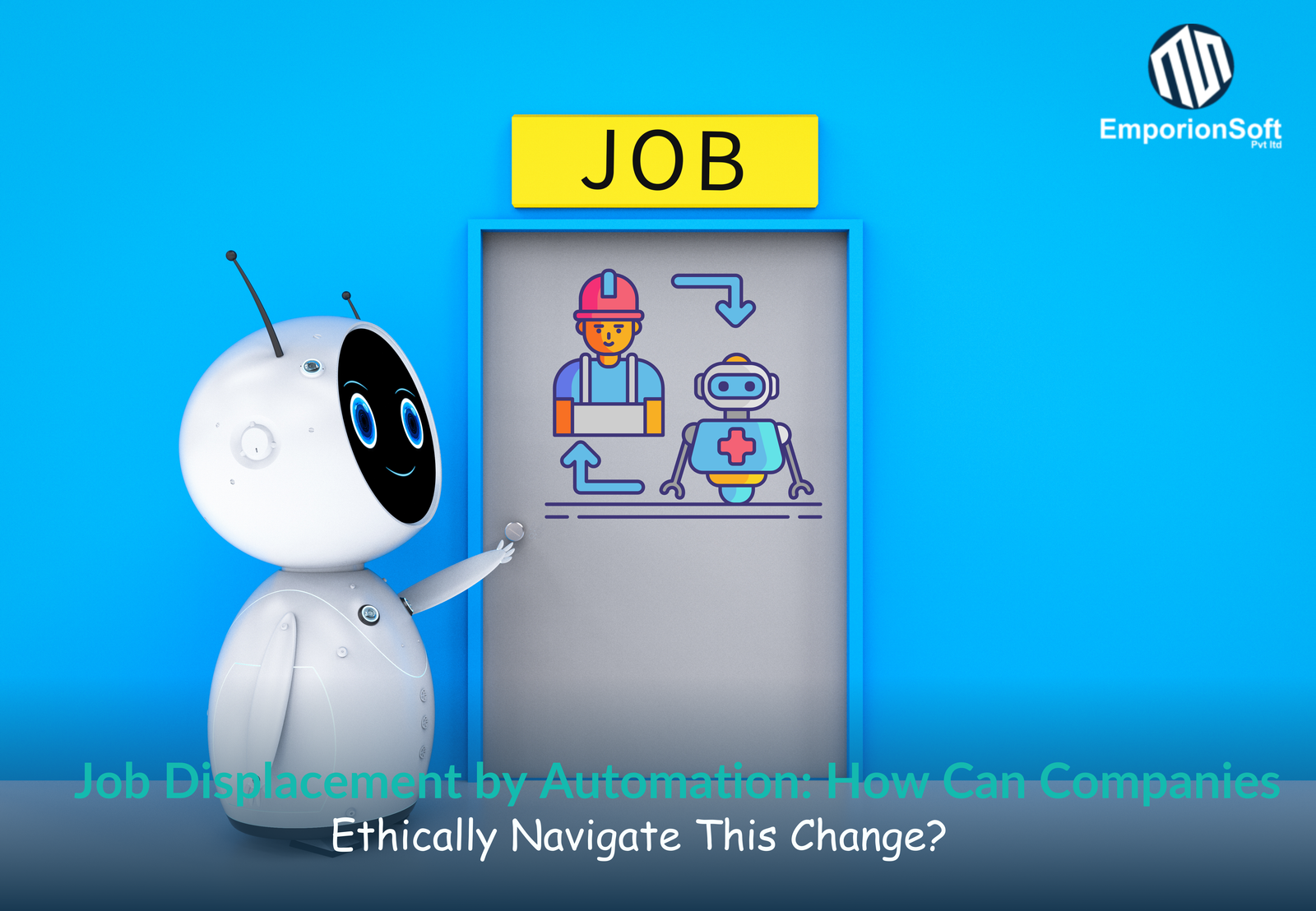
    Job Displacement by Automation: How Can Companies Ethically Navigate This Change?

    Job Displacement by Automation: How Can Companies Ethically Navigate This Change?

    In today’s fast-evolving digital landscape, job displacement by automation is no longer a looming possibility—it’s a present-day reality. From advanced robotics on manufacturing floors to intelligent chatbots in customer service, automation is reshaping the workforce at a breathtaking pace. For global businesses, especially in tech-forward economies like the US, UK, and parts of Asia, the impact is already being felt. But with this rapid transformation comes a pressing ethical question: How can companies embrace automation without sacrificing the very people who helped build them?

    This isn’t just about upgrading systems; it’s about redefining the future of work. As AI and jobs become increasingly intertwined, the responsibility to balance technological advancement with workforce stability rests heavily on the shoulders of decision-makers—especially HR leaders, CEOs, and policymakers. Inaction or missteps could not only disrupt internal culture but also spark reputational risk, social backlash, and talent attrition.

    At the heart of this conversation lies a fundamental paradox: how do we accelerate efficiency without dehumanising the workplace? The answer isn’t simple, but it’s urgent. Companies are walking a tightrope between innovation and ethical responsibility, and the stakes are high.

    Throughout this blog, we’ll explore how organisations can strategically—and ethically—navigate the wave of automation. We’ll look at:

    • The human cost of automation and why empathy must drive decisions

    • Reskilling and upskilling strategies that create future-ready workforces

    • Proven frameworks for ethical automation strategies

    • Real-world examples and case studies from pioneering firms

    • HR tech tools that support fair, transparent transitions

    • The evolving role of leadership in fostering inclusive innovation

    Forward-thinking companies like EmporionSoft Pvt Ltd are already leading the way. By offering tailored software solutions and strategic guidance, EmporionSoft empowers businesses to adopt automation in ways that are both technologically sound and ethically grounded. Their approach ensures that automation enhances human potential rather than replacing it outright.

    As you read on, you’ll gain insights not only into what’s happening but also into what should happen next. Whether you’re a business owner, HR professional, or tech executive, this guide is designed to help you future-proof your organisation without losing sight of the people behind your success.

    The age of automation isn’t coming—it’s here. The question is: will your company be remembered for replacing jobs or for reimagining work?

    Understanding Automation and Its Impact on Today’s Workforce

    Automation—once limited to repetitive tasks in factory lines—is now a driving force behind some of the most transformative innovations across industries. Powered by advances in AI and machine learning, automation today goes far beyond mechanical robots. It’s embedded in software, decision-making systems, chatbots, and even autonomous logistics solutions. And while it offers unmatched operational benefits, it also ushers in a complex conversation around job displacement by automation.

    What Is Automation?

    At its core, automation refers to the use of technology to perform tasks with minimal human intervention. This includes everything from physical robots on assembly lines to algorithmic processes that sort data, respond to customers, or predict maintenance needs. The integration of AI in business has added an intelligence layer to automation, allowing systems to learn, adapt, and improve over time.

    Machine learning, in particular, has transformed automation from rule-based execution to data-driven decision-making. This shift has expanded automation’s scope from the shop floor to the C-suite, influencing roles in marketing, finance, HR, and IT.

    The Rise of AI Across Industries

    Let’s look at how automation is revolutionising key sectors:

    • Manufacturing: Robotics and AI-driven quality control systems reduce errors and increase productivity. Predictive maintenance powered by machine learning is reducing downtime significantly.

    • Customer Support: Chatbots and virtual agents handle high volumes of queries with 24/7 availability, improving response time while reducing human workloads.

    • Logistics: Automated warehousing, drone deliveries, and AI-based route optimisation are redefining how goods move globally.

    • Information Technology: DevOps automation, AI-assisted code generation, and cybersecurity tools streamline operations and detect anomalies faster than ever.

    According to the World Economic Forum’s Future of Jobs Report, 85 million jobs could be displaced by automation by 2025, but 97 million new roles may emerge that are more adapted to the division of labour between humans, machines, and algorithms. This dual impact reflects automation’s potential to both disrupt and create.

    Benefits for Businesses

    The business case for automation is clear:

    • Cost savings through reduced manual labour

    • Efficiency gains by speeding up processes

    • Improved accuracy with fewer human errors

    • Scalability in operations and service delivery

    • Data-driven insights that support smarter decision-making

    In high-competition markets, automation often determines who leads and who lags.

    The Shadow Side: Workforce Disruption

    But while automation boosts productivity, it inevitably alters job landscapes. Entire roles can become obsolete, and employees without the skills to adapt are at risk. This leads to increased stress, economic inequality, and fears about future job security—making job displacement by automation one of the most critical HR and ethical concerns of our time.

    Leaders must recognise that automation isn’t just a technological shift—it’s a human shift. As machines take over tasks, the value of human creativity, emotional intelligence, and adaptability becomes more important than ever.

    The Ethical Dilemma: People vs. Profit in the Age of Automation

    As automation becomes more widespread, companies are faced with a complex ethical dilemma: should businesses prioritise cutting costs through automation or protecting the jobs and livelihoods of their employees? This tension between financial efficiency and human welfare lies at the heart of the debate around ethical automation strategies.

    While automation offers undeniable economic advantages—streamlined operations, reduced overheads, increased speed—the human cost of these gains is often overlooked. For many workers, particularly in vulnerable or routine-based roles, the rise of automation translates to job insecurity, skill redundancy, and emotional distress.

    A Moral Obligation or a Business Decision?

    According to a recent Harvard Business Review article on Automation and Ethics, companies that frame automation purely as a cost-saving exercise miss a vital point: people are not liabilities—they are assets. Employees represent institutional memory, customer relationships, innovation potential, and brand identity. Dismissing them in favour of machines isn’t just shortsighted; it may be morally questionable.

    But do companies owe it to their employees to protect their roles? From an ethical leadership standpoint, the answer is yes—at least partially. Business decisions must reflect a company’s values, not just its quarterly goals. This is where responsible AI and automation ethics come into play.

    Companies that lead with purpose understand that while automation may change job roles, it shouldn’t erase them without thoughtful mitigation strategies.

    Balancing Shareholder Value with Employee Welfare

    It’s a difficult balance to strike. On one hand, shareholders expect maximum returns. On the other, there’s growing pressure from consumers, governments, and employees to operate with social conscience. Ethical leadership means aligning profit goals with a broader sense of duty—not just to investors, but to society at large.

    Forward-thinking companies approach automation with the mindset of augmentation rather than replacement. They view machines as partners to humans, not their substitutes. This approach preserves employee dignity while enhancing overall productivity.

    Some proven strategies include:

    • Reskilling and redeploying employees into new roles supported by technology

    • Engaging workers in automation decisions, creating transparency and trust

    • Developing ethical review boards to oversee AI deployments and their workforce implications

    • Phasing automation rollouts to allow smoother transitions for displaced workers

    These methods don’t just soften the blow—they strengthen long-term brand loyalty and team cohesion.

    The Role of Ethical Automation Strategies

    Ethical automation strategies are built on core principles: transparency, accountability, inclusion, and fairness. Businesses that adhere to these pillars are better positioned to retain talent, manage change, and maintain a positive reputation. In an age where corporate responsibility is under the spotlight, ethics are not a luxury—they are a competitive necessity.

    Automation doesn’t have to be a zero-sum game. With the right leadership mindset and strategy, companies can maintain both profitability and humanity.

    Case Studies: Who Did It Right? Lessons in Ethical Automation

    While the fear surrounding job displacement by automation often dominates headlines, several global companies have set powerful examples by implementing automation ethically—prioritising people alongside profit. Through well-structured reskilling initiatives, transparent communication, and human-centric strategies, these organisations prove that embracing automation doesn’t have to mean sacrificing employees. Let’s explore a few standout automation case studies that exemplify responsible innovation—and offer valuable lessons for forward-thinking firms like EmporionSoft Pvt Ltd.

    1. Siemens: Reskilling for a Digital Future

    German manufacturing giant Siemens has long embraced automation, integrating AI and robotics into its global operations. Yet rather than displacing workers en masse, Siemens doubled down on reskilling.

    In 2018, the company launched a strategic initiative called the Siemens Mechatronic Systems Certification Program, in partnership with top global universities. The goal? Train its existing workforce in AI, IoT, robotics, and digital twin technologies. Thousands of employees were moved into more strategic, digitally focused roles—turning potential job losses into career evolutions.

    Key Takeaway for EmporionSoft: Build upskilling frameworks into automation deployments. When delivering software automation to clients, include built-in onboarding, tutorials, or learning paths tailored to end users transitioning into new workflows.

    2. Unilever: Internal Mobility Over Layoffs

    Consumer goods leader Unilever took a proactive approach to ethical automation strategies. As automation threatened several routine roles, the company introduced its Flex Experiences platform—an internal talent marketplace that allows employees to apply for short-term assignments across departments.

    This initiative not only helped prevent redundancies but also empowered workers to develop new skills and explore varied career paths within the company. In parallel, Unilever invested heavily in leadership training and digital fluency, equipping teams for the future of work.

    According to McKinsey’s Workforce Transitions report, such internal mobility platforms significantly reduce the impact of job displacement and create a culture of agility and inclusion.

    Key Takeaway for EmporionSoft: When designing HR tech or ERP solutions, integrate modules for internal job matching and training recommendations. This supports clients in prioritising internal talent over external hiring or layoffs during automation rollouts.

    3. Microsoft: AI With a Human Touch

    Microsoft’s use of responsible AI in its enterprise tools reflects a deeper organisational philosophy: augment humans, don’t replace them. Through programs like the AI Business School and Microsoft Learn, the tech giant helps clients and employees understand and adapt to AI-driven environments.

    Microsoft also introduced ethical review boards and an AI Ethics & Effects in Engineering and Research (AETHER) Committee to ensure responsible deployment of automation across its products and services.

    Key Takeaway for EmporionSoft: Embed ethical automation principles directly into software design. This could include transparency dashboards, consent controls, and fairness audits, helping clients adopt automation with confidence and care.

    The Role of HR and Leadership in Ethical Automation

    As the digital transformation wave accelerates, it’s no longer just the IT department driving change—HR leaders and C-suite executives must now stand at the forefront of crafting and implementing ethical automation strategies. While automation can unlock efficiency and innovation, how it is introduced across the workforce defines a company’s reputation, employee morale, and long-term success.

    The challenge is not just technical—it’s human. Leaders must balance innovation with empathy, ensuring that business gains do not come at the cost of trust, dignity, and organisational culture.

    HR: The Ethical Anchor in Tech-Driven Change

    HR teams are uniquely positioned to bridge the gap between strategic automation goals and employee wellbeing. Here’s how they can lead:

    • Transparency from Day One
      When employees are left in the dark, fear spreads. HR must ensure that automation plans are communicated clearly and early. Sharing the what, why, and how builds trust. Transparency also means being honest about the roles that may change—and offering alternatives well in advance.

    • Phased Rollouts with Clear Milestones
      Rather than implementing automation overnight, HR and leadership should advocate for gradual transitions. This allows employees to mentally prepare, retrain, or reposition themselves within the organisation.

    • Employee Counselling and Mental Health Support
      The psychological impact of job displacement by automation is real. Offering access to counselling, coaching, and emotional support helps employees cope with uncertainty and feel valued—even when their roles are evolving or being redefined.

    • Participatory Decision-Making
      Ethical automation isn’t a top-down directive. Involving employees in the conversation—through town halls, surveys, or innovation labs—fosters collaboration and reduces resistance. Workers often have insights that can improve automation outcomes or highlight risks leaders may overlook.

    • Upskilling and Internal Mobility Programs
      Proactively helping staff acquire digital and soft skills ensures that automation augments rather than eliminates their roles. HR teams should develop frameworks for continuous learning, supported by real opportunities to transition into future-ready jobs.

    The C-Suite: Driving Vision with Values

    For executives, the role goes beyond approving budgets and tech upgrades. C-suite leaders must set the tone for ethical innovation, ensuring that automation aligns with company values and long-term human capital goals.

    Leaders should ask:

    • Are we prioritising short-term efficiency over long-term trust?

    • Is our automation strategy inclusive, transparent, and fair?

    • What safeguards do we have to prevent biased algorithms or unintended job losses?

    Executives who champion responsible AI gain not only internal loyalty but also external credibility in a market increasingly focused on ESG (Environmental, Social, and Governance) benchmarks.

    Reskilling and Upskilling: Investing in Human Capital for the Future of Work

    In the race toward automation, businesses face a critical choice: displace or develop. As automation continues to reshape tasks and entire job categories, companies that prioritise reskilling the workforce are not just protecting jobs—they’re creating a resilient, future-ready organisation.

    Adopting ethical automation strategies goes beyond deploying tech; it’s about ensuring your people evolve alongside it. One of the most sustainable ways to do this is by investing in upskilling and reskilling programs tailored to emerging demands.

    Why Reskilling is a Strategic Imperative

    According to the OECD Skills for Jobs Database, digital skills, problem-solving, and adaptability are among the most in-demand competencies globally. This trend is set to intensify as AI, machine learning, and automation integrate further into daily workflows.

    Instead of letting valuable employees go due to outdated skills, businesses can create a competitive advantage by empowering their teams with relevant, modern capabilities.

    What Effective Reskilling and Upskilling Looks Like

    There’s no one-size-fits-all solution, but here are proven components of successful workforce development strategies:

    • Internal Training Academies
      Custom learning paths aligned with new roles or tools introduced by automation projects. For example, teaching basic data analytics to former clerical staff or cloud skills to infrastructure technicians.

    • Partnerships with EdTech Firms
      Collaborations with platforms like Coursera, Udemy, or LinkedIn Learning allow companies to provide high-quality content across technical, managerial, and creative domains.

    • Microlearning and On-Demand Modules
      Short, focused learning segments that employees can access anytime—ideal for busy schedules and continuous growth.

    • Mentorship and Peer-to-Peer Learning
      Senior staff mentoring employees transitioning into new roles reinforces culture, confidence, and collaboration.

    • Utilising Government Grants or Initiatives
      Many governments offer incentives or co-funding schemes to support digital workforce transformation. Tapping into these resources can reduce cost while broadening reach.


    How EmporionSoft Supports Learning-Driven Automation

    At EmporionSoft Pvt Ltd, we believe automation and education must go hand-in-hand. That’s why we integrate Learning Management Systems (LMS) and AI-based training tools directly into our workforce management software.

    Our solutions empower clients to:

    • Track employee skill gaps and learning progress

    • Deliver AI-personalised course recommendations

    • Integrate with top global e-learning platforms

    • Create gamified learning paths for higher engagement

    • Monitor training ROI with analytics dashboards

    Whether you’re automating sales operations, HR workflows, or IT tasks, we ensure your team doesn’t just adapt—they thrive in the new ecosystem.

    Our approach bridges the gap between automation training and real-world business value, giving companies the tools to grow their people as much as their platforms.

    Future-Proofing Starts with People

    Reskilling and upskilling are no longer HR luxuries—they’re C-suite priorities. Companies that fail to invest in their people risk falling behind not only technologically, but also ethically and competitively. With the right strategy, supported by partners like EmporionSoft, workforce transformation becomes an opportunity, not a threat.

    Technology Solutions That Enable Ethical Automation

    Ethical automation doesn’t happen by accident—it happens by design. As businesses race to adopt AI and machine learning for operational efficiency, ensuring these tools are used responsibly is critical. The intersection of tech and trust lies at the heart of automation ethics, and it starts with the right solutions.

    To help businesses navigate the delicate balance between automation and employee wellbeing, a new wave of technologies is emerging—ethical AI tools that put people at the centre of innovation.

    The Rise of Human-Centric Automation Tools

    Let’s explore some powerful solutions that enable ethical automation strategies without compromising performance:


    1. Employee Impact Dashboards

    These tools provide real-time visibility into how automation initiatives affect job roles, productivity, morale, and workload distribution. Dashboards allow HR leaders and C-suite decision-makers to:

    • Identify roles at risk of automation

    • Assess employee readiness and reskilling needs

    • Track engagement and stress indicators across teams

    By visualising impact, companies can make informed, empathetic decisions.


    2. Automation Simulators

    Before deploying automation tools in live environments, simulators allow businesses to model different implementation scenarios and their ripple effects on the workforce. These simulations help answer key ethical questions:

    • What tasks will be replaced, altered, or augmented?

    • Which departments will face disruption?

    • What are the short- and long-term implications on job structure?

    This foresight enables phased rollouts, better communication, and more thoughtful planning.


    3. AI Governance Platforms

    These tools help businesses maintain transparency, accountability, and fairness in AI models. A robust AI governance system typically includes:

    • Bias detection algorithms to ensure fairness across gender, race, or role types

    • Explainability frameworks that clarify how AI decisions are made

    • Audit trails for reviewing algorithmic actions and outputs

    • Consent and compliance modules to align with privacy and ethical standards

    These features protect not just employees, but also your brand’s reputation and legal standing.


    4. Workforce Tech with Built-In Ethics

    Modern enterprise platforms now come with embedded ethical checks. Features like fairness testing, transparency scoring, and diversity impact analysis are being integrated into HR tech, CRM systems, and performance tools.


    Communicating Automation to Employees Transparently

    The way you communicate automation to your workforce can make or break the success of your transformation. While job displacement by automation is a legitimate concern, how companies frame the conversation makes a critical difference. Fear-mongering can damage morale, spark resistance, and lead to talent loss. On the other hand, transparency-first communication fosters trust, reduces uncertainty, and invites collaboration.

    Whether it’s an AI tool replacing manual tasks or a company-wide automation rollout, clear, empathetic, and proactive internal messaging is key to navigating change.


    Why Transparency Matters

    When employees feel blindsided by change, resistance grows. But when they’re involved early, they’re far more likely to engage positively. Transparent communication:

    • Builds a culture of trust

    • Reduces speculation and workplace rumours

    • Encourages constructive feedback

    • Prepares employees mentally and emotionally

    • Demonstrates leadership integrity and respect

    Automation isn’t just about systems—it’s about people. And people need clarity, not surprises.


    Tools and Techniques for Transparent Automation Communication

    Here are four impactful strategies organisations can use to convey change openly and respectfully:


    1. Internal Newsletters and Updates

    Craft consistent, easy-to-understand updates around automation plans and timelines. Highlight:

    • What’s changing and why

    • What departments or roles will be affected

    • What support (e.g. training, coaching) is being provided

    • Success stories from early adopters or pilot teams

    Deliver these through emails, intranet bulletins, or even short videos. Use accessible language that avoids jargon or robotic tone.


    2. Team Meetings and Open Forums

    Encourage face-to-face or virtual discussions between leadership and employees. Town halls, Q&A sessions, and team-specific meetings create space for:

    • Real-time questions and answers

    • Demonstrations of automation tools in use

    • A humanised narrative around the tech

    • Transparency around what is still unknown or evolving

    The more visible the leadership, the more credible the message.


    3. Anonymised Feedback Tools

    Let employees voice concerns without fear of judgment. Use digital surveys, suggestion boxes, or AI-driven sentiment analysis to:

    • Spot recurring concerns

    • Address misinformation or confusion early

    • Identify emotional impact across departments

    • Make decisions informed by ground-level insight

    This two-way communication ensures that employees aren’t just receiving messages—they’re shaping them.


    4. AI-Driven HR Chatbots

    AI-powered internal chatbots are becoming an essential part of internal change management. These bots provide employees with 24/7 access to answers on:

    • Role changes

    • Training opportunities

    • Timeline queries

    • Automation support channels

    They also reduce pressure on HR teams and ensure consistent, on-brand communication.

    Preparing for a Hybrid Human + AI Workforce

    The future of work isn’t about humans versus machines—it’s about humans and machines working together. As automation and artificial intelligence continue to evolve, we’re seeing a powerful shift toward hybrid teams, where human intelligence is complemented, not replaced, by digital capabilities. This new paradigm—marked by human-AI collaboration—is already taking shape across industries and holds the key to sustained growth, innovation, and agility.

    Businesses that embrace this synergy will not only boost productivity but also empower their workforce to focus on higher-value, creative, and strategic tasks.


    What a Hybrid Workforce Looks Like

    In a hybrid workforce, AI doesn’t eliminate roles—it enhances them. Let’s explore a few real-world applications:

    🤖 Collaborative Robots (Cobots)

    In manufacturing and logistics, collaborative robots work side-by-side with human employees. Unlike traditional industrial robots that operate in isolation, cobots are designed to be safe, adaptive, and responsive to human actions. They assist with lifting, assembly, packaging, and precision tasks—reducing physical strain and boosting speed.

    🧠 AI Assistants

    From customer service to marketing and HR, AI-powered virtual assistants support employees by handling repetitive tasks like scheduling, data entry, and responding to common queries. This frees up human workers to focus on personalised service, critical thinking, and creative problem-solving.

    🔁 Digital Twins

    A digital twin is a real-time virtual replica of a physical product, system, or process. Engineers, doctors, and designers can use digital twins to simulate scenarios, test outcomes, and make smarter decisions without real-world risk. These tools turn employees into more informed, data-driven decision-makers.

    These are not futuristic ideas—they’re live solutions shaping workflows at companies like GE, BMW, and Siemens.


    The Human Advantage in the Age of AI

    Despite the rise of intelligent systems, uniquely human qualities remain irreplaceable: empathy, ethics, creativity, and leadership. The success of hybrid work environments lies in blending machine efficiency with human emotional intelligence.

    For example:

    • AI might analyse customer sentiment at scale, but only a human can navigate the emotional nuance of an upset client.

    • Algorithms can suggest the best pricing strategy, but strategic leadership is still needed to align it with company values and brand tone.

    The hybrid model allows each to do what they do best—and together, they produce better results than either could alone.

    Ethical Automation Is Possible—Let’s Build It Together

    As we’ve explored throughout this guide, job displacement by automation isn’t just a technological issue—it’s a human one. The choices businesses make today will define not only their operational efficiency, but also their culture, public image, and long-term viability in a rapidly changing world.

    From understanding the impact of automation, to navigating the ethical dilemma of people versus profit, leading companies are proving that it’s possible to innovate without leaving people behind. Case studies from Siemens, Unilever, and Microsoft demonstrate that when handled with foresight and care, automation can open new doors for employees rather than closing them.

    Key decision-makers—especially in HR and the C-suite—have the power to drive real change. Whether it’s reskilling the workforce, deploying ethical AI tools, or establishing transparent communication, leaders who adopt automation ethics as a strategic pillar will not only safeguard jobs but elevate them.

    The future of work will be hybrid, intelligent, and deeply human-centric. And the most successful organisations will be those that invest not just in machines, but in people.


    Why EmporionSoft Is Your Ethical Automation Partner

    At EmporionSoft Pvt Ltd, we don’t believe in one-size-fits-all solutions. We believe in crafting ethical automation strategies tailored to each company’s culture, goals, and workforce. Our commitment goes beyond code—we help businesses build transparency-first, AI-integrated platforms that:

    • Identify job roles at risk and propose reskilling paths

    • Empower employees with built-in learning and development tools

    • Offer AI governance features to ensure fairness, accountability, and compliance

    • Enable real-time collaboration between human teams and AI systems

    • Provide HR dashboards to monitor the emotional and operational impact of automation

    We understand that automation, when done right, is not just efficient—it’s transformative and profitable.


    Your Next Step Starts Here

    If you’re ready to move forward with confidence, ethics, and clarity, EmporionSoft is here to help. Whether you’re exploring automation for the first time or looking to scale responsibly, our team of experts can guide you every step of the way.

    ✅ We’ll help you:

    • Design a roadmap for responsible digital transformation

    • Build automation tools that prioritise both performance and people

    • Transform fear into opportunity through transparent communication and training

    📞 Book your consultation today to discuss your ethical automation goals.

    👉 Contact the EmporionSoft Team

    Let’s lead this change together—with empathy, intelligence, and innovation at the core.


    Because the future of work isn’t about replacing humans—it’s about empowering them.
  • Ethics in AI: Navigating Bias and Fairness in Software Development

    Ethics in AI: Navigating Bias and Fairness in Software Development

    Introduction to Ethics in AI: Navigating Bias and Fairness in Software Development

    In an era where artificial intelligence (AI) is increasingly shaping our digital experiences, the conversation around Ethics in AI has never been more urgent—or more relevant. As AI becomes an integral part of modern software development, from recommendation engines and facial recognition systems to predictive analytics and autonomous vehicles, the responsibility to ensure these systems operate ethically is critical. Ethics in AI refers to the moral principles and values that guide the development, deployment, and impact of artificial intelligence technologies. It calls into question how AI systems are designed, who benefits from them, and, more importantly, who might be harmed.

    As developers and organisations integrate AI into everything from finance to healthcare, questions of AI bias, fairness, and responsible AI development cannot be ignored. Machine learning algorithms often rely on vast datasets, which may unknowingly carry the societal prejudices and systemic inequalities of the past. When left unchecked, these biases can influence hiring decisions, criminal sentencing, loan approvals, and more—leading to unintended consequences and, in some cases, real-world harm.

    At the heart of the matter lies a key challenge: how do we ensure ethical software development in an age dominated by data-driven decisions? Is it enough to focus on accuracy and performance, or must we also consider algorithmic transparency, explain ability, and the societal implications of our code? These are not abstract philosophical questions—they’re practical engineering concerns with far-reaching consequences.

    This blog explores the multifaceted world of Ethics in AI, with a spotlight on navigating bias and fairness in the software development lifecycle. We’ll examine how bias enters AI systems, explore tools and frameworks to address it, and showcase real-world examples—both cautionary tales and best practices—that illustrate the power of ethical AI design.

    Whether you’re an AI engineer, software developer, policymaker, or tech enthusiast, understanding the ethical dimensions of AI is no longer optional—it’s a professional imperative. The decisions we make today will shape the AI-powered systems of tomorrow. This journey through Ethics in AI will equip you with insights, strategies, and a clear understanding of your role in building a fairer digital future.

    Let’s dive into the ethical crossroads of innovation, responsibility, and justice in AI.

    Understanding AI Bias

    As AI systems become increasingly embedded into critical areas of society—healthcare, finance, recruitment, law enforcement—the challenge of AI bias takes centre stage. At its core, AI bias refers to systematic and repeatable errors in an AI system that create unfair outcomes, such as privileging one group over another or reinforcing harmful stereotypes. This bias can arise at various stages of software development, from how data is collected and labelled, to how algorithms are trained and deployed.

    How AI Bias Occurs

    AI systems learn from data. If that data reflects existing societal prejudices or is not representative of all user groups, the AI will replicate and amplify these patterns. For example, an algorithm trained on historical hiring data from a tech company might learn to favour male candidates if the company has historically hired more men. This leads to a biased recruitment model that perpetuates gender inequality—regardless of the applicant’s actual qualifications.

    AI bias can emerge in several ways:

    • Data Bias: The dataset may be incomplete, unbalanced, or skewed towards certain demographics.

    • Label Bias: Human-labelled data may reflect personal or cultural biases.

    • Algorithmic Bias: The design of the model or the loss function may inadvertently favour certain outcomes.

    • Deployment Bias: AI systems might behave differently in real-world settings than they did during development or testing.

    Real-World Examples of AI Bias

    Let’s consider the healthcare industry. In one notable case, an algorithm used in U.S. hospitals to predict which patients would benefit from extra care was found to significantly underestimate the needs of Black patients. The training data used historical healthcare spending as a proxy for need, but due to systemic inequalities, less money had been spent on Black patients, causing the algorithm to misjudge their health conditions. This flawed metric led to unequal treatment, revealing the devastating effects of AI bias in life-and-death scenarios.

    In finance, credit-scoring algorithms may unfairly deny loans to minority applicants because they are trained on datasets influenced by decades of discriminatory lending practices. Even if race isn’t explicitly included as a variable, proxy indicators like postal codes or income history can lead to biased decisions.

    In recruitment, several companies have faced backlash after their AI-powered hiring tools were shown to favour applicants with certain names, accents, or educational backgrounds—often disadvantaging women, ethnic minorities, or people from non-traditional backgrounds.

    Why AI Bias Matters

    Bias in AI doesn’t just affect individuals—it undermines trust in technology, damages company reputations, and leads to regulatory and legal repercussions. For ethical software development, tackling AI bias is not just a technical challenge but a moral obligation. Businesses must take proactive steps to identify, monitor, and mitigate bias throughout the AI lifecycle.

    Moreover, addressing bias aligns with the broader goal of responsible AI development. It ensures that AI systems serve diverse populations fairly and uphold values of equity, justice, and inclusion. Developers, product managers, and stakeholders must collaborate to build models that don’t just perform well but behave ethically.

    As we move deeper into the digital age, recognising and addressing AI bias is fundamental to building technologies that reflect the best of human values, not the worst of our historical inequalities.

    The Impact of AI Bias on Society

    The rise of artificial intelligence has brought transformative possibilities to industries, governments, and everyday life. However, when AI systems are biased—whether in their data, design, or deployment—the consequences are not merely technical glitches; they are social injustices with real-world implications. The lack of AI fairness can erode public trust, deepen inequality, and perpetuate discrimination at scale. Addressing these challenges through responsible AI development is no longer optional—it’s a necessity.

    Ethical and Social Consequences

    At its worst, AI bias undermines the very principles of fairness, justice, and equality that societies strive to uphold. When biased AI systems are deployed in sensitive areas such as law enforcement, healthcare, hiring, and education, they can cause widespread harm to marginalised communities.

    One prominent example is facial recognition technology, which has been widely criticised for its racial and gender bias. Studies, including a groundbreaking 2019 report by MIT Media Lab, revealed that facial recognition systems from major tech companies misidentified darker-skinned women up to 35% more often than lighter-skinned men. These errors have already led to wrongful arrests and raised serious concerns about surveillance and civil liberties.

    In recruitment and hiring, AI bias has had profound consequences. Amazon famously scrapped an experimental hiring algorithm that was found to discriminate against female candidates. The system, trained on a decade’s worth of resumes, learned to favour male applicants simply because they were historically more likely to be hired—effectively encoding past biases into future decisions. Such flaws not only disadvantage qualified individuals but also harm companies by limiting workplace diversity and inclusion.

    Wider Societal Impact

    The ripple effects of biased AI go beyond individual injustices. In financial services, automated systems that unfairly deny credit or loans to certain groups can entrench economic disparity. In healthcare, diagnostic tools that underdiagnose or misdiagnose specific populations based on race or gender can lead to fatal oversights. For example, research has shown that some AI models used in dermatology struggle to detect skin conditions in people with darker skin tones because they were trained predominantly on images of lighter skin.

    Beyond personal harm, such incidents fuel public distrust in AI technologies, particularly among communities who are already vulnerable or marginalised. When people perceive that AI systems are biased or opaque, they are less likely to engage with or accept their outcomes—no matter how advanced the technology may be.

    The Role of Responsible AI Development

    To mitigate these consequences, developers and organisations must prioritise responsible AI development from the outset. This means actively auditing models for bias, diversifying training datasets, involving interdisciplinary teams in development, and building systems with explainability and algorithmic transparency. Ethical considerations should be embedded at every stage of the software development lifecycle—not bolted on as an afterthought.

    In summary, AI fairness is not just a technical challenge—it’s a societal responsibility. Ensuring that AI systems treat all individuals with equal dignity and accuracy is vital for preserving the social contract in our increasingly automated world.

    Why Fairness in AI Matters in Software Development

    As artificial intelligence becomes deeply woven into the fabric of modern software systems, ensuring fairness in AI is no longer just an ethical concern—it is a foundational pillar of trustworthy, inclusive, and high-performing technology. At its essence, AI fairness means that AI-driven systems make decisions impartially, without favouring or discriminating against individuals based on race, gender, age, religion, or other protected characteristics. In the context of ethical software development, this fairness is paramount.

    The Concept of AI Fairness

    AI fairness refers to the principle that AI systems should treat all users equitably, making decisions that are free from unjustified bias. This doesn’t always mean treating everyone the same—it means treating everyone justly. That may require adjusting algorithms or datasets to account for disparities that already exist in society.

    In software development, fairness must be embedded from the design stage. This involves questioning how data is collected, how algorithms are trained, and how models are validated and deployed. Without these considerations, systems can unintentionally replicate and even exacerbate societal inequalities. For example, a credit scoring app that penalises applicants from underrepresented areas based on zip code isn’t neutral—it’s discriminatory, even if unintentionally so.

    Why Fairness Is Crucial

    Incorporating Ethics in AI and fairness isn’t just about avoiding reputational damage or regulatory fines—though those are valid concerns. More importantly, fair AI builds trust with users and stakeholders. It enhances user satisfaction, reduces litigation risks, and ensures that systems are legally compliant, particularly with rising regulations like the EU’s AI Act and the UK’s Equality Act 2010.

    In today’s global software ecosystem, biased outcomes can have a cascading effect across millions of users. If an AI-powered medical tool underdiagnoses women because it was trained mostly on male patient data, it can lead to dangerous healthcare disparities. If a recruitment algorithm favours applicants with Anglo-sounding names, it narrows diversity and talent potential in organisations. These outcomes highlight why AI fairness must be a cornerstone of responsible AI development.

    Real-World Success Stories

    Several forward-thinking companies are setting benchmarks in AI fairness through transparency, inclusive design, and ongoing audits.

    • Microsoft has developed a set of AI principles that explicitly prioritise fairness, inclusivity, and transparency. Their Fairlearn toolkit helps developers assess and mitigate bias in their machine learning models.

    • IBM introduced the AI Fairness 360 toolkit—an open-source library that enables developers to detect, understand, and reduce bias in datasets and models. By making fairness tools accessible, IBM encourages industry-wide ethical standards.

    • Salesforce has embedded ethical review processes into every stage of AI development. The company’s “Office of Ethical and Humane Use of Technology” ensures all AI applications undergo fairness checks and adhere to internal ethical frameworks.

    These examples demonstrate that integrating AI fairness into ethical software development isn’t just a theoretical ideal—it’s a practical, achievable, and business-savvy strategy. Companies that adopt fairness not only build better software—they build stronger, more inclusive societies.

    Best Practices for Ensuring Fairness in AI Systems

    Developing AI that is fair, ethical, and transparent is both a technical and moral responsibility. As artificial intelligence becomes deeply embedded in everyday applications—from loan approvals to hiring tools and healthcare diagnostics—software developers must adopt best practices for ensuring fairness in AI systems. Doing so not only supports responsible AI development but also builds user trust and long-term success for organisations.

    1. Conduct Diverse and Inclusive Data Collection

    The foundation of any AI system is its data. If the training data is biased or unrepresentative, the results will be too. To mitigate AI bias, developers should:

    • Collect data from diverse demographic groups.

    • Include edge cases and minority populations often left out.

    • Regularly audit datasets for gaps, imbalances, or harmful stereotypes.

    This proactive approach helps foster AI fairness from the ground up and avoids marginalising underrepresented users.

    2. Perform Bias Audits Throughout the AI Lifecycle

    Bias isn’t always apparent in the early stages of development. Conducting regular fairness audits ensures ongoing oversight:

    • Use tools like IBM’s AI Fairness 360 or Microsoft’s Fairlearn.

    • Validate fairness at each phase—training, testing, and deployment.

    • Monitor models post-deployment to detect algorithmic drift or emerging unfair behaviours.

    These continuous checks align with ethical software development standards and help organisations comply with global regulations.

    3. Integrate Explainability and Transparency

    AI systems must be understandable not only to developers but also to end users. That’s where algorithmic transparency plays a vital role. Developers should:

    • Provide clear explanations of how decisions are made.

    • Use interpretable models where possible, especially in high-stakes applications.

    • Incorporate visualisation tools and documentation that make model behaviour more transparent.

    Companies like Google offer frameworks for transparency in their AI principles, encouraging accountability and human-centred design.

    4. Apply Fairness Constraints in Model Design

    When training AI models, developers can use fairness constraints to ensure balanced outcomes. For instance:

    • Use fairness-aware loss functions.

    • Implement demographic parity or equal opportunity constraints.

    • Choose models that allow adjustments to prioritise fairness metrics.

    While this may slightly reduce model performance, the trade-off can lead to more ethical and socially acceptable results.

    5. Build Interdisciplinary Teams

    Responsible AI development isn’t just for data scientists. Ethical development requires collaboration between:

    • Software developers

    • Social scientists

    • Legal advisors

    • UX designers

    • Policy experts

    This holistic perspective helps anticipate unintended consequences and promotes inclusive AI design from the start.

    6. Document and Version Ethical Decisions

    Using “model cards” and “data sheets” to document AI development decisions creates transparency and accountability. These documents should explain:

    • The dataset’s origin

    • Known limitations

    • Ethical considerations taken during model design

    Clear documentation ensures models are traceable and helps maintain AI fairness throughout software iterations.


    For businesses aiming to embed ethical AI into their systems, our team at EmporionSoft’s AI Solutions can help you implement these best practices, from bias audits to fairness-driven design.

    By following these steps, companies can mitigate bias, protect users, and align with global AI ethics frameworks. In a world where algorithms increasingly shape real-world decisions, building fair and transparent systems is both a technical mandate and a moral imperative.

    Algorithmic Transparency: Key to Ethical AI

    As artificial intelligence becomes more embedded in high-stakes decisions—from approving loans and hiring employees to diagnosing illnesses—the need for algorithmic transparency has grown significantly. At the heart of Ethics in AI, transparency ensures that the inner workings of AI systems are understandable, traceable, and accountable to users, regulators, and society at large. Without it, even the most advanced AI can become a black box—making critical decisions with little to no explanation.

    What Is Algorithmic Transparency?

    Algorithmic transparency refers to the ability to clearly explain how an AI system processes inputs and reaches its outputs. It involves providing insight into the data used, the logic applied, and the outcomes generated by machine learning models. Transparent systems don’t just produce decisions—they justify them.

    In practice, transparency might include:

    • Documenting model objectives, design decisions, and limitations.

    • Sharing information about datasets and their potential biases.

    • Explaining how inputs are transformed into predictions or classifications.

    • Making performance metrics and fairness audits publicly available.

    This level of openness is vital for ensuring trust and upholding ethical software development principles.

    Why Transparency Matters in Ethics in AI

    Transparency plays a crucial role in reducing AI bias. When developers and stakeholders can inspect an algorithm’s decision-making process, they are better positioned to identify and address issues of unfairness, discrimination, or error. Hidden or overly complex models—especially deep learning systems—pose risks when their predictions impact human lives, such as in healthcare, criminal justice, or finance.

    For example, a recidivism prediction tool used by courts to assess the likelihood of reoffending was criticised for being racially biased. The proprietary nature of the model made it difficult to scrutinise, sparking public outrage and legal debates. Had the tool adhered to algorithmic transparency, the issue might have been detected and corrected earlier.

    Transparent AI is also essential for legal and regulatory compliance. With the introduction of legislation like the EU’s AI Act and growing global emphasis on responsible AI development, companies are now being held accountable for how their AI systems make decisions. Transparency ensures that developers can provide necessary explanations to regulators and affected users.

    Trends and Industry Standards

    Leading tech companies and research institutions are increasingly championing transparency as a core component of Ethics in AI:

    • Google’s AI Principles place strong emphasis on explainability and user understanding of AI decisions.

    • Microsoft’s Responsible AI resources offer frameworks and tools that support transparency, including its InterpretML toolkit.

    • OpenAI, the creator of ChatGPT, has committed to improving transparency by releasing technical reports, system cards, and safety research.

    These efforts reflect a broader industry shift toward openness and accountability. Standards bodies such as ISO/IEC and the IEEE are also developing global guidelines on transparency in AI systems.

    Transparency in Action

    To achieve meaningful transparency, software developers can:

    • Use interpretable models (e.g., decision trees or linear models) where possible.

    • Apply explainability tools like SHAP (SHapley Additive exPlanations) or LIME (Local Interpretable Model-Agnostic Explanations).

    • Maintain comprehensive documentation (“model cards”) that outline performance across different demographics.

    Transparency is not a barrier to innovation—it’s a catalyst for trust. By embedding algorithmic transparency into every stage of AI development, businesses build systems that are not only intelligent but also fair, ethical, and human-centred.

    Challenges in Implementing Ethical AI Practices

    While the need for Ethics in AI is widely recognised, putting those principles into practice presents significant challenges. Companies across industries face multiple hurdles—ranging from technical limitations to organisational inertia—when trying to embed ethical considerations like AI fairness, algorithmic transparency, and responsible AI development into their workflows. Understanding these challenges is the first step toward overcoming them and creating software that is both innovative and equitable.

    1. Lack of Awareness and Education

    One of the most common barriers to ethical AI adoption is a general lack of awareness. Many development teams and decision-makers simply aren’t trained in recognising or addressing AI bias or understanding the nuances of ethical software development. Ethics often isn’t taught in technical curricula, and without formal training or exposure, teams may overlook key issues.

    Solution:

    • Invest in training and workshops focused on Ethics in AI, bias mitigation, and fairness auditing.

    • Build cross-functional teams that include ethicists, legal experts, and social scientists.

    • Promote a culture of accountability by incorporating ethical checkpoints into product development cycles.

    2. Complexity of Ethical Integration

    Ethics in AI is not just a checklist—it’s a complex, evolving field that requires thoughtful implementation. Applying algorithmic transparency or enforcing fairness constraints often demands deep technical expertise, advanced tooling, and additional resources.

    For instance, implementing explainable AI models (like LIME or SHAP) can be time-consuming and require adjustments to standard workflows. Similarly, auditing models for demographic parity or equal opportunity may introduce trade-offs with performance or scalability.

    Solution:

    • Adopt open-source frameworks such as IBM’s AI Fairness 360, Google’s What-If Tool, or Microsoft’s Fairlearn, which offer pre-built modules for detecting and reducing bias.

    • Prioritise transparency by creating model cards and data documentation throughout development.

    • Partner with ethical AI consultants who specialise in embedding fairness principles at scale.

    3. Organisational Resistance to Change

    Even when teams understand the need for responsible AI development, internal resistance can slow or block progress. Business leaders may be reluctant to allocate budget or extend timelines for ethics-related tasks, especially when short-term KPIs are prioritised over long-term impact.

    There’s also a concern that applying fairness constraints may impact system performance or profitability—creating a perceived conflict between ethics and business goals.

    Solution:

    • Build a strong business case that connects ethical software development with improved brand reputation, user trust, legal compliance, and market differentiation.

    • Share real-world case studies of companies (like Salesforce or Microsoft) that have benefited from ethical AI practices.

    • Encourage leadership to commit publicly to AI ethics, making it a strategic priority.

    4. Limited Regulatory Guidance

    While regulations like the EU AI Act and UK’s data ethics framework are emerging, many regions still lack concrete, enforceable AI ethics laws. This can make it difficult for companies to know where to start or how far to go.

    Solution:

    • Use international ethical AI frameworks (e.g., Google’s AI Principles) as baselines.

    • Proactively adopt internal governance policies before regulations become mandatory.

    • Consult with AI ethics professionals to align development practices with future legislation.

    Role of Regulation and Policy in AI Ethics

    As AI continues to reshape industries and societies, governments and international bodies are stepping up to establish clear rules around the Ethics in AI. These regulations and policies are critical to guiding how software companies develop and deploy AI systems—especially when it comes to addressing AI bias, ensuring AI fairness, and enforcing algorithmic transparency. Without a legal framework, ethical considerations risk being sidelined in favour of efficiency or profit.

    Why AI Regulation Matters

    The purpose of AI regulation is to safeguard fundamental rights, promote trustworthy technology, and ensure that AI innovations serve the public good. Ethical lapses—such as biased facial recognition, opaque decision-making, and discriminatory recruitment algorithms—have demonstrated the need for enforceable guidelines. These regulations help hold companies accountable and encourage responsible AI development by establishing baseline standards for fairness, transparency, and safety.

    For software developers and tech organisations, understanding and complying with these policies is vital—not just for legal reasons, but also for building trust with users, partners, and regulators.


    Key AI Regulations and Standards

    1. The European Union – AI Act

    The EU is leading the charge with one of the world’s most comprehensive AI regulatory frameworks: the EU AI Act. This regulation introduces a risk-based classification system for AI applications:

    • Unacceptable Risk: Banned outright (e.g., social scoring by governments).

    • High Risk: Strict compliance (e.g., AI in education, recruitment, or healthcare).

    • Limited Risk: Transparency requirements.

    • Minimal Risk: Most AI systems used today fall here, with few restrictions.

    Under this Act, companies must demonstrate that their AI systems are unbiased, explainable, and secure—pushing ethical software development to the forefront of product design.

    2. The United States – Patchwork Approach

    Unlike the EU, the U.S. does not have a unified national AI law. Instead, the approach is more decentralised:

    • NIST AI Risk Management Framework: Offers voluntary guidance to address risks related to AI development and use.

    • The Algorithmic Accountability Act (proposed): Aims to require large companies to assess their automated systems for bias and discrimination.

    While less prescriptive, U.S. policies are beginning to pressure companies to proactively engage in responsible AI development and conduct regular fairness audits.

    3. Global and Industry Standards

    Across the globe, organisations are developing frameworks and ethical guidelines:

    • OECD AI Principles: Promote inclusive growth, transparency, and human-centred values.

    • IEEE Ethically Aligned Design: Provides extensive guidance on ethically sound AI and autonomous systems.

    • ISO/IEC JTC 1/SC 42: Focuses on AI governance and lifecycle standards, influencing how software companies structure their ethical review processes.


    How Regulation Impacts Software Development

    These evolving policies compel companies to:

    • Conduct impact assessments to evaluate ethical risks.

    • Build explainable AI systems with traceable data flows.

    • Maintain audit trails and documentation for accountability.

    • Integrate fairness constraints and regular bias monitoring.

    For development teams, aligning with regulations isn’t just about compliance—it’s an opportunity to lead with integrity and differentiate products in an increasingly competitive market.

    As the regulatory environment becomes more stringent, businesses that embrace Ethics in AI early will be best positioned to innovate responsibly. By anticipating changes and building with transparency and fairness in mind, software companies can create AI solutions that are not only legal but ethical and inclusive.

    EmporionSoft’s Commitment to Ethical AI Development

    At EmporionSoft Pvt Ltd, we believe that innovation and integrity go hand-in-hand. As a forward-thinking software development company, our approach to artificial intelligence is rooted in one unshakable principle—Ethics in AI. From project initiation to post-deployment support, we embed fairness, transparency, and accountability into every AI solution we build. Our clients aren’t just investing in cutting-edge technology—they’re partnering with a team committed to responsible AI development that aligns with the highest ethical standards.

    Our Ethical AI Principles

    EmporionSoft’s ethical framework is guided by three core pillars:

    1. Fairness First – Every AI model we design undergoes rigorous checks to identify and mitigate AI bias. We ensure our systems treat all users equally, regardless of gender, race, or background.

    2. Algorithmic Transparency – We build AI that doesn’t just work—but makes sense. Our solutions include interpretable models, detailed documentation, and explainability tools so clients and end-users understand how decisions are made.

    3. Human-Centric Development – We design AI to augment human potential, not replace it. We maintain close collaboration with stakeholders and domain experts to ensure our technology respects human rights, inclusivity, and user trust.

    These values are not aspirational—they are operationalised through processes and policies that govern our entire development lifecycle.


    Our Process for Ethical Software Development

    Here’s how we ensure AI fairness and ethical practices in every project:

    • Bias-Aware Data Engineering
      We audit datasets for imbalances and remove biased features that may lead to discrimination in predictions. Our engineers employ best-in-class tools like AI Fairness 360 and SHAP to monitor and mitigate bias.

    • Ethical Model Design & Testing
      We use fairness-aware training methods and evaluate multiple models to ensure not only performance but equity across user groups. All models undergo explainability reviews using LIME and other XAI tools.

    • Ongoing Ethical Review
      Our internal Ethical AI Task Force evaluates project decisions from both a technical and social perspective. This interdisciplinary team ensures every AI solution adheres to evolving standards and regulatory compliance.

    • Client-Centric Transparency
      We involve clients at every critical juncture—offering visibility into datasets, model behaviour, and decision rationale. This openness promotes accountability and builds long-term trust.


    Why Choose EmporionSoft for Your Ethical AI Solutions?

    Our clients—from startups to global enterprises—choose EmporionSoft because we don’t just deliver solutions; we deliver responsible, resilient, and regulatory-ready AI systems. In a world where public scrutiny and AI regulation are intensifying, having a technology partner with ethical foresight is a competitive advantage.

    By working with us, you gain:

    • A future-proof AI solution aligned with global ethical standards.

    • Reduced risk of reputational damage or regulatory penalties.

    • Enhanced user trust and adoption due to fairness and transparency.

    • Full compliance support with frameworks like the EU AI Act and UK’s Equality Act.

    We don’t just talk about ethics—we build it into every line of code.

    Future Trends in AI Ethics and Responsible Software Development

    As AI continues to evolve and reshape industries, the future of Ethics in AI is moving beyond philosophical discussions and entering the core of responsible innovation. Businesses, governments, and society at large are demanding more transparent, fair, and accountable AI systems—pushing the boundaries of how ethical considerations are integrated into modern software development. For companies looking to stay ahead, embracing emerging trends in responsible AI development isn’t just good practice—it’s a strategic imperative.

    1. Algorithmic Transparency as a Standard, Not an Option

    One of the clearest trends in Ethics in AI is the normalisation of algorithmic transparency. As users and regulators demand explanations for AI-driven decisions, we can expect to see a widespread adoption of explainability tools across all industries. From healthcare diagnostics to automated financial underwriting, systems will be required to justify decisions in human-understandable terms.

    New standards are emerging that require developers to document model behaviours, decision logic, and data sources. Tools like SHAP (SHapley Additive Explanations) and LIME are increasingly embedded in production pipelines—not just research environments.

    2. Mandatory Ethical Audits and Governance Frameworks

    Just as financial audits became a norm for corporate transparency, ethical AI audits are on the rise. These reviews ensure that AI models comply with fairness, accountability, and non-discrimination standards. Organisations are building internal AI ethics committees or hiring external specialists to conduct regular bias evaluations, particularly in sectors like fintech, law enforcement, and HR tech.

    This trend is being accelerated by global regulatory movements such as the EU’s AI Act and UK’s growing AI governance frameworks. Companies that cannot demonstrate ethical AI practices may face fines, lawsuits, or public backlash.

    3. Advanced Tools for Bias Detection and Mitigation

    The next wave of AI fairness tools will be smarter, faster, and more user-friendly. These platforms will automatically flag biased outputs, highlight potential discriminatory variables, and suggest adjustments in real-time.

    We’re seeing promising developments in automated model validation platforms that score AI systems on ethical metrics like fairness, robustness, and explainability. Companies will increasingly rely on these tools as part of their CI/CD pipelines for ethical software deployment.

    4. Shift Toward Inclusive and Interdisciplinary AI Teams

    The future of ethical software development lies in diversity—not just in data, but in decision-making. Interdisciplinary teams that include ethicists, sociologists, lawyers, and designers will become standard in AI projects, ensuring ethical concerns are addressed holistically rather than retroactively.

    Inclusive design practices will lead to AI systems that better represent and serve all demographics, avoiding the blind spots that have plagued many existing models.

    5. Rise of Proactive, Ethical AI Partnerships

    Forward-thinking businesses will no longer wait for regulation—they’ll seek out ethical partners from the outset. Software companies like EmporionSoft are setting a new benchmark by embedding responsible AI development practices into every stage of the software lifecycle.

    From bias-aware data handling to transparent model reporting, EmporionSoft helps organisations future-proof their AI products while building trust with users and stakeholders.

    Let’s Build a Fairer AI Future Together

    As we’ve explored throughout this guide on Ethics in AI: Navigating Bias and Fairness in Software Development, the future of technology doesn’t lie in innovation alone—it lies in responsible innovation. The growing influence of artificial intelligence across healthcare, finance, recruitment, and beyond demands that developers, businesses, and leaders take ethical responsibility for how AI is built, trained, and deployed.

    We’ve seen how AI bias can emerge from flawed data or opaque algorithms, often with serious real-world consequences. We’ve examined why AI fairness is crucial—not just as a regulatory checkbox, but as a foundation for equity, trust, and social impact. From facial recognition errors to discriminatory hiring tools, the case for algorithmic transparency and proactive bias mitigation is stronger than ever.

    The good news? Ethical AI is entirely achievable—with the right mindset, tools, and partners. We discussed best practices like fairness audits, explainable models, diverse datasets, and adherence to global regulations such as the EU AI Act. We explored how companies like Google, IBM, and Salesforce lead by example, and how EmporionSoft Pvt Ltd is helping businesses implement these principles practically and powerfully.

    At EmporionSoft, we don’t just develop AI—we design ethical, future-proof AI systems that work for everyone. Whether you’re starting your first AI project or scaling your existing solutions, our expert team ensures your software is fair, transparent, and aligned with global standards. Our proven process includes rigorous bias analysis, interdisciplinary collaboration, and tools that demystify how your algorithms work—building user trust and regulatory confidence from day one.

    Why It Matters Now

    Regulations are tightening, users are demanding transparency, and businesses are being held accountable like never before. The time to act is not someday—it’s now. Companies that embrace responsible AI development today will lead the markets of tomorrow, while those who delay may face legal, ethical, and reputational risks.

    Choosing an ethical software partner like EmporionSoft ensures that your AI systems are not only powerful—but principled.

    Ready to Build Ethical AI That Drives Trust and Impact?

    Don’t wait for regulations to force your hand. Take the lead.

    👉 Contact EmporionSoft Pvt Ltd for a personalised consultation on ethical AI development, fairness auditing, or bespoke AI solutions tailored to your business.

    Let’s collaborate to design AI that’s intelligent, inclusive, and built for a better tomorrow.

  • Exploring the Latest Trends in New Technology: What Every Tech Enthusiast Should Know

    Exploring the Latest Trends in New Technology: What Every Tech Enthusiast Should Know

    Introduction

    The world of technology is evolving rapidly, bringing innovative solutions that redefine industries. Whether you’re an aspiring software developer or an IT consulting services professional, staying updated on the latest trends is essential. This blog explores the top emerging technologies that every tech enthusiast should know in 2024 and beyond.


    Artificial Intelligence and Machine Learning

    AI and ML continue to revolutionize industries, enhancing efficiency and decision-making processes.

    Key Trends:

    • AI-powered automation: Businesses are leveraging AI for automation in sectors like healthcare, finance, and manufacturing.
    • Natural Language Processing (NLP): AI is improving voice assistants and chatbots for better user interactions.
    • Generative AI: Tools like ChatGPT and DALL-E are reshaping content creation, design, and programming.

    For businesses looking for custom software development, AI integration can improve operational efficiency and predictive analytics.


    Blockchain and Decentralized Finance (DeFi)

    Blockchain technology extends beyond cryptocurrency. Companies are exploring secure, decentralized solutions for transactions, identity verification, and smart contracts.

    Major Developments:

    • Decentralized Finance (DeFi): DeFi platforms are transforming banking, lending, and trading.
    • NFT Expansion: Beyond digital art, NFTs are now used in gaming, real estate, and identity management.
    • Blockchain for Cybersecurity: Enhanced data security through decentralized authentication mechanisms.

    Businesses hiring AI software developers are now integrating blockchain to enhance security in custom web application development projects.


    5G Technology and IoT

    With 5G deployment accelerating worldwide, Internet of Things (IoT) applications are growing significantly.

    How 5G Impacts IoT:

    • Smart Cities: IoT-driven urban development is enhancing transportation, security, and energy efficiency.
    • Healthcare Innovations: Remote patient monitoring and real-time diagnostics are becoming standard.
    • Autonomous Vehicles: Improved communication for self-driving cars and smart transportation systems.

    Companies focusing on enterprise software solutions are integrating 5G-powered applications for real-time data processing.


    Cloud Computing and Edge Computing

    Cloud technology has been a cornerstone of modern IT infrastructure. Edge computing is now complementing cloud services to improve speed and reduce latency.

    Key Innovations:

    • Hybrid Cloud Adoption: Businesses are utilizing both private and public cloud environments.
    • Serverless Computing: Organizations are deploying applications without worrying about infrastructure management.
    • Edge AI: Bringing machine learning to edge devices for faster, real-time decision-making.

    For businesses seeking IT consulting services, cloud migration remains a top priority in 2024.


    Custom Software Development for Enterprises

    Companies require custom software solutions tailored to their needs, from CRM systems to ERP solutions.

    Trends in Enterprise Software Development:

    • Low-Code and No-Code Development: Faster software deployment with minimal coding.
    • Microservices Architecture: Enhancing scalability and modular application design.
    • AI-Powered Development: AI-assisted coding tools like GitHub Copilot streamline software engineering.

    Hiring software developers skilled in AI and automation is crucial for companies investing in custom application development.


    Quantum Computing and Its Impact

    Quantum computing is moving from theory to reality, promising exponential advancements in problem-solving and data encryption.

    How It’s Transforming Industries:

    • Financial Modeling: Complex risk analysis and fraud detection.
    • Pharmaceuticals: Drug discovery through quantum simulations.
    • Supply Chain Optimization: Faster computations for logistics and inventory management.

    Companies investing in AI developer technology will soon integrate quantum solutions for big data analytics.


    Cybersecurity Innovations

    With cyber threats increasing, businesses are prioritizing advanced security measures to protect sensitive data.

    Latest Cybersecurity Technologies:

    • AI-Powered Threat Detection: Real-time monitoring of cyber risks.
    • Zero Trust Architecture: Enhanced authentication mechanisms.
    • Biometric Security: Fingerprint and facial recognition for identity verification.

    Web development companies must ensure security compliance in custom web application development.


    Web and Mobile App Development Advancements

    With businesses going digital, the demand for web and mobile apps is soaring.

    Latest Trends:

    • Progressive Web Apps (PWA): Faster and more responsive applications.
    • Cross-Platform Development: Using frameworks like Flutter and React Native.
    • AI Chatbots & Voice Assistants: Enhancing customer experience and engagement.

    Companies looking to hire mobile app developers should prioritize skills in cross-platform development.


    AI-Powered Software Development

    AI is redefining the software development process by automating tasks and enhancing efficiency.

    AI in Development:

    • Code Generation: AI-assisted tools speed up software creation.
    • Automated Testing: AI optimizes software testing for faster deployment.
    • Bug Detection: AI-driven systems detect vulnerabilities in codebases.

    Organizations hiring for entry-level software developer jobs should focus on AI proficiency and automation skills.


    The Future of Tech: What to Expect

    With rapid technological advancements, we can expect the following in the near future:

    • AI-driven workplaces with automated decision-making tools.
    • Metaverse Expansion integrating VR and AR technologies.
    • Sustainable Tech Solutions focusing on energy-efficient innovations.

    Conclusion

    Staying ahead in the tech industry requires continuous learning and adaptation. Whether you’re an experienced developer or looking for front-end web developer jobs, mastering AI, blockchain, cloud computing, and cybersecurity is essential.

    EmporionSoft Pvt Ltd provides cutting-edge IT consulting services and custom software development to help businesses navigate the evolving digital landscape. If you’re looking to hire mobile app developers or explore co-development software, get in touch with us today!