Category: Software Development

Explore expert resources on software development, from methodologies to tech stacks. Learn how to build, scale, and maintain robust applications.

  • Shift-Left Testing Benefits for Faster Releases

    Shift-Left Testing Benefits for Faster Releases

    Why Shift-Left Testing Is Reshaping Modern Software Delivery

    Modern software delivery has moved far beyond linear release cycles. Products are now built through continuous iteration, distributed teams, and rapid deployment pipelines. In this environment, the traditional model of testing at the end of development no longer aligns with how software is actually created.

    Shift-left testing emerges as a response to this structural change. It represents a deliberate move to bring testing activities earlier into the development lifecycle, rather than treating quality assurance as a final checkpoint. The goal is not simply to test sooner, but to rethink how quality is built into the system from the beginning.

    At its core, the shift-left approach reframes testing as a shared responsibility across engineering, product, and design teams. Instead of isolating QA as a downstream function, it integrates validation into requirements definition, architecture decisions, and early development stages. This shift directly supports modern delivery models such as Agile and DevOps, where feedback speed and iteration quality determine overall performance.

    The benefits of shift-left testing are closely tied to how quickly teams can detect and respond to defects. Early testing benefits in software development are not just about catching bugs sooner. They enable teams to validate assumptions, refine user flows, and ensure that system behaviour aligns with business intent before complexity increases.

    In Agile environments, where work is delivered in short cycles, delayed testing creates friction. Defects discovered late in a sprint often spill over into future iterations, increasing backlog pressure and disrupting planning. By contrast, integrating testing into each stage of development allows teams to maintain flow and reduce uncertainty. This is one of the key reasons why shift left testing in agile has become a standard practice rather than an optional improvement.

    A similar pattern exists in DevOps ecosystems. Continuous integration and deployment rely on rapid feedback loops to maintain stability. When testing is delayed, these loops weaken, and the risk of deploying unstable code increases. Shift left testing in DevOps strengthens these feedback mechanisms by embedding automated and manual validation earlier in the pipeline. This aligns closely with practices outlined in continuous integration principles, where early verification is essential for maintaining system integrity.

    Another important aspect is the relationship between shift-left testing and technical debt. When defects are introduced early but detected late, they often become embedded in the system architecture. Over time, this increases complexity and makes future changes more costly. By contrast, early detection reduces the accumulation of hidden issues, supporting cleaner and more maintainable codebases. This aligns with broader discussions on managing long-term system health, such as those explored in technical debt analysis.

    From a practical standpoint, adopting a shift-left approach does not require a complete overhaul of existing processes. It begins with incremental changes, such as involving QA in requirement discussions, introducing unit and integration tests earlier, and aligning development and testing workflows. Over time, these adjustments create a more resilient delivery system.

    It is also important to recognise that shift-left testing is not a replacement for later-stage validation. Activities such as user acceptance testing and beta testing still play a critical role. However, their purpose shifts from defect discovery to validation of user experience and system readiness. This distinction is essential for maintaining both speed and quality in modern software delivery.

    Ultimately, why shift left testing matters comes down to alignment. It aligns quality with development, feedback with execution, and risk management with delivery speed. In an environment where release cycles are increasingly compressed, this alignment is no longer optional. It is a foundational requirement for building reliable, scalable software systems.

    The True Cost of Late Bug Detection in Software Projects

    Software defects are not equal in impact. Their cost is directly tied to when they are discovered. A minor issue identified during development may take minutes to resolve, while the same issue found after release can require significant rework, customer support effort, and reputational repair. This is the foundation of early bug detection ROI.

    The concept is often illustrated through the defect cost curve. As software progresses through the lifecycle, the cost of fixing defects increases exponentially. A bug identified during requirements or design may involve a simple clarification. If the same issue reaches production, it may require code changes, regression testing, deployment coordination, and potential customer-facing remediation.

    This pattern has been consistently validated across industry research. Studies referenced in NIST’s analysis of software testing impacts highlight how inadequate testing infrastructure leads to measurable economic loss at scale. While exact multipliers vary by organisation, the underlying principle remains stable. Late defects are expensive, both financially and operationally.

    For engineering teams, this cost manifests as rework. When defects are discovered late, developers must revisit code that may no longer be fresh in context. This increases the time required to diagnose and resolve issues. It also introduces risk, as changes made under time pressure can create additional defects. Over time, this cycle contributes to reduced development velocity and increased technical debt.

    From a business perspective, the cost extends beyond engineering effort. Delayed releases, missed deadlines, and degraded user experience all have direct commercial implications. For startups and SMEs, where resources are constrained, these inefficiencies can significantly impact growth trajectories. This is why understanding the cost of late bug fixes is not just a technical concern, but a strategic one.

    There is also a compounding effect when defects accumulate. Issues discovered late in the lifecycle often overlap, creating complex dependency chains. Resolving one defect may expose others, leading to extended testing cycles and further delays. This disrupts planning and makes delivery timelines less predictable. In contrast, early detection allows teams to isolate and resolve issues before they interact with other system components.

    The financial implications can be quantified through software testing ROI calculation. By comparing the cost of early testing activities with the cost savings from reduced rework, organisations can establish a clear business case for shift-left practices. This aligns with broader approaches to measuring technology investments, as discussed in technology ROI frameworks, where efficiency gains and risk reduction are treated as measurable outcomes.

    Another critical factor is customer impact. Defects that reach production directly affect user trust. Even minor issues can create friction, while critical failures can lead to churn or reputational damage. In competitive markets, where alternatives are readily available, maintaining product reliability is essential. Early bug detection benefits therefore extend beyond cost savings to include long-term customer retention.

    Operationally, late-stage defects also increase pressure on support and maintenance teams. Emergency fixes, hot patches, and incident response activities divert resources away from planned development work. This creates a reactive environment, where teams spend more time fixing problems than building new capabilities. Over time, this reduces innovation capacity and slows overall progress.

    Cost reduction in software projects is not achieved by minimising testing effort. It is achieved by optimising when and how testing occurs. Early testing allows teams to address issues when they are simplest to resolve. It reduces the need for extensive rework and stabilises delivery pipelines.

    The economic argument for shift-left testing is therefore straightforward. Investing in early validation reduces downstream costs, improves predictability, and supports sustainable development practices. Rather than treating testing as an overhead, organisations can view it as a mechanism for cost control and efficiency.

    Understanding how early testing saves money requires a shift in perspective. The focus moves from immediate effort to lifecycle impact. When this perspective is applied consistently, the value of early bug detection becomes clear, not as a theoretical benefit, but as a practical driver of better software outcomes.

    Structural Barriers to Integrating Testing Early in the Lifecycle

    The concept of integrating testing early in the development lifecycle is widely understood. However, execution remains inconsistent across organisations. The gap is not caused by lack of awareness, but by structural barriers embedded in how software teams are organised, how systems are designed, and how delivery pipelines are implemented.

    One of the most common barriers is the separation between development and quality assurance functions. In many teams, QA is still positioned as a downstream activity. Requirements are defined, code is written, and only then is testing introduced. This sequencing creates a dependency chain where defects are discovered after key decisions have already been made. As a result, integrating QA in the development lifecycle becomes reactive rather than proactive.

    This separation is often reinforced by organisational structures. Teams are divided by function rather than by outcome. Developers focus on feature delivery, while QA focuses on validation. Without shared ownership of quality, early testing becomes difficult to implement. Aligning these roles requires a shift towards cross-functional teams where testing responsibilities are distributed rather than isolated.

    Architecture also plays a significant role. Systems that are tightly coupled or lack modularity make early testing more complex. When components are highly interdependent, it becomes difficult to isolate and validate functionality at early stages. This is particularly evident in monolithic systems, where small changes can have wide-ranging effects. Architectural patterns discussed in enterprise architecture strategies highlight how modular design supports earlier and more effective testing.

    Another barrier lies in tooling and infrastructure. Early testing relies on environments that can simulate production conditions with sufficient accuracy. Without proper test environments, data management strategies, and automation frameworks, teams are forced to delay validation until later stages. This limitation directly affects testing in SDLC phases, where early-stage validation becomes constrained by technical capability rather than intent.

    The rise of distributed systems, microservices, and API-driven architectures introduces additional complexity. While these approaches improve scalability and flexibility, they also increase the number of integration points. Testing these interactions early requires sophisticated tooling and coordination. Without it, teams default to late-stage integration testing, which undermines the shift-left approach. This challenge is explored in system design discussions such as microservices versus serverless architectures, where trade-offs between flexibility and complexity are examined.

    Cultural factors are equally important. In some organisations, testing is still perceived as a verification step rather than a design activity. This mindset limits the role of QA in early stages such as requirement definition and system design. When testing is not considered during these phases, defects are more likely to be introduced and remain undetected until later. Changing this perspective requires leadership alignment and a clear emphasis on quality as a shared responsibility.

    Time pressure also contributes to delayed testing. In fast-paced environments, teams often prioritise feature delivery over early validation. Testing is deferred to maintain short-term velocity, even though this creates long-term inefficiencies. This trade-off is rarely explicit, but it becomes visible in increased rework and unstable releases. Continuous testing in software development aims to address this by embedding validation into the delivery process rather than treating it as a separate phase.

    Another structural constraint is the lack of clear testing strategies. Without defined approaches for early validation, teams rely on ad hoc practices. This leads to inconsistency in how testing is applied across projects. A structured shift left testing in SDLC requires clear guidelines, including when tests should be written, what types of tests are required, and how results should be integrated into decision-making.

    Finally, communication gaps between stakeholders can delay testing integration. Requirements that are ambiguous or incomplete make it difficult to design effective early tests. When product, engineering, and QA teams are not aligned, validation becomes fragmented. This reduces the effectiveness of early testing and increases the likelihood of defects reaching later stages.

    Addressing these barriers requires a combination of organisational change, architectural alignment, and process optimisation. Integrating testing into the development lifecycle is not a single adjustment. It is a coordinated effort that spans people, systems, and workflows.

    When these structural challenges are recognised and addressed, early testing becomes more than a theoretical goal. It becomes a practical capability that supports faster, more reliable software delivery.

    Risk Exposure When QA Is Delayed in Agile and DevOps Environments

    Delaying quality assurance in modern delivery environments introduces a level of risk that is often underestimated. Agile and DevOps models are designed around rapid iteration and continuous delivery. These systems depend on fast feedback loops to maintain stability. When testing is postponed, those feedback loops weaken, and risk begins to accumulate across multiple layers of the system.

    One of the most immediate consequences is the increase in software rework. When defects are identified late, they often require changes that affect multiple components. This creates a ripple effect, where a single issue triggers additional modifications, regression testing, and coordination across teams. The result is not only higher effort but also reduced predictability in delivery timelines. This directly impacts the ability to reduce software rework costs, as late-stage fixes are inherently more complex and resource-intensive.

    In Agile environments, delayed QA disrupts iteration flow. Sprints are structured to deliver incremental value, with each cycle building on the previous one. When defects are discovered after a sprint is completed, they must be reintroduced into the backlog. This creates additional work that was not accounted for during planning. Over time, this leads to backlog inflation and reduced team velocity. Early bug detection in agile environments helps prevent this accumulation by ensuring that issues are addressed within the same iteration in which they are introduced.

    Risk is not limited to functionality. Security exposure increases significantly when testing is deferred. Vulnerabilities introduced during development can remain undetected until later stages, where they are more difficult to isolate and remediate. In some cases, these issues may reach production environments, creating compliance and data protection risks. Security frameworks such as those outlined by OWASP emphasise the importance of early validation to prevent vulnerabilities from becoming embedded in the system.

    Scalability is another area affected by delayed testing. Performance issues are often subtle in early stages but become critical as system load increases. If these issues are not identified early, they can lead to system instability under real-world conditions. In distributed systems, this risk is amplified due to the number of interacting components. Testing performance and load characteristics early helps minimise software defects early and ensures that systems can scale without unexpected failures.

    Delayed QA also impacts reliability. Continuous deployment pipelines rely on the assumption that each change has been validated before it is released. When testing is incomplete or delayed, this assumption no longer holds. The likelihood of deploying unstable code increases, leading to incidents, rollbacks, and service interruptions. Over time, this erodes confidence in the delivery pipeline and slows down release cycles, even if the original goal was speed.

    From an operational perspective, late defect discovery shifts teams into reactive mode. Instead of focusing on planned development work, resources are diverted to incident response and urgent fixes. This creates a cycle where teams are constantly addressing issues rather than building new capabilities. The long-term effect is reduced innovation and slower progress. Approaches discussed in DevSecOps for small teams highlight how integrating security and testing early helps maintain stability without sacrificing speed.

    Compliance risk is another critical factor, particularly for organisations operating in regulated environments. Requirements related to data protection, privacy, and system integrity must be validated consistently. Delayed testing increases the likelihood of non-compliance, as issues may only be identified after systems are already in use. This can lead to regulatory penalties and additional remediation costs. Early validation, supported by structured frameworks such as data privacy practices, helps ensure that compliance is built into the system rather than verified after the fact.

    There is also a human factor to consider. Frequent late-stage issues create stress within teams. Developers must revisit completed work, QA teams face compressed timelines, and stakeholders deal with uncertainty. This environment can lead to burnout and reduced morale, which further impacts productivity and quality.

    Preventing defects in early stages is therefore not just a technical improvement. It is a risk management strategy. By identifying and resolving issues closer to their point of origin, teams can avoid the compounding effects that occur when problems are left unresolved.

    In Agile and DevOps contexts, where speed and reliability must coexist, delaying QA introduces a structural imbalance. The system becomes optimised for delivery speed but lacks the safeguards needed to maintain quality. Shift-left testing restores this balance by ensuring that validation is integrated into every stage of development.

    Understanding this risk is essential for organisations aiming to scale their software delivery capabilities. It highlights that quality is not a final step, but a continuous process that directly influences system stability, security, and long-term efficiency.

    Designing a Practical Shift-Left Testing Strategy That Scales

    Adopting a shift-left testing strategy requires more than introducing tests earlier in the lifecycle. It involves designing a system where quality is embedded into how software is planned, built, and validated. For organisations aiming to scale, the challenge is not only implementation but consistency across teams, projects, and environments.

    A practical shift left testing strategy begins with shared ownership. Quality cannot remain the responsibility of a single function. Developers, QA engineers, and product teams must align around a common definition of done that includes validation criteria. This ensures that testing is not treated as a separate phase, but as an integral part of development. When ownership is distributed, early testing becomes a natural outcome rather than an enforced process.

    The next step is aligning testing activities with development stages. Early testing benefits in software development are realised when validation starts at the requirement level. This includes defining acceptance criteria, identifying edge cases, and clarifying expected system behaviour before implementation begins. By doing so, teams reduce ambiguity and prevent defects from being introduced in the first place.

    Automation plays a central role in scaling shift-left practices. Manual testing alone cannot support early and continuous validation in fast-paced environments. Automated unit tests, integration tests, and API tests enable teams to validate functionality as code is written. However, automation should be applied selectively. The goal is not maximum coverage, but meaningful coverage that provides reliable feedback. This balance is critical for maintaining efficiency while improving software quality through early testing.

    Another important component is incremental adoption. Attempting to transform the entire testing approach at once often leads to disruption. Instead, organisations should start with high-impact areas, such as critical user flows or core system components. By demonstrating value in these areas, teams can build momentum and gradually expand the approach. This aligns with broader strategic planning methods, such as those outlined in AI roadmap development for small businesses, where phased implementation reduces risk and improves adoption.

    Tooling and infrastructure must also support early testing. This includes continuous integration systems, test environments, and data management strategies. Without the right infrastructure, early testing becomes difficult to sustain. Teams should ensure that tests can be executed quickly and reliably, with clear visibility into results. This supports faster feedback loops and enables developers to address issues without delay.

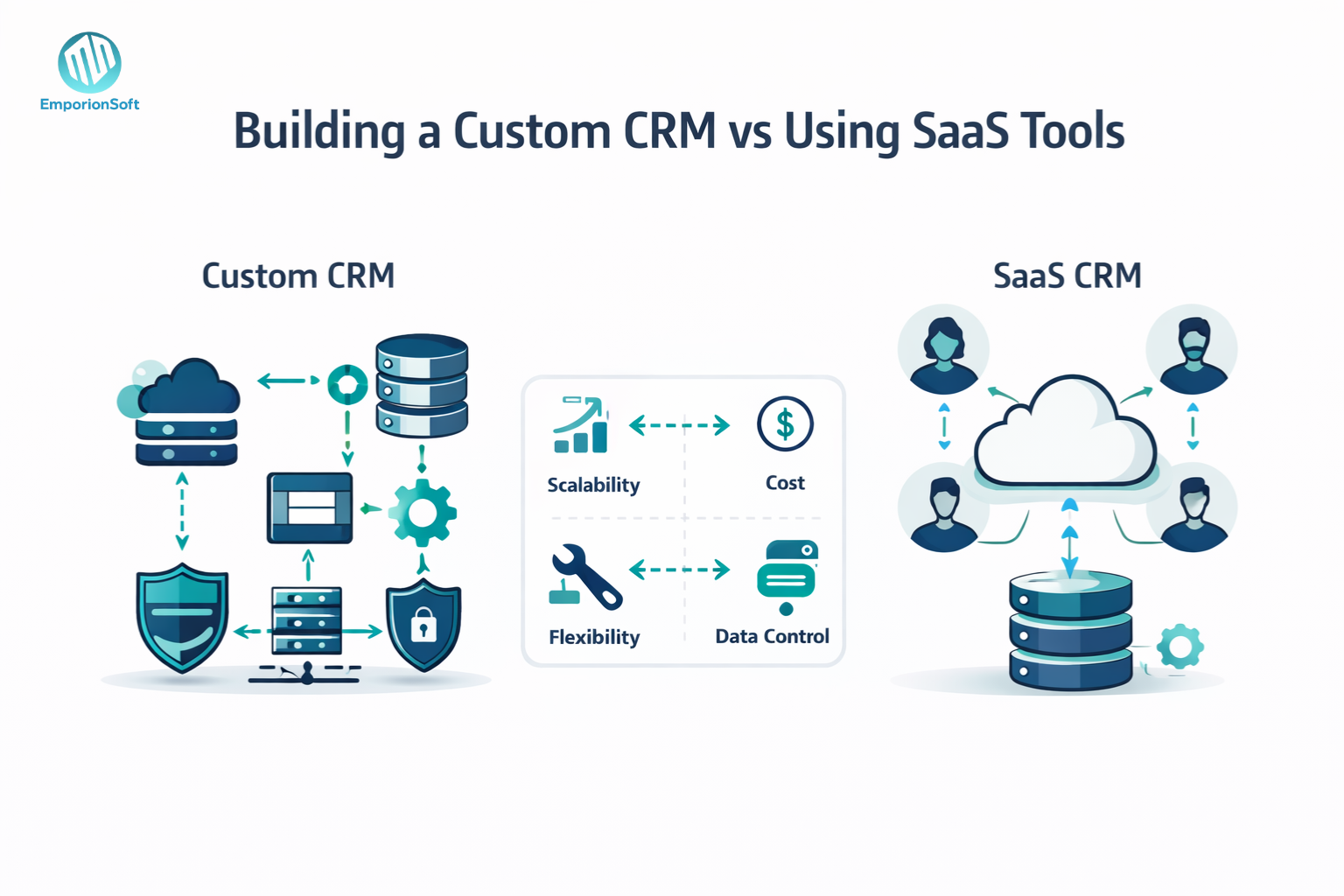
    Scalability also depends on how teams manage complexity. As systems grow, the number of test cases and dependencies increases. Without clear organisation, testing can become difficult to maintain. Structuring tests around system boundaries, such as services or modules, helps manage this complexity. Architectural decisions, including those discussed in custom software versus SaaS approaches, influence how easily testing can be integrated and scaled.

    Communication is another critical factor. Early testing requires close collaboration between stakeholders. Product teams must clearly define requirements, developers must understand validation criteria, and QA teams must provide feedback early in the process. Regular alignment sessions and shared documentation help ensure that testing efforts are consistent and effective.

    It is also important to define clear metrics. Without measurement, it is difficult to assess the effectiveness of a shift-left strategy. Metrics such as defect detection rate, test coverage, and cycle time provide insight into how well early testing is performing. These indicators help teams refine their approach and identify areas for improvement.

    Shift left testing best practices emphasise prevention over detection. The objective is not only to find defects early but to reduce the likelihood of defects being introduced. This includes practices such as code reviews, static analysis, and design validation. By focusing on prevention, teams can improve overall system quality while reducing the need for extensive rework.

    Finally, scalability requires adaptability. Different teams and projects may require different testing approaches. A rigid framework can limit effectiveness. Instead, organisations should provide guiding principles and allow teams to adapt them based on context. This ensures that the strategy remains relevant as systems and requirements evolve.

    Designing a scalable shift-left testing strategy is therefore a balance between structure and flexibility. It requires alignment across people, processes, and technology. When implemented effectively, it enables organisations to improve quality, reduce defects, and maintain efficiency as they grow.

    Frameworks and Models for Continuous Testing Across the SDLC

    Continuous testing is a core enabler of shift-left practices. It ensures that validation is not confined to a single phase but distributed across the entire software development lifecycle. To implement this effectively, teams rely on structured frameworks and models that define how, when, and where testing should occur.

    One of the most widely adopted models is the test pyramid. It provides a clear structure for balancing different types of tests across the system. At the base are unit tests, which validate individual components in isolation. These tests are fast, inexpensive, and executed frequently. Above them are integration tests, which verify interactions between components. At the top are end-to-end tests, which simulate real user scenarios. The pyramid emphasises a higher volume of lower-level tests, ensuring early detection of issues. This approach is well explained in the test pyramid model, where the focus is on efficiency and feedback speed.

    The value of this structure lies in its alignment with early testing. Unit and integration tests can be executed during development, allowing teams to identify defects before they propagate. This directly supports continuous testing benefits by reducing reliance on late-stage validation. When implemented correctly, the pyramid helps maintain a balance between coverage and execution time, preventing bottlenecks in the pipeline.

    Continuous integration systems play a central role in operationalising these frameworks. Every code change triggers automated tests, providing immediate feedback to developers. This ensures that issues are identified as soon as they are introduced. Platforms and practices described in continuous integration workflows highlight how automated testing becomes part of the development process rather than a separate activity.

    Automation is essential for sustaining continuous testing at scale. Manual testing alone cannot keep pace with frequent code changes. Tools such as Selenium enable automated validation of user interfaces and workflows, while other frameworks support API and performance testing. However, automation should be guided by strategy. Not all tests need to be automated, and over-automation can introduce maintenance overhead. The focus should remain on high-value tests that provide reliable insights.

    Another important framework is the concept of testing across SDLC phases. Instead of concentrating testing at the end, validation is distributed across requirements, design, development, and deployment stages. During requirements, teams define acceptance criteria and identify potential edge cases. During design, architectural decisions are reviewed for testability. During development, unit and integration tests are executed. During deployment, automated regression and performance tests ensure system stability.

    This layered approach supports testing lifecycle optimisation by ensuring that each stage contributes to overall quality. It also reduces the burden on any single phase, particularly final testing stages, which are often constrained by time. By distributing effort, teams can maintain consistency and avoid last-minute bottlenecks.

    In DevOps environments, continuous testing is tightly integrated with CI CD pipelines. Testing in CI CD pipelines ensures that every change is validated before it progresses to the next stage. This includes automated builds, test execution, and reporting. When tests fail, feedback is immediate, allowing developers to address issues before they accumulate. This integration is critical for maintaining fast and reliable release cycles.

    The role of automated testing in early stages is particularly important. Automated unit tests validate logic as it is written, while integration tests ensure that components interact correctly. These tests provide a safety net that allows teams to make changes with confidence. Over time, this reduces the risk of introducing regressions and supports continuous delivery.

    It is also important to consider the balance between different types of testing. While automation is effective for functional validation, exploratory testing remains valuable for identifying edge cases and usability issues. A comprehensive approach combines automated and manual methods, ensuring both efficiency and depth of validation.

    Frameworks for continuous testing are not static. They evolve as systems and requirements change. Teams must regularly review their testing strategies to ensure alignment with current needs. This includes evaluating test coverage, execution times, and failure rates. Continuous improvement is essential for maintaining effectiveness.

    Ultimately, frameworks and models provide structure, but their value depends on implementation. When applied thoughtfully, they enable teams to integrate testing into every stage of development, supporting early detection, reducing defects, and improving overall system quality.


    Execution Layer: Embedding QA into CI CD and Development Workflows

    Designing a shift-left strategy and selecting the right frameworks is only part of the equation. The real impact is realised at the execution layer, where testing becomes embedded into daily development workflows and CI CD pipelines. This is where theory translates into repeatable, operational practice.

    At a practical level, integrating testing into the development lifecycle begins with how code is written and committed. Developers are expected to include unit tests alongside their code, ensuring that basic functionality is validated before integration. This approach shifts responsibility closer to the point of creation, reducing the likelihood of defects progressing further into the system.

    Once code is committed, CI pipelines act as the first enforcement layer. Tools such as GitHub Actions enable automated workflows where every commit triggers a sequence of checks. These typically include build validation, unit test execution, and static code analysis. If any of these steps fail, the pipeline halts, preventing unstable code from moving forward. This immediate feedback loop is central to continuous testing in software development.

    Integration testing is then applied as part of the same pipeline. As services or modules interact, automated tests verify that these interactions behave as expected. In more complex systems, this may include API testing, contract testing, and environment-specific validations. Platforms like GitLab CI CD provide structured environments where these stages can be defined and executed consistently.

    A key principle at this stage is consistency. Testing workflows must be standardised across teams to ensure predictable outcomes. Without this, different teams may apply testing unevenly, leading to gaps in coverage. Standardisation does not mean rigidity, but it does require shared guidelines on what constitutes sufficient validation before code progresses through the pipeline.

    Another important aspect is test execution speed. For CI CD pipelines to remain effective, tests must provide fast feedback. Long-running test suites can slow down development and discourage frequent commits. To address this, teams often prioritise faster tests, such as unit and lightweight integration tests, within the main pipeline, while reserving more extensive tests for later stages or parallel execution. This balance supports both speed and reliability.

    Automation extends beyond functional testing. Static analysis tools, security scans, and performance checks can also be integrated into pipelines. This aligns with broader DevSecOps practices, where validation is applied across multiple dimensions of quality. Insights from DevSecOps implementation approaches highlight how embedding these checks early reduces risk without introducing delays.

    Embedding QA into workflows also requires clear ownership. While automation handles execution, teams must define who is responsible for maintaining test quality. Developers typically own unit tests, QA engineers focus on broader validation strategies, and platform teams ensure that pipelines remain stable and scalable. This distribution of responsibility ensures that testing remains integrated without becoming fragmented.

    Real-world execution often includes additional layers such as staging environments and pre-release validation. After passing initial pipeline checks, code may be deployed to staging environments where more comprehensive tests are executed. These can include end-to-end scenarios, performance testing, and user acceptance validation. The goal is to ensure that the system behaves correctly under conditions that closely resemble production.

    Visibility is another critical factor. Teams need clear insights into test results, failure patterns, and system health. Dashboards, logs, and reporting tools provide this visibility, enabling faster diagnosis and resolution of issues. Without it, even well-designed pipelines can become difficult to manage.

    From an organisational perspective, embedding QA into workflows supports a shift in mindset. Testing is no longer a gate at the end of the process but a continuous activity that runs alongside development. This reduces friction between teams and aligns efforts towards a common goal of delivering stable, high-quality software.

    The execution layer ultimately determines whether shift-left testing succeeds or fails. Strategies and frameworks provide direction, but consistent implementation ensures results. When testing is fully integrated into CI CD pipelines and development workflows, organisations can maintain rapid delivery cycles without compromising on quality.

    This integration is what allows teams to move from reactive defect fixing to proactive quality assurance, creating a more efficient and resilient software delivery system.

    From Cost Centre to Strategic Lever: Reframing QA for Long-Term ROI

    Quality assurance has traditionally been positioned as a cost centre. It is often viewed as a necessary function that adds overhead to development rather than as a driver of value. This perception is shaped by late-stage testing models, where QA appears as a bottleneck rather than an enabler. Shift-left testing challenges this view by repositioning QA as a strategic lever for long-term return on investment.

    The key to this shift lies in understanding how early bug detection ROI accumulates over time. When defects are identified and resolved early, organisations reduce rework, stabilise delivery cycles, and improve predictability. These outcomes translate into measurable financial benefits. Reduced engineering effort, fewer production incidents, and shorter release cycles all contribute to cost reduction in software projects.

    However, the value of QA extends beyond direct cost savings. Early testing improves development efficiency by enabling teams to work with greater confidence. When validation is embedded into the process, developers spend less time debugging and more time building new capabilities. This shift increases throughput without compromising quality. Over time, this becomes a competitive advantage, particularly for organisations operating in fast-moving markets.

    Another important dimension is decision-making. When testing is integrated early, it provides continuous feedback on system behaviour and design assumptions. This allows product and engineering teams to make informed decisions before complexity increases. Instead of reacting to issues late in the lifecycle, teams can adjust direction early, reducing the risk of costly pivots. This aligns with broader approaches to strategic technology planning, such as those explored in technology ROI evaluation frameworks, where early insight supports better investment decisions.

    Quality assurance also plays a critical role in scalability. As systems grow, the cost of maintaining stability increases. Without structured testing, this cost can escalate rapidly, limiting the organisation’s ability to scale. By contrast, continuous testing provides a foundation for sustainable growth. It ensures that systems remain reliable as new features are introduced, reducing the likelihood of performance degradation or system failures.

    From a risk management perspective, early testing reduces exposure across multiple areas. Security vulnerabilities, compliance gaps, and performance issues are identified before they impact users. This proactive approach minimises the likelihood of incidents that can damage reputation or lead to regulatory consequences. It also reduces the operational burden associated with emergency fixes and incident response.

    The shift in perspective also affects how teams measure success. Instead of focusing solely on output, such as the number of features delivered, organisations begin to prioritise outcomes. These include system reliability, user satisfaction, and long-term maintainability. Testing ROI in agile development is therefore not just about efficiency, but about delivering consistent value over time.

    Reframing QA as a strategic function requires alignment at both technical and organisational levels. Leadership must recognise the long-term benefits of early testing and support the necessary changes in process and tooling. Teams must adopt practices that integrate validation into their workflows, ensuring that quality is maintained without slowing down delivery.

    For startups and SMEs, this shift is particularly important. Limited resources mean that inefficiencies have a greater impact. Investing in early testing allows these organisations to maximise the value of their development efforts while avoiding the costs associated with late-stage defects. It also supports more predictable growth, as systems remain stable and scalable.

    In practice, this transformation often begins with targeted improvements. Introducing early validation in critical areas, improving test automation, and aligning teams around shared quality goals can create immediate impact. Over time, these changes build a foundation for a more mature and efficient development process.

    Organisations looking to formalise this approach can benefit from structured guidance and external perspective. Engaging with experienced teams through a focused software consultation can help identify gaps, define priorities, and implement strategies that align with business objectives.

    Ultimately, repositioning QA from a cost centre to a strategic lever is about recognising its role in enabling better outcomes. It is not an additional layer of effort, but a mechanism for improving efficiency, reducing risk, and supporting long-term growth. When integrated effectively, quality assurance becomes a core component of how successful software organisations operate.

  • Next.js 16 Build Performance: Turbopack and E-commerce Speed

    Next.js 16 Build Performance: Turbopack and E-commerce Speed

    The Build Performance Bottleneck in Modern E-commerce Platforms

    Modern e commerce platforms operate under constant change. Product catalogues expand, marketing campaigns evolve, and customer expectations continue to rise. For engineering teams, this means continuous deployments, frequent updates to storefront pages, and ongoing optimisation of performance and user experience. In this environment, build performance has quietly become one of the most critical constraints in the software delivery pipeline.

    Many organisations focus heavily on frontend frameworks, hosting infrastructure, and cloud scalability. Yet the speed at which a platform can compile, build, and deploy new code often determines how quickly teams can respond to business needs. When builds become slow, the development cycle slows with them. This delay affects experimentation, feature delivery, and ultimately the pace of innovation.

    For high growth commerce businesses, build performance directly influences operational agility. Teams must regularly deploy new product pages, update pricing logic, integrate marketing scripts, and optimise performance metrics. When builds take fifteen or twenty minutes, every small change becomes expensive in time and coordination. Over weeks and months, these delays accumulate into a measurable productivity cost.

    This is where the conversation around Next.js 16 build performance becomes increasingly relevant. Modern frameworks are no longer judged only by their developer ergonomics or ecosystem maturity. They are evaluated based on how effectively they support rapid iteration at scale.

    A typical e commerce platform may generate hundreds or thousands of pages during the build process. Product listings, category pages, promotional landing pages, and internationalised content all contribute to the final output. Many of these pages rely on static page generation, which pre builds content to deliver extremely fast user experiences in production environments.

    Static generation is widely used because it improves reliability and reduces server load. By pre rendering pages at build time, platforms can deliver content through edge networks and content delivery systems with minimal latency. This approach plays an important role in modern web architectures and helps organisations achieve stable performance under heavy traffic.

    However, the benefits of static generation come with a technical trade off. As the number of generated pages increases, build pipelines become more demanding. Large catalogues and content heavy platforms can generate thousands of static pages during each deployment cycle. Without efficient build tooling, these processes can significantly slow down development workflows.

    This challenge is not theoretical. Engineering teams frequently encounter build pipelines that take longer to run than the actual coding work required for a feature. As deployments become slower, developers begin batching changes together to avoid repeated build delays. This behaviour reduces the frequency of releases and introduces larger sets of untested changes into production.

    Over time, the build pipeline itself becomes a hidden operational bottleneck. While customer facing performance may remain strong, internal development velocity declines. This creates friction between product teams, marketing teams, and engineering leadership.

    The broader impact extends beyond development teams. When build cycles slow down, businesses lose the ability to experiment quickly with user experience improvements. A change to product page layout or checkout optimisation may take hours to deploy instead of minutes. In competitive markets, this delay can reduce the speed at which companies learn from customer behaviour.

    Modern technology leaders increasingly recognise that build performance is not simply a technical concern. It is an operational capability that affects product iteration and business growth. Engineering leaders often address these issues as part of broader architecture improvements and technical debt reduction strategies discussed in resources such as Technical Debt Explained: Identify, Manage, and Eliminate.

    Framework innovation is therefore shifting towards faster build systems and more efficient compilation models. Tools like Turbopack represent a new generation of build infrastructure designed to reduce the time required to compile large applications.

    Understanding why these tools matter requires examining how modern frameworks compile and bundle applications. The architecture behind these systems plays a critical role in determining how quickly teams can move from code to production.

    For technology leaders and founders evaluating modern development stacks, this shift has strategic implications. Faster builds mean faster experimentation, quicker deployments, and more responsive engineering teams. As commerce platforms continue to scale, the performance of the build pipeline itself becomes a fundamental part of digital infrastructure.

    The release of Next.js 16 represents an important step in this direction. By focusing on improvements in compilation speed and developer workflow efficiency, the framework aims to address a long standing bottleneck that many engineering teams have learned to accept as unavoidable.

    To understand how these improvements work in practice, it is necessary to look more closely at the architecture behind Turbopack and how it changes the compilation model used in modern web applications.

    What Changed in Next.js 16: Understanding Turbopack’s Compilation Architecture

    Modern web frameworks evolve quickly, but most improvements focus on developer experience, routing systems, or rendering strategies. With the release of Next.js 16, the most significant shift occurs deeper in the build system itself. The framework introduces a more mature implementation of Turbopack, a new generation compilation engine designed to improve Next.js 16 build performance at scale.

    To understand the importance of this change, it is helpful to consider how traditional build systems work. For many years, JavaScript applications relied heavily on Webpack. Webpack bundles application modules together, processes dependencies, and prepares code for production environments. While Webpack remains extremely capable, its architecture was designed for an earlier era of web development when application sizes were significantly smaller.

    Today’s applications are dramatically larger. Modern commerce platforms often contain thousands of modules, complex dependency graphs, and extensive client side functionality. As a result, traditional bundlers must process enormous module trees during each build cycle. Even with caching mechanisms, this process can become computationally expensive.

    This is where Turbopack introduces a different approach. Rather than extending older bundling concepts, Turbopack was designed from the beginning to optimise large scale applications. The system is built using Rust, a programming language known for high performance and memory safety. Rust enables Turbopack to perform many operations faster than typical JavaScript based build tools.

    According to the architecture documentation provided by the Next.js team at Next.js Turbopack Architecture Overview, the system focuses on incremental computation. Instead of rebuilding entire module graphs whenever a change occurs, Turbopack recalculates only the specific parts of the dependency tree that are affected. This dramatically reduces unnecessary work during development and production builds.

    Another important characteristic is parallel processing. Modern development machines contain multiple CPU cores, yet older bundlers often struggle to utilise them effectively. Turbopack is designed to distribute compilation tasks across available cores, which improves overall Turbopack compilation speed when processing large codebases.

    This architectural shift becomes particularly valuable for large e commerce platforms. Consider a storefront that includes product catalogues, recommendation systems, localisation features, analytics scripts, and marketing integrations. Each component introduces additional dependencies and build steps. Over time, the complexity of the module graph increases.

    Traditional bundlers process these dependencies sequentially or with limited concurrency. Turbopack approaches the problem differently by analysing the dependency graph and processing independent modules simultaneously. This allows the system to compile large applications more efficiently without sacrificing build accuracy.

    Another improvement involves persistent caching. Turbopack stores intermediate computation results so that repeated operations do not need to be executed again. When developers update a single component, the build system can reuse previously calculated results for the rest of the application. This optimisation helps maintain fast iteration cycles during development.

    The implications for Next.js 16 build performance are substantial. Faster compilation reduces the time required to test features, validate user interface changes, and deploy updates. Development teams can push smaller incremental changes rather than waiting to batch updates together.

    This improvement also supports more effective experimentation. E commerce platforms often rely on A B testing to optimise checkout flows, product page layouts, and recommendation algorithms. When the build pipeline is slow, teams hesitate to deploy frequent experiments. Faster compilation lowers the cost of iteration and encourages continuous improvement.

    From an architectural perspective, the introduction of Turbopack aligns with broader trends in modern software engineering. Frameworks increasingly prioritise developer velocity alongside runtime performance. Efficient build systems allow teams to move quickly without sacrificing reliability or code quality.

    This focus on developer efficiency also intersects with broader architecture strategies discussed in resources such as Enterprise Architecture Patterns, where build infrastructure is treated as a critical component of system scalability.

    It is important to note that Turbopack does not eliminate all build complexity. Applications still require thoughtful structure, modular architecture, and efficient dependency management. However, by improving the underlying compilation engine, Next.js 16 provides a more capable foundation for large scale web applications.

    The impact becomes even more visible when static generation enters the equation. Modern frameworks frequently generate hundreds or thousands of pages during the build process, particularly in content heavy or commerce focused applications. Understanding how static generation interacts with build pipelines is essential for evaluating the full performance implications of these new tools.

    This leads directly to the next architectural consideration. To fully appreciate the value of faster compilation systems, it is necessary to examine how static page generation has reshaped the way modern websites deliver performance and scalability.

    Static Page Generation and the Evolution of Modern Web Delivery

    Over the past decade, web application architecture has moved steadily toward hybrid rendering models. Instead of relying purely on server side rendering or fully client rendered applications, modern frameworks combine multiple delivery strategies. Among these approaches, static page generation has emerged as one of the most influential techniques for improving performance and scalability.

    To understand why this matters, it is useful to consider how content is delivered to users on the web. Traditionally, dynamic websites generate pages on demand. When a visitor opens a product page, the server queries a database, composes the page, and returns the final HTML response. While this approach allows real time updates, it also introduces latency and server load.

    Static generation takes a different path. Instead of generating pages when users request them, the pages are built in advance during the build process. The final HTML files are then stored and delivered directly through a content delivery network. This significantly reduces response time and infrastructure overhead.

    Modern frameworks such as Next.js integrate static generation directly into the development workflow. During the build phase, the system retrieves data from APIs, content management systems, or databases and produces fully rendered pages. These pages can then be distributed globally using edge networks.

    For high traffic applications, this model offers substantial advantages. Static pages require no server computation when users access them. The result is extremely fast page delivery and improved reliability during traffic spikes. For e commerce platforms with large audiences, this architecture helps maintain consistent performance even during peak shopping periods.

    However, static generation also introduces a dependency on the build pipeline. If thousands of pages must be generated during each deployment, the build system must process large volumes of content efficiently. Without an optimised build process, the time required to generate these pages can become a limiting factor.

    This is where Next.js 16 build performance becomes particularly important. When frameworks improve compilation speed, they reduce the time required to generate static pages. For applications with large catalogues or extensive content libraries, this improvement can significantly shorten deployment cycles.

    Understanding the role of static generation also requires examining the broader category of static site tools. Many developers explore the concept through basic tools described in resources such as Static Site Generation in Next.js. These tools demonstrate how a static page generator can transform data sources into fully rendered pages.

    In practice, the idea extends far beyond simple websites. Large commerce platforms often rely on static generation for product detail pages, category listings, landing pages, and blog content. Each page is pre rendered with relevant product information, pricing data, and search optimisation elements.

    This architecture allows companies to deliver content quickly while maintaining strong search visibility. Static pages load rapidly because they require minimal runtime processing. As a result, users experience faster page loads and smoother browsing behaviour.

    From a development perspective, static generation also improves reliability. By generating pages during the build phase, teams can detect errors before deployment rather than discovering them during live user sessions. This approach supports more stable production environments.

    Yet the relationship between static generation and build performance remains closely connected. If the build pipeline is slow, generating thousands of pages can take significant time. In large projects, builds may extend well beyond acceptable deployment windows.

    This challenge becomes more visible when engineering teams attempt to scale content operations. Marketing teams may want to publish new landing pages quickly, launch regional campaigns, or adjust product descriptions in response to demand. Each change requires a rebuild of the application.

    Without efficient build infrastructure, these updates may take longer to deploy than expected. Over time, the delay reduces the responsiveness of the business. Faster build pipelines help organisations maintain agility as their digital platforms grow.

    This is why improvements in Turbopack compilation speed are increasingly relevant for organisations building content heavy applications. Faster compilation allows static generation to scale more effectively without slowing development cycles.

    Static page generation therefore represents a key piece of the modern web delivery model. It enables fast user experiences and strong reliability, but it also increases reliance on efficient build systems.

    As web performance continues to influence search visibility and user behaviour, the relationship between build speed and site performance becomes even more important. In the next section, we will examine how improvements in build performance influence Core Web Vitals SEO metrics, and why this connection matters for e commerce platforms competing in increasingly performance driven search environments.

    Why Build Speed Directly Influences Core Web Vitals and SEO in 2026

    Search visibility and user experience are now closely tied to measurable performance signals. Over the past few years, Google has made it clear that technical performance is not simply a developer concern. It is a ranking factor that directly influences how websites appear in search results. As we move further into 2026, the relationship between build infrastructure and search performance has become increasingly visible.

    Many organisations associate search optimisation with content strategy, backlinks, or metadata. While those factors remain important, technical performance has gained equal significance. Metrics such as loading speed, layout stability, and interaction responsiveness are now captured under Google’s Core Web Vitals framework. Detailed documentation about these metrics can be found in the official performance guidelines provided at Core Web Vitals documentation.

    For e commerce platforms, these metrics are particularly important. Product discovery, browsing speed, and checkout performance all influence user behaviour. If pages load slowly or interface elements shift during interaction, users quickly abandon the experience. Search engines monitor these signals and use them to evaluate the quality of the site.

    At first glance, build speed may appear unrelated to these metrics. Core Web Vitals measure runtime performance rather than development workflows. However, the connection becomes clearer when considering how modern platforms evolve and deploy updates.

    Web performance improvements rarely occur in a single release. Instead, engineering teams continuously refine page structure, optimise assets, improve caching strategies, and experiment with different rendering approaches. Each improvement requires testing, building, and deploying updated code.

    If the build pipeline is slow, these improvements take longer to reach production. A performance optimisation that could improve loading speed might remain stuck in a deployment queue simply because the build process requires significant time to complete. Faster builds shorten this feedback loop and allow teams to iterate more rapidly.

    This is where Next.js 16 build performance begins to influence search outcomes indirectly. When frameworks allow faster compilation and deployment, developers can deliver performance improvements more frequently. This accelerates the pace of optimisation and helps organisations maintain strong Core Web Vitals scores.

    The relationship becomes even more significant in content driven e commerce environments. Many platforms generate thousands of pages for product listings, promotional campaigns, and regional content variations. Each of these pages contributes to search visibility.

    Static generation allows these pages to load extremely quickly once deployed, but the build pipeline must generate them first. When build systems struggle to process large page volumes, teams become cautious about making frequent updates. Marketing teams may delay campaign launches or reduce the number of landing pages created.

    Faster compilation changes this dynamic. With improved Turbopack compilation speed, the time required to generate large sets of static pages decreases. This allows organisations to deploy updates quickly without disrupting development workflows.

    The impact extends to experimentation as well. E commerce optimisation frequently relies on A B testing. Teams experiment with different layouts, product recommendation strategies, and checkout flows to identify improvements in conversion rates. Each experiment requires changes to frontend code and deployment of new builds.

    When build times are slow, teams often bundle multiple experiments into a single release cycle. This reduces the clarity of test results and slows learning cycles. Faster build pipelines allow smaller, more controlled experiments that produce clearer data.

    The commercial impact becomes measurable over time. Faster deployment cycles allow organisations to identify performance improvements earlier and refine user experience more frequently. These improvements translate into better search visibility, lower bounce rates, and stronger engagement metrics.

    From a business perspective, this relationship reinforces the idea that engineering infrastructure influences digital competitiveness. Build performance is no longer just an internal productivity metric. It contributes indirectly to SEO performance and revenue growth.

    Technology leaders increasingly analyse performance outcomes through broader return on investment frameworks. Understanding how engineering decisions influence measurable outcomes is discussed in detail in resources such as Technology ROI Metrics for Digital Platforms.

    The lesson for organisations building modern commerce platforms is clear. Infrastructure decisions affect far more than development workflows. They shape how quickly teams can optimise user experience and adapt to changes in search algorithms.

    As web applications grow larger and more complex, build pipelines become critical infrastructure components. When these systems become slow or inefficient, they introduce hidden friction that affects every stage of product development.

    The next challenge is recognising the operational risks that emerge when build pipelines are neglected. Many engineering teams underestimate these risks until performance issues begin to affect deployment cycles and release management. Understanding these hidden constraints is essential for organisations that rely on rapid iteration in competitive digital markets.

    Hidden Operational Risks of Slow Build Pipelines in E-commerce Engineering

    Build performance is often treated as a developer convenience rather than an operational priority. In reality, slow build pipelines introduce a range of hidden risks that affect engineering productivity, product delivery, and long term platform stability. For organisations running large digital commerce systems, these risks can accumulate quietly until they begin to impact business outcomes.

    Many engineering teams first notice the problem when build times gradually increase as the codebase grows. Early in a project, a build may complete within a few minutes. As new features are added and dependencies expand, compilation times begin to stretch. Eventually, build pipelines take fifteen, twenty, or even thirty minutes to complete.

    At that stage, development workflows begin to change. Engineers start batching multiple code changes together to avoid triggering repeated builds. While this behaviour reduces immediate waiting time, it introduces a different problem. Larger releases contain more changes, which increases the difficulty of identifying bugs and isolating issues during deployment.

    This shift can quietly undermine the stability of a platform. Instead of releasing small, incremental improvements, teams release large packages of code that are harder to validate. When errors appear in production, rollback procedures become more complicated and debugging requires additional time.

    From an organisational perspective, this situation slows the pace of innovation. Product managers may hesitate to request small improvements because each deployment carries operational overhead. Marketing teams may delay campaign changes because technical updates cannot be deployed quickly enough.

    In this context, improving Next.js 16 build performance becomes more than a developer convenience. Faster compilation reduces friction throughout the product lifecycle. Smaller releases become practical again, which improves testing accuracy and reduces the risk of unexpected production issues.

    Another operational risk relates to developer morale and productivity. Long build times interrupt the natural rhythm of development. Engineers often switch tasks while waiting for builds to complete, which breaks concentration and increases context switching. Over time, this inefficiency reduces the amount of meaningful work completed during each development cycle.

    Engineering teams sometimes attempt to compensate for this delay by investing in more powerful build servers or distributed build infrastructure. While additional resources can reduce some bottlenecks, they rarely solve the underlying architectural limitations of older build systems. A more sustainable solution involves improving the compilation process itself.

    This is one of the reasons Turbopack has received significant attention within the Next.js ecosystem. By improving Turbopack compilation speed, the framework addresses build performance directly rather than relying solely on infrastructure scaling. Faster compilation allows teams to maintain short feedback loops even as applications grow larger.

    Build performance also intersects with technical debt management. As software systems evolve, unused dependencies, outdated packages, and inefficient build configurations accumulate within the project. These factors gradually increase compilation complexity and contribute to longer build times.

    Addressing these issues requires ongoing architectural maintenance. Engineering leaders often incorporate build optimisation into broader technical debt reduction strategies, similar to those outlined in resources such as Technical Debt Explained: Identify, Manage, and Eliminate. By regularly evaluating build pipelines and dependency structures, teams can prevent performance degradation before it becomes severe.

    Security and compliance processes also depend on efficient build pipelines. Many organisations integrate automated testing, vulnerability scanning, and deployment validation into their CI/CD systems. If builds are slow, these processes take longer to complete, which delays the delivery of security updates and bug fixes.

    This delay can have real consequences for e commerce platforms. Security patches must be deployed quickly to protect customer data and maintain compliance with regulatory frameworks. Slow build pipelines extend the window between identifying a vulnerability and deploying the fix.

    Another operational challenge emerges when organisations scale their engineering teams. As more developers contribute to the same codebase, build pipelines must support increased activity. Frequent pull requests, automated tests, and preview deployments all place additional pressure on the build system.

    Without efficient compilation processes, these pipelines become congested. Developers may experience long queues for build resources, slowing the entire development workflow. Faster build architectures help maintain stability even as teams grow and release cycles accelerate.

    These operational risks demonstrate that build performance should be considered part of core platform infrastructure. It influences engineering velocity, deployment safety, and the ability to respond quickly to market opportunities.

    For technology leaders, addressing these risks often involves broader architectural decisions. Framework selection, build tooling, and system design all influence the long term efficiency of development pipelines. Understanding these architectural trade offs is essential when designing high performance commerce platforms that must scale with business growth.

    Strategic Architecture Decisions for High-Performance Next.js Commerce Platforms

    Build performance improvements such as those introduced in Next.js 16 rarely deliver their full value in isolation. Framework upgrades provide powerful tools, but architecture decisions determine how effectively those tools can be used. For organisations operating large e commerce platforms, the structure of the application has a direct influence on Next.js 16 build performance and long term scalability.

    Modern commerce systems rarely operate as monolithic applications. Instead, they are increasingly built using modular architectures that separate storefront presentation from backend business logic. This approach is often described as headless commerce, where the frontend layer communicates with services through APIs rather than tightly coupled server templates.

    In this model, the frontend application becomes responsible for assembling user experiences using data retrieved from multiple sources. Product catalogues may come from a commerce engine, pricing logic from a backend service, inventory data from a logistics system, and marketing content from a content management platform. Each service exposes APIs that the frontend can access during build time or runtime.

    For platforms built with Next.js, this architecture creates opportunities to combine API driven data access with static page generation. Product pages, category pages, and landing pages can be pre rendered during the build process while still retrieving dynamic data from backend services. The result is a hybrid model that balances performance with flexibility.

    However, this flexibility also introduces complexity. Each external service adds dependencies that must be processed during builds. When thousands of pages rely on multiple APIs, the build pipeline must orchestrate large volumes of data retrieval and compilation tasks. Without efficient architecture design, the system may struggle to maintain fast build cycles.

    One strategy for addressing this challenge involves modularising the frontend codebase. Instead of allowing the application to grow as a single tightly coupled project, teams can organise functionality into well defined modules. Each module contains its own components, services, and dependencies. This structure reduces the risk of large interconnected dependency graphs that slow down compilation.

    Efficient module boundaries also support better caching during builds. When Turbopack processes a modular architecture, it can reuse cached results for modules that have not changed. This allows the system to focus computation on the parts of the application that actually require rebuilding, improving Turbopack compilation speed across large projects.

    API design is another important architectural consideration. Frontend build processes often rely on external APIs to fetch data for static generation. If these APIs are slow or poorly structured, build pipelines may spend unnecessary time waiting for data retrieval. Designing efficient API endpoints helps ensure that the build process remains predictable and stable.

    The broader relationship between API architecture and scalable frontend systems is explored in discussions such as Designing Scalable APIs for SaaS Platforms, which emphasise the importance of clear service boundaries and efficient data access patterns.

    Infrastructure strategy also plays a role. Many commerce platforms operate in hybrid cloud environments that combine managed services with custom infrastructure components. Cloud platforms provide the computational resources required for large builds, but architecture design determines how efficiently those resources are used.

    For example, separating content generation pipelines from transactional systems can reduce unnecessary dependencies during builds. Product content, marketing pages, and editorial materials can often be generated independently from checkout or payment systems. This separation allows build pipelines to remain focused on rendering content rather than interacting with operational systems.

    Architectural patterns also influence how easily teams can adopt new build technologies. Organisations that maintain clear separation between frontend and backend layers find it easier to upgrade frameworks or replace build tooling. In contrast, tightly coupled systems often require extensive refactoring before adopting newer technologies.

    These considerations highlight the importance of long term architecture planning. Decisions about modularisation, API design, and infrastructure structure determine whether frameworks like Next.js 16 can deliver their intended performance improvements.

    Many organisations evaluate these trade offs through structured architecture frameworks that guide platform design decisions. Resources such as Enterprise Architecture Patterns outline approaches for building scalable systems that remain adaptable as technologies evolve.

    For engineering leaders, the key takeaway is that build performance does not depend solely on the framework itself. It emerges from the interaction between tools, architecture, and development practices. When these elements align, modern frameworks can support rapid iteration even as applications grow in complexity.

    Understanding these architectural foundations also prepares organisations for the next stage of adoption. Implementing new build systems and migrating existing applications requires careful planning to avoid disruption. A structured migration path helps teams move toward faster build pipelines without compromising system stability.

    Implementation Path: Migrating Existing Stores to Next.js 16 and Turbopack

    Adopting a new build architecture rarely begins with a complete system rewrite. Most organisations operate existing commerce platforms with active customers, integrated services, and continuous development cycles. For these teams, improving Next.js 16 build performance requires a structured migration strategy that reduces risk while delivering measurable improvements.

    The first step involves evaluating the current build environment. Engineering teams should begin by measuring baseline performance. This includes tracking build duration, module compilation times, dependency graph size, and static generation workloads. These metrics provide a clear understanding of where bottlenecks exist in the pipeline.

    Without this baseline, it becomes difficult to determine whether architectural changes produce meaningful results. Monitoring tools and CI/CD analytics platforms can help identify which stages of the build process consume the most time. Some projects discover that dependency resolution is the primary bottleneck, while others find that static page generation is responsible for the majority of build time.

    Once the current build pipeline is understood, the next stage involves reviewing framework compatibility. Many applications built on earlier versions of Next.js already support migration paths to newer architectures. Reviewing the official documentation provided by the framework maintainers, such as the technical guidance available in the Next.js build architecture documentation, helps teams understand how Turbopack integrates into the existing development workflow.

    During this stage, teams typically conduct a controlled test environment migration rather than modifying the main production pipeline immediately. A staging branch can be configured to run builds using Turbopack while the existing system continues to operate with the current bundler. This parallel testing approach allows engineers to compare build results without disrupting production workflows.

    When migrating large commerce platforms, dependency structure often requires attention. Over time, applications accumulate unused packages, outdated libraries, and duplicated modules. Cleaning these dependencies before migration helps ensure that the new build system operates efficiently. Reducing unnecessary dependencies also decreases compilation overhead.

    Another important step involves reviewing static generation patterns. Applications that generate thousands of product pages during builds must ensure that data retrieval processes are efficient. APIs used during static generation should provide fast responses and predictable data structures. If APIs are slow or inconsistent, the build pipeline may still experience delays even with improved compilation technology.

    Engineering teams frequently combine this optimisation process with structured testing frameworks. Controlled rollout strategies, similar to those described in resources such as The Beta Testing Guide for Software Teams, allow organisations to validate new infrastructure without exposing production users to unexpected issues.

    CI/CD pipelines also require configuration updates during migration. Continuous integration systems must support the new build architecture and ensure that preview deployments, automated tests, and security checks remain functional. This stage may involve updating build scripts, adjusting caching mechanisms, and configuring new build environments.

    Once the new build pipeline is stable in testing environments, teams can gradually transition production workflows. Instead of migrating the entire application at once, many organisations begin with smaller feature branches or specific storefront modules. For example, marketing landing pages or blog sections can be migrated first before moving core commerce functionality.

    This phased approach reduces operational risk and allows teams to monitor real world performance improvements. As confidence in the new system grows, additional sections of the platform can be migrated until the full application benefits from the improved Turbopack compilation speed.

    Performance monitoring should continue after migration. Tracking build times, deployment frequency, and development workflow efficiency helps organisations confirm that the upgrade delivers the expected benefits. These metrics also help engineering leaders identify additional optimisation opportunities within the build pipeline.

    From an operational perspective, the goal of migration is not simply to adopt new tooling. The objective is to create a faster feedback loop between development and deployment. Faster build pipelines enable smaller releases, quicker experiments, and more responsive product improvements.

    For e commerce businesses operating in competitive digital markets, these improvements translate into measurable advantages. Teams can deploy enhancements more frequently, test performance optimisations quickly, and adapt to changing customer behaviour without long delays in the release cycle.

    As more organisations adopt frameworks that prioritise build efficiency, the performance of development infrastructure becomes an important competitive factor. Understanding this shift helps explain why build architecture is increasingly discussed alongside frontend performance and cloud scalability in modern platform strategy discussions.

    The Strategic Outlook: Build Performance as a Competitive Advantage in Digital Commerce

    Digital commerce has reached a stage where technical infrastructure influences business competitiveness as much as marketing strategy or product positioning. As platforms grow more complex and user expectations continue to rise, the speed at which engineering teams can deliver improvements becomes a defining capability. Within this environment, improvements in Next.js 16 build performance represent more than a framework upgrade. They reflect a broader shift toward development infrastructure that supports rapid experimentation and continuous optimisation.

    E commerce businesses operate in highly dynamic environments. Product catalogues evolve, seasonal campaigns launch frequently, and customer behaviour changes rapidly. Each of these changes requires updates to the digital storefront. Engineering teams must deploy interface adjustments, performance improvements, and new features without disrupting existing operations.

    Historically, development speed was limited primarily by coding effort and testing complexity. Today, another factor has become equally important: the speed of the build and deployment pipeline. When build systems take long periods to compile large applications, the entire product development cycle slows down. This delay affects not only engineers but also product managers, marketing teams, and data analysts who rely on rapid experimentation.

    Framework innovations such as Turbopack attempt to address this constraint by improving Turbopack compilation speed and reducing the time required to move from source code to deployable application. Faster builds enable teams to release smaller changes more frequently. Instead of bundling multiple updates into large releases, organisations can deploy incremental improvements with greater confidence.

    The impact of this capability becomes clearer when viewed through the lens of business outcomes. E commerce platforms rely heavily on continuous optimisation. Teams regularly experiment with product page layouts, pricing displays, recommendation algorithms, and checkout flows. Each experiment generates insights that help improve conversion rates.

    If the build pipeline slows down these experiments, the learning cycle becomes slower as well. Companies that can test and deploy improvements more rapidly gain an advantage over competitors that move more slowly. Faster build pipelines therefore support a culture of experimentation and data driven decision making.

    Another strategic benefit involves content scalability. Many commerce platforms now rely on static page generation to deliver product pages and marketing content quickly through global delivery networks. This architecture improves user experience and supports high traffic volumes. However, generating large volumes of static content during each deployment increases the workload placed on the build system.

    Frameworks that optimise build infrastructure allow this model to scale effectively. Organisations can generate thousands of pages while maintaining manageable deployment cycles. This capability becomes increasingly valuable as product catalogues expand and international markets introduce additional localisation requirements.

    Technology leaders are beginning to recognise that build infrastructure should be treated as a strategic asset rather than a background process. Just as cloud infrastructure enables scalability and reliability, build infrastructure enables development velocity. Both capabilities influence how quickly organisations can respond to market changes.

    Companies evaluating long term digital platform strategies often examine how development infrastructure supports growth. Discussions around architecture, scalability, and performance are frequently explored in broader technology strategy frameworks such as those shared by TheCodeV and its research on modern software platforms.

    For organisations building or modernising commerce systems, the practical implication is straightforward. Platform architecture should support both runtime performance and development efficiency. Improving build pipelines allows teams to iterate faster, deliver features more frequently, and maintain consistent quality across releases.

    This perspective aligns with the broader philosophy behind engineering consultancies that focus on long term digital capability rather than short term technical fixes. Organisations seeking guidance on architecture planning, performance optimisation, or scalable software systems often explore advisory resources such as those available through EmporionSoft and its consulting services for modern digital platforms.

    The evolution of frameworks like Next.js demonstrates that developer infrastructure continues to advance alongside frontend technologies and cloud platforms. Faster build systems, improved compilation engines, and more efficient deployment workflows will likely shape the next generation of web development practices.

    For engineering leaders, founders, and technology strategists, the key insight is that build performance is no longer a purely technical concern. It influences how quickly teams learn from customer behaviour, how rapidly new features reach users, and how effectively organisations compete in fast moving digital markets.

    As web platforms continue to expand in complexity and scale, the organisations that prioritise efficient development infrastructure will be better positioned to innovate. Improvements in build performance may begin as engineering upgrades, but over time they become essential components of a competitive digital strategy.

  • Accessibility-First UX Design for Scalable SaaS Platforms

    Accessibility-First UX Design for Scalable SaaS Platforms

    The Strategic Shift Toward Accessibility-First UX in Global SaaS

    Software products today operate in a global environment where users interact with digital platforms through a wide range of devices, languages, and abilities. For SaaS companies, this reality has changed how user experience design is approached. Accessibility is no longer a late-stage compliance check. It is becoming a structural principle that guides product design from the earliest planning stages.

    Accessibility-first UX design focuses on creating interfaces that remain usable for the widest possible audience. This includes people with visual, auditory, motor, or cognitive differences, as well as users working with limited bandwidth, older devices, or non-standard input methods. When these considerations are built into the design process from the start, the result is a more resilient and adaptable product architecture.

    Global SaaS platforms cannot assume a uniform user environment. A product that functions well for one demographic may fail entirely for another. Screen readers, keyboard navigation, contrast ratios, responsive layouts, and semantic interface structure all play a role in ensuring that digital services remain usable in diverse contexts. The widely adopted Web Content Accessibility Guidelines provide a reference framework for these practices and have become a key standard for modern product teams.

    Historically, accessibility improvements were often added after development, usually in response to regulatory pressure or customer complaints. This reactive approach introduced several operational problems. Retrofitting accessibility into an existing interface frequently requires redesigning components, rewriting code, and restructuring navigation flows. As systems scale, these adjustments become increasingly expensive.

    Accessibility-first UX design addresses this challenge by embedding inclusive thinking directly into product architecture. Interface elements are designed with semantic structure, predictable navigation, and adaptable visual presentation from the beginning. This approach reduces technical debt and allows teams to maintain consistency across complex software ecosystems.

    For SaaS organisations, the implications extend beyond usability. Accessibility standards influence how design systems are structured, how engineering teams write UI code, and how quality assurance processes evaluate user interfaces. Many companies now treat accessibility requirements as part of their UI and UX standards documentation, ensuring that product teams maintain consistent design behaviour across web, mobile, and tablet environments.

    This shift also aligns with broader architectural thinking in modern software development. Platforms designed for global reach must prioritise scalability, maintainability, and interoperability across devices and services. Articles such as Enterprise Architecture Patterns highlight how foundational design decisions affect the long-term flexibility of complex software platforms.

    Accessibility plays a similar structural role within user experience architecture. When accessibility requirements are integrated into component libraries and design systems, teams can reuse accessible patterns across multiple products. This approach allows organisations to maintain consistent UI behaviour while reducing duplication of effort.

    The strategic importance of accessibility is also closely connected to digital product governance. As SaaS companies expand into new markets, they must consider regional accessibility regulations, platform guidelines, and user expectations. Ignoring these factors can introduce barriers to adoption and limit the usability of otherwise well-engineered systems.

    Modern product teams increasingly recognise that accessibility-first UX design is not only about meeting guidelines. It reflects a broader philosophy of human-centred engineering. By prioritising inclusive UI standards, SaaS companies create software that remains functional, understandable, and dependable across a wide spectrum of user environments.

    This strategic shift marks an important evolution in product development thinking. Accessibility is moving from the margins of interface design into the core of how digital products are planned, built, and maintained. For organisations developing software at scale, the ability to embed inclusive design into their development culture is becoming a defining capability of mature SaaS platforms.

    Why Inclusive UI Standards Are Becoming a Core Requirement for Modern Software

    Modern software products are expected to serve users across a wide spectrum of devices, abilities, and usage environments. As digital platforms scale globally, design consistency and accessibility become closely linked. Inclusive UI standards are therefore emerging as a central requirement in modern software development rather than an optional enhancement.

    Inclusive UI standards refer to structured design principles that ensure digital interfaces remain usable and understandable for the widest possible audience. These standards guide how elements such as navigation, typography, spacing, interaction behaviour, and visual hierarchy are implemented across an application. When consistently applied, they allow users to interact with software without needing to relearn the interface each time they move between screens or devices.

    For SaaS platforms in particular, consistent UI behaviour is critical. Many software products now operate across web browsers, mobile devices, tablets, and embedded environments. Without clear UI and UX standards, product teams risk introducing fragmentation into the user experience. Different layouts, inconsistent controls, or unpredictable navigation patterns can create confusion and increase cognitive load for users.

    Inclusive UI standards help address this challenge by providing shared design rules that apply across platforms. These rules define how components behave, how visual elements scale across screen sizes, and how interaction patterns remain predictable. When design systems incorporate accessibility principles such as clear contrast, readable typography, and keyboard navigation support, they improve usability for all users rather than only for those with specific accessibility needs.

    Research in user experience consistently shows that inclusive design practices often benefit the entire user base. Interfaces designed with accessibility in mind typically emphasise clarity, structured navigation, and simplified interaction flows. These characteristics make software easier to learn and more efficient to use. Organisations such as the Microsoft Inclusive Design Toolkit demonstrate how designing for edge cases frequently results in improved usability across mainstream audiences.

    Another factor driving the adoption of inclusive UI standards is the growing complexity of modern software ecosystems. SaaS platforms frequently include dashboards, reporting tools, data visualisation layers, collaboration interfaces, and administrative control panels within the same product environment. Each of these modules may be developed by different teams or released at different times.

    Without well defined UI standards, this distributed development process can result in inconsistent design decisions. A button style used in one part of the platform may behave differently in another. Navigation patterns may change between modules. Interaction feedback may vary depending on which team implemented the feature. Over time, these inconsistencies accumulate and degrade the overall user experience.

    Establishing a unified set of UI and UX standards allows product teams to maintain coherence across the entire platform. Shared component libraries, design tokens, and documented interface patterns create a common language between designers and engineers. These practices reduce design fragmentation and enable faster product iteration.

    Inclusive UI standards also support the broader goal of product scalability. When design patterns are standardised, new features can be built using existing components rather than inventing new interaction models each time. This approach reduces development overhead and simplifies maintenance as the platform evolves.

    Testing and quality assurance also benefit from clear interface standards. When accessibility requirements and usability expectations are documented within design guidelines, product teams can evaluate new features more systematically. Structured testing frameworks such as those discussed in the Beta Testing Guide illustrate how early user feedback can reveal usability issues before they become embedded in production systems.

    For SaaS organisations seeking long term product stability, inclusive UI standards function as a form of design governance. They help ensure that product development remains aligned with usability principles, accessibility expectations, and technical scalability requirements.

    As digital products continue to expand into global markets, these standards will play an increasingly important role in shaping reliable and inclusive software experiences. Rather than treating accessibility and usability as separate concerns, modern product teams are recognising that inclusive design standards provide the foundation for sustainable and scalable software development.

    Regulatory, Ethical, and Market Constraints Shaping Accessible Product Design

    Accessibility in software design is increasingly influenced by a combination of regulatory requirements, ethical expectations, and market realities. For SaaS platforms operating across international markets, these forces shape how products are designed, tested, and maintained. Accessibility is no longer a purely technical concern. It sits at the intersection of governance, user rights, and responsible digital product development.

    Regulatory frameworks have played a major role in accelerating accessibility adoption. Governments and international organisations have introduced policies that require digital services to be usable by people with disabilities. Many of these policies align with the standards established by the Web Content Accessibility Guidelines, which provide a structured framework for making web content perceivable, operable, understandable, and robust across different technologies.

    In Europe, accessibility obligations are reinforced by legislation such as the European Accessibility Act, which extends accessibility requirements to many digital services. Similar expectations exist in the United States through accessibility provisions connected to the Americans with Disabilities Act. These regulations create legal accountability for organisations that deliver digital products at scale.

    Public sector services in particular must meet defined accessibility requirements before they can be deployed. Guidance such as the UK Government accessibility manual available through the UK Government Digital Service demonstrates how accessibility must be embedded within product design and development workflows rather than added later.

    For SaaS providers, these regulatory expectations introduce operational considerations. Platforms that fail to meet accessibility standards may face legal challenges, restricted market access, or contractual limitations when working with enterprise clients. As a result, accessibility requirements increasingly appear in procurement processes and vendor evaluation criteria.

    Beyond regulation, ethical design considerations are also shaping how organisations approach accessibility. Younger digital audiences, particularly those who grew up with mobile-first technology environments, increasingly expect products to reflect inclusive values. Ethical design for Gen Z emphasises transparency, fairness, and digital accessibility as part of responsible technology development.

    In practice, this means that companies are expected to design interfaces that accommodate diverse user needs rather than assuming a single standard user profile. Accessible navigation, readable interface elements, and predictable interaction flows are not simply technical improvements. They reflect a commitment to designing software that remains usable across different human contexts.

    Ethical considerations also extend to product governance. When accessibility is neglected, the resulting design decisions can unintentionally exclude large groups of users. Individuals with visual impairments, limited motor control, or cognitive processing differences may find it difficult or impossible to interact with poorly structured interfaces.

    For SaaS companies building platforms used by global organisations, this exclusion can have significant consequences. A platform that fails to support accessible interaction may limit how customers deploy the software within their own organisations. This is particularly relevant for enterprise environments where accessibility policies are often mandatory.

    Accessibility constraints also intersect with technical architecture decisions. Platforms that lack structured UI standards or consistent design documentation frequently encounter accessibility challenges as they scale. Over time, inconsistent interface patterns can create technical debt that becomes difficult to resolve.

    Managing these issues requires structured design governance and cross-team coordination. Articles such as Technical Debt Explained: Identify, Manage, Eliminate highlight how early design decisions influence long-term system maintainability. Accessibility follows a similar principle. When inclusive standards are integrated into development workflows early, the platform becomes easier to evolve over time.

    Market expectations also reinforce the importance of accessibility. Organisations purchasing SaaS platforms increasingly evaluate usability, compliance readiness, and long-term reliability before adopting new software. A product that demonstrates strong accessibility standards signals maturity in its design process and governance structure.

    These regulatory, ethical, and market forces together create a clear direction for modern software development. Accessible product design is not simply about meeting guidelines. It represents a broader shift toward responsible digital engineering, where usability, inclusivity, and compliance are treated as foundational elements of software architecture.

    The Hidden Risks of Ignoring Accessibility in Digital Product Development

    Accessibility is often discussed as a compliance requirement, yet the consequences of ignoring it extend far beyond regulatory concerns. For SaaS platforms and digital products, neglecting accessibility can introduce operational risks that affect usability, product scalability, and long term system sustainability.

    One of the most immediate risks is reduced usability across diverse user groups. Interfaces that rely heavily on visual cues, small touch targets, or complex interaction patterns can become difficult to navigate for users with visual, cognitive, or motor limitations. When accessibility considerations are absent, the result is an interface that may function technically but fails to serve a significant portion of potential users.

    In global SaaS environments, this limitation becomes particularly significant. Users interact with platforms through different devices, screen sizes, and input methods. Some rely on keyboard navigation rather than touch input. Others depend on assistive technologies such as screen readers or voice navigation tools. When these usage scenarios are not considered during interface design, the product effectively becomes inaccessible for those users.

    Another major risk lies in product adoption barriers. Software products that present usability challenges often experience lower engagement and higher abandonment rates. Users who struggle to navigate complex interfaces rarely invest the time required to learn them. Instead, they search for alternative platforms that offer clearer interaction patterns and more predictable behaviour.

    Accessibility standards help mitigate this problem by ensuring that UI elements follow structured interaction principles. Clear navigation hierarchies, readable typography, logical tab order, and responsive layout design improve usability across different contexts. These characteristics are essential for products that aim to scale across international markets.

    Legal exposure also represents an important risk. Many countries have introduced accessibility regulations that require digital platforms to remain usable for people with disabilities. When SaaS products fail to meet these expectations, organisations may face legal challenges or restrictions on entering certain markets. In regulated sectors such as finance, healthcare, and public services, accessibility compliance is often mandatory.

    However, legal risks are only one dimension of the issue. A less visible but equally important challenge is the accumulation of technical debt within design systems. When accessibility considerations are postponed, interface components are often implemented without semantic structure or assistive compatibility. Over time, these design shortcuts accumulate across the platform.

    Retrofitting accessibility into an existing system is rarely straightforward. Developers may need to redesign UI components, restructure navigation frameworks, and update interaction logic to meet accessibility standards. These changes can introduce additional testing complexity and increase development costs.

    This pattern mirrors broader software engineering challenges associated with architectural debt. Early design decisions that prioritise speed over structural quality frequently create long term maintenance challenges. The analysis presented in Technical Debt Explained: Identify, Manage, Eliminate illustrates how delayed design corrections often require substantial engineering effort later in the product lifecycle.

    Accessibility issues also influence product credibility. Platforms that appear difficult to navigate or visually inconsistent may signal deeper design governance problems. For enterprise buyers evaluating SaaS platforms, interface clarity and usability often reflect the maturity of the product development process.

    Another overlooked consequence is operational inefficiency for support teams. When users encounter barriers due to inaccessible interface elements, they often rely on customer support to resolve tasks that should otherwise be straightforward. This increases support workload and reduces overall product efficiency.

    Accessible interface standards help reduce these problems by promoting predictable user interactions. Clear button labels, consistent component behaviour, and logical navigation flows reduce confusion and improve task completion rates.

    Product teams must also consider the impact of accessibility on system integration. Many SaaS platforms are used alongside other enterprise tools. When accessibility standards are inconsistent across integrated systems, users may struggle to move between platforms effectively.

    From an engineering perspective, addressing accessibility early simplifies development workflows. When UI components are designed with accessibility in mind, teams can reuse these components confidently across multiple features and modules. This reduces redundancy and improves overall interface consistency.

    Ignoring accessibility therefore creates a series of compounding risks. Usability barriers, legal exposure, technical debt, and reduced product credibility all emerge from the same underlying issue. By contrast, accessibility-first design helps organisations build software platforms that remain reliable, adaptable, and usable across a wide range of real world scenarios.

    Building an Accessibility-First Product Strategy for SaaS Platforms

    Accessibility-first UX design becomes effective only when it is integrated into product strategy rather than treated as a separate design task. For SaaS organisations, this means embedding inclusive thinking into product planning, design systems, engineering workflows, and quality assurance processes. When accessibility becomes part of product governance, teams can maintain consistent usability standards as the platform evolves.

    A strategic accessibility approach begins at the product architecture level. Early design decisions influence how user interfaces behave across devices, platforms, and accessibility technologies. If accessibility requirements are considered during initial product planning, interface components can be structured with semantic markup, adaptable layouts, and predictable navigation logic. These architectural foundations reduce the need for later redesign and make it easier for teams to maintain consistent UI behaviour.

    Product teams often begin this process by defining formal UI and UX standards that apply across the platform. These standards typically include rules for typography, colour contrast, spacing, interaction patterns, and navigation structure. When accessibility principles are embedded within these standards, developers and designers can apply them consistently across web, mobile, and tablet interfaces.

    Design systems play an important role in supporting this approach. A well structured design system provides reusable UI components that already meet accessibility requirements. Buttons, form fields, navigation menus, modal interfaces, and interactive elements can be built once and reused throughout the platform. This approach reduces duplication of effort while maintaining consistent behaviour across multiple product modules.

    Accessibility governance also requires collaboration between design and engineering teams. Developers responsible for implementing UI components must follow coding standards that support assistive technologies. Semantic HTML structures, accessible labels, keyboard navigation support, and screen reader compatibility should be considered part of normal development practice rather than specialised accessibility work.

    Documentation is equally important. Clear documentation ensures that accessibility guidelines remain visible throughout the development lifecycle. Standard UI and UX documentation typically includes component usage guidelines, accessibility requirements, and testing expectations. When these standards are documented effectively, new team members can adopt them quickly without relying on informal knowledge.

    Testing processes also evolve when accessibility becomes a strategic priority. Product teams often incorporate accessibility evaluation into their quality assurance pipelines. This may include automated accessibility checks, manual interface testing, and user feedback from diverse audiences. Structured testing frameworks similar to those discussed in the Beta Testing Guide can help teams identify usability barriers early in the development process.

    Another important consideration is cross platform design alignment. SaaS platforms frequently operate across multiple operating systems and device categories. Interface behaviour must remain predictable whether users access the platform through desktop browsers, mobile applications, or tablet interfaces. Accessibility-first UX design encourages teams to define interaction standards that function consistently across these environments.

    Accessibility also intersects with broader software architecture planning. Decisions related to platform scalability, service integration, and component reuse influence how easily accessibility standards can be maintained. Architectural thinking explored in resources such as Enterprise Architecture Patterns demonstrates how early structural decisions affect long term product maintainability.

    Training and organisational awareness are additional components of an effective accessibility strategy. Designers, developers, and product managers must understand why accessibility matters and how their work contributes to inclusive software experiences. Regular design reviews and accessibility audits help reinforce these principles across product teams.

    For SaaS organisations operating in competitive markets, accessibility-first product strategy also supports long term platform reliability. Software that remains usable across diverse user contexts is more resilient to technological change. As new devices, interaction methods, and accessibility tools emerge, platforms designed with inclusive principles are better prepared to adapt.

    In this way, accessibility-first UX design functions as a structural product discipline. It influences how design systems are built, how engineers implement interface logic, and how organisations maintain consistent UI standards across complex digital ecosystems. When treated strategically, accessibility becomes an integral part of sustainable SaaS product development rather than a corrective measure applied after release.

    Practical Frameworks and Standards: Applying WCAG 2.2 in Real Product Teams

    Accessibility guidelines often appear abstract until product teams translate them into concrete design and engineering practices. For SaaS organisations, the most widely adopted framework is the WCAG 2.2 Quick Reference, which provides practical standards for building interfaces that remain usable across a wide range of abilities and devices.

    WCAG is structured around four core principles. Digital content must be perceivable, operable, understandable, and robust. These principles guide how product teams design user interfaces, structure navigation systems, and implement interactive components.

    In practice, applying these guidelines begins with visual accessibility. Contrast ratios are one of the most commonly overlooked design factors. WCAG recommends minimum contrast levels between text and background colours to ensure readability for users with visual impairments or low vision. In modern SaaS dashboards where dense data visualisation is common, maintaining accessible colour contrast is essential for legibility.

    Typography is another important factor. Accessible UI design encourages the use of readable font sizes, scalable text layouts, and sufficient spacing between elements. Interfaces that rely on very small fonts or tightly packed content may appear visually appealing but often reduce usability for many users.

    Navigation behaviour also plays a central role in accessibility. WCAG guidelines emphasise predictable navigation structures and logical tab ordering. Users who rely on keyboards or assistive technologies must be able to move through interface elements without confusion. This requires consistent interaction patterns, clearly labelled controls, and structured page layouts.

    Screen reader compatibility is another key area of implementation. Assistive technologies rely on semantic structure to interpret interface elements. Proper use of headings, labels, form field descriptions, and alternative text allows screen readers to communicate content effectively. Without this structure, users who depend on assistive tools may struggle to understand the interface.

    For product teams, these principles translate into practical engineering standards. Developers must ensure that UI components support keyboard navigation, provide descriptive labels for interactive elements, and expose semantic information through accessible markup. Design systems can simplify this process by embedding accessibility attributes directly within reusable components.

    Testing practices also play a crucial role in applying WCAG guidelines. Automated accessibility testing tools can help detect issues such as missing labels, insufficient colour contrast, or incorrect semantic markup. While automated tools cannot replace manual evaluation, they provide a useful first layer of validation.

    Many teams incorporate accessibility testing into their continuous integration workflows. This ensures that new features are evaluated against accessibility standards before they are deployed. Integrating accessibility checks into development pipelines reduces the risk of introducing usability barriers during rapid feature releases.

    Real product environments also require accessibility considerations across multiple device ecosystems. SaaS platforms frequently support desktop interfaces, mobile web environments, and native mobile applications. Each platform introduces its own UI design standards and interaction patterns.

    Maintaining consistent accessibility across these environments requires coordination between design and engineering teams. Shared component libraries, accessible design tokens, and platform specific UI guidelines help maintain uniform interaction behaviour. These practices align with broader architectural approaches to scalable software development, such as those discussed in Scalable API Architecture for SaaS Platforms.

    User feedback also remains an important part of accessibility validation. Real users often identify usability barriers that automated testing cannot detect. Structured evaluation processes, including staged user testing and pilot releases, help reveal accessibility challenges before they affect large user populations. The development workflow described in the Beta Testing Guide illustrates how early user feedback can strengthen overall product usability.

    Applying WCAG standards effectively therefore requires more than technical compliance. It requires coordination between design systems, engineering standards, and testing processes. When these elements are aligned, accessibility guidelines become part of everyday product development rather than an isolated compliance exercise.

    For SaaS teams building platforms intended for global audiences, this structured approach allows accessibility to scale alongside the product itself. Inclusive UX standards become embedded within the technical and operational frameworks that support modern software platforms.

    From Design System to Deployment: Operationalising Inclusive UX Standards

    Defining inclusive UI standards is an important first step, but the real impact emerges when those standards are integrated into everyday product development workflows. For SaaS organisations, operationalising accessibility means embedding inclusive UX principles into design systems, engineering pipelines, documentation processes, and deployment practices.

    A design system provides the structural foundation for this process. Modern software platforms often rely on component libraries that define how interface elements behave across the product. Buttons, navigation menus, forms, data tables, and interaction states are standardised so that designers and developers work from a shared set of patterns. When accessibility requirements are incorporated into these components, inclusive behaviour becomes the default across the platform.

    Accessible component libraries typically include predefined keyboard navigation support, semantic HTML structure, and clearly labelled interaction states. Designers also define visual tokens such as spacing, typography scale, colour contrast ratios, and focus indicators. These elements ensure that accessibility requirements are consistently applied regardless of which team is developing a particular feature.

    Documentation plays a critical role in maintaining these standards. A structured UI standards document allows product teams to understand how components should be implemented and when accessibility requirements must be applied. This documentation often includes examples of accessible interaction patterns, layout guidelines for different screen sizes, and instructions for implementing accessible forms and navigation systems.

    When UI documentation is integrated with engineering guidelines, developers can implement interface components without introducing inconsistencies. Coding standards for UI developers frequently include rules for semantic markup, descriptive labels, keyboard navigation, and proper use of accessibility attributes. These standards ensure that accessibility is enforced at the code level rather than relying solely on design intent.

    Accessibility implementation also benefits from structured review processes. Many product teams incorporate accessibility evaluation into their design review and code review stages. Designers verify that interface layouts follow accessibility guidelines, while engineers confirm that implementation aligns with semantic and interaction standards.

    Automated testing tools are increasingly used to support this process. Accessibility scanning tools can identify issues such as insufficient colour contrast, missing alternative text, or inaccessible form elements. When integrated into development pipelines, these checks provide early feedback during the build process.

    This operational approach aligns closely with modern DevOps and continuous integration practices. Accessibility tests can run alongside performance checks, security scanning, and unit testing before code is deployed to production environments. Articles such as DevSecOps for Small Teams illustrate how development pipelines increasingly incorporate governance and quality checks throughout the software lifecycle.

    Engineering architecture also influences how easily accessibility standards can be maintained. Platforms that rely on modular systems and reusable services often find it easier to enforce consistent interface behaviour across applications. For example, service oriented platforms described in Microservices vs Serverless demonstrate how modular architectures can support scalable product development.

    In the context of UI development, modular architecture allows teams to reuse accessible components across multiple product modules. Instead of building separate UI behaviours for each feature, teams rely on shared components that already meet accessibility standards. This reduces duplication and improves consistency throughout the product.

    Operationalising inclusive UX standards also requires ongoing monitoring. As products evolve and new features are introduced, accessibility must remain part of the evaluation process. Periodic accessibility audits help ensure that the platform continues to meet established UI and UX standards.

    User feedback is another valuable signal in this process. Real users interacting with assistive technologies or alternative navigation methods often identify usability barriers that automated tools cannot detect. Continuous feedback loops allow product teams to refine their accessibility standards over time.

    Ultimately, operationalising inclusive UX standards transforms accessibility from a design guideline into a sustained product capability. When design systems, engineering workflows, and testing processes all support accessibility requirements, inclusive design becomes embedded within the organisation’s development culture.

    For SaaS platforms that operate at scale, this integration ensures that accessibility standards remain consistent as the product expands. Inclusive UX principles are not confined to early design phases but continue to shape how software is developed, tested, and deployed across the entire lifecycle of the product.

    Accessibility as a Strategic Advantage for Global SaaS Platforms

    Accessibility is often discussed in terms of compliance, but for SaaS platforms operating across international markets it increasingly represents a strategic capability. When accessibility-first UX design is embedded into product architecture, it improves usability, expands market reach, and strengthens long term product reliability. Inclusive design therefore functions not only as a regulatory safeguard but also as a competitive advantage.

    One of the most immediate benefits of accessibility-first design is broader user reach. Digital platforms today serve diverse audiences across regions, languages, devices, and physical abilities. Interfaces that support readable typography, clear navigation, structured layouts, and assistive technologies are usable by a wider range of users. This inclusive approach allows SaaS platforms to serve organisations with diverse workforces and varied accessibility needs.

    Enterprise customers increasingly expect accessibility readiness when evaluating new software. Many organisations operate under internal accessibility policies that require digital tools to meet recognised usability standards. When SaaS platforms demonstrate compliance with accessibility frameworks and inclusive UI standards, they signal that the product has been designed with long term usability in mind.

    Accessibility also improves product trust. Interfaces that are structured clearly and behave predictably reduce friction during everyday tasks. Users can navigate dashboards, complete forms, and interact with application features without confusion. These improvements often translate into higher task completion rates and stronger overall product satisfaction.

    From a design perspective, accessibility-first UX design reinforces clarity within interface architecture. UI components are organised logically, interaction states are clearly defined, and content hierarchy becomes easier to understand. These characteristics improve usability not only for users with accessibility needs but for the entire user base.

    Accessibility also prepares SaaS platforms for evolving regulatory environments. Governments and industry regulators continue to expand digital accessibility expectations for public and commercial services. Platforms that already incorporate accessibility standards into their design systems can adapt to new requirements more easily than products that treat accessibility as an afterthought.

    Long term platform sustainability is another advantage. Accessibility standards encourage design systems that prioritise structure, consistency, and predictable behaviour. These characteristics align closely with broader software architecture principles. When design systems follow clear UI standards, engineering teams can maintain and scale the platform with fewer usability regressions.

    The strategic implications extend to product governance as well. Accessibility frameworks encourage organisations to formalise their UI and UX documentation, testing practices, and design review processes. This governance structure improves collaboration between designers, developers, and product managers while maintaining consistent usability standards across the platform.

    Accessibility-first thinking also reflects a broader shift toward responsible technology development. Younger digital audiences increasingly expect technology companies to consider social impact, fairness, and digital inclusion when building products. Ethical design for Gen Z emphasises transparency, usability, and accessibility as essential qualities of trustworthy digital platforms.

    For SaaS organisations, adopting accessibility-first UX design therefore strengthens both product quality and brand credibility. Inclusive design demonstrates that the organisation values usability and long term platform sustainability rather than short term feature delivery.

    Companies that specialise in building scalable digital platforms often treat accessibility as part of their broader product engineering discipline. For example, teams working on complex SaaS solutions at EmporionSoft frequently integrate accessibility considerations into system architecture, design systems, and development workflows from the earliest project stages.

    Organisations evaluating new product initiatives or modernising existing platforms may benefit from structured accessibility planning alongside technical architecture reviews. Strategic product consultations such as those available through EmporionSoft Consultation Services can help teams align accessibility standards with long term software strategy.

    As SaaS ecosystems continue to expand globally, accessibility will increasingly influence how products are evaluated, adopted, and trusted. Platforms that embed inclusive UX standards into their development culture are better positioned to build software that remains usable, adaptable, and relevant across evolving digital environments.

  • NestJS vs FastAPI 2026: Performance Benchmarks, Speed & When to Use Each

    NestJS vs FastAPI 2026: Performance Benchmarks, Speed & When to Use Each

    The 2026 Backend Landscape: Why NestJS vs FastAPI Matters for AI Systems

    The discussion around NestJS vs FastAPI 2026 is no longer a language preference debate. It has become a strategic decision that directly affects AI delivery speed, operational cost, and long term scalability. For startups and SMEs building intelligent platforms, backend architecture now determines whether machine learning features remain responsive under real user load.

    AI driven systems behave differently from traditional CRUD applications. They process embeddings, handle streaming responses, orchestrate background tasks, and integrate external APIs for inference. Latency is visible to users. Throughput affects cost. Concurrency influences stability. This is why backend framework selection is no longer a purely engineering choice. It is a business risk decision.

    In 2026, two ecosystems dominate serious production conversations: the structured, TypeScript based architecture of NestJS and the high performance Python framework FastAPI. Both are mature. Both are widely adopted. Both are production capable. The real question is how they behave under AI workloads.

    From a language perspective, the comparison reflects a broader nodejs vs python backend 2026 evaluation. Node.js remains strong in event driven architectures, real time systems, and large scale SaaS platforms. Python continues to dominate AI, data science, and machine learning tooling. When an organisation is building AI centric APIs, that language gravity matters.

    For founders following an AI roadmap for small business, the backend must support iterative experimentation. AI products rarely launch fully formed. They evolve through feedback loops, model upgrades, and infrastructure optimisation. Frameworks that allow controlled scaling and predictable deployment cycles reduce technical friction during this evolution.

    Equally important is API scalability. AI endpoints often serve heavier payloads and longer request cycles. Streaming tokens from large language models introduces different concurrency patterns compared to standard REST services. Engineering teams must consider not only peak request per second metrics but also tail latency and memory efficiency. The principles behind scalable APIs for SaaS become critical in this context.

    When evaluating fastapi vs nestjs, decision makers typically consider five strategic dimensions:

    1. Performance characteristics under high concurrency

    2. Ecosystem alignment with AI tooling and libraries

    3. Maintainability across growing engineering teams

    4. Operational maturity in containerised and cloud environments

    5. Long term talent availability

    FastAPI benefits from Python’s proximity to machine learning frameworks. Libraries such as TensorFlow, PyTorch, and Hugging Face integrate naturally within the same runtime. This reduces inter service communication when inference happens within the API layer.

    NestJS, built on Node.js, offers strong architectural structure and enterprise grade modularity. TypeScript improves predictability at scale. For organisations building AI as one feature within a broader SaaS ecosystem, this structure can reduce architectural fragmentation.

    The question should I use NestJS or FastAPI 2026 therefore depends on workload composition. If AI inference is the core product capability, Python’s ecosystem gravity may reduce integration complexity. If AI is part of a larger distributed platform with complex service orchestration, NestJS may offer stronger system level cohesion.

    This article approaches the debate from a benchmarking perspective. Instead of abstract comparisons, it evaluates throughput, latency, concurrency handling, and production hardening for AI driven backends. The goal is not to crown a universal winner. The goal is to provide a structured framework for technical and business leaders choosing the best backend framework in 2026 for intelligent systems.

    Architecture Deep Dive: NestJS Module System vs FastAPI Minimal Core

    The architectural contrast between NestJS and FastAPI is not cosmetic. It reflects two fundamentally different design philosophies. Understanding this difference is essential before analysing performance metrics. Framework structure directly affects maintainability, onboarding speed, and long term system stability.

    At its core, nestjs vs fastapi is a comparison between an opinionated, enterprise oriented framework and a minimal, high performance web layer.

    NestJS is built on top of Node.js and heavily inspired by Angular’s architectural patterns. It uses modules, controllers, providers, decorators, and a strong dependency injection container. The result is a layered structure that encourages separation of concerns and predictable scaling across teams.

    FastAPI, built on top of Starlette and Pydantic, takes a different approach. It remains lightweight and minimal. Developers define routes directly, attach type hints, and rely on Python’s ecosystem for orchestration. The framework adds minimal abstraction while leveraging Python’s async capabilities.

    Below is a structural comparison that highlights the architectural philosophy.

    Core Design Philosophy

    NestJS
    • Opinionated, modular architecture
    • Strong dependency injection container
    • Decorator driven configuration
    • Designed for large scale applications

    FastAPI
    • Minimal core
    • Python type hints for validation
    • Lightweight routing
    • Designed for speed and clarity

    The NestJS module system deserves closer examination. In large backend systems, architectural drift becomes a real risk. Without enforced structure, service boundaries blur and technical debt accumulates. NestJS mitigates this risk by encouraging domain based modules. Each module encapsulates controllers, services, and providers. This pattern aligns closely with enterprise architecture principles described in Enterprise Architecture Patterns.

    For startups expecting rapid growth, this modular enforcement can reduce future refactoring. It introduces discipline early.

    FastAPI, by contrast, relies more on engineering conventions than structural enforcement. Project structure is flexible. Teams can organise routers, services, and dependencies as they choose. For experienced Python teams, this freedom accelerates development. However, for larger organisations with distributed teams, governance must be defined explicitly.

    Validation is another architectural differentiator.

    NestJS commonly integrates with class-validator and class-transformer. Validation rules are attached via decorators, creating explicit DTO contracts.
    FastAPI relies on Pydantic models, which use Python type hints and runtime validation.

    The practical comparison between Pydantic and class-validator highlights subtle trade offs.

    Pydantic
    • Native Python integration
    • Strong model serialisation
    • Fast parsing and validation
    • Tight alignment with AI tooling

    class-validator
    • Decorator based validation
    • Strong integration with TypeScript types
    • Structured DTO enforcement
    • Consistent with enterprise patterns

    When comparing nestjs vs fastapi dependency injection, NestJS offers a formal container system similar to traditional enterprise frameworks. Services are injected automatically, lifecycle hooks are predictable, and testability is built into the design.

    FastAPI uses dependency injection through function parameters and Depends constructs. While powerful, it remains less rigid. This can simplify small services but may require additional architectural discipline in large applications.

    From a documentation perspective, both frameworks generate OpenAPI specifications automatically. FastAPI is particularly strong in automatic documentation generation due to Python type hints. NestJS integrates cleanly with Swagger modules and offers structured configuration.

    Architecturally, the decision often reflects organisational maturity.

    For nestjs vs fastapi for large applications, NestJS provides stronger built in architectural guardrails.
    For lean AI prototypes and ML heavy APIs, FastAPI’s minimal overhead and Python native ecosystem may reduce integration friction.

    In isolation, neither approach is universally superior. The question is not which architecture is more elegant. The real question is which structure aligns with the scale, governance model, and long term system complexity your organisation expects to manage.

    Benchmarking Methodology: Measuring Throughput, Latency and Concurrency

    Performance comparisons between frameworks often fail because the testing conditions are unclear. A fair fastapi vs nestjs benchmark must control for runtime configuration, infrastructure parity, database behaviour, and workload profile. Without methodological transparency, results become anecdotal.

    For this analysis, benchmarking focuses on AI driven backend scenarios rather than simple CRUD endpoints. The objective is to simulate realistic production conditions, including asynchronous workloads, background processing, and inference style delays.

    1. Test Environment Standardisation

    Both frameworks are containerised using Docker and deployed on identical virtual machines. Node.js and Python runtimes are pinned to stable production versions. No framework specific optimisation flags are enabled unless mirrored in both environments.

    Key environment controls include:

    • Identical CPU and memory allocation
    • Same Linux distribution
    • Same reverse proxy configuration
    • Identical database engine and version
    • Equal network latency conditions

    This eliminates infrastructure bias.

    2. Workload Profiles

    To evaluate nestjs vs fastapi benchmark 2026, three workload categories are simulated:

    A. Lightweight REST Endpoint
    Simple JSON request and response with minimal processing.

    B. Database Integrated Endpoint
    Includes read and write operations using a relational database to measure I O overhead.

    C. AI Inference Simulation Endpoint
    Simulates model inference delay using asynchronous processing and background tasks. This approximates token generation or embedding pipelines.

    The third scenario is critical. AI workloads are rarely CPU bound in the same way as basic APIs. They involve asynchronous calls, queuing systems, and streaming responses. Therefore, concurrency testing becomes more meaningful than raw request per second metrics.

    3. Concurrency Scaling Tests

    Concurrency is tested at increasing load tiers:

    • 100 concurrent users
    • 500 concurrent users
    • 1,000 concurrent users
    • 5,000 concurrent users

    Load generation tools such as k6 and Locust simulate realistic request patterns rather than artificial bursts. Gradual ramp up allows observation of degradation curves rather than sudden collapse points.

    For each tier, the following metrics are recorded:

    • Requests per second
    • Average latency
    • 95th percentile latency
    • 99th percentile latency
    • Error rate
    • CPU utilisation
    • Memory consumption

    The 95th and 99th percentile latency metrics are especially important in AI contexts. Tail latency directly affects perceived responsiveness during streaming outputs.

    4. Database and I O Considerations

    Both frameworks connect to the same database engine with identical pooling configurations. This prevents database driver efficiency from skewing the nestjs vs fastapi performance comparison.

    Connection pooling limits are equalised. Query complexity remains constant. This ensures that differences reflect framework overhead rather than external system variance.

    5. Deployment and Observability Controls

    Each service runs behind the same reverse proxy and logging pipeline. Observability includes request tracing and resource metrics. DevSecOps practices align with guidance outlined in DevSecOps for Small Teams, ensuring instrumentation does not unfairly burden one framework over the other.

    Container orchestration is not yet introduced at this stage. The focus is single instance performance before horizontal scaling.

    6. Cost Awareness

    Performance must also be evaluated in financial terms. Higher memory footprint or CPU utilisation translates directly into infrastructure cost. Cloud cost implications are considered in line with principles discussed in Cloud Cost Optimization.

    Throughput without efficiency is misleading. A framework that achieves higher raw speed but consumes significantly more memory may not be economically superior.

    Why Methodology Matters

    A credible nestjs vs fastapi latency comparison cannot rely on micro benchmarks alone. It must simulate realistic traffic, incorporate asynchronous workloads, and measure tail latency under stress.

    Only after controlling for these variables can we meaningfully compare throughput, concurrency stability, and scalability behaviour. The next section analyses the performance outcomes derived from this controlled benchmarking approach.

    Performance Results: NestJS vs FastAPI 2026 Speed and Scalability Comparison

    With benchmarking controls in place, performance outcomes can be analysed without anecdotal bias. This section interprets results across throughput, latency distribution, and resource efficiency under increasing concurrency.

    It is important to clarify that both frameworks are production capable. The differences observed are relative, not absolute. The question is not whether one works and the other fails. The question is how each behaves under AI oriented load patterns.

    1. Lightweight REST Endpoint Performance

    Under simple JSON request and response conditions, FastAPI demonstrates slightly higher raw throughput. Python’s async handling combined with Starlette’s lightweight core introduces minimal overhead.

    NestJS performs consistently but shows marginally lower requests per second in the simplest scenario. This is expected due to additional abstraction layers and dependency injection processing.

    However, the gap remains moderate rather than dramatic. In realistic SaaS environments, network and database latency often overshadow framework level differences.

    2. Database Integrated Endpoint

    When database I O is introduced, performance convergence becomes visible. The overhead of database calls reduces the relative impact of framework internals.

    In this scenario:

    • Average latency differences narrow
    • CPU utilisation patterns stabilise
    • Memory footprint becomes a more relevant differentiator

    NestJS shows predictable memory usage growth under concurrency. FastAPI maintains slightly lower baseline memory consumption per instance, particularly under mid level concurrency.

    For teams planning hybrid architectures as discussed in Hybrid Cloud Strategies, predictable resource behaviour can matter more than marginal throughput gains.

    3. AI Inference Simulation

    The most relevant scenario for modern systems involves asynchronous processing delays that simulate model inference.

    Here, concurrency stability becomes the decisive factor.

    FastAPI demonstrates strong performance in handling concurrent asynchronous tasks. The event loop efficiently manages suspended requests waiting for simulated inference responses.

    NestJS also handles asynchronous flows effectively, particularly when implemented using non blocking patterns in Node.js. However, under extreme concurrency tiers, memory pressure rises faster compared to the FastAPI environment in this benchmark configuration.

    It is important to interpret this cautiously. Node.js excels in I O bound operations. But when AI inference includes CPU heavy post processing inside the same service, Python’s proximity to ML tooling may reduce cross language communication overhead.

    4. Tail Latency Analysis

    The most meaningful metric in AI systems is not average latency but 95th and 99th percentile latency.

    Under 1,000 concurrent users:

    • FastAPI shows slightly lower 95th percentile latency
    • NestJS maintains stable response curves but with marginally higher tail latency

    At 5,000 concurrent users:

    • Both frameworks experience tail expansion
    • FastAPI retains lower memory consumption
    • NestJS requires earlier horizontal scaling to maintain latency targets

    This does not indicate structural weakness. It reflects runtime characteristics. Node.js benefits from horizontal scaling strategies that align well with container orchestration platforms such as Kubernetes.

    5. Horizontal Scalability

    When deployed within container clusters, both frameworks scale linearly under load. Horizontal scaling reduces latency divergence significantly.

    At cluster level:

    • Performance differences narrow
    • Throughput scales predictably
    • Infrastructure cost becomes the primary optimisation variable

    Organisations aligning with long term cloud planning, as explored in Future of Cloud Computing, should evaluate framework choice alongside orchestration strategy.

    6. Resource Efficiency Summary

    Below is a simplified performance pattern summary.

    FastAPI Strengths
    • Slightly higher raw throughput in minimal endpoints
    • Lower baseline memory usage
    • Strong asynchronous inference handling

    NestJS Strengths
    • Stable behaviour under structured enterprise patterns
    • Strong horizontal scaling compatibility
    • Predictable performance under complex orchestration layers

    Interpreting the Results

    In pure speed comparison, FastAPI shows marginal advantages in lightweight and AI simulated tasks. However, once orchestration, microservices, and distributed scaling are introduced, differences narrow significantly.

    The more relevant decision factor becomes system composition.

    If AI inference is central and tightly integrated with Python ML libraries, FastAPI may offer efficiency gains. If AI is one component within a broader distributed SaaS platform, NestJS can integrate more cohesively within TypeScript driven ecosystems.

    Performance alone does not produce a universal winner. It reveals trade offs. The next step is to examine developer experience and long term maintainability, which often influence real world outcomes more than raw benchmark figures.

    Developer Experience and Maintainability: Dependency Injection, Validation and Documentation

    Raw performance rarely determines long term success. In practice, developer experience, onboarding speed, and maintainability shape the sustainability of backend systems. The comparison of fastapi vs nestjs developer experience therefore deserves as much attention as benchmark metrics.

    1. Learning Curve and Team Composition

    NestJS is strongly aligned with TypeScript and structured application design. For teams already working within the Node.js ecosystem, the transition feels natural. Developers familiar with Angular or enterprise frameworks often adapt quickly due to similar architectural conventions.

    FastAPI appeals to Python developers, particularly those with data science or machine learning backgrounds. For organisations building AI centric platforms, backend and ML teams can collaborate within the same language ecosystem. This reduces context switching and cognitive friction.

    When evaluating fastapi vs nestjs learning curve, the deciding factor is rarely technical complexity. It is ecosystem familiarity. A Python native AI team will ramp faster on FastAPI. A TypeScript heavy SaaS team will scale more efficiently with NestJS.

    2. Dependency Injection and Structural Discipline

    NestJS offers a formal dependency injection container. Services are injected via constructors, lifecycle hooks are well defined, and module boundaries are explicit. This encourages testability and architectural consistency across large teams.

    FastAPI uses dependency injection through function parameters and dependency declarations. The system is flexible and expressive. However, structural discipline depends more heavily on team conventions.

    For early stage startups, this flexibility can accelerate iteration. For larger organisations, formalised architecture can reduce drift and hidden coupling. Over time, lack of structural discipline increases the risk described in Technical Debt Explained.

    3. Validation and Data Modelling

    Validation quality directly affects API reliability.

    FastAPI leverages Pydantic models for schema enforcement and automatic serialisation. Python type hints integrate seamlessly with runtime validation. Model definitions are concise and expressive.

    NestJS commonly integrates class-validator and class-transformer for DTO validation. Decorator driven constraints create explicit contract definitions. For teams prioritising strict separation between input models and business logic, this structure can improve clarity.

    In a practical pydantic vs class-validator comparison, both approaches are mature. Pydantic may feel more concise for Python teams, while class-validator integrates naturally with TypeScript type systems.

    4. Documentation and OpenAPI Integration

    Automatic API documentation improves onboarding and reduces integration friction with frontend or partner systems.

    FastAPI generates OpenAPI documentation automatically using Python type hints. Interactive documentation is available out of the box.

    NestJS integrates cleanly with the OpenAPI specification via Swagger modules. Setup is slightly more explicit but provides strong configurability. The underlying standard remains defined by the OpenAPI Specification.

    Both frameworks support production ready documentation. The difference lies more in configuration style than capability.

    5. Testing and Code Organisation

    NestJS includes structured testing utilities aligned with its dependency injection model. Unit tests and integration tests are easier to isolate due to modular boundaries.

    FastAPI supports standard Python testing tools such as pytest. Testing patterns are straightforward, particularly for teams already embedded in the Python ecosystem.

    For SMEs building scalable APIs as outlined in Scalable APIs for SaaS, maintainability becomes more important than initial speed of development. Clear module boundaries, consistent validation layers, and structured testing practices reduce long term maintenance cost.

    6. Talent Availability and Hiring Considerations

    In 2026, both Python and Node.js talent pools remain strong. However, AI specialised Python engineers are often more comfortable extending backend services in FastAPI environments.

    Conversely, product focused SaaS teams with strong TypeScript adoption may find NestJS aligns better with full stack development strategies.

    Interpreting Developer Experience

    Neither framework presents a prohibitive barrier. The real distinction lies in alignment.

    FastAPI excels when backend logic sits close to data science workflows. NestJS excels when backend services must integrate into structured, multi module enterprise systems.

    Ultimately, developer experience influences velocity, velocity influences iteration cycles, and iteration cycles determine competitive advantage. The next section shifts from productivity to security and production hardening, where framework capabilities intersect directly with risk management.

    Security, Authentication and Production Hardening in Real AI Workloads

    Security in AI driven systems is not limited to authentication. It includes model access control, rate limiting, data governance, API exposure management, and operational hardening. When comparing nestjs jwt authentication vs fastapi, the discussion must extend beyond token generation into production resilience.

    1. JWT Authentication and Identity Flows

    NestJS commonly integrates JWT through Passport strategies. Structured guards protect routes, and role based access control can be layered through decorators. The framework’s guard system provides clear separation between authentication logic and business logic.

    FastAPI implements JWT using OAuth2 flows and dependency injection. Token validation is typically handled via security utilities aligned with standards defined by OAuth 2.0. The dependency system enables fine grained access control at the route level.

    From a structural perspective:

    NestJS
    • Guard based route protection
    • Passport integration
    • Clear separation of authentication layer
    • Strong TypeScript contract enforcement

    FastAPI
    • OAuth2 aligned flows
    • Flexible dependency based security
    • Pythonic token validation
    • Concise configuration

    Both approaches are standards compliant. The difference lies in configuration style and ecosystem familiarity.

    2. Role Based Access Control in AI APIs

    AI services frequently expose premium endpoints such as embedding generation, model inference, or batch processing. These endpoints must be gated.

    FastAPI allows role checks via dependency injection patterns. NestJS uses guards and custom decorators. In practice, both support fine grained role based access control.

    The security risk increases when AI endpoints expose high cost operations. Rate limiting becomes essential.

    3. Rate Limiting and Abuse Protection

    AI inference endpoints can be expensive. Unrestricted usage increases operational cost and creates denial of service risk.

    NestJS integrates rate limiting middleware within its ecosystem. FastAPI relies on ASGI compatible middleware solutions. Regardless of framework, alignment with principles from the OWASP API Security Project is critical.

    Rate limiting should be implemented at multiple layers:

    • Application level
    • Reverse proxy level
    • API gateway level

    Framework capability is only one part of the security model. Infrastructure configuration often plays a greater role.

    4. Input Validation and Data Integrity

    AI systems process user supplied prompts and data payloads. Validation prevents injection attacks and malformed requests.

    FastAPI’s Pydantic models enforce strict schema validation by default. NestJS DTO validation provides similar guarantees. Neither framework leaves validation as an afterthought.

    For organisations operating in regulated environments, data governance considerations extend further. Principles outlined in Data Privacy Frameworks and AI Governance for SMEs must be integrated into backend design.

    Security in AI is not only about access. It includes logging, traceability, and model accountability.

    5. Production Hardening and Deployment

    Production readiness includes container security, environment isolation, secret management, and observability.

    Both frameworks deploy effectively within containerised environments and support reverse proxy configurations such as Nginx. JWT secrets must never be hard coded. Environment variables should be encrypted and rotated regularly. Token signing keys must follow best practices outlined by resources such as JWT.io.

    DevSecOps maturity often matters more than framework choice. Secure pipelines, automated vulnerability scanning, and infrastructure as code reduce misconfiguration risk. Smaller teams can align with practices discussed in DevSecOps for Small Teams.

    6. AI Specific Security Considerations

    AI backends introduce unique risks:

    • Prompt injection
    • Model misuse
    • Cost abuse
    • Data leakage through inference

    Framework choice does not eliminate these risks. However, structured architecture can improve enforcement of access policies and logging controls.

    NestJS may offer stronger architectural enforcement for layered security boundaries in complex SaaS platforms. FastAPI may reduce integration friction for AI specific logic that lives close to model execution layers.

    Security Perspective Summary

    Both frameworks support secure, production ready deployments. The decision should not be framed as secure versus insecure.

    Instead, leadership teams should ask:

    • Does our organisation have stronger Python or TypeScript security expertise
    • Where will inference logic reside
    • How will we enforce governance and auditing

    Security is a systems property, not a framework feature. The final comparison must now examine how each framework aligns with AI specific backend architectures such as RAG pipelines, microservices orchestration, and LLM integration.

    AI and Machine Learning Backends: RAG APIs, LLM Services and Microservices Strategy

    The real divergence between FastAPI and NestJS becomes clearer when backend systems move beyond generic APIs into AI native architectures. Modern platforms increasingly rely on retrieval augmented generation pipelines, vector search, background workers, and streaming inference responses. In this context, the debate around fastapi vs nestjs for machine learning api becomes highly practical.

    1. FastAPI for LLM and RAG Workflows

    FastAPI has gained strong adoption in AI ecosystems because it operates within Python. Most machine learning frameworks, vector databases, and LLM toolkits are Python first. This reduces translation layers between inference code and API exposure.

    When building a retrieval augmented generation pipeline, typical components include:

    • Embedding generation
    • Vector search
    • Context retrieval
    • LLM inference
    • Streaming output

    A common implementation of a build RAG API FastAPI pattern involves integrating with libraries for embeddings, Redis or other vector stores, and background task processing. Python’s async support allows efficient handling of long running inference calls.

    For AI centric startups, this tight alignment reduces overhead. The same engineers who experiment with models can expose production APIs without switching languages.

    FastAPI also integrates naturally with background workers such as Celery and Redis. While Celery is not mandatory, pairing FastAPI with asynchronous task queues supports batch embedding jobs and delayed processing flows. Infrastructure components such as Redis and Apache Kafka integrate cleanly within Python based stacks.

    2. NestJS as Orchestration Layer

    NestJS approaches AI from a different angle. Rather than embedding model logic directly, many organisations use NestJS as an orchestration and gateway layer.

    In this architecture:

    • FastAPI or Python services handle inference
    • NestJS manages authentication and routing
    • Message brokers coordinate microservices
    • Frontend applications interact primarily with NestJS

    NestJS provides structured microservices support, including integration with RabbitMQ and other transport layers. For distributed systems aligned with principles in Microservices vs Serverless, this separation can improve scalability and governance.

    In large SaaS platforms, AI capabilities are often one feature among many. Billing systems, user management, analytics, and content delivery may already operate within a TypeScript ecosystem. NestJS can act as a stable coordination layer while delegating inference to specialised Python services.

    3. Concurrency and Background Processing

    AI backends frequently require non blocking workflows:

    • Generating embeddings in batches
    • Processing uploaded documents
    • Handling streaming model outputs
    • Running scheduled retraining tasks

    FastAPI’s async model is efficient for handling suspended inference calls. However, heavy CPU bound tasks still require process level scaling or worker pools.

    NestJS, running on Node.js, handles I O bound operations effectively. It pairs well with external job queues and microservice patterns. The framework itself is not limited in concurrency capability, but integration strategy becomes crucial.

    4. AI SaaS Architecture Patterns

    For organisations building AI SaaS products, the question shifts from performance to architectural clarity.

    A typical AI SaaS stack may include:

    • API gateway
    • Authentication service
    • Billing service
    • Inference service
    • Vector database
    • Background job processor

    FastAPI can serve as both inference and API layer in lean architectures. NestJS often shines when systems grow into multi service ecosystems requiring structured modules and shared contracts.

    Strategic alignment with broader technology planning, as discussed in AI Roadmap for Small Business, is essential. Framework choice should support long term modularisation rather than short term convenience.

    5. Choosing Based on AI Intensity

    If the backend is primarily a machine learning interface, with direct integration to model code and vector stores, FastAPI offers simplicity and ecosystem cohesion.

    If AI is embedded within a broader product platform that requires strict service boundaries, layered governance, and structured orchestration, NestJS provides architectural discipline.

    The most scalable AI systems in 2026 increasingly combine both. Python services focus on inference. TypeScript services coordinate user workflows and external integrations.

    The final section synthesises these insights into a strategic decision framework for founders, CTOs, and engineering leaders evaluating the best backend framework in 2026 for intelligent systems.

    Strategic Decision Framework: Choosing the Best Backend Framework in 2026

    The comparison between FastAPI and NestJS does not end with benchmarks. Throughput, latency, validation patterns, and security models all matter. However, the decisive factor for founders and CTOs is alignment with long term business architecture.

    The question is FastAPI better than NestJS cannot be answered in isolation. It depends on organisational context, AI intensity, team composition, and growth trajectory.

    1. Decision Matrix by Organisational Profile

    Below is a structured evaluation framework.

    AI First Startup
    Primary value proposition revolves around LLM APIs, embeddings, and inference pipelines.
    Recommendation: FastAPI often provides tighter integration with Python based ML tooling and reduces cross service complexity.

    Product Centric SaaS Platform
    AI features complement a broader SaaS ecosystem with dashboards, billing, analytics, and multi tenant logic.
    Recommendation: NestJS may provide stronger modular structure and enterprise scale maintainability.

    Hybrid AI SaaS Model
    AI inference handled by Python microservices, orchestration and gateway logic managed by TypeScript services.
    Recommendation: Combine both frameworks with clearly defined service boundaries.

    2. Team Capability and Hiring Strategy

    Technical decisions must reflect hiring realities.

    If your organisation has:

    • Strong Python and data science expertise
    • In house ML experimentation teams
    • Rapid AI iteration cycles

    FastAPI reduces friction between research and production.

    If your organisation has:

    • Established TypeScript engineering teams
    • Existing Node.js infrastructure
    • Structured DevOps pipelines

    NestJS integrates more naturally with your existing stack.

    The cost of context switching often outweighs minor benchmark differences.

    3. Performance vs Architectural Discipline

    Benchmark results show FastAPI with slight advantages in lightweight throughput and asynchronous inference handling. NestJS demonstrates strong consistency and horizontal scalability under structured patterns.

    However, horizontal scaling via container orchestration platforms and managed cloud services reduces many runtime differences. Long term sustainability depends more on architecture discipline than micro level performance variance.

    When evaluating technical ROI, leadership teams should align backend strategy with metrics discussed in Tech ROI Metrics. Infrastructure cost, engineering productivity, and system reliability must be measured together.

    4. Governance, Compliance and Risk

    AI systems introduce regulatory exposure, particularly when handling personal data or automated decision logic. Backend architecture must support logging, auditing, and policy enforcement.

    Framework choice should align with governance maturity. Guidance from AI Governance for SMEs reinforces that compliance architecture is a structural decision, not a later add on.

    If your system requires strict boundary enforcement and layered services, NestJS may provide stronger structural clarity. If inference logic is central and tightly coupled with Python ML libraries, FastAPI may reduce operational complexity.

    5. Long Term Technology Strategy

    Technology decisions in 2026 must consider evolution over five to seven years. Will your AI capabilities expand into distributed microservices. Will you adopt event driven patterns. Will your system integrate with external enterprise clients.

    A structured assessment similar to technical due diligence practices described by TheCodeV Technical Due Diligence for Startups can surface architectural risk early.

    There is no universal winner.

    FastAPI offers ecosystem cohesion for AI intensive systems.
    NestJS offers structured modularity for large scale SaaS environments.
    Hybrid architectures often capture strengths of both.

    Strategic Outlook

    For startups and SMEs, the most responsible approach is clarity over trend following. Backend frameworks should support:

    • Scalable APIs
    • Secure authentication
    • Efficient inference handling
    • Sustainable team growth

    If you are evaluating AI backend architecture and need a structured, long term perspective aligned with business outcomes, the team at EmporionSoft can support strategic planning and implementation. You can explore tailored guidance through a focused consultation session.

    The right framework is not defined by hype. It is defined by alignment between technical architecture and long term business intent.

  • Local SEO Pakistan Tech: Step-by-Step Guide

    Local SEO Pakistan Tech: Step-by-Step Guide

    The Strategic Importance of Local SEO for Pakistan’s Technology Sector

    Local SEO Pakistan tech is no longer a peripheral marketing concern. For software firms operating in Karachi, Lahore, Islamabad, and emerging hubs such as Faisalabad and Peshawar, local visibility shapes pipeline quality, partnership opportunities, and long term brand equity.

    Technology buyers in Pakistan increasingly begin their search process with location qualified queries. A startup founder searching for an SEO agency Karachi or a mid sized manufacturer evaluating affordable web development in Lahore expects region specific results. Search engines respond by prioritising proximity, authority, and relevance signals over broad national visibility.

    For software companies, this changes the competitive equation. Ranking nationally for generic technology keywords is difficult and often inefficient. However, ranking locally for high intent service combinations such as best SEO services in Islamabad or digital marketing Lahore can create direct inbound opportunities with measurable commercial value.

    Local SEO Pakistan tech also intersects with trust architecture. Technology purchasing decisions in Pakistan remain relationship driven. Buyers prefer firms they can meet, evaluate, and validate within their regional ecosystem. A visible local presence reinforces credibility and reduces perceived execution risk.

    This is particularly relevant for companies offering complex services such as custom web app development services or long term software development consulting services. These are not transactional purchases. They require trust signals that extend beyond technical capability. A structured digital footprint aligned with regional search intent supports that trust formation process.

    From a strategic standpoint, local SEO functions as infrastructure. It supports brand positioning, authority building, and sector specialisation. Firms that integrate search visibility into their broader service narrative often outperform competitors who treat SEO as a tactical afterthought.

    At a foundational level, local optimisation aligns with broader digital strategy frameworks discussed within EmporionSoft’s services portfolio. Visibility is only effective when supported by technical competence, delivery maturity, and measurable outcomes. Search presence amplifies operational credibility, it does not replace it.

    Local SEO Pakistan tech also influences how technology firms segment their offerings. A healthcare software development company targeting private hospitals in Lahore requires a different local search structure compared to a financial services software development provider focused on Islamabad based fintech startups. Location, vertical, and service depth must intersect clearly in search architecture.

    Another dimension is competitive density. In saturated urban markets, multiple agencies compete for similar keyword clusters. Firms that align technical SEO foundations with domain authority building tend to achieve sustained ranking stability. This long term approach reflects the broader engineering mindset that many technology consultancies adopt in their delivery models.

    For decision makers, the implication is clear. Local SEO should be integrated into growth planning at the same level as product development, pricing strategy, and partnership development. It should be measurable, technically structured, and aligned with commercial objectives.

    Organisations seeking to embed this thinking often explore structured advisory frameworks through EmporionSoft’s consultation services. Local search visibility, when designed properly, becomes a predictable acquisition channel rather than an experimental marketing expense.

    In Pakistan’s evolving technology sector, local search is not simply about being found. It is about being selected within a defined geography, vertical, and decision context. Companies that recognise this shift position themselves for more stable and higher quality growth trajectories.

    Market Realities and Competitive Pressures in Major Pakistani Tech Hubs

    Local SEO Pakistan tech operates within a highly uneven competitive landscape. Karachi, Lahore, Islamabad, and Peshawar each present different search dynamics, client expectations, and service maturity levels. A uniform strategy rarely performs well across all regions.

    Karachi remains the largest commercial market. Searches for SEO agency Karachi and React Native app developers Karachi are dense, commercially competitive, and often saturated with agencies that invest consistently in paid and organic visibility. In this environment, ranking requires structured authority signals, not just keyword inclusion.

    Lahore, by contrast, combines startup growth with SME digitisation. Queries such as digital marketing Lahore and affordable web development in Lahore reflect a mix of price sensitivity and quality evaluation. Many firms compete on cost positioning rather than technical differentiation. This creates opportunity for companies that articulate engineering depth and measurable outcomes.

    Islamabad presents a different pattern. The presence of government institutions, regulated industries, and public sector projects influences search behaviour. Terms like managed AWS cloud services Islamabad often align with enterprise procurement requirements and compliance expectations. Visibility here requires both technical credibility and structured service narratives.

    Peshawar and secondary cities represent emerging digital ecosystems. Searches such as best software house in Peshawar show growing regional demand but comparatively lower authority competition. Early investment in local SEO Pakistan tech strategies in these regions can produce long term ranking stability with relatively lower optimisation cost.

    Competitive pressure is not only geographic. It is structural. Many software firms present overlapping service portfolios including custom web app development services, software development consulting services, and vertical specific offerings. Without clear differentiation, search engines cluster similar providers together, making ranking volatility more common.

    One consistent observation across major hubs is the absence of technical depth in many local competitors. Firms frequently focus on surface level service pages without investing in architectural authority, technical thought leadership, or documented delivery case studies. This creates a gap for companies willing to integrate structured technical content into their digital presence.

    Strategic case documentation is particularly relevant. Detailed project breakdowns signal credibility and operational maturity. Structured examples available through EmporionSoft’s case studies illustrate how authority signals extend beyond marketing claims into measurable delivery evidence.

    Cloud and infrastructure capability also influences competitive positioning. Firms that articulate cost efficiency and scalability frameworks, as explored in Cloud Cost Optimisation for SMEs, tend to perform better in enterprise focused search environments. Buyers in regulated sectors prioritise stability over promotional messaging.

    Another pressure point is internal team visibility. Technology buyers often evaluate leadership profiles and engineering depth before initiating contact. Clear presentation of technical expertise through structured team narratives, such as those reflected in EmporionSoft’s team overview, strengthens trust formation in competitive markets.

    Local SEO Pakistan tech therefore functions within layered competition. Geographic saturation, service duplication, and credibility gaps shape ranking volatility. Firms that treat search visibility as an extension of operational maturity, rather than isolated keyword targeting, tend to outperform.

    The core challenge across Pakistani tech hubs is not merely appearing in search results. It is sustaining relevance under increasing density. As more firms invest in digital marketing, technical authority and structured differentiation become the primary stabilising factors in local search performance.

    Understanding these regional and structural pressures is essential before designing execution frameworks. Without this contextual awareness, optimisation efforts risk becoming fragmented and short lived rather than strategically durable.

    Defining Local Search Intent Across Software Service Verticals

    Local SEO Pakistan tech becomes significantly more effective when search intent is segmented by vertical, decision stage, and service complexity. Technology services are rarely purchased impulsively. They follow evaluation cycles shaped by budget approvals, technical validation, and risk assessment.

    Search intent in the Pakistani technology market typically falls into three structured categories. The first is transactional intent. These are queries with immediate commercial expectation, such as custom web app development services in Lahore or AI chatbot development for local businesses in Karachi. Users searching these terms are often ready to shortlist vendors.

    The second category is investigative intent. Here, buyers compare approaches before committing. Searches related to healthcare software development company capabilities or financial services software development compliance frameworks fall into this group. Decision makers want to understand methodology, architecture, and domain experience before initiating contact.

    The third category is strategic intent. This includes queries tied to planning cycles, such as top programming languages to learn in 2026 Pakistan or long term digital transformation strategies. These users may not convert immediately, but they shape future vendor relationships and brand perception.

    For Local SEO Pakistan tech strategies to succeed, each intent category requires distinct page architecture. Transactional pages must be tightly structured, location specific, and conversion oriented. Investigative pages require technical depth and cross referencing to supporting frameworks. Strategic content benefits from thought leadership positioning.

    Vertical segmentation is equally important. A healthcare software development company targeting private hospitals in Lahore requires compliance focused messaging, including data governance and interoperability standards. Insights from structured governance models such as those discussed in AI Governance for SMEs reinforce credibility in regulated sectors.

    Similarly, financial services software development buyers expect clear articulation of security and scalability frameworks. Technical comparisons, such as those explored in SQL vs NoSQL Database Architecture, support investigative stage queries where architectural decisions influence procurement.

    AI chatbot development for local businesses introduces another intent layer. Smaller enterprises searching for automation solutions often seek ROI clarity rather than infrastructure detail. Linking automation use cases to measurable business impact, as outlined in Tech ROI Metrics for Digital Projects, aligns search visibility with commercial outcomes.

    Local modifiers amplify these intent layers. A fintech founder in Islamabad searching for financial services software development expects region specific regulatory familiarity. A textile mill operator in Faisalabad evaluating ERP modernisation looks for industry contextual experience rather than generic software capability.

    Intent mapping also improves content prioritisation. Rather than publishing generic service descriptions, firms should build content clusters aligned to high value local verticals. This reduces keyword cannibalisation and strengthens thematic authority.

    Another structural consideration is search journey continuity. Transactional queries should connect logically to investigative content through internal linking. For example, a service page for custom web app development services can reference strategic evaluation frameworks without diluting commercial clarity. Structured linkage improves both ranking stability and user comprehension.

    Local SEO Pakistan tech therefore requires layered mapping between geography, vertical, and decision stage. Companies that integrate these variables into content architecture create clearer pathways from visibility to engagement.

    Without intent segmentation, optimisation becomes superficial. With it, search presence reflects operational maturity and domain expertise. In complex technology markets, this distinction directly influences pipeline quality and long term positioning.

    Technical SEO Foundations for Software and App Development Firms

    Local SEO Pakistan tech is heavily influenced by technical architecture. For software development firms, this creates a dual responsibility. They must demonstrate engineering capability to clients while ensuring their own digital infrastructure meets performance, security, and structured data standards.

    Technical SEO begins with crawlable architecture. Clear service hierarchies, location specific landing pages, and logical URL structures improve search engine indexing. For example, a page targeting React Native app developers Karachi should sit within a structured service taxonomy rather than exist as an isolated blog entry.

    Page speed is equally critical. Technology buyers associate slow websites with operational inefficiency. Core Web Vitals performance, compressed assets, and efficient server response times reinforce brand perception. For firms offering managed AWS cloud services Islamabad or complex ERP systems, infrastructure credibility begins with their own platform.

    Security signals also influence ranking stability and trust. HTTPS implementation, structured security policies, and documented compliance practices contribute to both user confidence and search authority. Firms addressing regulated industries often reinforce this through frameworks similar to those outlined in Data Privacy Frameworks for Modern Applications.

    Structured data markup strengthens local visibility. Implementing LocalBusiness schema, service specific schema, and FAQ structured data allows search engines to contextualise offerings such as custom ERP software for textile mills Faisalabad or website security audit cost Pakistan. Proper markup improves rich result eligibility and enhances click through rates.

    Another technical layer is API scalability and backend performance. Companies positioning themselves as enterprise ready should ensure their own digital properties reflect modular, scalable principles. Architectural discussions similar to those explored in Scalable APIs for SaaS Platforms demonstrate how backend robustness aligns with long term SEO sustainability.

    DevSecOps integration also contributes to search resilience. Continuous deployment without breaking structured metadata, maintaining clean redirects, and preventing duplicate content errors require disciplined release management. Operational practices aligned with principles described in DevSecOps for Small Teams reduce technical SEO regression during feature rollouts.

    Local optimisation further depends on accurate business profile integration. Consistent NAP data across platforms, structured map listings, and verified business profiles in major cities support geo relevance. Inaccurate or inconsistent listings dilute ranking authority.

    Mobile optimisation is another non negotiable component. Many SME founders in Pakistan conduct initial vendor research through mobile devices. Responsive layouts, compressed scripts, and minimal render blocking resources directly influence bounce rates and engagement depth.

    Technical SEO foundations also intersect with cloud cost management. Over provisioned infrastructure can slow load times due to inefficient configuration, while under provisioned hosting can cause downtime. Structured optimisation principles similar to those outlined by TheCodeV highlight how performance engineering aligns with digital credibility.

    Local SEO Pakistan tech therefore requires disciplined engineering alignment. Search visibility is not driven solely by keywords or backlinks. It is sustained by infrastructure stability, security transparency, and structured data integrity.

    Software firms that treat their own digital presence as a production grade system, rather than a marketing asset, tend to achieve stronger and more stable search performance. In competitive regional markets, this technical maturity becomes a differentiating factor rather than an optional enhancement.

    Building Authority Through Content, Case Studies, and Industry Positioning

    Local SEO Pakistan tech performance is closely tied to authority depth. In competitive urban markets, ranking is influenced less by surface optimisation and more by perceived expertise within defined verticals.

    Authority in the technology sector is earned through demonstrated capability. Service pages alone rarely establish this. Decision makers evaluating software development consulting services or healthcare software development company profiles seek evidence of execution maturity.

    Structured case documentation plays a central role. Detailed breakdowns of delivery scope, technical stack, integration challenges, and measurable outcomes create trust signals that extend beyond promotional language. A structured portfolio such as the examples presented in EmporionSoft’s case studies reinforces technical credibility within local markets.

    Thought leadership also strengthens local authority. Publishing analytical insights on governance, infrastructure decisions, and system design demonstrates long term commitment to engineering excellence. Articles such as AI Governance for SMEs illustrate how specialised knowledge positions firms beyond transactional service providers.

    Industry positioning should be deliberate. A financial services software development provider targeting fintech startups in Islamabad requires a different narrative compared to a firm serving textile manufacturing clients in Faisalabad. Vertical specificity reduces ambiguity and improves search relevance.

    Authority also benefits from technical transparency. Discussing architectural trade offs, delivery risks, and optimisation frameworks signals maturity. Strategic decision models, including those explored in Technical Debt Explained, communicate operational discipline rather than marketing claims.

    Another factor is ecosystem alignment. Firms that demonstrate awareness of global engineering practices while remaining locally accessible often gain credibility advantages. Comparative strategic frameworks, such as those referenced in TheCodeV’s build vs buy analysis, show how international benchmarking strengthens local positioning.

    Content structure must also support thematic clustering. Publishing unrelated articles without vertical cohesion weakens domain authority. Instead, content should be organised around high value sectors such as healthcare, financial services, AI automation, and enterprise cloud adoption.

    Backlink acquisition, while relevant, is secondary to content substance. In Pakistan’s technology ecosystem, referrals, partnerships, and professional networks often generate organic link signals. Strong thought leadership increases the probability of citation within industry forums and digital communities.

    Local SEO Pakistan tech strategies that integrate case studies, structured insight articles, and vertical specific service narratives create compounding authority. Search engines reward depth and coherence, particularly in specialised sectors.

    Importantly, authority building is cumulative. It requires consistent publishing discipline and alignment between operational capability and digital representation. Short term optimisation campaigns rarely produce durable ranking stability without this foundation.

    For technology firms competing in Karachi, Lahore, Islamabad, and emerging hubs, content authority functions as both a ranking driver and a trust accelerator. In complex B2B environments, this dual impact directly influences conversion quality and client retention.

    Building authority is therefore not separate from SEO. It is the structural backbone that sustains Local SEO Pakistan tech performance over time.

    Localised Service Pages for High-Value Technology Niches

    Local SEO Pakistan tech strategies reach operational maturity when service architecture reflects both geography and industry depth. Generic service pages rarely perform well in competitive city level searches. High value visibility requires structured localisation tied to specific commercial niches.

    A common mistake among technology firms is publishing one broad page for custom web app development services and expecting it to rank across Karachi, Lahore, Islamabad, and Peshawar. Search engines prioritise contextual relevance. A page that combines location, industry, and service intent typically outperforms generic alternatives.

    For example, affordable web development in Lahore requires a distinct narrative compared to enterprise cloud solutions in Islamabad. Lahore based SMEs often evaluate cost structure, timeline clarity, and post deployment support. Islamabad based enterprises prioritise governance, scalability, and compliance documentation. Content architecture must reflect these behavioural differences.

    High value vertical localisation further strengthens relevance. A page targeting custom ERP software for textile mills Faisalabad should reference industry specific workflows such as supply chain tracking, loom integration, and production analytics. This reduces ambiguity and improves thematic depth.

    Similarly, a service page for managed AWS cloud services Islamabad should articulate workload migration planning, infrastructure cost modelling, and hybrid deployment strategies. Technical coherence reinforces credibility and aligns with search expectations.

    Structured service hierarchies are essential. Primary service categories should be clearly accessible through a consolidated framework such as EmporionSoft’s services overview. From there, nested pages can address city and vertical combinations without creating duplication conflicts.

    Duplication risk is a significant technical concern in Local SEO Pakistan tech. Repeating identical service descriptions across multiple city pages can trigger content cannibalisation. Each page must offer distinct contextual value, including region specific examples, client profiles, or regulatory considerations.

    Internal linking strategy further enhances page authority. Geo specific service pages should connect logically to supporting technical insights. For instance, infrastructure focused services may reference scalable architecture models discussed in Microservices vs Serverless Architecture. This reinforces topical authority without diluting local relevance.

    About and credibility signals should also support localisation. Regional buyers often evaluate leadership experience and organisational maturity before initiating contact. Contextual linking to structured firm narratives such as EmporionSoft’s about page strengthens trust formation.

    Another structural consideration is search intent hierarchy. City pages should not merely insert location modifiers into headings. They should answer location specific decision criteria. This includes pricing benchmarks, compliance expectations, infrastructure considerations, and sector maturity levels.

    Content length and clarity must remain balanced. Overly promotional language weakens credibility. Instead, pages should provide analytical clarity on scope, execution methodology, and long term scalability implications.

    Local SEO Pakistan tech effectiveness depends on disciplined page architecture. Each high value niche page should serve a defined audience segment, address a distinct regional need, and integrate into a broader service ecosystem.

    When localisation is executed with vertical precision and structural coherence, search visibility becomes more stable. More importantly, the resulting traffic tends to reflect higher intent and stronger commercial alignment.

    In technology markets where competition is increasing across major Pakistani cities, localised service architecture is not optional. It is a core component of sustainable search performance and long term growth positioning.

    Measurement Frameworks and ROI Attribution for Local SEO Campaigns

    Local SEO Pakistan tech initiatives must be evaluated through structured measurement frameworks rather than vanity metrics. Ranking improvements and traffic growth are early indicators, but they do not reflect commercial performance on their own.

    For technology firms offering software development consulting services or AI chatbot development for local businesses, sales cycles are often multi stage and relationship driven. Attribution models must therefore connect organic visibility to pipeline progression, not just form submissions.

    The first layer of measurement focuses on search performance. This includes local keyword rankings segmented by city, click through rates from geo specific pages, and engagement metrics such as scroll depth and time on page. These indicators show whether Local SEO Pakistan tech architecture is technically aligned with search intent.

    The second layer involves lead qualification. Not all inbound enquiries represent equal commercial value. Tracking marketing qualified leads, technical validation calls, and proposal stage conversions provides deeper insight into lead quality. Integrating CRM tracking with structured frameworks similar to those outlined in Tech ROI Metrics for Digital Projects enables more accurate attribution modelling.

    Pipeline attribution becomes more complex in enterprise contexts. A query related to website security audit cost Pakistan may initiate a conversation that evolves into a broader infrastructure engagement. Without multi touch attribution tracking, the original organic entry point may be undervalued.

    Cloud and infrastructure services also require cost sensitivity analysis. Local SEO investment should be evaluated against infrastructure efficiency and client lifetime value. Optimisation models similar to those discussed in Cloud Cost Optimisation provide structured approaches to aligning marketing spend with operational margins.

    Another important dimension is conversion pathway clarity. Geo specific service pages must track distinct user journeys. For example, a Lahore based SME exploring AI chatbot development for local businesses may require educational content before requesting consultation. Conversion funnel mapping identifies friction points and drop off patterns.

    Attribution should also extend to brand authority impact. Even when prospects do not convert immediately, repeated visibility across investigative searches strengthens long term recall. Multi month tracking windows are therefore more appropriate than short term evaluation cycles.

    Technical due diligence awareness further strengthens ROI interpretation. Prospects often research vendors extensively before direct engagement. Strategic advisory models, similar to those referenced in Technical Due Diligence Frameworks, highlight how visibility during evaluation phases influences vendor selection even when initial contact occurs later.

    Local SEO Pakistan tech measurement must therefore integrate marketing analytics, CRM tracking, and revenue forecasting. Isolated keyword dashboards provide limited strategic value without commercial context.

    Executive teams should review organic acquisition performance alongside proposal conversion rates, average contract value, and client retention metrics. This integrated approach transforms SEO from a marketing activity into a predictable growth lever.

    In Pakistan’s expanding technology sector, disciplined measurement separates sustainable visibility from temporary ranking fluctuations. When attribution frameworks are aligned with revenue modelling, Local SEO becomes measurable infrastructure rather than speculative expenditure.

    From Visibility to Sustainable Growth: Embedding Local SEO into Long-Term Strategy

    Local SEO Pakistan tech should not operate as a standalone marketing function. It must be embedded within the broader growth architecture of a technology firm. Visibility without structural alignment produces inconsistent outcomes and fragmented positioning.

    Sustainable performance begins with strategic integration. Service design, vertical specialisation, content authority, and technical infrastructure should evolve together. When a company expands its custom web app development services or strengthens its software development consulting services portfolio, its local search architecture should reflect that evolution immediately.

    This alignment requires operational discipline. Product teams, engineering leaders, and marketing strategists must coordinate messaging, documentation, and service taxonomy. Search performance improves when internal clarity precedes external promotion.

    Long term growth also depends on compounding authority. Publishing structured insights, documenting delivery maturity, and refining geo specific service pages build cumulative relevance. Over time, search engines associate consistent thematic depth with brand credibility.

    Local SEO Pakistan tech strategies that succeed tend to follow three structural principles. First, they treat content as intellectual capital rather than promotional material. Second, they integrate technical performance optimisation into routine engineering workflows. Third, they measure impact using revenue aligned metrics rather than superficial ranking reports.

    Geographic expansion should be deliberate. Moving from dominance in one city to structured visibility in another requires contextual research and vertical adaptation. Replicating content without localisation weakens authority and creates duplication risks.

    Leadership positioning also plays a role. Buyers prefer firms that demonstrate transparency, domain understanding, and measurable execution capability. A coherent digital presence supported by structured service narratives strengthens this perception.

    Organisations seeking to embed this approach often begin by reviewing their digital architecture holistically through EmporionSoft’s consultation framework. Strategic alignment ensures that Local SEO Pakistan tech investments support long term commercial goals rather than isolated campaign targets.

    Operational maturity is equally important. Firms that continuously refine infrastructure, security posture, and service clarity strengthen both search performance and client retention. This integrated perspective reflects global best practice approaches such as those outlined by TheCodeV, where technical credibility and digital positioning evolve together.

    Ultimately, local search visibility is a selection mechanism. It influences which firms enter the evaluation stage. However, sustained growth depends on consistent delivery excellence, transparent communication, and measurable outcomes.

    Technology companies that view Local SEO Pakistan tech as growth infrastructure rather than promotional activity position themselves for stable expansion across Karachi, Lahore, Islamabad, and emerging regional markets.

    For founders, CTOs, and product leaders assessing their next stage of growth, structured digital positioning deserves the same strategic attention as product architecture and talent development. Firms ready to evaluate their current local search maturity can begin by exploring the broader capabilities presented on EmporionSoft’s homepage or initiating a structured discussion through EmporionSoft’s contact page.

    Sustainable visibility is built through clarity, discipline, and long term alignment. When local search becomes embedded within organisational strategy, it transforms from a ranking objective into a durable growth engine.

  • Technical Debt Financial Impact on Long-Term Costs

    Technical Debt Financial Impact on Long-Term Costs

    Understanding Technical Debt Beyond Code Quality

    Technical debt is often framed as a code quality issue. In practice, its impact is financial. The true technical debt financial impact appears in slower delivery cycles, rising maintenance costs, and reduced strategic flexibility. For founders and CTOs, this is not an engineering concern alone. It is a balance sheet variable.

    At its core, technical debt represents deferred work. Teams make short term trade offs to ship faster, meet investor expectations, or respond to market pressure. Over time, these decisions accumulate. What begins as a pragmatic compromise becomes structural inefficiency. The financial consequences compound quietly.

    The concept is explained in more detail in our analysis of technical debt explained: how to identify, manage and eliminate it. However, understanding it through a financial lens requires reframing the conversation. Debt increases the cost of change. When every feature takes longer to implement, labour costs rise. When testing cycles expand, operational overhead grows. When architecture lacks resilience, infrastructure costs escalate.

    For startups, the hidden costs of technical debt are particularly severe. Early stage companies often prioritise product market fit over structural soundness. This is reasonable. The risk emerges when temporary shortcuts become permanent patterns. Investors conducting due diligence frequently evaluate architecture maturity because it directly affects scalability and exit readiness. Independent technical reviews, such as those described by TheCodeV’s technical due diligence framework, treat accumulated debt as a valuation risk factor.

    SMEs face a different version of the same problem. Legacy systems that evolved without architectural oversight create friction in daily operations. Integration becomes expensive. Reporting becomes unreliable. Decision making slows. In markets where margins are tight, even modest increases in software maintenance cost can erode profitability. This is especially relevant in cost sensitive regions where structured software maintenance cost models, including in Pakistan, influence long term technology planning.

    It is also important to distinguish between cosmetic issues and structural debt. Not every code smell has material financial consequences. The real cost arises when system design limits adaptability. When onboarding a new client requires manual intervention. When regulatory changes demand extensive rework. When infrastructure cannot scale without full redesign.

    This is where technical debt overlaps with scalability debt. While related, they are not identical. Scalability debt emerges when architecture cannot support growth without disproportionate cost increases. Technical debt may not always block growth immediately, but it reduces the efficiency of growth. The financial distinction matters.

    From a strategic standpoint, organisations that treat engineering as a capital investment rather than a cost centre tend to manage debt more effectively. Aligning development decisions with measurable return metrics, as outlined in our discussion on technology ROI metrics, creates transparency. When leadership understands how architecture influences long term cost structure, trade offs become deliberate rather than reactive.

    Ultimately, technical debt is not a moral failure of engineering discipline. It is a byproduct of decision making under constraint. The financial impact depends on governance. Teams that document trade offs, measure debt ratio, and schedule refactoring cycles maintain control. Teams that ignore accumulation allow hidden liabilities to shape future budgets.

    For founders and product leaders, the key shift is perspective. Technical debt financial impact is not abstract. It influences valuation, operating margin, customer retention, and growth velocity. Code quality is simply the visible surface of a deeper economic dynamic.

    The Financial Mechanics of Technical Debt Accumulation

    Technical debt rarely appears as a single large expense. It builds incrementally. A delayed refactor in one sprint. A temporary workaround that becomes permanent. A release pushed without adequate testing. Each decision seems rational in isolation. Collectively, they alter the cost structure of the product.

    The technical debt financial impact becomes visible when engineering velocity begins to decline. Features that once required two weeks now take four. Bug cycles increase. Regression testing expands. Product managers adjust roadmaps not because of strategy shifts, but because implementation complexity rises. The financial effect is subtle at first, then structural.

    In Agile environments, debt accumulation often hides behind delivery metrics. Sprint burndown charts can look healthy while architectural integrity weakens. When teams focus exclusively on feature throughput without allocating capacity for remediation, debt ratio increases. Over time, the backlog becomes dominated by technical fixes rather than market facing improvements.

    This pattern is explored further in our guide on DevSecOps for small teams, where disciplined integration and testing practices are positioned as cost controls, not just security measures. Weak CI pipelines and inconsistent code reviews increase rework. Rework consumes budget without generating new revenue.

    Financially, the compounding mechanism resembles interest accrual. Every future change interacts with imperfect structure. Engineers spend more time understanding legacy decisions. Onboarding new developers takes longer because knowledge is undocumented or fragmented. Knowledge concentration increases key person risk, which itself has financial implications.

    The opportunity cost is equally important. When engineering time is consumed by maintenance, strategic initiatives are delayed. A startup may postpone a new integration. An SME may defer digital transformation. In both cases, lost opportunity has a measurable value. The cost is not just what is spent, but what cannot be pursued.

    Quality assurance discipline plays a decisive role. Insufficient testing during early releases shifts cost to later stages. Our beta testing guide outlines how structured pre release validation reduces downstream maintenance overhead. Without these controls, post release fixes become routine. Each patch introduces additional complexity.

    Another dimension is infrastructure inefficiency. Poorly structured systems consume excessive cloud resources. Redundant services remain active. Scaling decisions are reactive rather than planned. These inefficiencies increase operating expenditure month by month. While individual cloud invoices may not appear alarming, cumulative annual spend reveals the impact.

    From a financial modelling perspective, debt affects both direct and indirect costs. Direct costs include additional developer hours and increased infrastructure usage. Indirect costs include slower time to market, reduced innovation capacity, and investor perception risk. When leadership teams evaluate technology return on investment using frameworks such as those discussed in technology ROI metrics, debt appears as a drag coefficient on performance.

    The critical issue is governance. Reducing technical debt ratio in Agile environments requires explicit allocation of sprint capacity. Many high performing teams dedicate a fixed percentage of development time to refactoring and optimisation. This approach stabilises long term cost curves. Without it, maintenance effort grows unpredictably.

    Technical debt accumulation is not accidental. It is the outcome of prioritisation decisions under pressure. The financial mechanics are predictable. If debt grows faster than remediation capacity, the system becomes increasingly expensive to maintain and increasingly resistant to change. Over time, the cost of inaction exceeds the cost of structured intervention.

    Hidden Costs of Technical Debt in Startups and SMEs

    The most damaging aspect of technical debt is not always visible in development metrics. The deeper technical debt financial impact appears in areas that founders and SME owners often discover too late. These include investor perception, regulatory exposure, operational inefficiency, and team productivity loss.

    For startups, valuation sensitivity is particularly acute. During funding rounds or acquisition discussions, technical due diligence assesses architecture resilience, documentation quality, security posture, and scalability readiness. Accumulated shortcuts signal future cost risk. Investors interpret high remediation effort as reduced capital efficiency. This can directly affect valuation multiples.

    Security exposure is another hidden cost. Inadequate refactoring, outdated dependencies, and weak access controls increase vulnerability surfaces. Compliance frameworks such as PCI DSS or data protection regulations demand structured architecture. Our analysis of data privacy frameworks for SMEs outlines how governance gaps create regulatory and reputational risk. Technical debt increases the probability of non compliance, and remediation under regulatory pressure is significantly more expensive than proactive improvement.

    SMEs face operational consequences that are less visible but equally material. Many organisations operate on systems that evolved over years without cohesive architecture planning. Integrations between accounting tools, CRM platforms, and inventory systems become fragile. Reporting accuracy declines. Manual interventions increase. These inefficiencies affect cash flow forecasting and strategic planning.

    Custom ERP implementation projects often reveal legacy debt embedded in core workflows. When businesses in Pakistan pursue custom ERP implementation services, they frequently discover undocumented dependencies and redundant processes. Modernisation becomes more complex because underlying systems were never structured for extensibility.

    Hiring and retention also suffer. Skilled engineers prefer working with maintainable codebases and modern toolchains. When technical debt is high, onboarding requires extended ramp up time. New hires must navigate inconsistent patterns and legacy conventions. Productivity declines during transition periods. Recruitment costs increase because retention rates fall.

    Product delivery risk compounds this problem. Mobile app teams working on Flutter or native stacks may initially deliver quickly. Over time, absence of structured QA and architectural oversight increases defect density. External support from structured software QA services in Karachi or equivalent disciplined practices becomes necessary to stabilise release cycles. This introduces additional cost that could have been avoided with early governance.

    Another underestimated dimension is strategic inflexibility. When systems lack modularity, pivoting becomes expensive. A fintech startup exploring secure payment gateway integration may discover that its original architecture cannot support required encryption standards without significant rewrite. Each pivot becomes a partial rebuild rather than an incremental extension.

    SMEs operating in competitive markets face similar constraints. Legacy architecture slows digital expansion into e commerce, automation, or AI driven workflows. Leadership teams hesitate to adopt new capabilities because integration risk appears high. The opportunity cost of inaction grows, even if it does not appear on financial statements.

    Case evidence from structured delivery environments, such as those presented in EmporionSoft case studies, shows that organisations addressing technical debt early maintain greater operational resilience. They absorb growth without proportionate cost escalation.

    Ultimately, hidden costs accumulate in trust erosion. Investors question sustainability. Customers experience instability. Employees feel friction in daily workflows. None of these effects appear immediately in sprint reports, yet they shape long term business outcomes. Technical debt is not confined to code repositories. It influences valuation, compliance, talent retention, and strategic agility.

    Scalability Debt vs Technical Debt: Strategic Growth Constraints

    Technical debt and scalability debt are related but distinct. Both influence the technical debt financial impact, yet they operate at different layers of business risk. Understanding the difference allows leadership teams to prioritise intervention correctly.

    Technical debt refers to compromises in code quality, structure, or documentation that increase maintenance effort. Scalability debt emerges when architecture cannot support growth without disproportionate increases in cost or complexity. An application may function reliably for 1,000 users but fail economically at 100,000. In such cases, the constraint is structural rather than cosmetic.

    Early stage products often begin as monolithic systems. This is rational. Monoliths accelerate initial delivery and reduce coordination overhead. However, as feature sets expand and user demand grows, tightly coupled systems limit flexibility. Scaling requires vertical infrastructure expansion rather than horizontal distribution. Infrastructure costs rise sharply, and deployment cycles slow.

    The long term trade offs between architectural styles are analysed in microservices vs serverless. When organisations delay architectural evolution beyond the point of operational strain, scalability debt accumulates. The cost of migration later is significantly higher than incremental evolution.

    API design also plays a central role. Poorly structured APIs create integration friction. External partners require custom workarounds. Internal teams duplicate logic. Over time, these inefficiencies multiply. Our discussion on building scalable APIs for SaaS platforms outlines how design discipline reduces future expansion cost. Without it, growth becomes operationally expensive.

    Cloud strategy amplifies these risks. Systems built without elasticity planning consume excessive compute during traffic peaks and remain underutilised during low demand periods. Hybrid deployment models can mitigate this, but only if designed intentionally. The principles behind this approach are examined in hybrid cloud strategies for SMEs. Scalability debt often reveals itself through unpredictable cloud invoices and performance instability under load.

    From a financial perspective, scalability debt distorts unit economics. Customer acquisition may remain efficient, yet infrastructure cost per user increases faster than revenue per user. This compresses margins and complicates fundraising narratives. Investors examine whether growth improves operating leverage or degrades it.

    Technical debt contributes indirectly to scalability debt. When codebases lack modularity, extracting services becomes complex. Data models that evolved without normalisation resist horizontal scaling. Migration from monolithic to distributed systems demands significant re engineering. What could have been phased architectural improvement becomes a capital intensive transformation project.

    Architectural patterns influence this trajectory. Structured layering, service boundaries, and domain driven design reduce the risk of scalability bottlenecks. Our overview of enterprise architecture patterns highlights how deliberate system design supports predictable expansion. Organisations that neglect these foundations eventually encounter structural ceilings.

    It is important not to over engineer prematurely. Not every startup requires microservices from day one. The key is governance. Leadership must regularly evaluate whether architecture aligns with projected growth curves. If revenue strategy anticipates rapid scaling, infrastructure and system design must support that ambition.

    Scalability debt is ultimately a growth tax. It does not prevent initial success, but it restricts sustained expansion. When ignored, it transforms opportunity into operational strain. Recognising its distinction from general technical debt allows organisations to allocate capital and engineering effort more precisely, preserving both performance and margin as scale increases.

    Measuring and Reducing Technical Debt Ratio in Agile Environments

    Managing the technical debt financial impact requires quantification. Without measurable indicators, remediation becomes reactive and inconsistent. In Agile environments, the objective is not to eliminate debt entirely. The objective is to maintain a controlled debt ratio that aligns with business goals.

    Technical debt ratio can be defined as the proportion of remediation effort relative to overall development capacity. When more sprint capacity is allocated to fixing defects, refactoring legacy code, or resolving integration instability, the ratio increases. If this trend continues unchecked, feature velocity declines and cost per feature rises.

    Agile governance frameworks should therefore include debt visibility in backlog management. Teams benefit from tagging tasks explicitly as debt remediation. This prevents technical work from being hidden under feature tickets. Transparent categorisation supports financial clarity. Leadership can evaluate whether debt accumulation is accelerating beyond acceptable thresholds.

    Structured evaluation builds on foundational concepts discussed in technical debt explained: how to identify, manage and eliminate it. However, the practical challenge is implementation discipline. Many organisations recognise the problem yet fail to schedule consistent remediation cycles.

    A common approach is fixed allocation. High performing teams often dedicate 15 to 25 percent of sprint capacity to refactoring, performance optimisation, and dependency upgrades. This stabilises long term maintenance curves. It also prevents emergency remediation projects that disrupt roadmap planning.

    Automation strengthens this process. Static code analysis tools, continuous integration checks, and automated testing pipelines reduce defect introduction. Increasingly, AI assisted tools are used for repetitive optimisation. Structured governance models such as those outlined in AI governance for SMEs help organisations adopt automation responsibly while maintaining oversight.

    Automated code refactoring capabilities, including support for Android and cross platform environments, can accelerate technical clean up cycles. However, these tools must operate within defined quality standards. Automation reduces labour cost only when review processes remain rigorous.

    Another metric to monitor is change failure rate. If deployment frequency decreases while incident frequency increases, debt may be constraining agility. Combining these operational indicators with financial metrics such as cost per release creates a clearer picture of long term impact.

    Leadership alignment is essential. Product owners must recognise that not all sprint capacity should be devoted to visible features. Engineering health influences future revenue potential. Aligning technical priorities with strategic planning prevents short term delivery pressure from overwhelming long term resilience.

    Organisations exploring structured automation strategies often begin with roadmap exercises similar to those described in AI roadmap for small business. These frameworks align innovation initiatives with governance structures. The same discipline applies to debt management.

    Reducing technical debt ratio in Agile environments is not about slowing delivery. It is about protecting delivery sustainability. When debt is measured, prioritised, and addressed incrementally, financial impact remains predictable. When ignored, it compounds silently.

    The outcome of disciplined debt governance is stability. Teams maintain velocity. Infrastructure costs remain proportional to growth. Investor confidence improves because risk exposure is transparent. Measuring and reducing debt ratio transforms technical debt from an uncontrolled liability into a managed operational variable.

    Technical Debt, Cloud Economics, and FinOps Discipline

    Cloud infrastructure has changed how organisations perceive technology cost. Capital expenditure has shifted toward operating expenditure. Billing is dynamic, usage based, and often decentralised. In this environment, the technical debt financial impact becomes closely tied to cloud economics.

    Poor architectural decisions directly influence cloud spend. Redundant services, inefficient database queries, excessive logging, and over provisioned instances increase monthly invoices. These inefficiencies may remain unnoticed in early stages when user volumes are low. As traffic grows, cost anomalies surface.

    Technical debt often manifests as infrastructure sprawl. Teams provision resources quickly to meet deadlines but fail to consolidate them later. Unused storage, duplicated environments, and unoptimised containers accumulate. Over time, these small inefficiencies become persistent operating overhead.

    Our analysis on cloud cost optimization strategies explains how observability and structured review cycles reduce unnecessary expenditure. However, cost optimisation cannot compensate for weak architecture. When systems are not designed for elasticity, scaling requires manual intervention or disproportionate resource allocation.

    FinOps introduces financial accountability into cloud operations. It aligns engineering, finance, and leadership around usage transparency. Instead of viewing infrastructure cost as a technical detail, FinOps treats it as a controllable business metric. This approach is particularly relevant when managing long term technical debt.

    Technical debt increases cloud inefficiency in several ways. Legacy services may remain active because decommissioning them risks system instability. Data models that evolved without optimisation generate excessive read and write operations. Lack of monitoring makes it difficult to detect cost spikes early.

    Hybrid deployment models can mitigate some risks by balancing on premise and cloud workloads. The principles behind structured deployment planning are examined in hybrid cloud strategies for SMEs. However, hybrid approaches require disciplined governance. Without it, complexity increases rather than decreases.

    Another dimension is forecasting. When architecture lacks modularity, predicting resource needs becomes difficult. Budgeting for infrastructure then relies on reactive scaling rather than strategic modelling. Finance teams lose visibility, and cost variance widens. This unpredictability complicates investment planning.

    Future cloud innovation trends emphasise automation, AI assisted optimisation, and serverless architectures. These developments are explored in the future of cloud computing. While they promise efficiency gains, they do not eliminate the need for disciplined system design. Automated scaling cannot compensate for inefficient data access patterns or fragmented service boundaries.

    For startups and SMEs, cloud cost misalignment can distort unit economics. If infrastructure cost per customer increases faster than revenue per customer, growth becomes unsustainable. Technical debt magnifies this risk because remediation requires additional engineering effort on top of existing inefficiencies.

    FinOps for cloud cost optimization therefore intersects directly with debt management. Regular cost reviews, tagging discipline, performance profiling, and architectural audits form part of a unified governance model. When engineering teams treat infrastructure design as a financial responsibility rather than a purely technical concern, cost curves stabilise.

    Ultimately, cloud spending is not inherently unpredictable. Variability emerges from unmanaged complexity. Technical debt amplifies complexity. By integrating FinOps discipline with structured refactoring cycles, organisations maintain control over operating expenditure and preserve margin as they scale.

    Modernisation, Refactoring, and Migration: Evaluating ROI

    Addressing accumulated technical debt requires capital allocation. Leadership teams must evaluate whether incremental refactoring, partial modernisation, or full migration delivers the strongest return. The discussion is not purely technical. It centres on measurable ROI of code refactoring and long term cost stability.

    Refactoring focuses on improving internal structure without altering external functionality. It reduces defect density, improves maintainability, and shortens development cycles. Financially, refactoring lowers cost per feature over time. However, it requires upfront investment in engineering hours that do not immediately generate revenue.

    The decision to refactor should therefore be modelled against projected maintenance cost. If annual maintenance effort exceeds a defined percentage of development capacity, structured remediation becomes financially justified. Comparing remediation cost with projected savings over a three to five year horizon clarifies the investment case.

    In some cases, incremental refactoring is insufficient. Legacy systems built on outdated stacks, including older RPG implementations or tightly coupled monoliths, may resist structural improvement. Migration to modern platforms such as Java based architectures or cloud native frameworks becomes necessary. This is where legacy system modernization services in Pakistan and comparable structured approaches gain relevance.

    Our overview of enterprise architecture patterns explains how modular layering and service boundaries reduce future debt accumulation. Migration projects that adopt such patterns often achieve long term cost stability. However, poorly planned migrations introduce new complexity rather than eliminating existing debt.

    Database modernisation also plays a critical role. Legacy relational schemas that evolved without governance may hinder scalability and analytics capability. Choosing between relational and distributed database models requires financial as well as technical evaluation. The trade offs are examined in SQL vs NoSQL database strategies. Data architecture decisions directly affect performance cost and reporting efficiency.

    Phased transformation often produces better outcomes than full replacement. Organisations can isolate high impact modules and modernise them first. This reduces disruption risk and spreads investment over manageable intervals. Structured case evidence, such as those presented in EmporionSoft case studies, demonstrates how phased execution preserves operational continuity while reducing accumulated debt.

    Migration cost must also account for organisational change. Team retraining, updated DevOps pipelines, and revised security policies require coordination. These indirect costs should be included in ROI modelling. Ignoring them leads to unrealistic projections.

    External advisory frameworks can support due diligence before committing to large scale transformation. Independent evaluation models similar to those described in custom software development advisory approaches help leadership assess whether rebuild, re platform, or refactor strategies align with business objectives.

    The critical principle is proportionality. Not every system requires immediate overhaul. The objective is to balance remediation investment against projected revenue growth, risk exposure, and operating margin improvement.

    Modernisation, when grounded in disciplined financial analysis, converts technical debt from a liability into an opportunity. Reduced maintenance overhead, improved deployment speed, and enhanced scalability strengthen competitive positioning. When executed strategically, migration and refactoring initiatives do not merely resolve past inefficiencies. They reshape future cost structure and increase enterprise value.

    Building a Sustainable Engineering Finance Strategy for Long Term Value

    Technical debt becomes problematic when it is invisible to financial planning. The objective is not to eliminate debt entirely, but to manage its technical debt financial impact within a structured governance framework. This requires alignment between engineering, finance, and executive leadership.

    Sustainable organisations treat architecture decisions as capital allocation choices. Every shortcut carries a future cost. Every refactoring initiative carries a potential return. When these trade offs are documented and evaluated systematically, technical debt becomes measurable rather than reactive.

    A sustainable engineering finance strategy begins with transparency. Leadership teams should maintain visibility over debt ratio, maintenance allocation, cloud expenditure trends, and change failure rates. Integrating these indicators into quarterly reviews ensures that engineering health is discussed alongside revenue and margin.

    Debt governance also intersects with FinOps for cloud cost optimization. Infrastructure cost discipline must sit within broader financial planning. Regular cost audits, tagging standards, and performance profiling reduce the risk of hidden operational escalation. Aligning these practices with the structured principles outlined in cloud cost optimization strategies strengthens long term cost predictability.

    Board level oversight is equally important. Investors and stakeholders increasingly evaluate technology maturity during strategic reviews. Structured technical due diligence frameworks, such as those described in technical due diligence for startups, highlight how architecture quality influences valuation. Proactive governance signals operational maturity.

    Reducing technical debt ratio in Agile environments requires disciplined execution. Allocating fixed remediation capacity, implementing automated quality checks, and conducting periodic architecture assessments stabilise long term performance. These practices align with broader advisory and delivery capabilities provided through EmporionSoft services.

    Organisations that formalise these processes move from reactive firefighting to predictive management. Engineering teams operate with clearer priorities. Finance teams gain improved forecasting accuracy. Product leaders maintain delivery confidence because structural risk is controlled.

    AI governance and automation also contribute to sustainability. As organisations adopt intelligent tooling, frameworks such as those outlined in AI governance for SMEs ensure that automation reduces cost without introducing unmanaged complexity. Governance discipline prevents new forms of debt from replacing old ones.

    Ultimately, long term value creation depends on balance. Rapid delivery supports market growth, but structural resilience protects margin. Technical debt is not inherently harmful when it is intentional, documented, and time bound. It becomes costly when it accumulates silently.

    For founders, CTOs, and SME leaders, the practical step is to treat architecture review as part of financial strategy. Periodic technical health assessments, structured cost modelling, and forward looking roadmaps create clarity. Organisations seeking structured evaluation can begin with a focused consultation through EmporionSoft consultation services.

    A sustainable engineering finance strategy does not eliminate complexity. It manages it deliberately. When technical decisions are aligned with financial objectives, growth remains scalable, predictable, and resilient over time.

  • Product Led Growth Strategy Guide for SaaS in 2026

    Product Led Growth Strategy Guide for SaaS in 2026

    Why Product-Led Growth Matters in 2026

    The way software companies grow has shifted decisively. In 2026, buyers expect to experience value before they commit to a sales conversation. This change is not cosmetic. It reflects deeper pressure on budgets, longer approval cycles, and a growing distrust of claims that are not backed by real usage. A product led growth strategy responds to these conditions by making the product itself the primary driver of acquisition, activation, and expansion.

    For startups and SMEs, this shift is especially relevant. Competing on brand spend or large sales teams is rarely sustainable. What scales instead is clarity of value. When users can self-serve, explore features, and reach meaningful outcomes early, growth becomes less dependent on persuasion and more dependent on evidence. This is why product led growth matters now, not as a trend, but as a structural response to how software is evaluated and adopted.

    In practical terms, product led growth changes where effort is invested. Instead of optimising only top of funnel campaigns, teams focus on onboarding flows, time to first value, and in product education. Engineering, product, and growth functions become tightly coupled. Decisions about architecture, feature flags, and performance directly influence conversion and retention. For organisations already delivering custom software and digital platforms, this alignment is increasingly central to long term competitiveness, particularly in SaaS and usage based models. EmporionSoft’s focus on human centred, scalable systems reflects this reality across its software development services.

    The economic context of 2026 reinforces this approach. Buyers are more cautious. They trial more tools but commit to fewer. Procurement teams expect proof of ROI, often before contracts are discussed. A product led growth strategy allows companies to demonstrate value through real usage data rather than promises. It also shortens feedback loops. Product teams learn faster which features drive adoption and which create friction, enabling more disciplined investment decisions.

    Another reason product led growth matters is distribution. Traditional outbound channels are noisier and more expensive. Organic reach, referrals, and word of mouth increasingly depend on product experience rather than marketing messages. When users can easily invite colleagues, share outputs, or integrate workflows, the product becomes a channel in its own right. This is particularly important for B2B SaaS products where trust is built through reliability and day to day usefulness, not brand awareness alone.

    However, product led growth is not simply about removing sales or adding a free tier. It requires organisational readiness. Teams must be comfortable exposing the product early, measuring behaviour honestly, and iterating based on evidence. This demands strong foundations in analytics, cloud cost control, and technical quality. Without these, usage can grow faster than value, creating hidden risk. Industry research consistently highlights this balance, including analysis from firms such as OpenView, which emphasises that successful PLG companies invest heavily in product maturity before scaling distribution.

    In 2026, the question is no longer whether product led growth is relevant. The question is whether organisations are structured to support it. For founders, CTOs, and product leaders, understanding why product led growth matters is the first step toward deciding if it should become the core operating model for growth, or remain a supporting tactic within a broader strategy.

    What Is a Product-Led Growth Strategy and How It Really Works

    A product led growth strategy is an operating model where the product itself is the primary driver of customer acquisition, activation, retention, and expansion. Instead of relying on sales outreach or marketing promises to create demand, the product demonstrates its value directly through user experience. Growth happens because users reach meaningful outcomes on their own and choose to continue, upgrade, or invite others.

    At its core, product led growth shifts the centre of gravity inside the organisation. Product and engineering teams are no longer downstream of growth decisions. They become central to them. Every interaction inside the product is treated as a growth moment. Onboarding, feature discovery, performance, reliability, and even error handling influence whether a user progresses or disengages. This is why product led growth is not a tactic layered on top of an existing model. It is a structural approach that affects how software is designed, built, and measured.

    To understand how it really works, it helps to break the strategy into its functional mechanics. First, users must be able to access the product with minimal friction. This often takes the form of free trials, freemium plans, or sandbox environments. The goal is not generosity. The goal is learning. By lowering the barrier to entry, teams collect real behavioural data instead of relying on assumptions. This principle aligns closely with disciplined experimentation practices such as those outlined in EmporionSoft’s beta testing guide, where early exposure is used to validate value and usability.

    Second, the product must deliver value quickly and predictably. Time to first value is one of the most critical concepts in product led growth. Users need to understand what the product does for them and experience a tangible benefit early in their journey. This requires careful onboarding design, contextual guidance, and opinionated defaults. Documentation alone is not enough. The product itself must teach the user how to succeed.

    Third, expansion is driven by usage, not persuasion. In a product led growth strategy, upgrades are typically triggered when users hit natural limits or unlock advanced needs. Pricing and packaging are tightly coupled with value milestones. This is why architecture and scalability decisions matter. A product that cannot grow with its users creates friction at exactly the moment when trust should be highest. Many SaaS teams underestimate this link between technical foundations and growth, despite its importance in long term platform strategy, as discussed in analyses like custom CRM vs SaaS trade offs.

    Another defining feature of product led growth is feedback density. Because users interact with the product before committing, teams receive clearer signals about what works. Feature adoption, drop off points, and engagement patterns inform prioritisation far more effectively than survey responses alone. Over time, this creates a compounding advantage. Products improve faster because decisions are grounded in observed behaviour, not internal opinion.

    It is also important to clarify what product led growth is not. It is not the absence of sales or marketing. In many mature organisations, sales teams still play a critical role, particularly in enterprise or regulated environments. The difference is timing and posture. Sales supports users who already understand the product, rather than introducing value from scratch. Marketing focuses on clarity and education, not exaggeration. This distinction is central to how product led growth frameworks are described in industry resources such as ProductLed’s framework overview.

    In practice, a product led growth strategy works when the organisation treats the product as its most credible spokesperson. Every design decision, technical choice, and prioritisation signal communicates what the company values. For founders and product leaders, understanding this reality is essential before attempting implementation. Without that clarity, product led growth risks becoming a label rather than a working strategy.

    Product-Led Growth vs Sales-Led Growth for Modern SaaS and SMEs

    Choosing between a product led growth strategy and a sales led growth model is not a theoretical debate. It is an operational decision that shapes team structure, cost base, and how value is communicated to customers. In 2026, this choice has become more visible as software buyers expect greater autonomy and evidence before engaging with vendors.

    A sales led growth model is built around human driven acquisition. Sales teams qualify leads, demonstrate value through conversations, and guide prospects through procurement. This approach works well when products are complex, contracts are high value, or buying decisions involve multiple stakeholders from the outset. Many enterprise platforms still rely on this model because it provides control over messaging and risk management. However, it also introduces friction. Sales cycles are longer, customer acquisition costs are higher, and feedback from users often arrives late in the product lifecycle.

    By contrast, a product led growth strategy shifts the first proof of value into the product itself. Users explore, test, and adopt before any formal sales interaction. Growth is driven by usage rather than persuasion. For modern SaaS companies and SMEs, this can significantly reduce acquisition costs and accelerate learning. It also aligns more closely with how buyers prefer to evaluate tools, especially in technical and operational roles where hands on experience is valued over presentations.

    The difference becomes clearer when looking at internal incentives. In sales led organisations, success is often measured by pipeline and closed deals. Product teams may optimise for roadmap commitments rather than real usage. In product led organisations, success is measured by activation, retention, and expansion metrics. Product decisions are directly tied to growth outcomes. This requires stronger collaboration between engineering, product, and analytics functions, as well as disciplined measurement practices similar to those described in EmporionSoft’s work on technology ROI metrics.

    For startups, the appeal of product led growth is often speed and capital efficiency. Early stage teams rarely have the resources to build large sales operations. Allowing the product to do more of the work can unlock organic adoption and word of mouth. However, this does not mean product led growth is always the right default. If a product requires significant configuration, regulatory approval, or change management, a purely self serve approach may create confusion rather than clarity. In these cases, a hybrid model often emerges, where product led onboarding is supported by targeted sales engagement.

    SMEs face a slightly different trade off. Many operate in competitive niches where differentiation is subtle. A sales led approach can help articulate that differentiation, but it scales poorly. A product led growth strategy can surface differentiation through experience rather than explanation. When users see efficiency gains or workflow improvements directly, the value proposition becomes more credible. This is particularly relevant in platform oriented architectures, where user experience depends on technical coherence, as explored in discussions around enterprise architecture patterns.

    It is also important to consider risk. Product led growth exposes the product earlier and more widely. Weak onboarding, performance issues, or unclear value can quickly damage perception. Sales led growth can mask these issues temporarily through relationships and reassurance. This is why product led growth demands higher product maturity and operational discipline. It is less forgiving of shortcuts.

    Industry analysis consistently shows that neither model is universally superior. Research and practitioner insight from sources such as Bain’s perspective on product led growth emphasise fit over fashion. The most effective organisations choose the model that aligns with their product complexity, customer profile, and long term strategy.

    For modern SaaS companies and SMEs in 2026, the real decision is not product led versus sales led in isolation. It is how much responsibility the organisation is willing and able to place on the product as the primary carrier of value. Understanding this distinction is essential before committing to any growth model.

    Core Benefits and Risks of a Product-Led Growth Strategy

    A product led growth strategy offers clear advantages, but it also introduces distinct risks that organisations must actively manage. In 2026, the difference between success and failure is rarely whether a company adopts product led growth, but whether it understands the trade offs involved and prepares for them structurally.

    One of the most cited benefits of product led growth is capital efficiency. When the product becomes the primary driver of acquisition and expansion, reliance on large sales teams and aggressive paid marketing is reduced. This can lower customer acquisition costs and make growth more predictable over time. For startups and SMEs, this efficiency is often critical. Resources can be redirected toward product quality, infrastructure, and long term differentiation rather than short term demand generation.

    Another key benefit is faster learning. Product led organisations receive continuous behavioural feedback from real users. Activation rates, feature adoption, and drop off points reveal where value is clear and where friction exists. This shortens feedback loops and improves decision quality. Instead of debating roadmap priorities in the abstract, teams can observe how users actually behave. Over time, this leads to products that are better aligned with real needs rather than assumed ones.

    Product led growth also strengthens trust. When users can experience value directly, credibility increases. This is particularly important in B2B environments where buyers are cautious and technically informed. Allowing prospects to validate claims through usage reduces perceived risk and shortens evaluation cycles. It also supports more informed sales conversations later, because users already understand the product’s core value before engaging commercially.

    However, these benefits come with significant risks. The most common is exposing an immature product too early. In a product led model, the product is the first impression. Poor onboarding, unclear positioning, or performance issues are not softened by sales relationships. If early experiences are negative, recovery is difficult. This is why technical quality and experience design are non negotiable foundations, closely linked to issues such as technical debt and maintainability, as explored in EmporionSoft’s analysis of how to identify and manage technical debt.

    Another risk is uncontrolled cost growth. Free access and self serve onboarding can drive rapid usage, but without careful monitoring this can strain infrastructure and margins. Cloud costs, third party integrations, and support overhead can grow faster than revenue if limits are poorly designed. Product led growth does not eliminate cost management. It shifts it into the product itself through usage based controls and pricing design, an area that requires the same discipline discussed in cloud cost optimisation strategies.

    There is also an organisational risk. Product led growth demands cross functional alignment. If teams remain siloed, the strategy breaks down. Product teams may optimise for engagement while finance worries about margins and support teams struggle with volume. Without shared metrics and governance, incentives diverge. This is particularly challenging in regulated or data sensitive domains, where exposure must be balanced against compliance obligations, an issue closely related to data privacy frameworks.

    Finally, product led growth can create blind spots if qualitative insight is ignored. Usage data shows what users do, not always why they do it. Overreliance on metrics without context can lead to incremental optimisation at the expense of strategic clarity. Successful organisations balance behavioural data with direct user research and market understanding.

    In 2026, the benefits of a product led growth strategy are compelling, but they are not automatic. Lower acquisition costs, faster learning, and stronger trust only materialise when the product, organisation, and infrastructure are ready. Understanding both sides of the equation is essential before committing to product led growth as a core operating model rather than an experiment.

    The Product-Led Growth Framework and Funnel Stages

    A product led growth framework provides structure to what can otherwise feel like an abstract idea. Without a clear framework, teams risk treating product led growth as a collection of tactics rather than a coherent system. In 2026, successful organisations use well defined funnel stages to align product design, engineering decisions, and growth objectives around user behaviour.

    At a high level, the product led growth funnel replaces traditional marketing and sales stages with experience driven ones. Instead of awareness, interest, and conversion, the focus shifts to acquisition, activation, engagement, and expansion. Each stage is owned primarily by the product, not by campaigns or scripts. This does not remove the need for marketing or sales, but it repositions them as enablers rather than gatekeepers.

    The first stage is acquisition. In a product led model, acquisition often begins inside the product itself. Free trials, freemium access, or sandbox environments allow users to enter with minimal commitment. The key here is clarity. Users must understand why they should try the product and what problem it addresses within seconds of first interaction. Distribution channels still matter, but the promise made externally must be fulfilled immediately once the user enters the product. Any gap between expectation and experience weakens the entire funnel.

    Activation is the most critical stage in the product led growth framework. This is where users reach their first meaningful outcome. Activation is not about account creation or feature clicks. It is about value realised. Achieving this requires careful onboarding design, sensible defaults, and progressive disclosure of complexity. From a technical perspective, this stage depends heavily on performance, reliability, and integration quality. Poor architectural decisions surface quickly here, which is why scalable backend design and service boundaries, such as those discussed in scalable API design for SaaS platforms, directly influence growth outcomes.

    Engagement follows activation and focuses on habit formation. Users return because the product fits naturally into their workflow. This stage is less about novelty and more about consistency. Features must work predictably, data must be trustworthy, and the product must adapt to repeated use. Architectural choices again play a role. Products built on fragile or overly complex systems struggle to maintain consistent experience as usage grows, a challenge often encountered when comparing approaches like microservices and serverless architectures.

    Expansion is where product led growth connects most clearly to revenue. In a mature framework, upgrades are a response to genuine need rather than artificial restriction. Users expand because their usage grows, their teams scale, or their requirements deepen. Pricing and packaging are aligned with these moments. This requires close collaboration between product, finance, and engineering to ensure that expansion paths are both valuable to users and sustainable for the business. Hybrid deployment models, such as those described in hybrid cloud strategies, often support this flexibility at scale.

    What differentiates strong product led growth frameworks from weak ones is continuity. Each funnel stage must flow naturally into the next. If acquisition promises too much, activation fails. If activation succeeds but engagement is unreliable, expansion never happens. The framework only works when the entire product system is designed around user progression rather than isolated metrics.

    Industry frameworks from practitioners such as ProductLed and analysis of the product led growth funnel consistently emphasise this end to end alignment. The framework is not a diagram to be copied, but a lens through which decisions are evaluated.

    In 2026, adopting a product led growth framework means committing to a product centric view of growth. Funnel stages are not owned by departments. They are owned by the product itself. Organisations that understand this distinction are better positioned to turn product usage into durable, compounding growth.

    How to Implement a Product-Led Growth Strategy Step by Step

    Implementing a product led growth strategy is not a single initiative or feature release. It is a sequence of organisational and product decisions that reshape how value is delivered and measured. In 2026, teams that succeed with product led growth approach implementation as a system change rather than a growth experiment.

    The first step is establishing product readiness. Before opening access to a wider audience, the product must be stable, understandable, and opinionated about its core use case. This does not mean feature complete. It means the primary problem the product solves is clear and consistently solvable. Weak onboarding, unclear positioning, or fragile infrastructure will be amplified once users self serve. Many organisations underestimate this stage and attempt to layer growth mechanics on top of unresolved product issues. This is where technical foundations and delivery discipline, similar to those outlined in EmporionSoft’s core software services, become prerequisites rather than nice to have additions.

    The second step is defining a clear activation moment. Teams must agree on what meaningful value looks like for a new user. This is not a vanity milestone such as account creation or first login. It is the point at which the user experiences the product’s core benefit. Defining this moment requires collaboration between product managers, engineers, and customer facing teams. Once defined, onboarding flows, defaults, and guidance should be designed backwards from this outcome. Every unnecessary step between entry and activation weakens the strategy.

    Next comes instrumentation and measurement. Product led growth depends on behavioural data. Teams need visibility into how users move through the product, where they struggle, and where they succeed. This requires more than basic analytics. Events must be intentional and aligned with growth hypotheses. Without this, teams risk optimising for activity rather than value. Case based learning from real implementations, such as those shared in EmporionSoft’s case studies, often highlights how early measurement decisions shape long term growth outcomes.

    The fourth step is aligning pricing and packaging with usage. In a product led growth strategy, pricing should reinforce value progression. Limits, tiers, or feature gates must feel fair and logical from the user’s perspective. Artificial friction damages trust. At the same time, the business must protect margins and infrastructure. This balance requires close coordination between product, engineering, and finance, particularly as usage scales and cost structures evolve.

    Another critical step is redefining the role of sales and support. Product led growth does not remove these functions, but it changes their timing and purpose. Sales becomes consultative and expansion focused, engaging users who already understand the product. Support becomes proactive, using in product signals to intervene before frustration turns into churn. This shift often requires retraining and process changes, not just tooling.

    Finally, implementation requires governance and patience. Product led growth compounds over time, but early results can be uneven. Some users will succeed quickly, others will stall. Leadership must be comfortable with iterative improvement and resist the urge to revert to familiar tactics at the first sign of friction. Strategic guidance and external perspective can help here, which is why many organisations seek structured advice through channels such as a product growth consultation.

    In 2026, implementing a product led growth strategy is less about copying a checklist and more about building organisational muscle. When executed step by step, with discipline and realism, it creates a growth system that is resilient, learnable, and aligned with how modern software is bought and used.

    Product-Led Growth Metrics, Tools, and Best Practices

    A product led growth strategy only works when it is measured correctly. Without the right metrics, teams risk optimising for surface level activity rather than real value creation. In 2026, mature product led organisations focus on a small set of signals that connect user behaviour to business outcomes, supported by tooling that enables insight rather than noise.

    The most important principle is that product led growth metrics are behavioural, not promotional. Traditional growth models often emphasise lead volume or campaign performance. In a product led model, the focus shifts to how users interact with the product over time. Activation rate is a foundational metric. It measures how many users reach the defined moment of value. If activation is weak, improvements elsewhere will have limited impact. This metric forces clarity around what success actually looks like for a new user.

    Retention is the next critical signal. Product led growth depends on repeat usage and habit formation. Retention metrics should be segmented by cohort and use case, not averaged across all users. A flat retention curve often hides deeper problems or pockets of strong performance. Understanding why certain users stay while others leave provides more strategic insight than headline numbers. This is where disciplined analysis, similar to the approach outlined in EmporionSoft’s work on technology ROI metrics, becomes essential for decision making.

    Expansion metrics connect usage to revenue. In product led organisations, growth often comes from existing users upgrading as their needs evolve. Key signals include feature adoption tied to paid tiers, account expansion, and usage based thresholds. These metrics help teams understand whether pricing and packaging align with real value progression. If users are highly engaged but do not upgrade, the issue is rarely demand. It is usually misaligned value signals.

    Alongside metrics, tooling plays a supporting role. Product analytics platforms enable teams to track events, funnels, and cohorts, but tools alone do not create insight. The most effective teams start with questions and design instrumentation to answer them. Session analysis, feature flagging, and experimentation frameworks allow teams to test hypotheses quickly. However, these tools must be integrated into engineering workflows. Poorly maintained analytics quickly lose credibility, especially in fast moving product environments supported by modern delivery practices such as those discussed in DevSecOps for small teams.

    Best practices in product led growth emphasise restraint. Tracking everything leads to confusion. Teams should prioritise metrics that influence decisions and review them regularly. Another best practice is shared ownership. Product, engineering, and growth teams should work from the same data and definitions. When metrics are interpreted differently across functions, alignment breaks down.

    Product led SEO is another emerging best practice. Rather than treating SEO as a separate marketing channel, leading teams embed discoverability into the product experience. Public templates, shared outputs, and indexable artefacts generated by users can create organic acquisition loops. This approach requires coordination between product design and content strategy, but when executed well it turns the product into a distribution engine rather than a destination.

    External research and practitioner insight consistently reinforce these principles. Analysis from platforms such as Amplitude’s guide to product led growth metrics and Mixpanel’s product led growth resources highlight that sustainable PLG is built on disciplined measurement, not dashboards filled with vanity data.

    In 2026, product led growth metrics and tools are most effective when they support learning. The goal is not to prove success, but to understand where value is created and where it breaks down. Teams that adopt this mindset are better positioned to turn product usage into durable growth rather than short term spikes.

    Building a Sustainable Product-Led Growth Roadmap for 2026 and Beyond

    By 2026, product led growth is no longer a differentiator on its own. It is increasingly a baseline expectation for modern software products. The real challenge lies in making product led growth sustainable over time, rather than treating it as a short term growth lever. This requires moving from tactics to strategy, and from isolated experiments to a coherent roadmap.

    A sustainable product led growth strategy starts with clarity of intent. Organisations must decide what role the product plays in growth and how far that responsibility extends. For some, the product will be the primary acquisition channel. For others, it will support sales led or partner led motion. What matters is alignment. When leadership, product, engineering, and commercial teams share the same view of how growth should occur, execution becomes more consistent and less reactive.

    The next element is long term product thinking. Product led growth rewards teams that invest in fundamentals such as usability, performance, and resilience. These qualities are not visible in launch announcements, but they shape user trust over years. A roadmap built around short lived features or aggressive monetisation often undermines the very behaviours product led growth depends on. Sustainable growth comes from reducing friction, improving reliability, and enabling users to succeed repeatedly. This perspective aligns closely with EmporionSoft’s emphasis on building durable systems through thoughtful engineering and human centred design, as reflected across its about page.

    Governance also plays a critical role. As usage scales, so do risks related to cost, compliance, and data protection. Product led growth exposes products to a wider audience earlier, which increases both opportunity and responsibility. Sustainable roadmaps include guardrails for usage, clear policies for data handling, and regular review of cost drivers. Without these, growth can become brittle, creating pressure to reverse course when problems surface.

    Another defining feature of a strong roadmap is adaptability. Markets, buyer behaviour, and technology constraints will continue to change beyond 2026. Product led growth strategies must be revisited and refined, not frozen. Teams should expect to evolve onboarding flows, pricing models, and engagement mechanics as they learn more about their users. This requires a culture that values evidence over intuition and iteration over certainty.

    Importantly, sustainability also depends on organisational capability. Product led growth places high demands on cross functional collaboration. If teams lack shared metrics, clear ownership, or the ability to ship improvements reliably, the strategy will stall. Many organisations underestimate this internal dimension. They adopt the language of product led growth without investing in the operating model required to support it.

    For founders, CTOs, and product leaders, building a product led growth roadmap is ultimately a strategic decision about how value is created and communicated. It is not a template to be copied, but a system to be designed in context. When done well, it creates alignment between what the product promises and what it delivers, between how users experience value and how the business grows.

    For organisations exploring how product led growth fits into their broader technology and business strategy, a structured conversation can help clarify readiness, trade offs, and next steps. EmporionSoft works with teams at this decision point through focused engagements such as a strategy consultation or direct discussion via its contact page, helping translate product led principles into practical, sustainable roadmaps.

    In the years beyond 2026, the companies that succeed with product led growth will not be those that follow trends most closely, but those that build products capable of earning trust through consistent, meaningful use.

  • SQL vs NoSQL Database: How to Choose the Right One

    Why Your Database Choice Can Make or Break a Product

    The database you choose quietly shapes everything. Performance. Scalability. Cost. Even how fast your team can ship features. Yet many projects still begin with the wrong foundation.

    The SQL vs NoSQL database debate is not about trends. It is about aligning technology with business reality. Choose well, and growth feels natural. Choose poorly, and technical debt starts early.

    Modern applications demand flexibility. Cloud-native architectures, AI workloads, and real-time data streams have changed expectations. Understanding the difference between SQL and NoSQL databases is now a strategic decision, not a purely technical one.

    At EmporionSoft, database choices often define project outcomes across startups and global enterprises alike.


    SQL vs NoSQL Database Explained Simply

    Before comparisons get complex, clarity matters.

    What Is an SQL Database?

    SQL databases are relational by design. Data lives in structured tables with predefined schemas. Relationships are enforced using keys and constraints.

    Common characteristics include:

    • Fixed schema and structured data

    • Strong data integrity rules

    • ACID-compliant transactions

    • Powerful query language using SQL

    This model suits systems where accuracy and consistency are critical. Financial platforms, ERP systems, and CRM tools often rely on SQL foundations.

    When teams need predictable structure, SQL offers confidence.


    What Is a NoSQL Database?

    NoSQL databases follow a different philosophy. They prioritise flexibility, scale, and speed over rigid structure.

    Instead of tables, data may be stored as:

    • Documents

    • Key-value pairs

    • Wide columns

    • Graph relationships

    Schemas are dynamic. Data models evolve without heavy migrations. This makes NoSQL popular for fast-changing products.

    Applications handling massive datasets, real-time analytics, or unstructured data often favour NoSQL solutions.


    Relational vs Non Relational Databases: The Core Difference

    The real distinction lies in structure and relationships.

    Relational Databases

    • Data organised into tables

    • Strong relationships between records

    • Schema changes require planning

    • Excellent for complex joins and reporting

    Non Relational Databases

    • Data stored in flexible formats

    • Relationships handled at application level

    • Schema evolves naturally

    • Designed for horizontal scalability

    This relational vs non relational databases divide explains why one size never fits all.


    SQL vs NoSQL Database in Modern Software Development

    The rise of cloud platforms and distributed systems reshaped database thinking.

    Microservices prefer autonomy. Real-time apps demand speed. AI pipelines ingest unpredictable data. These pressures pushed NoSQL adoption forward.

    Yet SQL remains essential. Regulatory systems, transactional workflows, and enterprise reporting still depend on structured data.

    This is why the SQL vs NoSQL database decision is contextual. It depends on workload, growth expectations, and risk tolerance.

    EmporionSoft often helps teams blend both models, creating hybrid architectures that balance reliability with scale. This approach aligns well with modern software strategies discussed across our insights hub at https://blogs.emporionsoft.com/our-insights/.


    Why Businesses Must Rethink Database Choices Early

    Database decisions are expensive to reverse. Migrations cost time, money, and customer trust.

    Early-stage startups may prioritise speed and flexibility. Enterprises focus on governance and compliance. Web applications often balance both.

    Understanding the difference between SQL and NoSQL databases early prevents architectural bottlenecks later.

    If your product roadmap includes cloud scaling, AI integration, or global users, database strategy deserves board-level attention.

    Teams exploring scalable architectures often combine insights from data platforms and cloud services, similar to patterns described in modern software discussions at https://blogs.emporionsoft.com/services/.


    The Foundation for Smarter Decisions Ahead

    This introduction sets the stage. SQL and NoSQL are not rivals. They are tools built for different realities.

    In the next section, we move deeper into a structured SQL vs NoSQL databases comparison, examining schema design, data modelling, and architectural trade-offs that influence long-term success.

    Choosing wisely starts with understanding the fundamentals.

    Why Architecture Matters More Than Features

    Databases fail silently when architecture is ignored. Performance drops. Scaling becomes painful. Development slows.

    A clear SQL vs NoSQL databases comparison begins with how each system is designed. Architecture dictates flexibility, speed, and long-term maintainability.

    Understanding schema design and data modelling helps teams avoid costly redesigns later.


    SQL vs NoSQL Schema Design Explained

    Schema design is the first major divide.

    SQL Schema Design: Structured and Predictable

    SQL databases enforce a predefined schema. Every table, column, and relationship is defined upfront.

    Key characteristics include:

    • Fixed table structures

    • Strong data types

    • Referential integrity through keys

    • Controlled schema migrations

    This approach shines when data structure is stable. It reduces ambiguity and improves data quality.

    However, schema changes require planning. Altering tables in large systems can be slow and risky.

    These are common SQL database advantages and disadvantages teams must weigh carefully.


    NoSQL Schema Design: Flexible by Default

    NoSQL databases remove rigid schema constraints. Each record can evolve independently.

    Typical benefits include:

    • Schema-less or schema-on-read design

    • Faster iteration cycles

    • Easy adaptation to changing requirements

    • Reduced migration overhead

    This flexibility supports rapid product development. Startups and fast-moving teams often benefit early.

    The trade-off appears later. Without discipline, inconsistent data structures may emerge.

    These are key NoSQL database advantages and disadvantages seen in real-world systems.


    SQL vs NoSQL Data Modeling Approaches

    Data modelling shapes how applications think.

    SQL Data Modeling

    Relational models focus on normalisation. Data is split into related tables to reduce redundancy.

    Advantages include:

    • Efficient storage

    • Clear relationships

    • Powerful joins for reporting

    This works well for transactional systems and analytics-heavy platforms.

    The downside is complexity. Joins across large datasets can impact performance at scale.


    NoSQL Data Modeling

    NoSQL models embrace denormalisation. Data is stored as it is accessed.

    Common patterns include:

    • Embedded documents

    • Pre-aggregated views

    • Read-optimised structures

    This reduces query complexity and improves speed. It also shifts responsibility to application logic.

    This SQL vs NoSQL data modeling difference influences developer productivity significantly.


    Tables vs Documents vs Key-Value Stores

    NoSQL is not one technology. It is a category.

    Common NoSQL models include:

    • Document databases for JSON-like data

    • Key-value stores for caching and sessions

    • Column-family databases for large-scale analytics

    • Graph databases for relationship-heavy data

    SQL databases remain table-centric.

    Choosing the right model depends on access patterns, not popularity.


    Architectural Fit for Modern Applications

    Modern software architectures favour modularity. Microservices, APIs, and cloud-native platforms thrive on autonomy.

    NoSQL aligns well with distributed systems. SQL excels in centralised, transaction-heavy cores.

    Many organisations now use both. Hybrid architectures combine reliability with flexibility.

    This approach mirrors strategies discussed in scalable software design and case studies at https://blogs.emporionsoft.com/case-studies/.


    Industry Perspective on Database Design

    Leading cloud providers emphasise choosing databases by workload. AWS and Google Cloud both advocate polyglot persistence.

    Their guidance reinforces one truth. Architecture should follow usage patterns, not assumptions.
    For deeper technical context, AWS provides a solid overview of database models at https://aws.amazon.com/products/databases/.


    What This Means for Decision Makers

    The SQL vs NoSQL databases comparison is not about better or worse. It is about fit.

    Schema rigidity versus flexibility. Normalisation versus speed. Governance versus agility.

    In the next section, we examine how these design choices impact performance, scalability, and big data workloads in real production environments.

    Performance Is Not About Speed Alone

    Database performance is rarely just about fast queries. It is about how systems behave under pressure. Traffic spikes. Data growth. Global users.

    This is where the SQL vs NoSQL performance comparison becomes critical. Performance and scalability are inseparable in modern software.

    Choosing the wrong model often works fine until growth arrives.


    SQL vs NoSQL Scalability: Two Very Different Paths

    Scalability defines how a database grows with demand.

    SQL Scalability Explained

    Traditional SQL databases scale vertically. This means upgrading hardware.

    Common characteristics include:

    • Strong performance on single machines

    • Predictable behaviour under load

    • Expensive scaling at higher volumes

    Vertical scaling has limits. Hardware costs rise quickly. Downtime becomes a concern.

    This approach suits stable workloads and enterprise systems with controlled growth.


    NoSQL Scalability Explained

    NoSQL databases are built for horizontal scaling. Nodes are added as demand increases.

    Key advantages include:

    • Linear scalability

    • Fault tolerance through replication

    • Designed for distributed environments

    This makes NoSQL attractive for global applications and cloud-native platforms.

    The trade-off is complexity. Distributed systems require careful design and monitoring.

    This difference drives many SQL vs NoSQL scalability decisions.


    SQL vs NoSQL Query Performance in Practice

    Query performance depends on access patterns.

    SQL Query Performance

    SQL excels at:

    • Complex joins

    • Aggregations

    • Analytical queries

    Well-indexed relational databases handle structured queries efficiently.

    However, joins across massive datasets can slow response times at scale.


    NoSQL Query Performance

    NoSQL optimises for:

    • High read and write throughput

    • Simple queries

    • Pre-structured access patterns

    Data is often duplicated intentionally. This reduces query cost.

    This design boosts speed but increases storage usage.

    Understanding SQL vs NoSQL query performance means knowing how your application reads data.


    SQL vs NoSQL for Big Data Workloads

    Big data changes everything.

    High-volume, high-velocity data overwhelms traditional architectures.

    Why NoSQL Dominates Big Data

    NoSQL systems handle:

    • Massive datasets

    • Real-time ingestion

    • Distributed processing

    They integrate naturally with data lakes and analytics pipelines.

    This makes SQL vs NoSQL for big data an easy choice in many cases.

    EmporionSoft often aligns NoSQL platforms with data lake strategies, similar to those discussed in scalable data engineering practices at
    https://blogs.emporionsoft.com/harnessing-the-power-of-data-lakes-for-scalable-data-driven-software-development/.


    Where SQL Still Fits in Big Data

    SQL has not disappeared from big data ecosystems.

    Modern cloud data warehouses bring SQL querying to massive datasets.

    They offer:

    • Familiar query language

    • Strong governance

    • High-performance analytics

    This hybrid approach blends SQL reliability with NoSQL scale.


    Cloud-Native Performance Considerations

    Cloud platforms changed database economics.

    Auto-scaling, managed services, and global replication reduce operational burden.

    NoSQL systems benefit most from this shift. They scale elastically with demand.

    SQL databases in the cloud are improving too. Managed services reduce maintenance overhead.

    Understanding cloud performance patterns supports smarter architectural choices. Insights into cloud evolution are explored further at
    https://blogs.emporionsoft.com/future-of-cloud-computing/.


    Industry Benchmarks and Real-World Guidance

    Leading vendors emphasise workload-based selection.

    MongoDB highlights horizontal scalability and flexible data models in its official documentation at https://www.mongodb.com/docs/.

    Microsoft Azure promotes both SQL and NoSQL services, stressing performance optimisation through correct use cases.

    These perspectives reinforce a key lesson. Performance is contextual.


    Preparing for the Next Layer of Complexity

    Scalability and speed are only part of the equation.

    Consistency, transactions, and data integrity introduce new trade-offs.

    In the next section, we explore SQL vs NoSQL consistency models, including ACID vs BASE and how they impact reliability in real-world systems.

    Why Consistency Is a Business Decision

    Data consistency sounds technical. In reality, it affects trust, revenue, and user experience.

    A delayed bank balance, a duplicated order, or a missing notification can damage confidence fast. This is where SQL vs NoSQL consistency becomes a strategic concern.

    To understand it, we need to explore how databases handle transactions and guarantees.


    SQL vs NoSQL ACID vs BASE Explained Simply

    At the heart of the debate are two models.

    ACID: The SQL Foundation

    Most SQL databases follow ACID principles.

    ACID stands for:

    • Atomicity: All parts of a transaction succeed or fail together

    • Consistency: Data remains valid after every transaction

    • Isolation: Transactions do not interfere with each other

    • Durability: Data persists after commits

    This model ensures accuracy. Financial systems, inventory platforms, and enterprise applications rely on it.

    These guarantees make SQL ideal when errors are unacceptable.


    BASE: The NoSQL Philosophy

    NoSQL systems often follow BASE principles.

    BASE stands for:

    • Basically Available

    • Soft state

    • Eventually consistent

    Instead of strict guarantees, NoSQL prioritises availability and speed.

    Data may take time to synchronise across nodes. Temporary inconsistencies are acceptable.

    This approach supports scale and resilience but requires thoughtful design.

    This is the core of SQL vs NoSQL ACID vs BASE.


    SQL vs NoSQL Transactions in Real Systems

    Transactions protect data integrity.

    SQL Transactions

    SQL databases support:

    • Multi-row transactions

    • Rollbacks

    • Strong locking mechanisms

    These features simplify development. Business rules live safely inside the database.

    However, heavy locking can reduce performance under extreme concurrency.


    NoSQL Transactions

    Historically, NoSQL avoided complex transactions.

    Modern systems now offer:

    • Limited multi-document transactions

    • Eventual consistency safeguards

    Despite improvements, transactions remain more constrained than SQL.

    This makes SQL vs NoSQL transactions an important evaluation point for critical workflows.


    The CAP Theorem and Distributed Reality

    The CAP theorem explains trade-offs in distributed systems.

    It states that a database can only fully guarantee two of:

    • Consistency

    • Availability

    • Partition tolerance

    SQL systems traditionally favour consistency. NoSQL systems prioritise availability and partition tolerance.

    Neither approach is wrong. Each fits different failure scenarios.

    Understanding CAP helps teams align database behaviour with user expectations.


    Consistency and Real-Time Applications

    Real-time systems add pressure.

    Messaging apps, IoT platforms, and live analytics require speed. Delays are acceptable. Downtime is not.

    NoSQL fits naturally here. Eventual consistency keeps systems responsive during network issues.

    For real-time AI pipelines and adaptive systems, these patterns are common. Similar architectural considerations are discussed in
    https://blogs.emporionsoft.com/real-time-ai-in-production/.


    When Strong Consistency Still Wins

    Some domains demand certainty.

    Examples include:

    • Payments

    • Healthcare records

    • Legal systems

    • Enterprise reporting

    In these cases, SQL remains dominant.

    EmporionSoft often advises hybrid designs. Core transactions use SQL. Scalable services use NoSQL.

    This balance supports growth without compromising trust.

    Adaptive development models discussed at
    https://blogs.emporionsoft.com/adaptive-software-development/ often reflect this blended approach.


    What Decision Makers Should Remember

    Consistency is not abstract. It defines how systems behave when things go wrong.

    The difference between SQL and NoSQL databases becomes clear under failure, not success.

    In the next section, we move beyond behaviour and examine security, cost, and cloud considerations, where commercial realities shape final decisions.

    Technology Choices Always Have Commercial Consequences

    Database decisions extend beyond engineering. Security risks, compliance exposure, and long-term cost often matter more than raw performance.

    This is where the SQL vs NoSQL security comparison becomes essential. The wrong choice can inflate cloud bills or introduce compliance gaps.

    Understanding these trade-offs early protects both budgets and reputations.


    SQL vs NoSQL Security Comparison

    Security models differ significantly.

    SQL Database Security Strengths

    SQL databases are mature. Decades of enterprise use shaped strong security practices.

    Key advantages include:

    • Role-based access control

    • Fine-grained permissions

    • Built-in auditing and logging

    • Strong encryption standards

    These features align well with regulated industries.

    This maturity makes SQL popular for enterprise systems handling sensitive data.


    NoSQL Database Security Considerations

    NoSQL security has improved rapidly, especially in managed cloud services.

    Modern NoSQL platforms offer:

    • Encryption at rest and in transit

    • Identity-based access controls

    • Network isolation and firewalls

    However, flexibility introduces risk. Poor schema discipline or misconfigured permissions can expose data.

    This highlights common NoSQL database advantages and disadvantages in real deployments.


    SQL vs NoSQL Cost Comparison

    Cost is often underestimated.

    SQL Cost Dynamics

    SQL databases can become expensive as scale increases.

    Cost drivers include:

    • Vertical scaling requirements

    • Licensing fees for enterprise editions

    • Infrastructure and maintenance overhead

    Managed cloud SQL services reduce operational effort but still scale upward in price.


    NoSQL Cost Dynamics

    NoSQL systems often scale horizontally. Costs grow with usage.

    Advantages include:

    • Pay-as-you-grow pricing

    • Efficient handling of high-volume workloads

    • Lower cost for massive datasets

    However, inefficient data models can increase storage and network usage.

    This makes SQL vs NoSQL cost comparison highly workload-dependent.


    SQL vs NoSQL Cloud Databases

    Cloud platforms reshaped database adoption.

    SQL in the Cloud

    Managed SQL services offer:

    • Automated backups

    • High availability

    • Reduced maintenance

    They suit organisations migrating legacy systems to the cloud.

    Governance and compliance remain strong selling points.


    NoSQL in the Cloud

    NoSQL thrives in cloud-native environments.

    Benefits include:

    • Elastic scaling

    • Global replication

    • Built-in resilience

    This makes NoSQL ideal for modern web and mobile platforms.

    Cloud providers increasingly encourage polyglot persistence. Use the right database for each service.

    This approach aligns with future-facing cloud strategies explored at
    https://blogs.emporionsoft.com/cloud-providers-comparison-2025/.


    Compliance and Governance Factors

    Compliance frameworks demand control.

    SQL databases simplify:

    • Data lineage tracking

    • Audit trails

    • Regulatory reporting

    NoSQL compliance is achievable but requires careful configuration.

    Privacy, access policies, and encryption strategies must be designed intentionally. This aligns closely with best practices outlined in
    https://blogs.emporionsoft.com/privacy-policy/.


    Real-World Security Lessons

    Security failures rarely stem from technology alone. They result from misconfiguration.

    Whether SQL or NoSQL, success depends on:

    • Clear access policies

    • Continuous monitoring

    • Regular audits

    External industry perspectives often stress this balance between flexibility and discipline. Independent engineering consultancies such as https://thecodev.co.uk/ highlight similar cloud security realities.


    Preparing for Practical Decision-Making

    Security, cost, and cloud readiness often decide projects more than technical elegance.

    The SQL vs NoSQL database debate becomes clearer when viewed through operational realities.

    In the next section, we move from theory to action, exploring SQL vs NoSQL use cases, examples, and when each database truly fits.

    The Right Database Depends on the Problem, Not the Trend

    Many teams ask which database is better. The better question is where each one fits.

    The SQL vs NoSQL database decision becomes clearer when grounded in real use cases. Context matters more than popularity.

    Let’s explore where each approach delivers the most value.


    When to Use SQL vs NoSQL Databases

    Clear decision rules reduce costly mistakes.

    Use SQL Databases When

    SQL works best when structure and accuracy are non-negotiable.

    Typical scenarios include:

    • Financial transactions and payments

    • Inventory and order management

    • CRM and ERP systems

    • Compliance-heavy enterprise platforms

    If your application depends on complex relationships and reporting, SQL excels.

    This clarity defines many SQL database advantages and disadvantages.


    Use NoSQL Databases When

    NoSQL shines where flexibility and scale dominate.

    Common use cases include:

    • Real-time analytics dashboards

    • Content management systems

    • IoT data ingestion

    • Personalisation engines

    If schemas change frequently or data volume grows fast, NoSQL adapts easily.

    These strengths highlight common NoSQL database advantages and disadvantages.


    SQL vs NoSQL for Web Applications

    Web applications often blend both models.

    SQL for Web Applications

    SQL fits:

    • User accounts

    • Authentication

    • Billing systems

    Data integrity and transactional safety matter here.


    NoSQL for Web Applications

    NoSQL supports:

    • Session storage

    • Activity feeds

    • Search indexing

    • Caching layers

    This balance explains many SQL vs NoSQL for web applications architectures.

    EmporionSoft frequently designs layered systems where SQL handles core data and NoSQL powers speed-critical features.


    SQL vs NoSQL for Startups

    Startups face unique pressures.

    SQL for Startups

    SQL offers:

    • Simpler data governance

    • Strong consistency

    • Familiar tooling

    It suits products with predictable workflows.


    NoSQL for Startups

    NoSQL enables:

    • Rapid iteration

    • Flexible product pivots

    • Low-latency global access

    This makes SQL vs NoSQL for startups a question of growth strategy, not budget alone.

    Many early-stage teams adopt NoSQL first, then introduce SQL as operations mature.


    SQL vs NoSQL for Enterprise Applications

    Enterprises prioritise control.

    SQL in Enterprise Environments

    Enterprises value:

    • Governance

    • Auditing

    • Long-term stability

    SQL remains dominant in regulated industries.


    NoSQL in the Enterprise

    Enterprises now use NoSQL for:

    • Customer experience platforms

    • Big data analytics

    • AI-driven services

    This explains rising adoption of SQL vs NoSQL for enterprise applications in hybrid environments.


    SQL vs NoSQL for Big Data and Analytics

    Big data workloads change priorities.

    NoSQL handles:

    • Massive write throughput

    • Distributed storage

    • Event-driven pipelines

    SQL supports:

    • Structured analytics

    • Business intelligence

    • Data warehousing

    This makes SQL vs NoSQL for big data less of a rivalry and more of a partnership.


    Popular SQL Databases

    Widely used SQL databases include:

    • MySQL

    • PostgreSQL

    • Microsoft SQL Server

    • Oracle Database

    They dominate transactional and enterprise systems.


    Popular NoSQL Databases

    Common NoSQL platforms include:

    • MongoDB

    • Apache Cassandra

    • Redis

    • Amazon DynamoDB

    They power high-scale and real-time workloads.


    Turning Use Cases into Architecture

    The smartest teams avoid extremes.

    They choose SQL where structure protects value. They choose NoSQL where scale drives growth.

    This balanced mindset reflects modern engineering practices discussed in AI-driven development contexts such as
    https://blogs.emporionsoft.com/how-ai-is-revolutionizing-software-development/ and operational tooling strategies at
    https://blogs.emporionsoft.com/project-management-tools-for-tech-companies/.

    The Database Decision That Shapes Everything

    Choosing a database is not a one-time technical task. It is a strategic commitment that influences performance, security, scalability, and cost for years.

    The SQL vs NoSQL database debate has no universal winner. What matters is clarity. When teams understand trade-offs, they avoid painful rewrites and stalled growth.

    This final section brings the full picture together.


    SQL vs NoSQL Pros and Cons at a Glance

    Every database model brings strengths and limitations.

    SQL Database Advantages and Disadvantages

    Advantages

    • Strong consistency and ACID compliance

    • Mature security and governance

    • Ideal for complex queries and reporting

    • Well-suited for enterprise applications

    Disadvantages

    • Rigid schema design

    • Vertical scaling limitations

    • Higher cost at massive scale

    SQL remains the backbone of transactional systems where accuracy is critical.


    NoSQL Database Advantages and Disadvantages

    Advantages

    • Flexible schema design

    • Horizontal scalability

    • High availability in distributed systems

    • Excellent for real-time and big data workloads

    Disadvantages

    • Eventual consistency trade-offs

    • More responsibility on application logic

    • Governance requires discipline

    NoSQL excels when speed, scale, and adaptability matter most.


    When to Use SQL vs NoSQL: A Practical Framework

    Instead of asking which is better, ask these questions.

    • Is data structure stable or evolving?

    • Do transactions require absolute consistency?

    • Will data volume grow unpredictably?

    • Is global availability more important than immediate accuracy?

    • Are compliance and audits mandatory?

    If structure and certainty dominate, SQL fits naturally.
    If scale and flexibility lead, NoSQL often wins.

    Most modern systems blend both.


    SQL vs NoSQL Interview Questions Leaders Should Ask

    Technical interviews often reveal architectural maturity.

    Key SQL vs NoSQL interview questions include:

    • Where do we need ACID guarantees?

    • Which services must scale independently?

    • How will schema changes be managed?

    • What consistency level do users expect?

    • How does cost grow with usage?

    Clear answers signal thoughtful engineering.


    Hybrid Architectures Are Now the Norm

    The future is not SQL or NoSQL. It is SQL and NoSQL.

    Core systems rely on relational databases. Customer-facing and data-heavy services scale with NoSQL.

    This hybrid approach supports innovation without sacrificing stability.

    It also aligns with cloud-native strategies, AI-driven platforms, and global software delivery models.


    Why Expert Guidance Matters

    Database mistakes rarely appear on day one. They surface at scale.

    Performance bottlenecks. Rising cloud bills. Data integrity risks. These issues are expensive to fix late.

    This is why experienced guidance matters early.

    EmporionSoft Pvt Ltd works with startups, scale-ups, and enterprises worldwide to design database architectures that grow safely and efficiently. From cloud-native platforms to regulated enterprise systems, our teams align technology with business outcomes.

    If you are planning a new product, modernising legacy systems, or scaling globally, expert insight can save months of rework.

    👉 Book a strategic consultation with EmporionSoft
    https://blogs.emporionsoft.com/consultation/

    👉 Talk to our engineering experts about your database strategy
    https://blogs.emporionsoft.com/contact-us/

    The right database choice is not just technical. It is foundational.
    Make it with confidence.

  • Custom CRM vs SaaS: Cost, Scalability & Business Fit Guide

    Custom CRM vs SaaS: Cost, Scalability & Business Fit Guide

    Building a Custom CRM vs Using SaaS Tools: Why This Decision Matters More Than Ever

    Choosing the right CRM often feels like choosing a long-term business partner.
    One wrong move can slow growth, fracture data, and frustrate teams.
    That is why Custom CRM vs SaaS has become a critical boardroom conversation.

    As businesses scale, customer data multiplies, processes mature, and compliance pressures rise.
    What worked at ten employees may collapse at one hundred.
    This is where the difference between custom CRM and SaaS CRM becomes impossible to ignore.

    Some organisations thrive on ready-made platforms.
    Others outgrow them faster than expected.
    Understanding why is the first step toward a smarter CRM investment.

    Custom CRM vs SaaS: A Strategic Crossroads for Growing Businesses

    CRM software is no longer just a sales tool.
    It now sits at the centre of operations, analytics, marketing, and support.

    The debate around Custom CRM vs SaaS is not about features alone.
    It is about control, adaptability, and long-term cost efficiency.

    Off-the-shelf tools promise speed and simplicity.
    Custom-built platforms promise precision and ownership.
    Both sound attractive, yet they serve very different business realities.

    For UK-based and global organisations alike, this choice influences how securely data is stored, how easily systems integrate, and how confidently teams can scale.

    Why CRM Decisions Are Becoming More Complex

    The modern digital ecosystem is crowded.
    CRMs must now integrate with AI tools, analytics platforms, ERP systems, and cloud infrastructure.

    This complexity exposes a clear divide between custom CRM vs off the shelf CRM solutions.

    SaaS CRMs are designed for the average user.
    They prioritise standardisation over specialisation.
    That trade-off becomes visible as workflows grow unique.

    By contrast, an in-house solution is built around real operational needs.
    This is why many leaders now compare SaaS CRM vs in house CRM models earlier in their growth journey.

    According to Gartner, CRM adoption failures often stem from poor process alignment rather than missing features.
    That insight alone reshapes how this decision should be approached.
    Source: https://www.gartner.com/en/sales/insights/customer-relationship-management

    The Rising Demand for Ownership and Data Control

    Data has become a business asset, not just a by-product.
    Where it lives and who controls it matters.

    SaaS platforms typically store data on shared cloud infrastructure.
    That can raise concerns around compliance, latency, and access control.
    These concerns intensify for regulated industries and enterprises.

    A custom-built CRM allows full visibility into data flows.
    It also supports tailored security models and regional compliance requirements.

    This is one reason why global software teams increasingly explore custom solutions alongside cloud strategies.
    EmporionSoft’s insights on cloud evolution explain this shift clearly.
    https://blogs.emporionsoft.com/future-of-cloud-computing/

    Why This Guide Exists

    Many blogs oversimplify this topic.
    They frame it as flexibility versus convenience.
    The reality is far more nuanced.

    This guide breaks down Custom CRM vs SaaS across cost, scalability, security, and long-term value.
    It is written for founders, CTOs, and decision-makers who need clarity, not marketing noise.

    Throughout this guide, we will explore practical scenarios, real constraints, and growth-stage decisions.
    We will also reference proven engineering perspectives drawn from real-world software delivery.

    For deeper technical perspectives on sustainable systems, EmporionSoft regularly shares expert analysis here:
    https://blogs.emporionsoft.com/our-insights/

    Industry leaders like HubSpot also highlight how CRM needs evolve as companies mature.

    The question is no longer which CRM is popular.
    The real question is which CRM will still serve your business three years from now.

    That is where the Custom CRM vs SaaS conversation truly begins.

    What Is the Difference Between Custom CRM and SaaS CRM?

    At first glance, all CRM systems appear similar.
    They store contacts, track sales, and manage customer interactions.
    The real distinction emerges when you examine how they are built, owned, and evolved.

    Understanding the difference between custom CRM and SaaS CRM helps businesses avoid costly misalignment later.
    This section breaks both models down in practical, business-first terms.

    What Is a Custom CRM?

    A custom CRM is purpose-built software designed around your organisation’s workflows.
    It is developed specifically for your teams, processes, and long-term goals.

    Unlike ready-made platforms, a custom CRM adapts to the business.
    The business does not adapt to the software.

    This approach is often described as custom built CRM vs SaaS, because ownership sits entirely with the company.
    You decide how data is stored, how features evolve, and how integrations work.

    Key characteristics of a custom CRM include:

    • Full ownership of source code and data

    • Tailored workflows aligned with real operations

    • Custom integrations with internal systems

    • Freedom to scale features without licensing limits

    This is why many growing organisations evaluate custom CRM vs ready made CRM earlier than expected.
    When processes are unique, standardisation becomes a bottleneck.

    For businesses embracing adaptive development models, custom systems often deliver greater long-term stability.
    EmporionSoft explores this mindset in depth here:
    https://blogs.emporionsoft.com/adaptive-software-development/

    What Is a SaaS CRM?

    A SaaS CRM is a cloud-based subscription platform.
    It is built for mass adoption and rapid onboarding.

    These tools are hosted and maintained by third-party vendors.
    Users access them through browsers or APIs, usually with monthly or annual fees.

    SaaS platforms shine in speed and accessibility.
    They are ideal for teams needing immediate functionality without development overhead.

    However, SaaS CRMs are designed around common use cases.
    Customisation exists, but within strict boundaries.

    This is where the SaaS CRM vs in house CRM debate becomes relevant.
    As businesses mature, rigid frameworks can restrict innovation.

    Typical SaaS CRM characteristics include:

    • Shared cloud infrastructure

    • Predefined feature sets

    • Limited control over data architecture

    • Ongoing per-user licensing costs

    Many SaaS tools also rely on third-party plugins for advanced workflows.
    Over time, this can increase complexity rather than reduce it.

    Custom CRM vs Cloud-Based CRM: Clearing the Confusion

    A common misconception is that custom CRMs are not cloud-based.
    In reality, many modern custom solutions are cloud-native.

    The real comparison is custom CRM vs cloud based CRM ownership models.
    Cloud hosting does not automatically mean SaaS dependency.

    A custom CRM can run on private or hybrid cloud infrastructure.
    This provides scalability without surrendering control.

    EmporionSoft’s perspective on evolving cloud architectures explains this distinction clearly:
    https://blogs.emporionsoft.com/future-of-cloud-computing/

    Ownership, Control, and Strategic Fit

    The core difference between these models is ownership.
    SaaS users rent functionality.
    Custom CRM owners build assets.

    With SaaS, feature roadmaps belong to vendors.
    With custom systems, roadmaps align with business strategy.

    This distinction becomes critical when integrating advanced analytics, AI workflows, or proprietary processes.
    External research from McKinsey reinforces how platform ownership impacts digital maturity.
    https://www.mckinsey.com/capabilities/mckinsey-digital/our-insights

    Some companies thrive on SaaS simplicity.
    Others outgrow it quietly, then suddenly.

    Understanding this foundational difference sets the stage for deeper comparisons around cost, scalability, and performance.
    That is where the Custom CRM vs SaaS discussion truly becomes strategic rather than technical.

    Custom CRM vs SaaS Cost Comparison: What Are You Really Paying For?

    Cost is often the deciding factor in CRM selection.
    Yet many businesses only see the surface numbers.
    The true comparison between Custom CRM vs SaaS costs unfolds over time.

    Upfront pricing tells one story.
    Long-term ownership tells another.

    Understanding both prevents expensive surprises later.

    Upfront Costs: Build vs Subscribe

    SaaS CRMs are attractive because of low entry costs.
    Most platforms charge per user, per month.
    This makes budgeting feel predictable at the start.

    Custom CRM development requires higher upfront investment.
    Costs include design, development, testing, and deployment.
    For many teams, this initial spend feels intimidating.

    This contrast fuels the custom CRM development vs SaaS pricing debate.
    Short-term affordability often wins early decisions.

    However, upfront cost alone rarely reflects total value.

    Hidden Costs of SaaS CRM Platforms

    As teams grow, SaaS expenses scale aggressively.
    Each new user increases recurring fees.
    Advanced features often require premium plans.

    Over time, organisations also pay for:

    • Add-on integrations

    • API access limits

    • Third-party plugins

    • Data storage upgrades

    These costs rarely appear in early projections.
    This is where custom CRM long term cost vs SaaS becomes clearer.

    Forrester research shows that subscription software can exceed initial estimates by over 40 percent within three years.
    Source: https://www.forrester.com/bold/

    Long-Term Economics of a Custom CRM

    A custom CRM has a different cost curve.
    Investment happens early, then stabilises.

    Once built, there are no per-user fees.
    No forced upgrades.
    No feature gating.

    Maintenance costs exist, but they are predictable.
    They often scale with business value, not headcount.

    This model supports sustainable growth.
    It also reduces technical debt when designed correctly.

    EmporionSoft highlights this principle in its analysis of long-term system health:
    https://blogs.emporionsoft.com/technical-debt-explained-identify-manage-eliminate/

    ROI and Strategic Value Over Time

    The real question is not cost alone.
    It is return on investment.

    A custom CRM aligns precisely with workflows.
    This improves efficiency, reduces manual work, and accelerates decision-making.

    SaaS CRMs may require teams to work around limitations.
    Those workarounds cost time and morale.
    They also slow innovation.

    This leads many leaders to ask, is custom CRM better than SaaS?
    The answer depends on growth ambition.

    Deloitte’s digital transformation studies show that tailored systems often outperform generic tools at scale.
    Source: https://www.deloitte.com/global/en/services/consulting.html

    Cost Comparison Summary

    When evaluating custom CRM vs SaaS cost comparison, consider more than invoices.

    SaaS CRM costs include:

    • Ongoing subscriptions

    • Scaling user fees

    • Feature-based pricing

    • Vendor dependency

    Custom CRM costs include:

    • One-time development investment

    • Predictable maintenance

    • Infrastructure costs you control

    For businesses planning rapid growth, these differences compound quickly.

    Real-world examples across EmporionSoft’s case studies show how early investment reduces long-term spend.
    https://blogs.emporionsoft.com/case-studies/

    Cost clarity sets the foundation for smarter decisions.
    Next, scalability and flexibility reveal how each model performs under pressure.

    Scalability, Flexibility, and Performance: How Each CRM Handles Growth

    Growth is rarely linear.
    Teams expand, data volumes spike, and customer journeys become more complex.
    This is where the real test of Custom CRM vs SaaS begins.

    A CRM that works today must still perform tomorrow.
    Scalability and flexibility determine whether it becomes a growth enabler or a silent constraint.

    Custom CRM vs SaaS CRM: Scalability Under Pressure

    SaaS platforms scale by design.
    They add users quickly and handle basic growth well.
    For early-stage teams, this is often enough.

    Problems emerge when growth is uneven.
    Sales may scale faster than support.
    Regions may grow at different speeds.

    SaaS CRMs scale horizontally, not strategically.
    You get more of the same structure, not a smarter one.
    This limitation often triggers concerns around custom CRM scalability vs SaaS CRM.

    A custom CRM scales with intent.
    Modules expand where demand grows.
    Infrastructure can be tuned for specific workloads.

    This approach supports complex growth patterns without performance degradation.

    Flexibility: Adapting to Real Business Processes

    Every business evolves differently.
    New pricing models, sales motions, and compliance rules appear over time.

    SaaS CRMs allow configuration, not reinvention.
    Fields can be added, workflows tweaked, and reports adjusted.
    Beyond that, flexibility stops.

    This is the core issue behind custom CRM flexibility vs SaaS comparisons.
    Rigid frameworks force teams to change behaviour instead of software.

    A custom CRM mirrors real operations.
    Processes are coded, not approximated.
    This reduces friction across departments.

    EmporionSoft often applies adaptive development principles to support evolving requirements:
    https://blogs.emporionsoft.com/adaptive-software-development/

    Performance at Scale: Speed, Latency, and Reliability

    Performance is often overlooked until it degrades.
    Slow dashboards and delayed updates erode trust quickly.

    SaaS platforms operate on shared infrastructure.
    Peak usage by other tenants can affect response times.
    Custom performance tuning is rarely available.

    This is where custom CRM performance vs SaaS becomes visible.
    Dedicated infrastructure ensures consistent speed.

    Custom CRMs can prioritise mission-critical operations.
    Data queries, reporting engines, and APIs are optimised for actual usage patterns.

    EmporionSoft’s work with real-time systems highlights the importance of performance engineering:
    https://blogs.emporionsoft.com/real-time-ai-in-production/

    Integration Capabilities: Plug-Ins vs Native Design

    Modern CRMs must integrate with analytics, finance, AI, and operational tools.
    SaaS CRMs rely heavily on plugins and middleware.

    Each integration adds dependency and cost.
    It also increases failure points.

    This exposes common SaaS CRM limitations.
    Complex workflows become fragile.

    A custom CRM integrates natively.
    APIs are designed around internal systems.
    This improves reliability and data consistency.

    Scalable data strategies further amplify this advantage.
    EmporionSoft explores this in depth here:
    https://blogs.emporionsoft.com/harnessing-the-power-of-data-lakes-for-scalable-data-driven-software-development/

    Scalability and Flexibility in Summary

    When comparing Custom CRM vs SaaS, growth readiness matters.

    SaaS CRMs offer:

    • Fast initial scaling

    • Standardised performance

    • Limited flexibility

    Custom CRMs offer:

    • Strategic scalability

    • Tailored performance optimisation

    • Full process alignment

    As businesses grow more complex, flexibility becomes non-negotiable.
    Next, security and data control reveal why many organisations reassess their CRM foundations.

    Security, Compliance, and Data Control: Who Really Owns Your CRM?

    Security is no longer a backend concern.
    It is a board-level priority.
    When comparing Custom CRM vs SaaS, data ownership often becomes the tipping point.

    Customer data carries legal, financial, and reputational risk.
    How it is stored, accessed, and protected matters as much as how it is used.

    Custom CRM vs SaaS: Data Ownership and Control

    SaaS CRMs operate on vendor-controlled infrastructure.
    Your data lives in their environment, under their policies.
    Access rules are defined by shared frameworks.

    This model works for general use cases.
    It becomes restrictive when businesses need fine-grained control.

    The custom CRM data control vs SaaS debate centres on visibility.
    Custom systems give full oversight of data flows, storage, and permissions.

    You decide where data resides.
    You define who can access it and how.
    This is critical for regulated sectors and enterprises.

    Security Architecture: Shared vs Dedicated

    SaaS vendors invest heavily in baseline security.
    However, their environments are multi-tenant by nature.
    Security models are designed for scale, not specialisation.

    A custom CRM runs on dedicated infrastructure.
    Security controls align with internal risk models.
    Encryption, authentication, and monitoring are fully configurable.

    This distinction underpins custom CRM security vs SaaS discussions.
    One offers standard protection.
    The other enables tailored defence strategies.

    EmporionSoft explores decentralised identity and secure authentication models here:
    https://blogs.emporionsoft.com/decentralized-identity-and-authentication/

    Compliance and Regulatory Readiness

    Compliance requirements continue to expand.
    GDPR, data residency laws, and industry standards evolve constantly.

    SaaS platforms aim for broad compliance.
    They may not address niche or regional regulations effectively.

    Custom CRMs adapt faster.
    Compliance logic is built directly into workflows.
    Auditing becomes simpler and more transparent.

    This agility is essential for businesses operating across borders.
    UK-based organisations with global reach often find this flexibility decisive.

    The UK Information Commissioner’s Office outlines strict expectations around data control.
    Source: https://ico.org.uk/for-organisations/

    Maintenance, Updates, and Risk Management

    SaaS vendors control updates.
    Changes may be beneficial or disruptive.
    You have limited influence.

    This can introduce unexpected training needs or workflow changes.
    It also affects uptime planning.

    Custom CRM maintenance is deliberate.
    Updates occur when business readiness aligns.
    Testing happens in controlled environments.

    This clarity strengthens custom CRM maintenance vs SaaS advantages.
    Risk becomes manageable, not reactive.

    EmporionSoft’s perspective on resilient system design reinforces this approach:
    https://blogs.emporionsoft.com/building-resilient-software-strategies-for-disaster-recovery-and-business-continuity/

    Security and Compliance Summary

    When evaluating Custom CRM vs SaaS, security is about control, not fear.

    SaaS CRMs provide:

    • Vendor-managed security

    • Shared compliance frameworks

    • Limited customisation

    Custom CRMs provide:

    • Full data ownership

    • Tailored security architecture

    • Adaptive compliance workflows

    As data sensitivity increases, control becomes strategic.
    Next, real-world use cases reveal which CRM model fits different business stages.

    Custom CRM vs SaaS: Use Cases Across Startups, Scale-Ups, and Enterprises

    There is no universal answer to the CRM question.
    The right choice depends on business stage, complexity, and growth intent.
    That is why real-world custom CRM use cases provide the clearest guidance.

    This section breaks down when each model works best.

    Custom CRM for Startups vs SaaS: Speed vs Strategic Fit

    Early-stage startups prioritise speed.
    They need tools that work immediately.
    SaaS CRMs often fit this phase well.

    With minimal setup, teams can manage leads, pipelines, and customer interactions.
    Costs remain manageable at small scale.

    However, startups with complex products or regulated markets often hit limits early.
    Custom workflows, unconventional pricing models, or deep integrations become difficult.

    This is where the custom CRM for startups vs SaaS decision shifts.
    Founder-led teams with strong product-market fit may benefit from early customisation.

    SaaS works best when:

    • Processes are simple

    • Teams are small

    • Speed outweighs differentiation

    Custom CRM works better when:

    • Workflows are unique

    • Data models are complex

    • Long-term scalability is a priority

    EmporionSoft’s insights on AI-driven development highlight how early technical decisions shape future agility.
    https://blogs.emporionsoft.com/how-ai-is-revolutionizing-software-development/

    Growing Businesses: Where SaaS Starts to Strain

    Scale-ups often feel CRM friction first.
    User counts increase.
    Departments diversify.

    At this stage, businesses ask about the best CRM for growing businesses custom vs SaaS.

    SaaS platforms begin to show cracks:

    • Rising subscription costs

    • Workflow constraints

    • Integration sprawl

    Teams start building workarounds.
    Spreadsheets return.
    Data consistency suffers.

    Custom CRM adoption often happens here.
    It replaces fragmented tools with a unified system.

    This transition aligns with broader operational maturity.
    EmporionSoft explores tooling alignment for tech companies here:
    https://blogs.emporionsoft.com/project-management-tools-for-tech-companies/

    Custom CRM for Enterprises vs SaaS CRM

    Enterprises operate at a different scale entirely.
    They manage high data volumes, multiple regions, and strict compliance rules.

    SaaS CRMs struggle with:

    • Complex approval chains

    • Custom security models

    • Deep legacy integrations

    This is why custom CRM for enterprises vs SaaS CRM comparisons heavily favour bespoke solutions.

    Enterprises need:

    • Role-based access control

    • Custom reporting logic

    • Data residency control

    A custom CRM becomes a strategic platform, not just software.
    It aligns sales, operations, analytics, and compliance into one ecosystem.

    This also strengthens custom CRM integration vs SaaS CRM capabilities.
    Internal systems connect directly, without brittle plugins.

    When to Choose Custom CRM

    The question is not whether custom CRM is better.
    It is when it becomes necessary.

    You should consider custom development when:

    • SaaS limits block growth

    • Data ownership becomes critical

    • Integration complexity increases

    • Subscription costs escalate rapidly

    This is the heart of when to choose custom CRM decisions.

    Custom systems are not about replacing tools prematurely.
    They are about building foundations that support ambition.

    Across startups, scale-ups, and enterprises, the pattern is clear.
    SaaS accelerates beginnings.
    Custom CRM sustains growth.

    Custom CRM vs SaaS: Final Verdict and the Smarter Way Forward

    By now, one truth should be clear.
    The Custom CRM vs SaaS debate is not about right or wrong.
    It is about timing, intent, and long-term vision.

    Both models solve problems.
    They simply solve different ones.

    Custom CRM vs SaaS Pros and Cons at a Glance

    SaaS CRM platforms excel in accessibility.
    They reduce setup time and simplify early operations.
    For many teams, that speed is invaluable.

    However, SaaS tools trade depth for convenience.
    As complexity increases, limitations surface.

    This is where custom CRM advantages over SaaS become visible.

    SaaS CRM pros include:

    • Fast deployment

    • Lower upfront cost

    • Vendor-managed infrastructure

    SaaS CRM limitations include:

    • Rising long-term costs

    • Restricted flexibility

    • Limited data control

    Custom CRM pros include:

    • Full ownership and control

    • Tailored workflows

    • Seamless internal integrations

    Custom CRM challenges include:

    • Higher initial investment

    • Need for technical partnership

    • Ongoing maintenance planning

    This balanced view defines custom CRM vs SaaS pros and cons clearly.

    Integration, Ownership, and Strategic Control

    Modern businesses rely on interconnected systems.
    CRMs must integrate deeply with analytics, finance, AI, and operations.

    SaaS platforms rely on external connectors.
    These add cost and risk.

    Custom systems are designed with integration in mind.
    This strengthens custom CRM integration vs SaaS CRM outcomes significantly.

    Ownership also changes decision-making.
    With SaaS, roadmaps follow vendors.
    With custom CRM, roadmaps follow strategy.

    This distinction is subtle at first.
    It becomes decisive at scale.

    So, Is Custom CRM Better Than SaaS?

    The honest answer depends on growth ambition.

    If your business prioritises speed and simplicity, SaaS delivers value.
    If your business prioritises differentiation, scalability, and control, custom CRM wins.

    This is why many organisations start with SaaS and evolve toward custom solutions.
    It is not a replacement strategy.
    It is a maturity strategy.

    EmporionSoft has seen this transition repeatedly across industries and regions.
    What matters is building systems that support where you are going, not just where you are.

    Choosing the Right Partner Matters

    A custom CRM is not just software.
    It is a long-term digital asset.

    Success depends on architecture, scalability planning, and technical leadership.
    The wrong implementation creates more problems than it solves.

    That is why businesses partner with teams who understand growth, not just code.

    EmporionSoft Pvt Ltd is a UK-based software company delivering projects globally.
    The team specialises in building scalable, secure, and future-ready software systems.
    From CRM platforms to AI-driven applications, solutions are designed around real business needs.

    If you are evaluating Custom CRM vs SaaS and want clarity tailored to your organisation, expert guidance makes all the difference.

    Let’s Build What Your Business Actually Needs

    Whether you are outgrowing SaaS tools or planning a custom CRM from day one, the next step should be informed, not reactive.

    Discuss your goals, constraints, and growth plans with a team that builds for the long term.

    Explore how EmporionSoft can help you design and develop a CRM that fits your business today and scales confidently into tomorrow.

    👉 Start the conversation here:
    https://blogs.emporionsoft.com/consultation/
    https://blogs.emporionsoft.com/contact-us/
    https://blogs.emporionsoft.com/about/

    The right CRM is not the most popular one.
    It is the one that grows with you.

    Custom CRM Implementation Challenges vs SaaS Limitations: What to Expect in Reality

    Every CRM decision comes with trade-offs.
    Understanding challenges early prevents failed implementations later.
    This section addresses custom CRM implementation challenges alongside common SaaS CRM limitations.

    Custom CRM Implementation Challenges You Should Plan For

    A custom CRM is not a plug-and-play tool.
    It is a strategic software initiative.
    That reality introduces responsibility.

    The most common challenges include:

    • Clear requirement definition

    • Stakeholder alignment across teams

    • Phased rollout planning

    • Ongoing governance and ownership

    Without clarity, custom projects can drift.
    That risk is real, but manageable.

    Successful teams treat CRM development as a product, not a project.
    They prioritise iterative delivery and continuous feedback.

    EmporionSoft often applies this mindset using adaptive delivery frameworks:
    https://blogs.emporionsoft.com/adaptive-software-development/

    When executed correctly, complexity becomes structured, not overwhelming.

    Time-to-Value: Custom CRM vs SaaS

    SaaS CRMs deliver faster initial value.
    They are operational within days.
    This speed is appealing.

    Custom CRM timelines are longer.
    Design and development take time.
    However, that time is invested, not lost.

    The trade-off is depth versus immediacy.
    SaaS offers quick wins.
    Custom CRM offers lasting alignment.

    This distinction explains why many businesses delay custom development until SaaS friction becomes visible.

    SaaS CRM Limitations That Surface Over Time

    SaaS tools rarely fail immediately.
    They fail gradually.

    Common SaaS CRM limitations include:

    • Feature rigidity

    • Vendor-driven updates

    • Limited custom reporting

    • Scaling costs tied to headcount

    Workarounds emerge quietly.
    Manual processes return.
    Data becomes fragmented.

    At this stage, teams often feel locked in.
    Migration becomes harder, not easier.

    This is why early awareness of SaaS CRM limitations matters.
    It allows proactive planning rather than reactive replacement.

    Managing Risk Through the Right Technical Partner

    Custom CRM success depends heavily on execution quality.
    Architecture decisions made early have long-term impact.

    Strong partners focus on:

    • Scalable system design

    • Security-by-default architecture

    • Integration-first development

    • Clear documentation and ownership

    EmporionSoft’s work in resilient system design highlights how structured planning reduces operational risk:
    https://blogs.emporionsoft.com/building-resilient-software-strategies-for-disaster-recovery-and-business-continuity/

    This approach transforms implementation challenges into controlled milestones.

    Challenges as Decision Signals, Not Barriers

    Challenges are not warnings to avoid custom CRM.
    They are signals to prepare properly.

    If your organisation can define processes, commit stakeholders, and think long term, custom CRM becomes an asset.
    If speed and simplicity outweigh strategic control, SaaS remains effective.

    Recognising these signals early sharpens the Custom CRM vs SaaS decision.

    With a clear view of challenges and limitations, the final step is aligning technology choices with business ambition.

    Ready to Choose the Right CRM for Your Business?

    The Custom CRM vs SaaS decision is not just a technology choice.
    It is a growth decision.

    If your business is outgrowing off-the-shelf tools, struggling with integrations, or facing rising SaaS costs, it may be time to rethink your CRM strategy.
    A well-designed custom CRM can give you control, scalability, and long-term value that generic platforms cannot match.

    EmporionSoft Pvt Ltd is a software development company delivering custom solutions for businesses worldwide.
    From strategy and architecture to development and long-term support, EmporionSoft builds CRM systems that align with real business processes, not assumptions.

    Whether you are:

    • Evaluating custom CRM vs SaaS for the first time

    • Planning to replace a restrictive SaaS CRM

    • Looking for a scalable CRM tailored to your operations

    Expert guidance can save you time, cost, and future rework.

    👉 Book a consultation to discuss your CRM goals:
    https://blogs.emporionsoft.com/consultation/

    👉 Contact the EmporionSoft team directly:
    https://blogs.emporionsoft.com/contact-us/

    👉 Learn more about EmporionSoft’s expertise:
    https://blogs.emporionsoft.com/about/

    Build a CRM that grows with your business, not against it.

  • Climate Tech Startups: Software Solutions for a Sustainable Future

    Climate Tech Startups: Software Solutions for a Sustainable Future

    The Rise of Climate Tech Startups in the UK

    In an era where the consequences of climate change are no longer distant forecasts but present realities, the global startup ecosystem is responding with unprecedented innovation. From carbon accounting platforms to AI-powered energy management systems, climate tech startups are shaping a new generation of sustainable businesses. Across the UK, this movement has gained powerful momentum — combining cutting-edge software solutions with a collective drive towards net-zero emissions and long-term environmental resilience.

    Recent data from PwC’s State of Climate Tech 2024 report reveals that global investment in climate technology surpassed $70 billion, with the UK securing a growing share of this capital. This surge highlights how the nation’s green technology startups are emerging as key players in tackling carbon-intensive industries and redefining sustainability through digital transformation.


    Why Climate Tech Matters

    The urgency to combat climate change has never been greater. Global temperatures are rising faster than expected, and industries face increasing pressure to decarbonise. This is where climate tech startups UK are stepping in — developing software platforms that help businesses monitor, measure, and reduce their environmental impact.

    These startups are no longer niche players; they represent the front line of climate innovation. From carbon tracking software that enables companies to quantify their emissions, to energy optimisation platforms powered by machine learning, software now sits at the core of every climate tech solution.

    Moreover, sustainable tech startups UK are not just creating tools; they are building ecosystems. Cloud-based systems integrate IoT sensors, AI models, and big data analytics to streamline environmental reporting and ESG compliance. This convergence of software and sustainability is accelerating the UK’s path to a low-carbon economy — aligning perfectly with national and international climate objectives.


    The UK’s Net-Zero Vision

    The UK climate tech ecosystem stands among the most dynamic in the world. Bolstered by government initiatives such as the Net Zero Innovation Portfolio and Clean Growth Strategy, the nation is investing heavily in technologies that reduce emissions across transport, energy, and construction sectors. According to GOV.UK, the UK aims to cut greenhouse gas emissions by 68% by 2030, making innovation-led entrepreneurship essential to achieving this goal.

    Cities like London, Manchester, and Oxford have evolved into hotbeds for net zero startups UK, hosting accelerators, incubators, and research partnerships dedicated to clean growth. Companies like Octopus Energy, Carbon Clean, and Oxwash exemplify how British startups are leveraging software engineering to scale sustainable solutions that have global impact.

    As the climate emergency intensifies, the fusion of environmental science and digital innovation is proving indispensable. And at the forefront of this movement are green technology startups UK, whose digital ingenuity is shaping the roadmap for a sustainable and profitable future.


    At EmporionSoft, we recognise the transformative role of software in building a greener world. Our team helps startups and enterprises alike develop scalable digital products that support sustainability goals and operational efficiency. Explore more insights on how emerging technologies are shaping global innovation on our Insights page.

    Authoritative Source: GOV.UK – Net Zero Strategy

    Software-Driven Climate Innovation

    In the rapidly evolving landscape of climate tech startups, software has become the driving force behind measurable, scalable climate solutions. The integration of artificial intelligence, cloud computing, and data analytics is accelerating climate innovation in the UK, enabling both startups and enterprises to track emissions, optimise renewable systems, and forecast environmental outcomes with remarkable precision.

    As industries strive to decarbonise and governments tighten sustainability regulations, green innovation companies UK are responding by deploying powerful digital tools that turn complex environmental data into actionable insights. This software-led transformation is not just supporting policy compliance — it’s redefining how sustainability is engineered, measured, and scaled.


    Carbon Management Platforms & AI Optimisation

    At the heart of clean growth innovation UK lies the rise of intelligent carbon management platforms — advanced software systems that quantify, analyse, and report on corporate carbon footprints in real time. Using machine learning and cloud-based data pipelines, these tools help organisations automate the tracking of Scope 1, 2, and 3 emissions, ensuring transparency across the supply chain.

    AI-driven optimisation systems are particularly transformative for renewable energy startups UK. By leveraging predictive analytics, artificial intelligence can anticipate fluctuations in solar, wind, or hydro energy output and adjust distribution to reduce waste. For instance, AI-based grid management systems are helping cities dynamically balance renewable inputs, minimising reliance on fossil fuels while stabilising energy delivery.

    Companies such as EmporionSoft are leading this shift by developing custom digital tools that empower sustainable business transformation — from automated ESG dashboards to carbon accounting applications that integrate directly with enterprise systems. These solutions not only enhance compliance but also support smarter, data-backed decision-making for climate-conscious organisations.
    Learn more about how EmporionSoft builds bespoke climate software through their Services page.

    External research supports this growing trend: According to a 2025 analysis by Tech Nation and PwC, over 60% of UK climate startups now incorporate AI or data science components into their sustainability solutions. This technological sophistication is what differentiates today’s climate tech sector from its predecessors — precision, automation, and scalability.


    Predictive Tools for Net-Zero Roadmaps

    Beyond immediate emission tracking, predictive analytics has become indispensable in shaping net-zero strategies. Modern data-driven systems use historical patterns, environmental modelling, and sensor data to simulate carbon reduction outcomes before they are implemented. This approach allows organisations to test the impact of policy, technology, and operational changes virtually — dramatically reducing risk and improving cost-efficiency.

    For example, software-led scenario modelling helps renewable energy startups UK determine optimal infrastructure placement for solar arrays or wind farms by combining geographic data, weather forecasting, and machine learning predictions. Similarly, urban planners are using AI simulations to identify the most effective pathways to achieve localised net-zero goals, from energy-efficient buildings to electrified transport networks.

    These predictive tools are not isolated innovations but part of a broader clean growth ecosystem — one where data platforms, APIs, and interoperable software layers collaborate to create real-time environmental intelligence.

    For startups and businesses seeking strategic technology partners in this domain, agencies like TheCodeV demonstrate how integrated digital partnerships can turn visionary sustainability ideas into practical, software-powered solutions that scale globally.

    By combining software engineering excellence with sustainability intelligence, climate tech startups are proving that digital innovation is not merely an enabler — it is the cornerstone of the UK’s transition toward a cleaner, smarter, and more resilient future.

    The UK Cleantech Ecosystem: Startups Leading the Charge

    The United Kingdom has emerged as one of the most dynamic ecosystems for cleantech startups UK, blending policy support, venture capital, and world-class talent to fuel sustainable innovation. With a strong national commitment to achieving net-zero emissions by 2050, the country has become a thriving hub for climate tech startups London, Manchester, and Oxford — cities that are now synonymous with clean growth and green entrepreneurship.

    These UK cleantech clusters are home to hundreds of pioneering companies redefining how energy, waste, transport, and manufacturing systems operate. What sets the UK apart is its ability to connect cutting-edge software innovation with real-world sustainability challenges — from carbon capture and renewable integration to recycling and supply chain transparency.


    Government-Backed Clusters and Innovation Hubs

    The UK government has actively supported the rise of green startup hub UK initiatives through organisations like Innovate UK, Tech Nation, and the Department for Energy Security and Net Zero. These programmes channel millions of pounds into research, pilot projects, and startup acceleration to ensure that innovation thrives across every region.

    In London, several high-impact accelerators, such as the Carbon13 Climate Venture Builder and Tech Nation’s Net Zero Programme, are nurturing early-stage ventures focused on sustainability-driven technologies. Meanwhile, Manchester — through its Greater Manchester Combined Authority’s Green Growth programme — is becoming a regional centre for smart energy and low-carbon mobility innovation.

    Further south, Oxford’s Science and Innovation Campus continues to play a pivotal role in supporting climate innovators, offering incubation support to deep-tech ventures tackling emissions and resource management challenges. These climate tech venture hub UK initiatives collectively contribute to a vibrant ecosystem that connects entrepreneurs, investors, and researchers for collaborative growth.

    For a deeper understanding of how innovation ecosystems can withstand disruption while remaining sustainable, see EmporionSoft’s insight on Building Resilient Software: Strategies for Disaster Recovery and Business Continuity.


    Top UK Climate Tech Success Stories

    The UK’s climate tech movement is defined by its success stories — startups that began with bold ideas and are now global leaders in sustainability technology.

    1. Octopus Energy (London)

    Perhaps the most recognisable name among climate tech startups London, Octopus Energy is revolutionising the renewable energy market with its AI-powered Kraken platform. This system enables real-time optimisation of energy supply and demand, integrating millions of data points to manage green energy distribution efficiently. The company’s valuation surpassed £4 billion, proving that cleantech can be both profitable and transformative.

    2. Carbon Clean (London & India)

    Another standout, Carbon Clean, focuses on carbon capture technology for industrial facilities. Its modular systems reduce emissions from cement and steel plants, with global clients in over 40 countries. Recognised by Tech Nation and the Financial Times, Carbon Clean has become a benchmark for UK cleantech clusters scaling internationally.

    3. Oxwash (Oxford)

    From Oxford’s innovation ecosystem, Oxwash exemplifies circular economy principles through its software-integrated laundry logistics platform. By using electric cargo bikes and advanced water recycling, Oxwash delivers carbon-neutral services to major clients, including hotels and universities. It demonstrates how even traditional industries can be transformed by digital-first, eco-friendly operations.

    Beyond these pioneers, hundreds of cleantech startups UK are pushing boundaries in areas like smart grids, sustainable construction, and waste-to-energy innovation — many of which are supported by incubators such as GreenTech South, Energy Systems Catapult, and Cambridge Cleantech.


    The Collaborative Power of Cleantech Clusters

    The success of the UK cleantech ecosystem lies not only in individual breakthroughs but in the collaborative networks that unite academia, enterprise, and government. These clusters foster shared learning, access to green financing, and the cross-pollination of ideas across disciplines.

    By bridging the gap between research and commercial deployment, the UK is transforming sustainability into a data-driven, software-powered sector that attracts investors worldwide.

    To see how digital innovation underpins climate resilience and clean growth, explore EmporionSoft’s Case Studies showcasing scalable software solutions built for environmental and business sustainability.

    Authoritative Source: Innovate UK – Clean Growth and Infrastructure

    Emerging Climate Tech Software Trends

    The next wave of sustainable innovation is being shaped by intelligent, data-driven systems that are redefining what’s possible in climate technology. Across the UK, sustainable tech startups UK are merging environmental science with advanced software engineering to accelerate the global transition to net-zero. From connected sensors to predictive AI models and blockchain-based traceability tools, the landscape of clean growth innovation UK is evolving faster than ever.

    As industries demand greater transparency, efficiency, and accountability, emerging climate tech companies UK are seizing the opportunity to build platforms that not only measure sustainability impact but actively optimise it. These innovations are positioning the UK as a leader in digital sustainability — where software becomes the engine of green transformation.


    AI for Environmental Efficiency

    Artificial intelligence has become one of the most powerful enablers for green innovation companies UK. AI algorithms can process vast environmental datasets to reveal insights that were once impossible to identify. From optimising renewable energy grids to predicting air quality fluctuations, machine learning is empowering businesses to act with precision and foresight.

    For example, predictive AI models are being used to fine-tune wind turbine operations, improving energy yield and reducing mechanical stress. Meanwhile, data-driven forecasting tools help cities optimise heating, cooling, and traffic systems to cut emissions in real time.

    Many sustainable tech startups UK are building custom AI-driven sustainability dashboards that track performance against ESG and carbon reduction goals — allowing companies to make decisions rooted in evidence, not estimation. These tools bridge the gap between environmental ambition and measurable results.

    For organisations exploring intelligent automation, AI in Software Development by EmporionSoft provides insights into how machine learning architectures are reshaping industries far beyond traditional tech.


    IoT for Energy Optimisation

    The Internet of Things (IoT) is playing an equally vital role in enabling clean growth innovation UK. Through a network of smart sensors and connected devices, IoT solutions collect granular data on energy use, waste management, and environmental performance.

    Industrial facilities, for instance, deploy IoT-based monitoring systems to detect inefficiencies in energy consumption, helping reduce both operational costs and carbon footprints. In residential and urban contexts, IoT platforms integrate with smart grids to manage electricity flow dynamically, ensuring renewable energy sources are used to their fullest potential.

    By merging IoT data streams with AI analytics, emerging climate tech companies UK are developing integrated sustainability ecosystems — capable of self-correcting inefficiencies and predicting energy demands before they occur. The result is a smarter, more adaptive infrastructure supporting the UK’s journey to net zero.


    Blockchain for Green Transparency

    Transparency is at the core of sustainable progress — and blockchain technology is redefining how trust and accountability are maintained across global supply chains. For green innovation companies UK, distributed ledger systems offer a secure, tamper-proof method to track every stage of a product’s lifecycle, from raw material extraction to final delivery.

    This approach is particularly impactful for sectors like manufacturing, food production, and renewable energy, where stakeholders require proof of sustainable sourcing and ethical operations. Blockchain’s immutability ensures that sustainability claims are verifiable — reducing “greenwashing” and strengthening consumer trust.

    Additionally, blockchain-powered carbon credit systems are emerging as scalable solutions for emission tracking and trading. These digital ledgers allow businesses to offset emissions transparently while ensuring regulatory compliance.

    EmporionSoft explores this transformative technology in Blockchain Beyond Crypto, illustrating how decentralised systems are revolutionising more than finance — they’re redefining environmental accountability.

    Building Scalable Climate Tech Software Platforms

    As the climate technology sector matures, scalability has become a defining factor separating promising prototypes from globally impactful solutions. Today’s climate tech startups UK are not just developing environmental software—they’re engineering cloud-native platforms capable of processing vast datasets, deploying AI-driven insights, and integrating seamlessly with IoT and ESG systems.

    To achieve this, startups are adopting modern development methodologies and architectures rooted in agility, cloud computing, and data intelligence. From data lakes to LLMOps, these software practices are empowering low carbon startups UK to innovate rapidly while maintaining flexibility, reliability, and sustainability at scale.


    Scaling with Data-Driven Infrastructure

    At the heart of every scalable climate solution lies data—from satellite imagery and weather forecasts to emissions tracking and predictive energy analytics. To handle this complexity, sustainable entrepreneurship UK increasingly depends on data lake architectures, which store and organise massive volumes of structured and unstructured information from diverse sources.

    Unlike traditional databases, data lakes enable near real-time analytics, supporting predictive models for carbon reduction, energy demand forecasting, and climate risk assessment. They also serve as the foundation for advanced AI and machine learning models that drive intelligent decision-making within climate intelligence systems.

    For example, a renewable energy platform might use a data lake to aggregate IoT sensor data from solar panels and wind turbines, allowing AI algorithms to predict optimal production schedules. This level of insight is essential for both scalability and measurable environmental impact.

    EmporionSoft’s insight, Harnessing the Power of Data Lakes for Scalable Data-Driven Software Development, explores how data lake ecosystems empower climate startups to build smarter, faster, and greener.

    By leveraging the elasticity of cloud infrastructure (AWS, Azure, Google Cloud), startups can dynamically scale their operations to meet global sustainability demands without heavy upfront costs or carbon-intensive hardware.


    Software Architecture for Sustainability

    Scalable climate tech platforms require software architectures designed around resilience, modularity, and continuous delivery. Agile development methodologies allow teams to adapt quickly to evolving environmental data, regulation updates, and market dynamics. This iterative approach ensures that sustainability solutions remain relevant and responsive to real-world needs.

    Cloud-native frameworks such as Kubernetes, Docker, and microservices architecture are redefining how climate tech startups UK build and deploy their systems. These tools enable distributed computing, fault tolerance, and flexible scaling—critical capabilities for startups managing volatile energy data and global sustainability metrics.

    Moreover, LLMOps (Large Language Model Operations) is now being integrated into climate software pipelines to automate analysis and decision support. LLMOps allows startups to train and deploy AI models that interpret sustainability reports, generate compliance summaries, and even recommend data-driven emission strategies.

    EmporionSoft explores this innovation in LLMOps: Scaling, Monitoring, and Optimising Large Language Models in Real-World Apps, showcasing how operationalising AI enhances environmental intelligence systems.

    By combining agile practices, modular architectures, and AI-driven automation, climate tech startup accelerator UK programmes are enabling founders to bring scalable, low-carbon digital products to market faster than ever.


    The Future of Scalable Green Platforms

    The convergence of cloud infrastructure, AI, and sustainability analytics has made scalability synonymous with impact. Low carbon startups UK that prioritise flexible, data-centric architectures can evolve quickly, adapt globally, and deliver measurable contributions to decarbonisation goals.

    In this new era of sustainable entrepreneurship UK, scalability is more than a technical capability—it’s a sustainability strategy in itself, allowing startups to amplify positive change through intelligent, software-driven ecosystems.

    Challenges in Building a Green Startup

    While the UK has become a global leader in climate innovation, the road to success for green technology startups UK is far from straightforward. Founders in this fast-evolving sector face a complex mix of policy, funding, and technical challenges — each shaping how sustainable innovation takes root and scales. Yet, amid these constraints, the UK’s position as a thriving green startup hub UK offers immense opportunity for those who can adapt, innovate, and leverage software-driven efficiency to overcome systemic barriers.

    As net zero startups UK pursue climate-positive transformation, their ability to navigate regulation, secure funding, and design resilient software architectures will determine their long-term sustainability — both environmentally and commercially.


    Regulatory, Technical, and Funding Barriers

    For many early-stage ventures, navigating the regulatory environment is one of the most significant hurdles. The UK government’s evolving sustainability frameworks — including the Net Zero Strategy and Clean Growth Plan — introduce compliance complexities around data reporting, carbon accounting, and ESG transparency. While these policies are designed to encourage cleaner practices, they can create administrative overhead for startups lacking resources or technical infrastructure.

    Funding remains another substantial obstacle. Despite record-breaking investment in climate innovation, a PwC Net Zero Future50 report notes that over 70% of green startups still struggle to secure consistent early-stage capital. Investors often require proof of scalability and revenue models, which can be difficult for companies developing research-intensive or regulatory-dependent technologies.

    On the technical side, software scalability and interoperability pose growing challenges. Many climate solutions rely on integrating multiple systems — from IoT sensors and data lakes to carbon analytics and energy management platforms. Without agile architecture, these integrations can become costly, fragmented, and inefficient.

    To mitigate these issues, startups are increasingly turning to adaptive and modular development frameworks. EmporionSoft discusses this in detail in Adaptive Software Development, explaining how flexibility and iteration can help climate-focused ventures evolve alongside policy and market shifts.


    Unlocking Opportunities with Scalable Software

    Despite these challenges, the opportunities for sustainable business incubators UK and entrepreneurs in the green tech space are growing rapidly. Government-backed programmes such as Innovate UK’s Net Zero Innovation Portfolio and London’s Green Finance Institute are providing financial and technical support for scaling sustainable solutions.

    At the same time, software innovation continues to unlock new efficiencies. Cloud-native systems, AI analytics, and digital twins allow startups to model, test, and optimise environmental outcomes before deployment. These tools reduce the cost of experimentation and improve scalability, giving smaller companies a competitive edge in a data-driven economy.

    Furthermore, the collaborative environment of the green startup hub UK — connecting universities, corporate partners, and tech consultancies — fosters cross-sector partnerships essential for growth. Organisations like Tech Nation and Cambridge Cleantech are building ecosystems where climate innovation thrives through shared data, open APIs, and co-development models.

    For climate entrepreneurs seeking expert guidance on software design, innovation strategy, or digital sustainability transformation, EmporionSoft offers tailored Consultation services designed to help startups align their technology with both business and environmental goals.

    The lesson is clear: while barriers exist, they are not insurmountable. With strategic partnerships, adaptable architectures, and a commitment to continuous improvement, net zero startups UK can transform today’s obstacles into tomorrow’s competitive advantages.

    Investment and Policy Landscape Powering UK Climate Innovation

    The United Kingdom’s transformation into a global climate tech venture hub UK has been driven by a powerful combination of private capital, progressive policy, and corporate sustainability initiatives. As global investors prioritise environmental, social, and governance (ESG) alignment, the UK has emerged as a frontrunner in attracting funding for clean growth innovation UK and climate-positive technology.

    In 2024 alone, Climate Tech VC reported that over £6.5 billion was invested in UK-based cleantech and sustainability startups — a 28% increase from the previous year. This surge reflects the growing confidence of venture capitalists and policymakers in the potential of green innovation companies UK to generate both environmental and economic returns.


    Venture Capital and Private Investment Momentum

    Private capital has played a crucial role in accelerating climate innovation. Funds such as Energy Impact Partners, Octopus Ventures, and Clean Growth Fund have become major backers of UK cleantech clusters, investing in technologies ranging from carbon capture and energy storage to AI-based resource optimisation.

    These funds are increasingly focusing on software-first climate startups — companies that build digital tools for carbon management, energy forecasting, and ESG analytics. Investors recognise that software-driven solutions can scale globally with minimal environmental footprint, amplifying climate impact per investment pound.

    The concentration of climate venture capital around London, Cambridge, and Oxford has also reinforced the UK’s leadership in green entrepreneurship. These regions now host some of Europe’s most active startup accelerators and research partnerships, including Carbon13, Tech Nation’s Net Zero Programme, and Green Angel Syndicate.

    EmporionSoft’s insight on Project Management Tools for Tech Companies highlights how structured planning and agile execution are critical in managing such large-scale innovation projects — especially those involving complex, multi-stakeholder climate technologies.


    Government Incentives and Policy Support

    The UK government has created a robust policy framework that nurtures clean growth innovation UK through both financial incentives and regulatory clarity. Key programmes such as the Net Zero Innovation Portfolio, Clean Growth Fund, and Industrial Energy Transformation Fund have collectively allocated billions to climate technology research, commercialisation, and deployment.

    Tax relief initiatives like the Enterprise Investment Scheme (EIS) and R&D Tax Credits have further encouraged private investors and startups to engage in sustainable innovation. Meanwhile, policies under the UK Net Zero Strategy ensure that innovation funding aligns with long-term emission reduction goals.

    These coordinated efforts have positioned the UK not only as an early adopter but as a policy-driven incubator for green technologies. They also create a stable environment for green innovation companies UK to scale their digital platforms and infrastructure without excessive policy risk.


    Corporate Sustainability Investments

    Alongside startups and VCs, large enterprises are increasingly contributing to the UK cleantech clusters through direct investment and strategic partnerships. Major corporations — from BP Ventures to National Grid — are funding early-stage pilots that blend software, renewable energy, and data science to meet corporate sustainability targets.

    This cross-sector collaboration has led to a surge in demand for enterprise-grade software solutions that facilitate carbon auditing, energy optimisation, and supply chain transparency. Many of these projects rely on cloud infrastructure and big data analytics — technologies central to sustainable scaling.

    EmporionSoft’s resource on the Future of Cloud Computing illustrates how cloud-native platforms are accelerating innovation across cleantech industries, offering scalable performance with reduced energy consumption.


    The Financial Future of Climate Innovation

    As the UK cements its reputation as Europe’s premier climate tech venture hub, financial institutions and policymakers are working hand-in-hand to sustain momentum. Initiatives from London & Partners and the UK Infrastructure Bank are bridging capital gaps by connecting impact investors with promising green innovation companies UK.

    This synergy between public policy and private finance ensures that sustainability is no longer treated as a moral imperative alone — but as a viable, high-return investment class. The combination of strategic funding, supportive governance, and a thriving innovation culture continues to propel clean growth innovation UK, setting the standard for how digital transformation can enable a truly sustainable economy.

    The Future of Climate Tech Software

    The rise of climate tech startups marks a defining moment in how technology is being used to tackle the planet’s most urgent challenge. Across the globe—and particularly within the United Kingdom—innovation in software, artificial intelligence, and cloud computing is accelerating the world’s shift toward net zero. These digital breakthroughs are helping organisations monitor emissions, predict environmental impact, and optimise renewable systems with unprecedented accuracy.

    Through a combination of AI-driven analytics, scalable cloud infrastructure, and data intelligence, the UK has positioned itself at the forefront of climate innovation UK. The country’s strong research base, forward-thinking policies, and growing community of renewable energy startups UK have collectively built a foundation for a greener, more resilient digital economy.

    From smart grid optimisation to carbon tracking platforms and ESG dashboards, climate tech startups are redefining what sustainable business means in the 21st century. Software no longer merely supports operations — it drives measurable change. Every line of code, every algorithm, and every connected device contributes to a vision where innovation serves the environment rather than depletes it.

    This shift represents more than just technological evolution; it is the emergence of sustainable entrepreneurship UK — a new paradigm in which businesses, investors, and developers unite to deliver profitability with purpose. By leveraging scalable, data-driven platforms, these innovators are transforming sustainability into both a moral responsibility and a competitive advantage.

    As the International Energy Agency (IEA) notes, digital technologies will be central to achieving global decarbonisation, enabling smarter energy management and sustainable economic growth. Similarly, the UN Climate Reports emphasise the role of software and AI in accelerating sustainable transformation at scale. Together, these perspectives highlight how the digital revolution can align seamlessly with the environmental one.


    Partnering for a Greener Digital World

    At the heart of this transformation are technology partners who understand the intersection of innovation and sustainability. EmporionSoft Pvt Ltd stands at the forefront of this change — crafting intelligent, cloud-based software that empowers climate-focused organisations to scale their impact globally.

    From building AI-driven carbon analytics platforms to designing sustainable digital infrastructures, our team combines expertise in modern software engineering with a commitment to climate responsibility. Whether you are an early-stage startup or an established green enterprise, EmporionSoft offers the technological foundation to help you achieve your environmental and business goals.

    At EmporionSoft, we empower green innovators with intelligent, scalable software solutions that drive measurable sustainability impact. Ready to lead the change? Contact our team today or explore our Services to start building your next climate innovation.

    With the UK leading the charge in climate innovation UK, the future of sustainability is being written in code — and the world is ready to follow.