Author: EmporionSoft Pvt Ltd

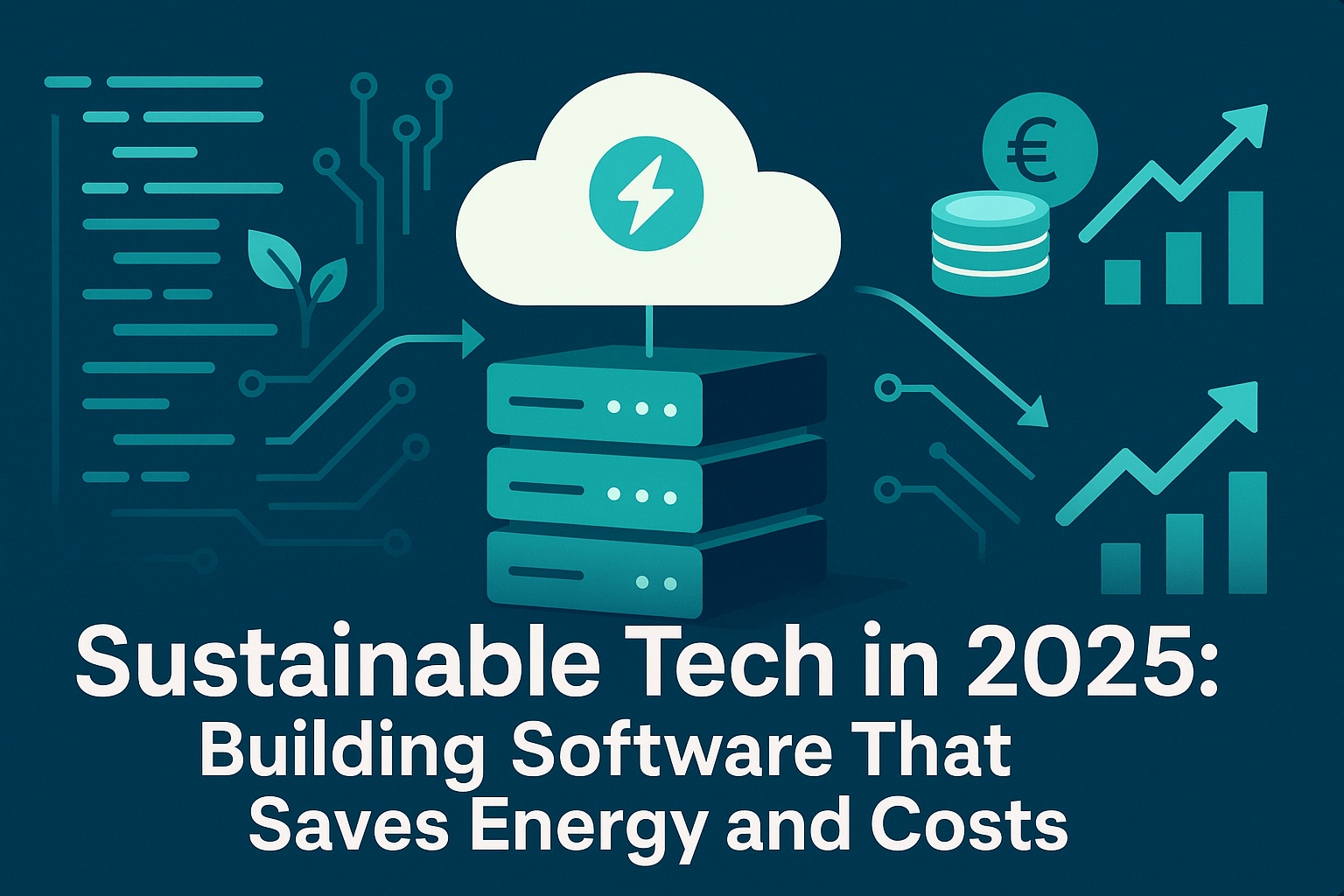
  • Sustainable Software Development in 2025: Building Tech That Saves Energy and Costs

    Sustainable Software Development in 2025: Building Tech That Saves Energy and Costs

    Why Sustainable Software Development Matters in 2025

    Climate change, volatile energy markets, and mounting corporate responsibility are reshaping how businesses approach technology. Software, once viewed as an intangible product with minimal environmental impact, is now recognised as a significant contributor to global energy consumption. In 2025, the conversation is no longer about if we should consider sustainability in technology—it is about how quickly we can adopt practices that cut energy use and operating costs while building a resilient digital future.

    According to the United Nations, the ICT sector contributes an estimated 2–4% of global greenhouse gas emissions, a figure projected to grow without intervention (UN, 2023). With data centres, cloud platforms, and software applications consuming vast resources, the pressure is on businesses to integrate sustainable practices at every layer of the digital stack. This is where sustainable software development emerges as a defining approach for modern enterprises.

    What is Sustainability in Software Engineering?

    At its core, sustainability in software engineering refers to creating systems that balance performance, scalability, and energy efficiency while reducing environmental impact. It moves beyond short-term optimisation and instead embraces a lifecycle perspective: how software is designed, deployed, and maintained across years of use.

    The importance of this shift is twofold. First, the global cost of powering IT systems continues to rise, with energy bills squeezing startups and enterprises alike. Second, regulators and consumers are holding companies accountable for their environmental footprint. Adopting sustainable practices is no longer optional; it is becoming a business necessity.

    This is precisely why sustainable development is important in software engineering—it connects ecological responsibility with tangible financial outcomes. By writing cleaner code, using efficient algorithms, and optimising infrastructure, organisations can simultaneously lower costs and reduce their carbon emissions.

    Why 2025 Marks a Turning Point

    Several forces converge in 2025 to make sustainable software development critical. Cloud adoption is accelerating, but so are concerns about its environmental cost. Artificial intelligence is booming, yet training large models requires enormous energy input. Meanwhile, consumers are becoming more conscious of how digital services impact the planet.

    The World Economic Forum emphasises that “green digital transformation” is one of the most important levers for reaching net-zero targets (WEF, 2024). Companies that align their technology strategies with sustainability goals not only strengthen brand trust but also gain a competitive advantage in increasingly regulated markets.

    The Business Case for Sustainable Tech

    Energy efficiency and cost savings are the immediate benefits of sustainable software practices, but the value extends further. Businesses that integrate sustainability into their technology:

    • Reduce operational expenses through optimised infrastructure.

    • Comply with environmental regulations and avoid costly penalties.

    • Enhance reputation and customer trust by demonstrating corporate responsibility.

    • Future-proof their systems against rising costs of energy and stricter sustainability demands.

    At EmporionSoft, we understand how vital it is for businesses to remain competitive while staying environmentally responsible. Our services are designed to help organisations adopt forward-looking strategies that blend performance with sustainability, ensuring technology supports both growth and long-term responsibility.

    Setting the Stage for Sustainable Software

    The rest of this blog will explore practical strategies for embedding sustainability into software—from efficient design principles to emerging tools for measuring environmental impact. We will also highlight real-world examples and frameworks that businesses can adopt in 2025 to build greener, leaner, and more cost-effective systems.

    By the end, it will be clear that sustainable software development is more than an ethical choice. It is a pathway to innovation, resilience, and profitability in an era defined by environmental urgency and financial efficiency.

    What is Sustainable Software Development?

    In today’s fast-changing digital landscape, businesses are rethinking how technology is built and deployed. Beyond speed and functionality, organisations are now asking an important question: how can software contribute to sustainability? This is where sustainable software development comes into focus. It refers to designing, building, and maintaining applications in ways that minimise environmental impact, reduce costs, and extend the useful life of technology.

    Software Sustainability Definition

    At its simplest, software sustainability definition can be explained as the ability of software to meet present needs without compromising future usability, adaptability, or environmental responsibility. This concept covers three interconnected dimensions:

    1. Environmental sustainability – reducing energy consumption and carbon footprint.

    2. Economic sustainability – delivering long-term cost efficiency and return on investment.

    3. Social sustainability – supporting ethical practices, accessibility, and inclusive design.

    When applied together, these principles ensure that software is not just a short-term solution but a long-lasting, responsible asset.

    What is Sustainable Software Design?

    While sustainability is often associated with physical infrastructure or energy policy, the idea of sustainable software design is equally critical. It involves decisions at the coding, architecture, and deployment levels that influence efficiency over the software’s lifecycle.

    For example, sustainable design might mean choosing energy-efficient algorithms, reducing unnecessary computations, or structuring databases for minimal resource usage. It also includes anticipating scalability needs, so software avoids premature replacement or costly re-engineering.

    As the IEEE notes, sustainable design is about striking a balance between performance, resource use, and longevity—ensuring that technology remains relevant and efficient in the face of growing demands (IEEE, 2024).

    Strengths and Weaknesses of Sustainable Software Design

    Strengths

    • Lower Energy Consumption: Efficient design reduces power usage in data centres and end devices.

    • Cost Savings: Streamlined processes and optimised code reduce infrastructure expenses.

    • Regulatory Compliance: As governments enforce stricter sustainability policies, software aligned with these frameworks avoids penalties.

    • Longer Product Life: Systems built with adaptability in mind remain useful for years, reducing replacement costs.

    Weaknesses

    • Initial Investment: Implementing sustainable practices often requires upfront costs in training, research, or advanced tools.

    • Complexity: Balancing efficiency, scalability, and maintainability can increase design complexity.

    • Performance Trade-offs: In some cases, sustainability-focused design may slightly compromise processing speed or require additional optimisation cycles.

    • Limited Awareness: Many organisations still prioritise time-to-market over long-term sustainability, which slows adoption.

    Understanding these trade-offs helps businesses weigh the short-term challenges against the long-term benefits of sustainability-driven strategies.

    Real-World Applications

    Sustainable practices are already visible across industries. From cloud-native applications optimised for renewable-powered data centres to AI models designed for lower training costs, the movement is growing. For example, organisations are adopting adaptive software development methods that prioritise iterative, resource-efficient approaches to meet sustainability goals.

    You can explore case studies of how different businesses have embraced such solutions, proving that sustainable software development is not a theoretical concept but a practical framework with measurable benefits. At EmporionSoft, our expertise in adaptive software development allows us to design resilient systems that perform well today while preparing for tomorrow’s challenges.

    The Path Forward

    Defining sustainable software development goes beyond abstract ideals—it is about aligning technological innovation with environmental and economic realities. By adopting principles of sustainable design and understanding both the strengths and weaknesses, organisations can unlock not just greener systems but also more cost-effective and future-proof solutions.

    As sustainability continues to dominate global business priorities, companies that embrace these practices early will gain a significant competitive advantage in terms of efficiency, compliance, and public trust. The shift towards sustainable software development is not just a trend for 2025; it is an essential evolution in the way we approach technology for the next decade and beyond.

    Designing Software That Saves Energy and Reduces Costs

    In 2025, the financial and environmental stakes of running large-scale digital systems are higher than ever. Businesses are increasingly recognising that sustainable software development is not simply an ethical choice but a strategic one. By embedding efficiency into code, architecture, and operations, organisations can lower energy usage, reduce infrastructure expenses, and gain long-term resilience.

    Sustainable in Software Engineering: The Efficiency Mindset

    Sustainable in software engineering means designing systems that are optimised to use fewer resources while maintaining high performance. The benefits are measurable. Efficient algorithms consume less processing power, well-structured databases require fewer queries, and streamlined applications minimise server load.

    This approach delivers a dual impact: reduced electricity consumption for data centres and significant cost savings for businesses. A recent Gartner report (2024) highlighted that organisations adopting green software practices can reduce infrastructure costs by up to 20% annually. The results speak for themselves—sustainability is quickly becoming synonymous with profitability.

    Energy-Efficient Algorithms and Green Coding

    At the core of efficiency lies the code itself. Developers are rethinking how software is written and executed:

    • Energy-efficient algorithms cut down on unnecessary calculations, optimising CPU usage.

    • Green coding practices—such as avoiding redundant loops, reducing API calls, and caching results—reduce load on servers.

    • Software sustainment ensures that systems remain relevant and efficient over time, avoiding wasteful rewrites or frequent replacements.

    A sustainable software design summary would emphasise that small changes in coding standards, multiplied across millions of transactions, can lead to dramatic savings in both energy and costs.

    Cloud Optimisation for Lower Bills and Carbon Footprints

    Cloud computing is one of the biggest enablers of sustainable software development. With hyperscale providers investing in renewable-powered data centres, the cloud offers businesses access to greener infrastructure. Yet efficiency does not come automatically—it requires deliberate optimisation.

    Key strategies include:

    • Right-sizing workloads so that resources are never over-allocated.

    • Auto-scaling environments that expand or shrink based on real demand.

    • Serverless architectures that only consume energy when functions are executed.

    For organisations comparing providers, understanding sustainability credentials has become as important as pricing or performance. Our insights on the Future of Cloud Computing and Cloud Providers Comparison 2025 explore how businesses can select the most energy-efficient platforms.

    Case Example: Sustainable Supply Chain Software

    Supply chains, with their complex logistics and vast data requirements, are prime candidates for sustainable optimisation. A sustainable supply chain software system can integrate green coding practices and energy-efficient algorithms to streamline transportation routes, reduce idle server time, and optimise warehouse operations.

    For instance, a logistics company using AI-driven route planning can lower fuel consumption by 15%, while shifting data processing to energy-efficient cloud regions reduces costs by thousands of pounds annually. This combination of algorithmic efficiency and cloud optimisation demonstrates how sustainability and profitability can align.

    TechCrunch has noted that companies investing in sustainable digital solutions are seeing stronger investor confidence and consumer trust, further reinforcing the business case for adopting sustainable practices (TechCrunch, 2024).

    A Long-Term Perspective on Costs

    It is easy to assume that sustainable software requires higher upfront investment, but the reality is more nuanced. While adopting new coding standards, training teams, or migrating to greener clouds may carry short-term costs, the lifecycle savings are significant.

    • Lower energy bills mean reduced operational expenses.

    • Prolonged software lifespans cut down on costly replacements.

    • Compliance with environmental regulations avoids fines or reputational damage.

    Sustainable practices, in essence, ensure that software does not just perform well today but remains cost-effective and environmentally responsible in the long term.

    Building a Competitive Advantage

    In the race for efficiency, companies that embed sustainability at the heart of their digital strategy gain more than just reduced energy bills. They build a competitive advantage by aligning with consumer expectations, regulatory requirements, and global net-zero goals.

    By combining energy-efficient algorithms, green coding, and cloud optimisation, businesses prove that sustainable software development is not only possible but also highly profitable. This is the direction modern software engineering must take—where performance, sustainability, and financial efficiency converge.

    Tools and Reporting Frameworks for Software Sustainability

    Sustainability is no longer a vague ambition for technology teams; it is a measurable, reportable, and actionable component of software development. Companies that embrace sustainability software can demonstrate real progress toward energy efficiency, compliance, and corporate responsibility. One of the most powerful enablers of this shift is the rise of sustainability reporting software, which helps organisations capture, analyse, and communicate their environmental impact.

    Why Reporting Tools Matter

    Software projects are increasingly judged not only on performance but also on how they align with environmental and governance standards. From cloud infrastructure choices to coding efficiency, sustainability metrics provide visibility into whether applications are truly cost-efficient and environmentally responsible.

    Leading frameworks such as the Global Reporting Initiative (GRI) and the Sustainability Accounting Standards Board (SASB) set the benchmarks for how organisations disclose energy use, emissions, and broader sustainability factors. By integrating these frameworks into development workflows, businesses can move beyond aspiration to accountability.

    Key Solutions in Sustainability Reporting Software

    Among the most widely recognised platforms is Accuvio sustainability reporting software, which allows companies to track carbon emissions, resource consumption, and compliance requirements in real time. Its strength lies in centralising data from diverse systems and presenting it in formats that align with global standards such as GRI and CDP (Carbon Disclosure Project). As Accuvio notes, automation in reporting reduces the burden on IT teams and ensures that sustainability is considered from the earliest stages of project design (Accuvio, 2024).

    Other notable tools in this space include:

    • SpheraCloud – a platform offering sustainability and risk management for enterprises.

    • EcoVadis – widely used for supply chain sustainability ratings.

    • Enablon – combining sustainability reporting with compliance and risk frameworks.

    These tools bridge the gap between engineering teams and sustainability officers, ensuring that progress is not just measured but actively embedded into project lifecycles.

    Integration with Modern Software Projects

    The value of sustainability reporting software increases when linked directly to software development workflows. For example, cloud-native applications can feed data directly into reporting platforms to track energy efficiency, while AI-driven tools measure the carbon footprint of large-scale model training.

    At EmporionSoft, we see clear synergies between reporting and technical innovation. Our expertise in real-time AI in production demonstrates how efficiency can be monitored and optimised during deployment, while our insights on harnessing the power of data lakes highlight how centralised data ecosystems support sustainability audits across entire organisations.

    Research Softwares for Sustainable Water Management under Climate Change

    Beyond enterprise-level reporting, domain-specific research tools play a vital role in tackling urgent challenges. Research softwares for sustainable water management under climate change exemplify this approach. These systems combine environmental data modelling, predictive analytics, and geospatial intelligence to optimise how scarce water resources are managed.

    By simulating climate scenarios and evaluating the energy cost of water treatment or distribution, these platforms help policymakers and engineers make informed, sustainable decisions. Such examples demonstrate how sustainability reporting tools extend beyond generic compliance and can deliver targeted insights for sectors facing acute environmental pressures.

    Building a Culture of Accountability

    While sustainability reporting software is essential, the real shift occurs when organisations embed these tools into everyday practices. The future lies in creating feedback loops where software design choices are continuously measured against environmental and financial outcomes.

    • Dashboards enable teams to track progress in real time.

    • APIs link reporting systems with cloud platforms, ensuring no gap in visibility.

    • AI-driven analytics transform raw data into actionable recommendations.

    This integration ensures that sustainability is not an afterthought but a guiding principle of the development lifecycle.

    Looking Ahead

    In the coming years, sustainability reporting will become as critical as financial reporting. Tools such as Accuvio, combined with global frameworks like GRI, will shape how organisations prove their environmental commitment. For software developers, this means that sustainability software is not just a toolset but a responsibility—one that aligns innovation with accountability.

    By investing in robust sustainability reporting systems today, companies position themselves as leaders in an era where efficiency, transparency, and environmental stewardship define competitive advantage.

    Beyond Software Architecture: Creating and Sustaining Winning Solutions

    Modern businesses are under increasing pressure to deliver technology that is not only high-performing but also responsible and resilient. This shift has given rise to a new perspective: beyond software architecture creating and sustaining winning solutions. The idea is that architecture must do more than solve technical problems—it must balance performance, cost efficiency, and environmental sustainability across the software lifecycle.

    Sustainable architecture is not about reinventing design principles; it is about extending them with a long-term mindset. By embedding sustainability at the architectural level, companies avoid unnecessary waste, reduce energy use, and protect themselves from future risks like rising costs or regulatory demands.

    Sustainable Software Design Principles

    At its core, sustainable architecture rests on several guiding principles:

    • Modularity: Building systems in smaller, independent components to allow upgrades without complete rewrites.

    • Efficiency-first design: Prioritising energy-efficient algorithms and databases that minimise computational overhead.

    • Lifecycle thinking: Designing with adaptability in mind, ensuring systems remain functional and relevant over the long term.

    • Resilience: Embedding disaster recovery and fault-tolerance into software to prevent unnecessary downtime and rebuilds.

    These principles tie directly into sustainable software engineering course objectives, which often teach future engineers to balance environmental responsibility with technical excellence. Such objectives prepare developers not only to write efficient code but also to make architectural decisions that shape the energy and cost footprint of digital systems for years.

    Sustainable Software Design Comments

    Professionals often describe sustainable architecture as both technical discipline and cultural shift. Sustainable software design comments generally highlight the importance of cross-functional collaboration. Engineers, architects, and business leaders must work together to decide which trade-offs are acceptable in pursuit of efficiency.

    For example, some developers note that optimising algorithms for efficiency might take longer during development but pays off in years of reduced infrastructure costs. Others comment on the value of cloud-native design patterns that scale only when needed, preventing wasted resources. These insights reflect a growing consensus: sustainability is not just about code quality, it is about organisational priorities.

    At EmporionSoft, we emphasise this in practice by helping clients address technical debt early. Reducing debt ensures that systems do not become bloated and inefficient, which in turn supports both cost control and sustainable performance.

    Weaknesses of Sustainable Software Design

    Despite its advantages, sustainable design is not without challenges. Some weaknesses include:

    • Higher upfront investment: Optimising for sustainability may require more time, training, or specialised tools.

    • Complex decision-making: Balancing efficiency, resilience, and scalability can complicate architectural planning.

    • Performance trade-offs: In rare cases, ultra-efficient design may slightly limit raw processing speed.

    • Slow adoption: Many organisations remain focused on short-term delivery, making it difficult to prioritise sustainability.

    Acknowledging these weaknesses is essential for moving forward. It allows teams to anticipate obstacles and make informed decisions rather than treating sustainability as a rigid, one-size-fits-all model.

    The good news is that many of these weaknesses diminish over time. Initial investments often result in lower total cost of ownership, and cultural adoption grows as sustainability becomes a standard business metric.

    Building Long-Term Resilience

    The most compelling argument for sustainable architecture lies in resilience. Systems built with adaptability and efficiency are better prepared to handle unexpected challenges, whether that means a spike in user demand, a new compliance requirement, or a shift in market conditions. EmporionSoft’s insights into building resilient software show how forward-thinking design principles minimise risks while maximising return on investment.

    As TheCodeV (2024) points out, resilience and sustainability go hand in hand—software that adapts gracefully over time avoids costly rebuilds and contributes to long-term business success (TheCodeV).

    A Holistic Approach

    Sustainable software architecture is not a single framework or methodology. It is a holistic approach that unites design, engineering, and organisational strategy. By focusing on efficiency, resilience, and lifecycle value, businesses create software that does more than meet immediate needs—it builds a foundation for enduring success.

    In a world where costs are rising and sustainability is non-negotiable, going beyond software architecture is no longer optional. It is the path to building digital solutions that truly sustain themselves, their users, and the planet.

    Learning and Teaching Sustainable Software Engineering

    As sustainability becomes a defining force in technology, education and training in this field are rapidly expanding. Engineers are no longer only expected to master coding languages or system design; they must also understand the environmental and economic consequences of their work. Universities, certification providers, and industry-led programmes are stepping in to equip professionals with the skills needed for the future.

    The Rise of Sustainable Software Education

    Universities across the globe are incorporating sustainability into their computer science curricula. Courses covering sustainable software engineering address energy-efficient algorithms, lifecycle management, and eco-conscious architectural principles. Many institutions now offer dedicated modules, often presented through accessible platforms such as sustainable software engineering slide share, where academic research is condensed into practical, visual learning aids.

    This educational push ensures that graduates are prepared not only to write efficient code but also to embed sustainability into every layer of the development lifecycle. For organisations, hiring developers with this background means projects that are designed with long-term efficiency and resilience in mind.

    Sustainable Software Engineering Course Online

    A growing number of professionals prefer flexible learning routes, and online training platforms have answered the call. A sustainable software engineering course online typically blends theoretical principles with practical case studies, offering learners the ability to apply sustainability concepts directly to real-world projects.

    Platforms such as Coursera and edX already provide sustainability-focused programmes, often developed in collaboration with leading universities and industry partners (Coursera, 2024). These courses cover not only technical efficiency but also broader issues such as ethical computing, green cloud adoption, and regulatory compliance.

    For example, engineers may learn how to optimise serverless applications to reduce energy waste or how to design cloud-native systems that run on renewable-powered infrastructure. This type of knowledge directly translates into better business outcomes, from reduced operational costs to improved compliance with environmental standards.

    Certifications and Professional Training

    Certifications are another important part of this growing ecosystem. Credentials in areas such as green IT, sustainable software architecture, and eco-friendly cloud strategies signal to employers that a professional has the expertise to align software projects with sustainability goals.

    Tech companies are also leading initiatives. Large cloud providers have begun offering sustainability badges or learning paths, teaching developers how to leverage renewable-powered data centres and energy-efficient infrastructure. These initiatives highlight the increasing demand for certified knowledge in the space, where sustainability is becoming a core measure of technical excellence.

    Industry-Led Knowledge Sharing

    Beyond formal courses, the industry is embracing collaborative knowledge sharing. Conferences, webinars, and online communities allow developers to exchange insights on how sustainability can be embedded into software projects. Slide decks, like those found under sustainable software engineering slide share, often serve as valuable tools for practitioners who want to communicate key principles within their organisations.

    This approach fosters a culture of collective learning, where best practices spread quickly and teams across different industries can adopt proven methods without reinventing the wheel.

    Bridging Education with Career Development

    At EmporionSoft, we see education as a vital step in preparing the next generation of software engineers. Our insights in The Software Developer’s Roadmap 2025 outline how sustainability is no longer an optional skill—it is essential for staying competitive. Similarly, our work on AI in Software Development highlights how cutting-edge technologies can both support and challenge sustainability goals, making continuous learning crucial.

    The Future of Sustainable Software Training

    The momentum behind education in sustainable software engineering is only set to grow. As environmental accountability becomes a standard business metric, developers with expertise in sustainable practices will be in high demand. Universities will expand their offerings, online platforms will refine their courses, and companies will invest in in-house training to ensure their teams remain future-ready.

    For software professionals, this represents an exciting opportunity: to combine technical innovation with a purpose-driven career. By embracing training opportunities now, they can position themselves at the forefront of an industry increasingly defined by sustainability and responsibility.

    The Future of Sustainable Software Development

    As we look ahead, it is clear that sustainable software development is no longer a niche concept but a defining principle of modern technology. The journey through this discussion has highlighted the critical role sustainability plays in shaping systems that are energy-efficient, cost-conscious, and socially responsible. In 2025, businesses that adopt sustainable practices will not only reduce their environmental footprint but also gain a strong competitive edge in an increasingly regulated and customer-conscious market.

    Benefits at the Core

    The advantages of sustainable software practices are tangible. From a technical perspective, energy-efficient algorithms, modular design, and optimised cloud strategies lower power consumption while extending the life of systems. Economically, these efficiencies translate into measurable savings on infrastructure and operational costs. Beyond financial metrics, sustainable systems strengthen reputation, signalling to stakeholders and customers alike that a business is serious about environmental responsibility.

    For startups, the benefits often lie in agility and differentiation. Building green from the outset provides a unique value proposition that attracts investors and customers seeking ethical, future-ready partners. For enterprises, the benefits include compliance with environmental regulations, enhanced resilience, and scalability across global operations. In both cases, sustainability drives growth.

    Challenges to Address

    Despite its promise, the path to sustainability is not without obstacles. Many organisations struggle with the upfront investment required to train teams, adopt new tools, or redesign existing systems. Others face the complexity of balancing trade-offs, such as optimising for energy without compromising performance. In addition, cultural resistance persists, with some decision-makers prioritising short-term delivery over long-term efficiency.

    These challenges, however, are not insurmountable. As frameworks, reporting tools, and training opportunities expand, the barriers to entry continue to fall. What once required specialist knowledge is increasingly becoming part of standard development practice.

    Opportunities for the Future

    The most exciting aspect of sustainable software development lies in the opportunities it opens. Emerging technologies—such as AI, adaptive systems, and cloud-native architectures—are being harnessed to create solutions that are not only smarter but greener. The growth of sustainability reporting platforms ensures greater transparency, while global education initiatives prepare the next generation of engineers to design with sustainability in mind.

    This is a future where software is judged as much by its environmental impact as by its performance, and where businesses that act early will lead the way.

    Partnering with EmporionSoft

    For companies ready to take the next step, partnering with the right technology experts is essential. At EmporionSoft, we specialise in designing and delivering software that balances innovation with responsibility. Whether you are a startup seeking to build scalable, green systems from the ground up, or an enterprise aiming to optimise existing platforms, our team can help you integrate sustainability into every stage of your digital journey.

    Our tailored consultation services ensure that your projects are aligned with both business objectives and sustainability goals. For organisations ready to act, reaching out through our contact us page is the simplest way to start building solutions that deliver long-term value.

    Closing Thoughts

    The challenges of climate change, rising energy costs, and increasing regulation demand that software engineering evolves. Sustainable practices are no longer optional—they are critical for building systems that endure. By embracing sustainable software development, businesses can unlock efficiency, reduce costs, and demonstrate genuine leadership in a world that values responsibility.

    In 2025 and beyond, the companies that succeed will be those that design software not just for today but for tomorrow. The time to act is now, and EmporionSoft is ready to help you lead the way.
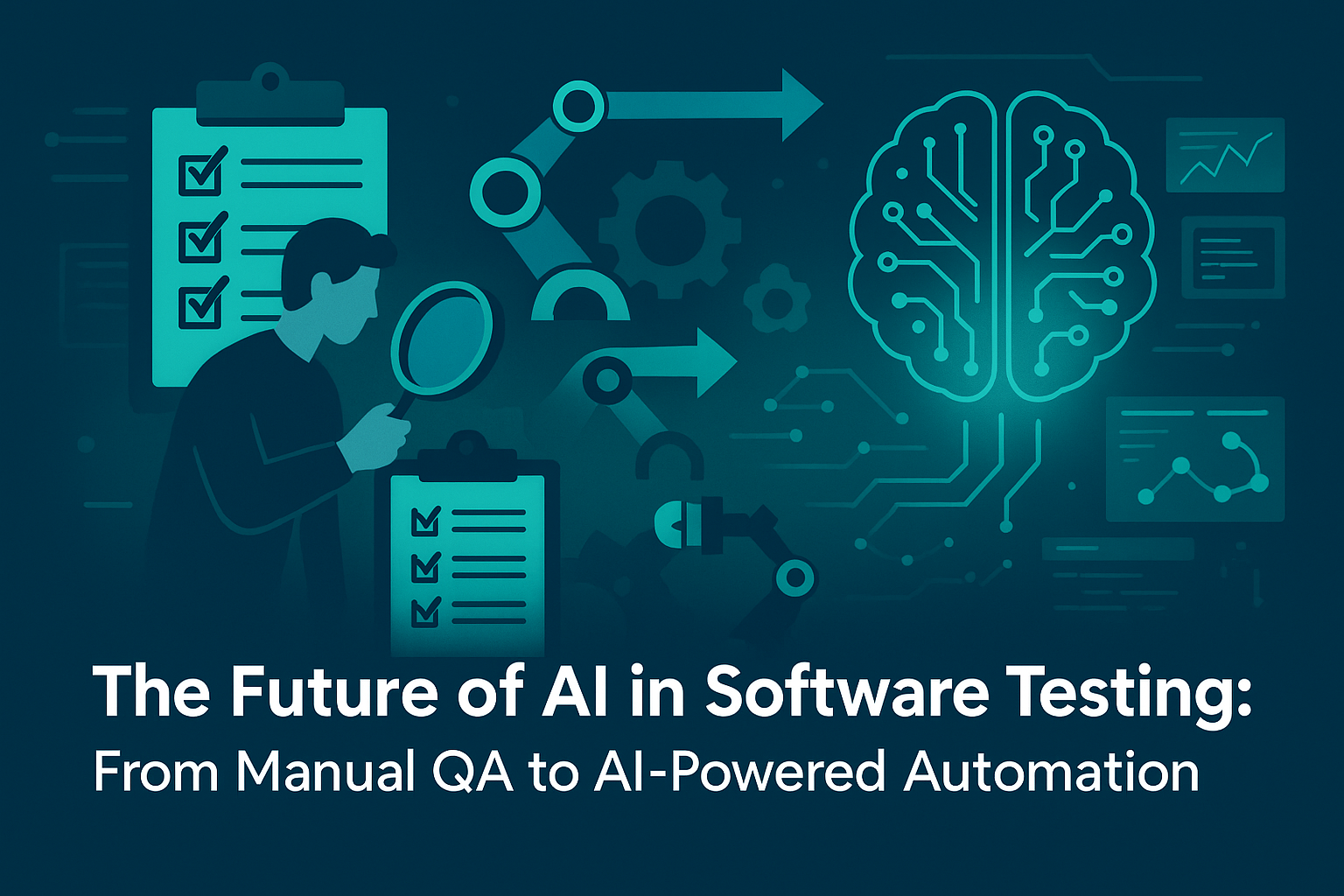

  • The Future of AI in Software Testing: From Manual QA to AI-Powered Automation

    The Future of AI in Software Testing: From Manual QA to AI-Powered Automation

    The Future of Software Testing: From Manual QA to AI-Powered Automation

    AI in software testing is no longer a futuristic concept—it is redefining how organisations deliver reliable, high-quality software in today’s digital-first economy. For years, businesses have relied on traditional manual quality assurance (QA) to ensure applications met user expectations. But as systems grew in complexity and speed-to-market became critical, manual methods struggled to keep up. This is where artificial intelligence (AI) enters the conversation, transforming not only how testing is performed but also how we think about quality itself.

    So, what is AI in software testing? At its core, it refers to the integration of intelligent algorithms, machine learning, and data-driven models into the testing process. Unlike traditional automation scripts that rely on rigid pre-programmed instructions, AI-driven testing adapts, learns, and predicts outcomes based on real-world data. This makes testing smarter, faster, and more aligned with the dynamic nature of modern applications.

    The role of AI in software testing is already proving to be pivotal. AI is enabling predictive defect analysis, automatic test case generation, and even self-healing automation frameworks that adapt to code changes without human intervention. This shift is vital because, according to Gartner, organisations that integrate AI and machine learning into their DevOps pipelines are seeing up to a 20% reduction in testing time and costs (Gartner, 2024). Such outcomes illustrate that artificial intelligence in software testing is not just about efficiency—it is about unlocking new levels of innovation and reliability.

    In the past, QA teams relied heavily on manual testing. Testers would spend hours writing cases, executing scenarios, and manually logging results. While effective in smaller projects, this approach became unsustainable as digital ecosystems expanded across mobile, web, and cloud. The introduction of automation tools like Selenium and JUnit helped bridge the gap, but these frameworks still required constant maintenance and lacked adaptability. AI has arrived as the natural next step in this evolution, creating systems capable of autonomous decision-making, predictive analytics, and intelligent error detection.

    At EmporionSoft, we recognise that businesses can no longer rely solely on legacy testing methods if they want to remain competitive. Our QA and development services are designed to integrate emerging technologies with proven testing practices, helping organisations transition smoothly from traditional automation to AI-powered solutions. This blend of expertise allows enterprises to embrace change without disrupting their delivery cycles. You can explore our comprehensive offerings through our services page.

    Artificial intelligence in software testing is not merely a tool—it is a strategic enabler. By embedding AI into QA processes, organisations gain the ability to identify risks earlier, test at scale, and ensure flawless customer experiences. More importantly, AI shifts the focus from reactive defect detection to proactive quality assurance, ensuring that applications are built with resilience and user satisfaction in mind from the very start.

    Yet, this transformation does not happen overnight. It requires cultural shifts, investment in training, and a clear understanding of how AI integrates into existing testing pipelines. Companies that fail to adapt risk being left behind in an era where software quality directly impacts reputation, revenue, and user trust.

    As we look ahead, the future of testing is clear: intelligent automation will dominate, and human testers will evolve into strategic quality leaders, focusing on creativity, edge-case design, and oversight of AI-driven systems. In the following sections, we will explore how manual QA compares to AI-powered testing, the practical benefits AI brings, real-world use cases, and how organisations can prepare for the next wave of innovation in software quality assurance.

    Manual QA vs Automation: Setting the Stage for AI

    Software testing has always been a critical part of delivering dependable applications. For decades, quality assurance teams relied on manual testing, where human testers followed step-by-step instructions to verify functionality. While effective in smaller environments, manual QA faced significant barriers as digital ecosystems became more complex. The emergence of automation tools promised relief, but even they had limitations. Today, the industry stands at a crossroads where AI in testing software is reshaping the landscape entirely.

    Manual Testing Limitations

    Manual testing played a vital role in the early stages of software development. Testers meticulously executed cases, reported bugs, and validated requirements. Yet, this approach soon revealed its flaws.

    • Time-consuming: Large projects required thousands of test cases, leading to lengthy cycles that slowed delivery.

    • Human error: Even the most skilled testers could overlook defects or inconsistencies.

    • Limited scalability: Testing across multiple platforms, devices, and browsers was nearly impossible to manage manually.

    As software moved toward continuous integration and delivery, these inefficiencies became glaring. Manual QA could not keep pace with the demands of rapid iteration, making innovation harder to achieve.

    Rise of Automation Tools

    To address these challenges, automation frameworks such as Selenium, JUnit, and QTP gained popularity. Automation reduced the need for repetitive manual effort, improving speed and accuracy. It allowed teams to rerun tests consistently and validate core functionality with less human intervention.

    The benefits were clear:

    • Repeatability for regression testing.

    • Faster execution across environments.

    • Cost savings through reduced reliance on large QA teams.

    However, automation was not without drawbacks. Scripts required frequent maintenance, particularly when applications underwent UI or logic changes. Test coverage still depended on predefined scripts, which meant that automation lacked adaptability. This rigidity created bottlenecks whenever applications evolved quickly.

    Modern businesses adopting Adaptive Software Development frameworks need more flexible testing solutions. Automation helped, but it did not eliminate the unpredictability of today’s fast-paced digital world.

    Bridging to AI

    This is where AI tools in software testing take centre stage. Unlike traditional automation, AI does not rely solely on fixed scripts. Instead, it learns from data, adapts to changes, and predicts where defects are most likely to occur. This shift represents a leap in capability, enabling proactive rather than reactive quality assurance.

    Key advantages of AI tools used in software testing include:

    • Self-healing scripts: Automation frameworks that automatically adjust when an element changes.

    • Predictive analytics: Identifying risk-prone areas before defects surface in production.

    • Visual validation: Using machine learning to detect UI anomalies across devices.

    • Smarter test creation: AI generates new test cases by analysing user journeys and historical bug data.

    According to BrowserStack (2024), organisations implementing AI-driven testing saw up to 40% improvement in defect detection and 30% faster release cycles. These gains highlight why AI is not just an incremental improvement—it is the foundation for future-proof quality strategies.

    This evolution also aligns with broader shifts in project delivery. Businesses leveraging modern project management tools for tech companies understand that agility and intelligence must extend across the entire software lifecycle. AI in testing is an essential component of that ecosystem.

    Moving Forward

    The progression from manual QA to automation and now to AI illustrates the industry’s constant pursuit of efficiency and accuracy. Manual methods built the foundation, automation addressed scalability, but AI introduces adaptability and foresight. For companies that want to remain competitive, adopting AI-driven testing is no longer optional—it is a strategic necessity.

    In the next section, we will explore the tangible benefits of AI in software testing, from reducing costs to accelerating release cycles, and why forward-thinking organisations are making this investment today.

    The Benefits of AI in Software Testing

    In the fast-paced digital economy, businesses are under constant pressure to release high-quality software quickly and cost-effectively. Traditional methods of testing often struggle to keep up, but artificial intelligence offers a smarter solution. The benefits of AI in software testing extend far beyond efficiency, delivering measurable improvements in cost reduction, accuracy, and speed. By shifting towards intelligent automation, organisations are transforming testing into a competitive advantage.

    Cost Efficiency

    One of the most compelling AI use cases in software testing is cost optimisation. Manual QA and even scripted automation can drain budgets due to the high number of test cases, the need for frequent updates, and the extensive involvement of human testers. By contrast, AI introduces intelligent test creation, prioritisation, and maintenance.

    • Reduced labour costs: AI systems can execute thousands of test cases automatically, reducing dependency on large QA teams.

    • Optimised test coverage: Instead of running every test case, AI prioritises the most relevant ones, saving both time and money.

    • Self-healing scripts: When applications evolve, AI frameworks adapt without requiring costly rework.

    According to McKinsey (2023), companies that adopted AI in testing reported up to 20% lower QA expenditure while simultaneously improving coverage. This illustrates that using AI in software testing is not just about innovation—it is about financial sustainability.

    At EmporionSoft, we design solutions that balance innovation with resilience. For example, our approach to building resilient software ensures businesses minimise costs while maintaining robust testing practices.

    Improved Accuracy & Coverage

    Human testers are limited by time, attention, and fatigue. Even automated scripts can miss issues if they are not designed to anticipate unexpected changes. AI addresses these challenges by leveraging data-driven insights and machine learning models to expand coverage and improve defect detection.

    • Predictive defect analysis: AI identifies areas of code most likely to contain errors.

    • Visual validation: Machine learning detects subtle UI inconsistencies across browsers and devices.

    • Data-driven decision-making: Historical bug reports and user data help AI prioritise high-risk areas.

    This results in a testing process that is not only broader in scope but also deeper in accuracy. By capturing issues earlier in the lifecycle, AI reduces the risk of production failures and costly post-release fixes.

    Real-world case studies show how companies adopting AI-driven QA frameworks have significantly reduced defect leakage, ensuring smoother product launches and enhanced customer satisfaction.

    Faster Release Cycles

    In today’s agile and DevOps-driven environments, speed is as important as quality. Businesses must deliver updates quickly to remain competitive, but this often comes at the cost of testing rigour. AI changes this balance by automating repetitive tasks and accelerating test execution without compromising quality.

    • Continuous testing: AI integrates seamlessly with CI/CD pipelines, enabling real-time validation.

    • Parallel execution: Thousands of tests can run simultaneously across platforms.

    • Proactive risk management: AI anticipates defects before they impact the delivery pipeline.

    These capabilities empower organisations to release updates faster while maintaining confidence in software performance. Accenture’s 2024 report noted that enterprises deploying AI in their QA cycles achieved 25–30% quicker release times compared to those relying solely on manual or script-based testing.

    For modern businesses, this means shorter time-to-market, greater agility, and the ability to respond rapidly to customer demands or market shifts.

    The Bigger Picture

    The AI use in software testing is not merely an incremental improvement; it represents a paradigm shift. By lowering costs, enhancing accuracy, and accelerating delivery, AI transforms testing into a strategic enabler of digital transformation. Companies that embrace this shift position themselves to innovate faster, serve customers better, and sustain long-term growth.

    As we continue, the next section will dive into specific AI use cases in software testing, showcasing how real-world businesses are already leveraging these benefits to revolutionise their QA strategies.

    AI and Machine Learning Use Cases in Software Testing

    The adoption of AI and machine learning in software testing is no longer experimental—it is practical, scalable, and increasingly essential. As applications grow in complexity, traditional QA methods fall short in ensuring quality at the speed modern businesses demand. The role of AI in software testing is to bridge this gap by automating routine tasks, predicting potential issues, and learning continuously from past data. Real-world applications from industry leaders like IBM, Microsoft, and ThoughtWorks demonstrate how transformative these technologies have become.

    Defect Prediction and Risk Analysis

    One of the most powerful AI and ML in software testing use cases is predictive defect analysis. Rather than waiting for issues to surface during regression or production, AI models analyse historical test data, code changes, and bug reports to predict where defects are most likely to occur.

    • Proactive detection: AI identifies risk-prone areas early in development.

    • Resource optimisation: Testers can prioritise high-risk modules, saving time.

    • Reduced production failures: By addressing issues earlier, businesses avoid costly downtime.

    For example, IBM’s AI-driven testing platforms use machine learning to predict failure patterns and reduce defect leakage significantly. This proactive approach illustrates how AI can be used in software testing to improve reliability before users ever encounter problems.

    Visual Testing and User Experience Validation

    Applications today must perform consistently across countless browsers, devices, and operating systems. Manual visual validation is resource-intensive, and even traditional automation cannot always detect subtle issues. AI-based visual testing changes that.

    • Image comparison models: AI identifies pixel-level UI inconsistencies.

    • Device diversity: Testing across multiple resolutions and platforms simultaneously.

    • Enhanced UX assurance: Ensures layout and branding remain intact across interfaces.

    Microsoft has incorporated AI into its Azure DevOps testing suite, enabling continuous validation of visual interfaces at scale. This demonstrates the growing role of machine learning in ensuring end-user experience remains seamless and brand-consistent.

    Intelligent Test Case Generation

    Another vital application is automated test case creation. Traditionally, QA teams spend hours writing, updating, and maintaining test cases. AI drastically reduces this workload by analysing application flows, historical bug data, and user journeys to generate relevant test cases dynamically.

    • Coverage expansion: AI creates cases for scenarios testers may overlook.

    • Self-healing capability: When application logic changes, test cases adapt automatically.

    • Efficiency: Significant reduction in manual scripting effort.

    ThoughtWorks has reported success in integrating AI-driven test generation into agile pipelines, allowing teams to scale QA practices without increasing headcount. This is a tangible example of AI and machine learning in software testing driving measurable productivity gains.

    Continuous and Real-Time Testing

    In the era of DevOps and CI/CD pipelines, testing can no longer be an isolated stage. AI enables continuous, real-time validation, ensuring quality is integrated throughout the lifecycle.

    • Continuous monitoring: AI algorithms check software health as code is committed.

    • Real-time defect alerts: Issues are flagged instantly for faster resolution.

    • Adaptive feedback loops: Machine learning improves accuracy with each iteration.

    This aligns with broader business strategies, such as those discussed in EmporionSoft’s Real-Time AI in Production. Integrating real-time AI validation ensures stability while accelerating deployment cycles.

    The Bigger Impact

    These use cases highlight how AI can be used in software testing to go beyond simple automation. By embedding intelligence into the QA process, companies gain the ability to anticipate problems, ensure flawless user experiences, and release software faster with greater confidence.

    For organisations navigating digital transformation, the implications are clear. As EmporionSoft outlines in How AI is Revolutionising Software Development, the integration of intelligent technologies is not a matter of if but when. Businesses that delay risk falling behind competitors who are already leveraging AI to deliver more reliable and customer-centric applications.

    Looking Ahead

    The future of quality assurance lies in smarter, self-learning systems that enhance both accuracy and efficiency. From defect prediction to visual validation and dynamic test creation, the role of AI in software testing is rapidly expanding. In the next section, we will explore how generative AI and agentic AI are pushing these capabilities even further, creating autonomous QA agents capable of reshaping the very foundation of software testing.

    Generative and Agentic AI in Software Testing

    The emergence of generative AI in software testing and autonomous AI agents represents the next major evolution in quality assurance. While traditional AI-driven tools focus on automation, prediction, and defect detection, generative and agentic models introduce creativity, adaptability, and autonomy into testing processes. These technologies are not just optimising existing workflows—they are reimagining what software testing can achieve.

    Generative AI in Testing

    Generative AI (Gen AI) refers to systems capable of creating new artefacts, from text and code to test cases and datasets. In software testing, this means:

    • Dynamic test case generation: AI generates test scenarios based on natural language requirements, reducing reliance on manual scripting.

    • Synthetic data creation: Gen AI builds realistic test datasets where sensitive or limited production data cannot be used.

    • Exploratory testing support: AI simulates diverse user behaviours, uncovering edge cases that human testers may not anticipate.

    For example, developers can provide natural language prompts such as “test login with invalid credentials” and Gen AI will generate scripts tailored to the application under test. According to the Stanford AI Index Report (2024), generative models are already accelerating QA productivity by up to 30% in early adopter organisations.

    Agentic AI and Autonomous Testing

    While Gen AI focuses on creation, agentic AI in software testing introduces autonomous problem-solving. AI agents in software testing act like digital colleagues, capable of analysing codebases, identifying gaps, executing tests, and even fixing scripts without human intervention.

    Key features include:

    • Self-healing automation: When UI elements change, agents adapt scripts automatically.

    • Autonomous exploration: AI agents identify new areas to test, beyond predefined scenarios.

    • Continuous learning: Agents improve their accuracy over time by incorporating results from previous test cycles.

    This approach represents a shift towards autonomous QA pipelines, where human testers become strategic supervisors rather than script maintainers. NIST’s 2023 guidelines on trustworthy AI emphasise that agentic systems must be transparent, reliable, and ethically aligned—a critical factor for enterprises adopting these technologies at scale.

    Diagram-Style Explanation

    To conceptualise the relationship between traditional AI, generative AI, and agentic AI in testing, consider this structured flow:

    [Manual QA] → Limited scalability, time-consuming
    [Traditional Automation] → Scripted, repeatable, but rigid
    [AI-Enhanced Testing] → Predictive, adaptive, faster execution
    [Generative AI] → Creates test cases, datasets, exploratory flows dynamically
    [Agentic AI] → Autonomous agents manage, heal, and evolve testing pipelines

    This continuum shows how the field has advanced from human-led validation to intelligent, autonomous systems capable of redefining QA practices.

    Challenges and Ethical Considerations

    The integration of gen AI in software testing is not without risks. Issues such as data privacy, model bias, and over-reliance on machine decisions must be carefully managed. Ethical frameworks play a crucial role here. At EmporionSoft, we emphasise responsible adoption, aligning with insights outlined in our article on Ethics in AI. Ensuring transparency and accountability in AI agents’ decision-making processes will be essential to building trust in these systems.

    Additionally, managing and scaling large models used for generative and agentic AI testing requires robust operational strategies. EmporionSoft’s work with LLMOps provides a framework for safely deploying and monitoring these complex systems in production environments.

    Looking Ahead

    Generative and agentic AI signify a future where testing is not merely automated but intelligent and autonomous. Generative models will continuously supply fresh, relevant test cases, while AI agents will oversee and adapt entire QA ecosystems. Human testers will evolve into curators and strategists, guiding these systems while focusing on creativity and higher-level problem-solving.

    The combination of these technologies points towards a new era of proactive, self-sustaining quality assurance. As the Stanford AI Index suggests, enterprises adopting generative and agentic AI early will gain a competitive edge in delivering secure, resilient, and user-centric software.

    In the next section, we will explore how testers and organisations can prepare themselves—through training, tools, and courses—to embrace this AI-driven transformation in software quality assurance.


    Learning AI in Software Testing: Courses, Skills, and Tools

    As artificial intelligence becomes a cornerstone of modern QA, professionals must adapt. Manual testers and traditional automation engineers can no longer rely on legacy skills alone. Instead, they must embrace structured learning paths, practical experience, and exposure to advanced tools. The demand for skills in AI in software testing course programmes is growing rapidly, with opportunities available across online platforms, professional workshops, and industry-driven internships.

    Why Upskilling Matters

    Software development is evolving at a relentless pace, and testing must keep up. Testers who understand AI concepts gain the ability to work with predictive analytics, machine learning frameworks, and automated case generation. As highlighted in EmporionSoft’s Software Developer’s Roadmap 2025, continuous learning is no longer optional—it is the backbone of a sustainable technology career.

    Upskilling in AI for testing also makes professionals more attractive in the job market. Organisations increasingly look for testers who can bridge traditional QA methods with AI-enabled pipelines. By pursuing an AI in software testing course online, individuals can gain certifications that demonstrate their readiness for the future.

    Recommended Online Courses

    Fortunately, there is no shortage of accessible and high-quality learning platforms:

    • Coursera: Offers courses on machine learning, AI for everyone, and applied AI testing frameworks. Many are developed in collaboration with universities such as Stanford or companies like Google.

    • Udemy: Provides tailored AI in software testing Udemy courses focusing on automation integration, visual testing, and real-world QA workflows. Popular among beginners for its affordability.

    • EdX: Features academic-grade modules on AI, ML, and their role in testing environments, suitable for those seeking structured pathways.

    Beginners may consider enrolling in an AI in software testing course for beginners to cover foundational concepts such as supervised learning, neural networks, and test automation principles. For professionals seeking structured knowledge, recorded lectures, downloadable notes, and interactive projects often come in the form of an AI in software testing PPT resource.

    Key Skills to Develop

    Enrolling in courses is only the first step. To remain competitive, testers should focus on building practical competencies in:

    • Machine learning fundamentals: Understanding classification, regression, and clustering for defect prediction.

    • Natural language processing: Useful in test case generation and log analysis.

    • Data analysis and visualisation: To interpret and present results effectively.

    • Continuous integration skills: Integrating AI-driven tools within CI/CD pipelines.

    These skills not only increase individual efficiency but also contribute to building more resilient QA frameworks across organisations.

    Essential AI-Driven Testing Tools

    Alongside learning theory, testers must familiarise themselves with the tools shaping the future of QA:

    • Testim: Uses machine learning to create stable, self-healing automated tests.

    • Applitools: Leverages AI for advanced visual testing and cross-platform validation.

    • Selenium + AI extensions: Traditional automation enhanced with AI plugins for smarter, adaptive testing.

    Practical experience with these platforms often complements online learning. Many courses now include free trials or labs to help learners gain hands-on exposure.

    Practical Pathways

    For learners seeking a structured journey, combining online education with industry experience is essential. EmporionSoft offers internship opportunities where students and graduates can apply AI concepts to real-world testing scenarios. This blend of classroom knowledge and hands-on projects is invaluable in preparing testers for AI-powered roles.

    The Way Forward

    By leveraging platforms such as Coursera, Udemy, and EdX, testers at all levels can access knowledge that was once reserved for AI specialists. When combined with practical skills and hands-on projects, these courses empower QA professionals to move confidently into the age of intelligent testing.

    As the industry embraces AI, those who invest in their skills now will be best positioned to lead the future of quality assurance. In the next section, we will examine what lies ahead: the broader outlook for AI in software testing, and how organisations can prepare for the rise of autonomous QA pipelines.

    The Future of AI in Software Testing

    The trajectory of AI in software testing suggests a future defined by autonomy, speed, and intelligence. As technology ecosystems become more complex and businesses push for rapid digital transformation, AI is moving beyond supportive tools into central enablers of quality assurance. The convergence of AI ML in software testing with DevOps and cloud-native development is setting the stage for self-governing QA pipelines that continuously validate software performance without human intervention.

    Autonomous QA Pipelines

    In the future, testing will no longer be a separate stage in the development lifecycle—it will be a seamlessly integrated function. Autonomous pipelines powered by AI will:

    • Detect and fix issues in real time: AI models will monitor systems continuously and apply corrective actions automatically.

    • Generate adaptive test cases: As applications evolve, AI will dynamically produce new scenarios.

    • Optimise resource allocation: Machine learning will determine the right balance of depth and speed for each test run.

    This represents a radical departure from current practices. Human testers will shift towards supervisory roles, ensuring ethical alignment and providing creative oversight, while intelligent systems handle the bulk of execution.

    Continuous Testing at Scale

    Agility is already a cornerstone of modern development, but AI will amplify this by enabling testing at an unprecedented scale. AI tools in software testing will integrate into CI/CD pipelines, validating every code commit instantly.

    Key benefits include:

    • Early defect detection: Reducing costly post-release fixes.

    • Broader coverage: Thousands of scenarios can be executed across environments simultaneously.

    • Real-time reporting: Dashboards fuelled by AI will provide stakeholders with instant visibility.

    Deloitte’s 2024 report on AI adoption notes that enterprises deploying AI-driven continuous testing achieved 35% faster delivery cycles and significant improvements in reliability. This underlines that the future of AI in testing software is not about incremental improvement—it is about reshaping how organisations deliver value.

    Agentic Collaboration and AI-Driven Teams

    The next evolution will be the rise of agentic AI collaboration. AI agents will act as co-workers in QA teams, handling repetitive tasks, suggesting optimisations, and even debating approaches with human testers. These agents will:

    • Learn continuously: Drawing insights from each sprint or release.

    • Collaborate in real time: Offering recommendations within IDEs or project management tools.

    • Expand creativity: Suggesting unconventional test scenarios that humans may overlook.

    This kind of collaboration will not replace human testers but augment their capabilities. Ethical oversight will remain critical, particularly as AI-driven systems make more autonomous decisions. EmporionSoft’s article on the Future of Cloud Computing highlights how interconnected systems and distributed infrastructures will depend on intelligent testing agents to maintain resilience across global deployments.

    Preparing for What’s Next

    The transformation of software testing will also influence broader strategic approaches. Enterprises will need to adopt robust governance models to ensure AI adoption remains transparent, accountable, and fair. This aligns with the insights available in EmporionSoft’s Our Insights hub, which explores the ethical and operational challenges of next-generation technology adoption.

    PwC predicts that AI adoption across software engineering could contribute trillions in global economic value by 2030, with quality assurance being a major driver. For organisations, this makes the integration of AI into testing pipelines not a matter of innovation, but survival.

    Looking Ahead

    From autonomous pipelines and real-time validation to agentic collaboration, the evolution of QA is accelerating. The future belongs to organisations that can adapt, combining human creativity with machine intelligence to ensure speed, accuracy, and reliability.

    In the final section, we will examine how businesses can act now—partnering with the right technology providers and adopting strategic practices—to make the shift towards AI-driven quality assurance with confidence.

    Making the Shift: Why Partner with EmporionSoft for AI-Driven QA

    The journey from manual quality assurance to fully autonomous, AI-powered testing reflects the broader evolution of software development itself. Where once testers manually executed scripts line by line, today’s intelligent systems can predict defects, generate new cases, and adapt instantly to changing codebases. This transition is more than a technological upgrade—it is a business imperative. The role of AI in software testing has moved from experimental to essential, and organisations that act now will reap the rewards of resilience, speed, and innovation.

    From Manual QA to Intelligent Automation

    Manual QA laid the foundations of software reliability, but its limitations in scalability and efficiency quickly became clear. Automation brought consistency and speed, yet remained dependent on human-written scripts that required constant maintenance. AI has changed the equation entirely. Through machine learning and intelligent agents, businesses now benefit from predictive analytics, real-time validation, and adaptive frameworks that continuously improve.

    By embracing this shift, organisations no longer treat testing as a bottleneck but as a driver of competitive advantage. This is why companies that successfully integrate AI into QA pipelines consistently achieve faster release cycles, higher product quality, and lower long-term costs.

    The Benefits and Opportunities Ahead

    The benefits of AI in software testing have been made clear throughout this exploration. Cost efficiency is achieved by reducing manual effort and optimising resources. Accuracy improves through predictive defect detection and visual validation. Release cycles shorten as continuous testing ensures quality is embedded from day one.

    But the opportunities extend even further. Generative AI promises dynamic case generation and synthetic data creation, while agentic AI introduces autonomous agents capable of managing entire pipelines. Together, these advances enable proactive quality assurance, freeing human testers to focus on strategy, creativity, and ethical oversight.

    Looking forward, industries that rely heavily on digital services—from finance to healthcare—will find these capabilities indispensable. Deloitte and PwC forecast that AI adoption in software engineering will be one of the largest contributors to business productivity gains this decade. For any enterprise, failing to adopt AI in QA is equivalent to conceding ground to more agile competitors.

    Why Invest Now

    Timing is critical. The longer businesses delay adopting AI in software testing, the greater the gap becomes between them and forward-thinking competitors. Integrating AI into QA today allows teams to experiment, refine, and scale before AI-driven testing becomes the industry norm. Early adopters will build institutional knowledge and cultural readiness, while late movers will scramble to catch up.

    At EmporionSoft, we understand this urgency. Our services are designed to help organisations embrace AI strategically, ensuring that adoption aligns with both technical and business objectives. From consultancy and pilot projects to full integration, we guide enterprises at every step of their journey.

    Whether you are exploring AI-enabled automation, implementing generative models, or deploying full QA pipelines, EmporionSoft combines technical expertise with a proven track record of innovation. You can discuss your needs directly with our team through our consultation page or connect with us for tailored solutions via contact us.

    A Trusted Partner for the Future

    Choosing the right partner is as important as adopting the right tools. EmporionSoft’s global experience, coupled with a deep focus on AI-driven development and testing, positions us as a trusted collaborator for businesses ready to modernise their QA. We take pride in bridging the gap between innovation and practicality—delivering solutions that not only leverage AI but also remain aligned with long-term business goals.

    For further insights into the transformative power of AI across industries, you can also explore resources from our peers at TheCodeV, who share a vision of shaping the future through intelligent software solutions.

    The Final Word

    The transition from manual QA to AI-powered testing is no longer optional—it is the pathway to survival and success in a digital economy. By investing now, businesses can future-proof their products, deliver with confidence, and secure a competitive edge.

    Partner with EmporionSoft today, and ensure your software testing evolves with the intelligence, speed, and adaptability that tomorrow demands. The future of software quality is here—make sure you are ready to lead it.

  • No-Code vs Pro-Code Automation in 2025: Where Should Your Business Invest?

    No-Code vs Pro-Code Automation in 2025: Where Should Your Business Invest?

    No-Code vs Pro-Code Automation in 2025: Where Should Your Business Invest?

    In 2025, the race towards digital automation has never been more intense. Organisations of every size are seeking faster, smarter, and more cost-efficient ways to innovate, and the debate around No-code vs pro-code automation has become central to this transformation. With automation shaping everything from finance to customer support, businesses are now forced to decide: should they empower non-technical teams with simplified tools, or continue investing in highly customisable, developer-driven systems?

    The Rise of Automation in 2025

    Automation is no longer a luxury; it’s a strategic necessity. According to a Gartner report, by 2026, over 75% of enterprises will adopt some form of no-code or low-code automation to accelerate digital transformation. This surge reflects both the growing demand for speed and the global shortage of skilled software developers. Businesses cannot afford to delay projects, making automation a lifeline for innovation and competitiveness.

    At the same time, pro-code automation remains a cornerstone for large-scale enterprises that require robust, secure, and deeply integrated systems. The tension between agility and scalability has never been sharper, making this debate critical in 2025.

    What is No-Code Automation?

    No-code automation refers to platforms that allow users to build workflows and applications without writing traditional code. Instead, these tools rely on drag-and-drop interfaces, pre-built templates, and visual logic. Marketing teams, HR departments, and even small business owners can make no code automation solutions without relying on technical staff.

    Popular examples include no code automation software such as Zapier, Airtable, and Integromat, which empower users to connect applications, automate tasks, and accelerate productivity without engineering support. This approach democratises automation, giving business users more control over their processes.

    Advantages of No-Code Automation

    • Rapid deployment without technical expertise

    • Lower development costs

    • Ideal for startups and SMEs seeking agility

    Limitations of No-Code Automation

    • Limited customisation for complex systems

    • Risks of vendor lock-in

    • Potential scalability issues for enterprise-level demands

    What is Pro-Code Automation?

    Pro-code automation, on the other hand, is rooted in developer-led solutions. These require programming knowledge and often involve advanced frameworks, APIs, and integrations. While more resource-intensive, pro-code automation allows businesses to design highly tailored workflows that align perfectly with their infrastructure.

    This is the domain of software engineers who create resilient systems for industries like finance, healthcare, and telecommunications—sectors where precision, compliance, and scalability cannot be compromised. Pro-code systems are especially critical when businesses need full control over security, performance, and custom features.

    Advantages of Pro-Code Automation

    • Maximum flexibility and customisation

    • Enterprise-grade security and compliance

    • Better scalability for high-growth organisations

    Limitations of Pro-Code Automation

    • Longer development cycles

    • Higher costs compared to no-code tools

    • Dependence on skilled developers

    Why This Debate Matters Now

    The No-code vs pro-code automation debate is not just theoretical—it influences real investment decisions. With the global shortage of software talent, businesses must balance agility with complexity. No-code automation may suit fast-moving teams that need quick wins, while pro-code solutions remain indispensable for organisations with complex, mission-critical needs.

    This decision also affects cost structures. While no-code tools reduce upfront investment, pro-code automation may deliver stronger long-term ROI by ensuring scalability and avoiding limitations. The choice will define whether a company thrives in the new era of digital-first business.

    What is No-Code Automation and Why Businesses Love It in 2025

    In 2025, no code automation has shifted from a niche solution into a mainstream business strategy. Organisations now recognise that speed, accessibility, and cost-effectiveness often matter more than deep technical complexity. Whether in startups or multinational enterprises, the adoption of no-code automation is accelerating because it empowers teams to innovate without waiting for scarce developer resources.

    Defining No-Code Automation

    At its core, no-code automation allows users to design and launch automated workflows without writing traditional programming code. Instead, they rely on intuitive drag-and-drop interfaces, pre-built connectors, and visual builders. This approach transforms automation into a skill accessible to non-technical staff, such as marketers, HR managers, or customer service representatives.

    No-code tools have evolved rapidly. Today, no code automation software like Zapier, Airtable, and Make are supplemented by no code AI automation platforms, which integrate machine learning and natural language processing into simple interfaces. These tools bring advanced capabilities such as sentiment analysis, predictive analytics, and chatbots to users who have never written a line of code.

    Benefits of No-Code Automation

    Faster Time to Market

    One of the most celebrated benefits is speed. Instead of lengthy development cycles, business users can design and launch automated processes in hours or days. This speed enables organisations to experiment, pivot, and scale far faster than in traditional software development.

    Reduced Reliance on Developers

    The global shortage of skilled engineers makes developer time both scarce and expensive. By adopting no-code automation, businesses reduce dependency on technical teams, freeing developers to focus on high-value projects. This democratisation ensures that innovation is not bottlenecked by limited technical capacity.

    Accessibility and Empowerment

    With no-code platforms, employees across departments can contribute directly to digital transformation. Marketing teams automate campaign tracking, HR teams streamline recruitment workflows, and customer service managers deploy no code automation testing for chatbots—all without escalating requests to IT. This accessibility shifts ownership of automation closer to the teams that use it daily.

    Industries Adopting No-Code

    The appeal of no-code automation is evident across multiple industries:

    • Small and Medium Enterprises (SMEs): SMEs, which often lack large IT departments, use no-code to create customer portals, automate invoices, and manage operations efficiently.

    • Marketing: Marketers rely on no-code workflows for lead management, email campaigns, and analytics dashboards. These teams benefit from faster campaign launches and reduced costs.

    • Customer Service: Contact centres increasingly turn to no code AI automation to deploy chatbots, sentiment analysis tools, and automated ticketing systems. This reduces manual workload while enhancing customer experiences.

    For a deeper dive into how AI accelerates this movement, see How AI is Revolutionizing Software Development.

    Challenges and Limitations

    Despite its popularity, no-code automation is not without its challenges:

    • Complexity Limitations: While excellent for routine processes, no-code tools often struggle with highly customised or large-scale enterprise workflows. Businesses handling sensitive data, such as banks or healthcare providers, may find these platforms insufficient for compliance and security needs.

    • Vendor Lock-In: Many no-code platforms are closed ecosystems. Migrating to another provider or customising deeply within the tool may be difficult, raising long-term dependency concerns.

    These challenges highlight why the No-code vs pro-code automation debate remains relevant. Businesses must weigh speed and accessibility against long-term flexibility and control.

    The Bigger Picture

    As TechCrunch noted in a 2024 report, the no-code market is projected to exceed $45 billion by 2027, driven by rising demand for faster development cycles and democratised digital solutions. Yet, as Harvard Business Review cautions, automation at scale must consider workforce impacts, including job displacement by automation.

    The lesson is clear: no-code automation is not a silver bullet, but when implemented thoughtfully, it unlocks enormous value. For many organisations, its accessibility and speed make it the right tool for today’s fast-changing market.

    What is Pro-Code Automation and Why Enterprises Still Depend on It

    While no-code automation has captured headlines in recent years, pro-code automation continues to form the backbone of enterprise-grade digital transformation. In 2025, large organisations in sectors like finance, healthcare, and telecommunications still rely heavily on developer-led solutions that offer deep customisation, compliance, and scalability. The no code vs pro code automation debate is less about one replacing the other and more about which approach is best suited for a company’s needs.

    Defining Pro-Code Automation

    Pro-code automation refers to developer-driven solutions where custom scripts, APIs, and frameworks are used to automate workflows, processes, and integrations. Unlike drag-and-drop no-code platforms, pro-code automation requires technical expertise, programming knowledge, and often advanced infrastructure.

    This approach gives businesses complete control. Developers can fine-tune processes at the source code level, integrate multiple systems securely, and create enterprise applications that meet industry regulations. The flexibility of pro-code automation ensures it remains indispensable where precision and scale are critical.

    Strengths of Pro-Code Automation

    Scalability

    Enterprises often manage millions of transactions, users, or data points. Pro-code automation supports complex architectures that can scale seamlessly across global infrastructures. For example, fintech companies processing high-frequency transactions require automation pipelines that are not only fast but also capable of handling spikes in demand.

    Security

    Security remains a non-negotiable factor. No-code tools often struggle to meet stringent regulatory requirements such as HIPAA for healthcare or PCI-DSS for financial services. With pro-code automation, developers can embed security features directly into the workflow, ensuring compliance with industry standards.

    Advanced Integrations

    Pro-code automation allows organisations to integrate with custom APIs, legacy systems, and advanced cloud environments. Unlike limited no code automation software, which may only offer standard connectors, pro-code enables deep interoperability across platforms. This becomes crucial in enterprises that run hybrid or multi-cloud environments.

    For more on how cloud platforms affect these integrations, see our Cloud Providers Comparison 2025.

    When Pro-Code Wins Over No-Code

    Although best no code test automation tools like Testim or Katalon are excellent for SMEs, enterprise testing often requires the flexibility of developer-driven frameworks such as Selenium, Cypress, or Playwright. These allow custom test scripts, parallel execution, and continuous integration with DevOps pipelines.

    Pro-code solutions are particularly dominant in:

    • Fintech: High-frequency trading, fraud detection, and compliance-heavy processes demand security and customisation that no-code cannot deliver.

    • Healthcare: Patient records, diagnostic systems, and medical devices require precise, regulatory-compliant automation only achievable through pro-code.

    • Large-Scale Enterprise Systems: Telecommunications, logistics, and global e-commerce platforms often span multiple geographies and require automation tailored to each region’s compliance rules.

    For insights on how enterprises ensure resilience while automating critical systems, explore Building Resilient Software.

    Why Enterprises Still Depend on Pro-Code

    Deloitte’s 2024 enterprise automation report highlighted that over 60% of Fortune 500 companies still rely on pro-code automation for mission-critical operations. Similarly, Microsoft’s Azure automation services emphasise that enterprise-grade automation must balance flexibility, compliance, and performance. AWS reinforces this view, showcasing pro-code pipelines as the foundation for AI-driven cloud automation.

    While no code vs pro code automation may seem like a competition, in reality, both approaches are complementary. Enterprises use no-code for quick wins and smaller workflows but continue to depend on pro-code for the systems that matter most.

    The Long-Term Perspective

    Looking ahead, hybrid adoption is likely to dominate. Businesses will combine the speed of no-code tools with the robustness of pro-code frameworks, creating layered automation strategies that balance agility with resilience. In this model, pro-code remains the critical enabler of enterprise innovation.

    No-Code vs Low-Code vs Pro-Code: Breaking Down the Differences

    The debate around no code vs low code vs pro code automation is at the centre of digital transformation strategies in 2025. Each approach comes with distinct advantages and trade-offs, making it crucial for businesses to evaluate carefully before committing to a platform. From fast deployment to advanced integrations, the choice depends on organisational needs, budgets, and long-term growth strategies.

    The Three Approaches to Automation

    To simplify the discussion, let’s break down the main characteristics of no-code, low-code, and pro-code automation:

    Factor No-Code Automation Low-Code Automation Pro-Code Automation
    Who Uses It Business users, non-technical staff Business analysts + developers Professional developers and IT teams
    Ease of Use Drag-and-drop, pre-built templates Mix of visual tools + custom code Requires coding knowledge
    Flexibility Limited to platform features Moderate – can extend functionality with scripts Unlimited – highly customisable
    Speed of Deployment Fast – hours or days Medium – days or weeks Slower – weeks or months
    Scalability Best for SMEs and small teams Good for mid-sized projects Excellent for enterprise-grade systems
    Security & Compliance Basic, dependent on vendor Moderate – can add compliance features Strong – fully customisable to meet industry regulations
    Cost Low entry costs, subscription-based Moderate costs Higher development and maintenance costs
    Best For SMEs, marketing, HR, customer service Mid-sized companies seeking flexibility Large enterprises in fintech, healthcare, telecom, logistics

    This comparison makes it clear why no-code/low-code vs pro-code is not about choosing one over the other, but about aligning tools with specific business contexts.

    The Case for Hybrid Adoption

    Increasingly, organisations are adopting a hybrid strategy—blending the agility of no-code with the flexibility of low-code and the depth of pro-code. For example:

    • SMEs might begin with no-code to automate marketing or HR tasks, then introduce low code no code automation tools as operations become more complex.

    • Enterprises often combine low-code platforms with pro-code frameworks, giving non-technical teams autonomy while maintaining developer control for mission-critical systems.

    This layered adoption supports resilience. Agile no-code solutions provide quick wins, while pro-code automation ensures compliance, scalability, and advanced customisation. For companies navigating constant market change, hybrid adoption aligns well with Adaptive Software Development, where flexibility and iteration are prioritised.

    Why the Differences Matter

    Choosing between no-code, low-code, and pro-code is more than a technical decision—it shapes team dynamics, resource allocation, and long-term competitiveness. No-code empowers non-technical staff, low-code bridges collaboration between business users and developers, and pro-code equips enterprises with the depth they need to scale globally.

    However, Gartner’s 2024 Low-Code Market Forecast emphasises that low-code adoption is expected to grow by 20% annually, driven by demand for faster delivery without sacrificing flexibility. IDC echoes this, noting that by 2027, over 75% of enterprises will deploy a combination of no-code, low-code, and pro-code automation to balance speed with complexity.

    Building the Right Framework

    Ultimately, there is no one-size-fits-all. The question of no code vs low code vs pro code comes down to context:

    • Startups lean toward no-code for agility and lower costs.

    • Growing businesses use low-code for balance and scalability.

    • Enterprises depend on pro-code to ensure compliance, security, and performance.

    Whichever path is chosen, organisations must ensure alignment with broader business objectives. Modern teams also need effective coordination, making tools like Project Management Tools for Tech Companies invaluable for ensuring automation projects deliver real ROI.

    The Best No-Code and Pro-Code Automation Tools in 2025

    Selecting the right automation tools is critical for any business in 2025. With the rapid growth of best no code automation tools and the enduring strength of developer-driven frameworks, organisations now have more options than ever. The choice often depends on whether teams need speed and accessibility or scalability and customisation.

    Best No-Code Automation Tools

    No-code platforms have matured into powerful ecosystems that enable non-technical teams to innovate without writing a single line of code. These best no code automation tools focus on usability, visual interfaces, and pre-built connectors.

    • Zapier: A pioneer in workflow automation, Zapier connects thousands of apps. It is particularly valuable for marketing teams and SMEs that want to automate repetitive tasks quickly.

    • Airtable: Combining the functionality of a spreadsheet with a database, Airtable helps teams manage projects, workflows, and content pipelines with no coding required.

    • UiPath (Citizen Developer Edition): Once focused solely on robotic process automation (RPA), UiPath now includes simplified interfaces so business users can build workflows, bridging the gap between RPA and no-code adoption.

    These platforms empower teams to move faster, but they also raise questions about long-term flexibility. That’s why many organisations adopt them for specific use cases rather than enterprise-wide systems.

    Best No-Code Test Automation Tools

    In the realm of quality assurance, best no code test automation tools have become a cornerstone for agile development. They allow QA teams and even non-technical staff to participate in testing processes.

    • Testim: Offers AI-powered test creation and maintenance with minimal scripting.

    • Katalon Studio: Provides a balance between no-code simplicity and low-code extensibility, ideal for SMEs.

    • Leapwork: Known for its visual, drag-and-drop interface, making test automation accessible across departments.

    These no code automation testing tools reduce testing bottlenecks, allowing businesses to launch products faster without overloading engineering resources.

    Pro-Code Frameworks for Automation

    While no-code tools dominate accessibility, pro-code automation frameworks remain essential for enterprises that require deep integrations, compliance, and high performance.

    • Selenium: A widely used framework for web application testing, giving developers full control over scripting and integrations with CI/CD pipelines.

    • Cypress: Built for modern web applications, Cypress supports end-to-end testing with advanced debugging features.

    • Node.js Automation: With packages like Puppeteer, Node.js allows developers to build custom scripts for browser automation, scraping, and advanced workflows.

    • Python Libraries (e.g., PyTest, Robot Framework): These are popular in machine learning pipelines and backend automation, offering maximum flexibility.

    The distinction here is clear: while no code automation testing tools excel in accessibility, pro-code frameworks offer precision, scalability, and resilience—qualities often necessary in industries like finance and healthcare.

    Balancing No-Code and Pro-Code Tools

    Most businesses do not choose one camp exclusively. Instead, they combine the best no code automation tools for quick wins with pro-code frameworks for mission-critical applications. For example, a marketing team may use Zapier to automate lead capture while the development team builds advanced workflows in Python.

    This hybrid adoption is particularly evident in AI-driven use cases. As highlighted in Real-Time AI in Production, enterprises often require custom pro-code pipelines to integrate AI models into operations, while using no-code tools to manage surrounding workflows. Similarly, as organisations build apps for diverse ecosystems, Cross-Platform App Development Tools help teams integrate both approaches into a single product strategy.

    Industry Recognition

    According to G2’s 2025 rankings, Zapier and Airtable remain among the top-rated no-code automation platforms, while Selenium and Cypress dominate in pro-code testing frameworks. Gartner’s latest Magic Quadrant for Robotic Process Automation also notes that low-code and no-code platforms are expanding rapidly, but pro-code continues to drive enterprise-scale digital transformation.

    The Takeaway

    The landscape of automation in 2025 is not about winners and losers. Instead, businesses must assess which tools align best with their goals. No-code tools democratise automation, test automation platforms accelerate delivery, and pro-code frameworks ensure the customisation and resilience enterprises need. Together, they form the backbone of a future-ready automation strategy.

    How Businesses Use No-Code and Pro-Code Automation in 2025

    In 2025, automation is no longer a back-office function but a driver of competitive advantage. From streamlining customer interactions to securing financial systems, businesses are embracing both no-code and pro-code strategies. The adoption of these tools is not only reshaping workflows but also redefining how industries operate in a digital-first economy.

    No-Code in Everyday Business Functions

    Contact Centres

    Customer service teams are turning to no code automation contact center platforms to improve responsiveness and reduce costs. Tools with drag-and-drop interfaces allow managers to build chatbots, automate call routing, and deploy self-service portals without IT involvement. This reduces wait times, improves customer satisfaction, and cuts operational expenses.

    Marketing Automation

    No-code tools are transforming marketing by enabling campaign automation, audience segmentation, and analytics dashboards. Instead of depending on development teams, marketers can now launch dynamic campaigns powered by low code no code test automation tools, ensuring quality and consistency before reaching customers. This agility helps brands adapt rapidly to shifting consumer behaviour.

    Human Resources

    HR departments are using no-code solutions to automate repetitive tasks such as onboarding, leave approvals, and performance tracking. By reducing administrative burdens, HR professionals can focus on employee engagement and strategic workforce planning. This trend also intersects with the rise of no code automation jobs, where professionals are now hired specifically to design and manage automation workflows within HR and operations.

    Pro-Code in Enterprise-Grade Use Cases

    Artificial Intelligence

    Deploying AI into production demands far more than drag-and-drop interfaces. Enterprises rely on pro-code automation to integrate machine learning models into core systems. Developers use advanced frameworks, CI/CD pipelines, and monitoring tools to ensure these AI models are scalable, compliant, and secure. For more insight, see LLMOps: Scaling & Monitoring, which explains how large language models are managed at enterprise scale.

    Fintech

    In fintech, automation supports high-frequency trading, fraud detection, and compliance management. These systems require robust pro-code solutions that can handle millions of transactions per second with zero tolerance for error. No-code platforms lack the precision and scalability required here, making pro-code essential.

    Cybersecurity

    Cybersecurity workflows demand advanced integration across threat intelligence, detection systems, and incident response tools. Pro-code automation allows security teams to script responses, link to external APIs, and customise monitoring for enterprise-level threats. In contrast, most no-code tools are too generalised to handle such mission-critical demands.

    The Future of Automation

    Looking ahead, several trends are shaping the future of both no-code and pro-code adoption:

    • AI-Powered Automation: Both no-code and pro-code platforms are embedding artificial intelligence, enabling predictive decision-making and self-optimising workflows.

    • Industry Convergence: Sectors such as healthcare, retail, and logistics are beginning to adopt hybrid approaches, using no-code for front-end processes and pro-code for back-end resilience.

    • Cloud-First Strategies: As highlighted in The Future of Cloud Computing, enterprises are leveraging cloud platforms to blend no-code agility with pro-code depth, ensuring global scalability.

    Expert Perspectives

    PwC notes in its 2025 Future of Work report that automation adoption will increasingly blend business and technical roles, with “citizen developers” using no-code tools alongside professional engineers. IBM echoes this sentiment, emphasising that hybrid automation strategies will dominate, combining rapid prototyping with enterprise-grade resilience.

    Final Thoughts on Industry Adoption

    The current landscape demonstrates that no-code automation contact center platforms empower customer-facing teams, while pro-code frameworks drive transformation in areas requiring scale, compliance, and security. Together, these approaches represent not a competition, but a complementary toolkit for future-ready enterprises.

    As businesses continue to merge the accessibility of no-code with the robustness of pro-code, automation in 2025 is less about tools and more about strategy—choosing the right balance to meet both present needs and future growth.

    No-Code vs Pro-Code Automation in 2025: Making the Right Choice for Your Business

    The debate around no-code vs pro-code automation has defined the digital transformation agenda in 2025. Both approaches have demonstrated immense value, yet their applications differ depending on the complexity, scale, and strategic goals of each business. The decision is not about which one is superior, but about aligning the right approach with your organisation’s needs.

    When No-Code is the Right Choice

    No-code platforms excel in situations where speed, accessibility, and cost-effectiveness matter most. For small and medium enterprises, startups, or departmental teams, the ability to make no code automation solutions without deep technical knowledge is transformative.

    • Marketing teams deploy campaign automation in days rather than weeks.

    • HR teams streamline onboarding and performance management without IT intervention.

    • Customer service managers use no code AI automation to create chatbots and automate ticketing.

    In these contexts, no-code brings agility and empowers non-technical staff to innovate without waiting for developers.

    When Pro-Code is Essential

    On the other hand, pro-code automation remains the cornerstone of mission-critical, large-scale systems. Enterprises in fintech, healthcare, and cybersecurity require the precision, scalability, and compliance that only pro-code offers.

    • AI deployments rely on custom coding for seamless integration into production environments.

    • Financial systems demand security features embedded into workflows.

    • Enterprise platforms require advanced integrations that go beyond the limitations of no-code tools.

    Here, developer-driven frameworks ensure that automation can scale globally while meeting industry standards.

    The Balanced Path Forward

    For most organisations, the real value lies in adopting a hybrid strategy. Combining the agility of no-code with the resilience of pro-code creates a layered framework that supports both innovation and long-term scalability. Businesses often begin with no-code for quick wins, then gradually extend capabilities with pro-code solutions as complexity grows.

    This mirrors findings from McKinsey’s Global Automation Report 2025, which highlights that companies blending multiple approaches outperform those relying exclusively on one model. Similarly, the World Economic Forum notes that hybrid adoption will dominate the next decade, as it balances accessibility with enterprise-grade resilience.

    Building a Future-Proof Automation Strategy

    To succeed in this landscape, businesses need more than tools—they need strategic guidance. Partnering with a technology leader ensures that automation choices align with business goals, regulatory requirements, and industry trends. This is where tailored expertise becomes critical, moving beyond off-the-shelf solutions to deliver measurable results.

    For practical examples of how companies are already succeeding with hybrid automation models, explore our Case Studies. And if you are considering how to start your automation journey, EmporionSoft offers Consultation services designed to help you identify the right balance between no-code and pro-code solutions.

    Why Choose EmporionSoft?

    At EmporionSoft Pvt Ltd, we specialise in building automation frameworks that integrate the speed of no-code with the depth of pro-code. Our team has delivered projects across industries—from cloud-native enterprise systems to AI-powered automation pipelines—helping clients achieve efficiency, scalability, and resilience.

    Whether you want to empower business users with no-code solutions, integrate no code AI automation into customer-facing operations, or design developer-driven pro-code systems for mission-critical applications, our expertise ensures success.

    Take the Next Step

    Automation is no longer optional; it is a competitive necessity. The businesses that thrive in 2025 and beyond will be those that strike the right balance between accessibility and resilience. Choosing between no-code vs pro-code automation is not about picking one path, but about crafting a strategy that serves your unique goals.

    📌 Ready to future-proof your business? Visit our Contact Us page today to connect with our experts. Let EmporionSoft guide you in building automation systems that don’t just meet today’s needs, but anticipate tomorrow’s challenges.

  • The UX Revolution: Why UX Design 2025 Defines Business Winners

    The UX Revolution: Why UX Design 2025 Defines Business Winners

    Why UX Design in 2025 Matters More Than Ever

    The competitive landscape of digital products has never been more intense. By 2025, the businesses that succeed will not simply be those with cutting-edge technology or the fastest time-to-market. Instead, they will be the companies that embrace user-centric UI/UX design as the core of their growth strategy. Products that fail to prioritise usability, accessibility, and customer satisfaction risk rapid abandonment, regardless of how innovative they appear on the surface.

    The numbers tell a clear story. Studies consistently show that businesses delivering superior customer experience outperform competitors, with higher loyalty and conversion rates. As product-led growth becomes the dominant model for startups and enterprises alike, UX design 2025 has emerged as the deciding factor between winners and laggards.

    Startups once scaled by focusing purely on features or rapid iterations. Today, however, users expect more than functionality—they demand seamless interactions, emotional connection, and personalised journeys. Those expectations are only intensifying with the rise of artificial intelligence and digital-first engagement. In this environment, ignoring UX isn’t just a mistake; it is a formula for stagnation.

    Defining User-Centric UI/UX in the Digital Age

    So, what exactly do we mean by UX design 2025? At its core, it represents a shift from building technology-first products to designing experiences around the needs, behaviours, and aspirations of users. It is not just about interfaces or colour schemes but about creating meaningful journeys that remove friction and deliver value at every touchpoint.

    User-centric UI/UX focuses on:

    • Empathy – Understanding the motivations, frustrations, and goals of users before a single line of code is written.

    • Iteration – Using continuous feedback loops to refine and optimise products.

    • Integration with AI – Leveraging tools that analyse user behaviour, predict needs, and personalise experiences at scale.

    • Customer experience alignment – Ensuring design decisions directly improve satisfaction, loyalty, and advocacy.

    This approach moves beyond aesthetics and functionality. It positions design as a strategic driver of growth, enabling businesses to stand out in crowded markets. For example, platforms that adopt AI-powered personalisation—such as adaptive content feeds or predictive search—are better positioned to retain customers who now expect products to “know them” on an individual level.

    The Cost of Neglecting UX

    When businesses overlook user-centric design, the consequences are immediate and measurable. Poor adoption rates often reflect confusing onboarding experiences. High churn can usually be traced back to frustrating interfaces or features that fail to align with user needs. Even with strong marketing, products with weak customer experience struggle to sustain growth because users rarely return after a negative interaction.

    Some of the most common challenges include:

    • Rigid design approaches that cannot adapt to fast-changing user expectations.

    • Overemphasis on features rather than the experience those features enable.

    • Siloed development teams disconnected from customer insights.

    • Short-term fixes that create long-term usability problems.

    These missteps explain why many promising startups plateau despite strong early traction. Without a clear UX design roadmap, even the most well-funded ideas can fail to deliver lasting impact.

    Building with EmporionSoft

    At EmporionSoft, we recognise that UX design 2025 is more than a trend—it is a business imperative. Our commitment to user-centric UI/UX stems from years of partnering with startups and enterprises to transform ambitious ideas into market-ready solutions. By combining design thinking with agile development, we help businesses create digital experiences that not only attract users but keep them engaged for the long term.

    For organisations ready to embrace this revolution, EmporionSoft offers the expertise to design, test, and scale digital products with the customer at the centre. Learn more about our mission on our About page, or explore how our tailored Services can accelerate your product-led growth journey.

    The Future of UI/UX – Key Trends for 2025

    As digital products continue to evolve, design is no longer just about aesthetics—it has become the engine of user satisfaction, loyalty, and growth. The latest UX design trends 2025 reflect a blend of advanced technologies and human-centred principles, ensuring businesses deliver seamless, accessible, and emotionally engaging experiences. For founders and product managers, keeping pace with these changes is not optional. It is the difference between creating products that thrive and those that fade.

    Across industries, the 2025 UX design trends are being shaped by artificial intelligence, inclusivity, and immersive experiences. By studying these patterns, leaders can prepare for the challenges and opportunities that will define UX design in 2025.

    From AI Tools to Immersive Design

    One of the most significant shifts is the integration of AI-driven personalisation. Users increasingly expect interfaces that adapt to their behaviours, preferences, and contexts. In 2025, machine learning tools are enabling products to anticipate needs—whether through predictive search, adaptive content feeds, or smart onboarding journeys. For example, recommendation engines powered by AI not only increase engagement but also strengthen retention by reducing the time users spend searching for value.

    Alongside AI, accessibility-first design has become central to the conversation. Global standards and user expectations now require digital products to serve all users, regardless of ability. Accessibility is no longer a “nice-to-have”; it is a business necessity. Startups that integrate accessibility from the start avoid costly retrofits later while building trust with broader audiences. As Nielsen Norman Group highlights, accessibility improvements consistently enhance usability for every user group, not just those with disabilities.

    Another dominant theme within UI/UX design trends 2025 is minimalism. Clean, uncluttered interfaces reduce cognitive load and help users achieve their goals faster. This trend also extends to typography, spacing, and motion, ensuring that products feel modern and intuitive. Minimalism is particularly effective for mobile-first products, where screen space is limited and user attention is fleeting.

    Dark mode also continues its rise in 2025, transitioning from a niche feature to a standard design option. Beyond aesthetic appeal, dark mode reduces eye strain and conserves battery life on mobile devices. Companies offering well-optimised dark and light experiences demonstrate a commitment to user choice, improving overall customer experience.

    Finally, AR/VR-powered UX is moving from experimental to mainstream. As hardware becomes more affordable and platforms mature, immersive interfaces are transforming industries like e-commerce, healthcare, and education. Virtual fitting rooms, 3D product demos, and immersive training environments are only the beginning. For businesses exploring new markets, AR/VR represents a powerful differentiator in 2025.

    Why These Trends Matter for Businesses

    The common thread across these innovations is user-centricity. Businesses that adopt AI personalisation, accessibility-first approaches, and immersive technologies align themselves with evolving expectations. Conversely, those that ignore these trends risk delivering outdated, frustrating experiences that accelerate churn.

    Moreover, these trends highlight the fusion of design and strategy. Accessibility is about compliance and trust. Minimalism is about efficiency. AI personalisation is about loyalty and growth. AR/VR is about innovation and differentiation. By weaving these into an agile IT roadmap, startups ensure their design decisions contribute directly to measurable outcomes.

    EmporionSoft’s Global Insights

    At EmporionSoft, we believe keeping pace with the latest UX design trends 2025 is essential for businesses aiming to lead their industries. Our global experience shows that companies investing in user-centric innovation consistently outperform their peers in adoption, retention, and satisfaction. Through our Our Insights, we regularly explore how shifts in design and technology are reshaping the digital landscape.

    By integrating AI, accessibility, and immersive experiences into product strategies, founders and product managers can position their businesses for sustainable growth. UX design in 2025 is not just a design discipline—it is a competitive advantage.

    AI Tools Reshaping UX Design in 2025

    The role of artificial intelligence in digital product design has shifted dramatically in recent years. By 2025, AI tools for UX designers 2025 are no longer experimental add-ons—they are essential components of a modern UX design roadmap 2025. From predictive analytics to automated testing, AI has become the silent partner helping design teams deliver faster, more personalised, and data-driven user experiences.

    For founders and product managers, the question is no longer whether to use AI in UX, but how to integrate it effectively. Businesses that fail to adapt risk falling behind competitors who can design, test, and scale products with unprecedented speed.

    Automating User Research and Testing

    Traditionally, user research was time-intensive, relying on interviews, focus groups, and manual analysis. In 2025, AI transforms this process by automatically gathering and interpreting large datasets of user behaviour. Machine learning models detect patterns in clickstreams, dwell time, and heatmaps, giving designers instant insight into what users actually do rather than what they say.

    Automated usability testing powered by AI has also reduced reliance on lengthy human studies. Platforms simulate thousands of user interactions, highlighting pain points and bottlenecks in record time. This enables product teams to run continuous testing throughout development rather than waiting for milestone-based assessments. As McKinsey’s 2024 digital report emphasises, AI-driven analytics allow businesses to achieve “10x efficiency gains” in design and testing cycles by replacing manual analysis with machine learning-driven insights.

    Predictive Analytics for Smarter Decisions

    Another area where AI is transforming UX is predictive analytics. By analysing historical user data, AI can forecast behaviours such as churn risk, likelihood to upgrade, or response to new features. This insight enables teams to design interfaces that proactively address user needs before issues arise.

    For example, predictive models can anticipate when users may abandon an onboarding process and dynamically adjust flows to reduce friction. Similarly, content recommendations can adapt in real time to reflect emerging preferences, boosting engagement and loyalty. These capabilities make AI an indispensable guide for building an actionable UX design roadmap 2025 that aligns directly with growth objectives.

    Customer Journey Mapping with AI

    Customer journey mapping has long been a cornerstone of UX design, but in 2025, AI takes it to the next level. Instead of static diagrams, AI-powered platforms generate dynamic, data-driven maps that evolve as user behaviour changes. These maps integrate touchpoints across apps, websites, and even physical interactions, giving businesses a holistic view of the customer experience.

    For startups and enterprises alike, this capability helps align design with broader business strategies. By visualising where friction occurs, teams can prioritise improvements that directly impact revenue and retention.

    EmporionSoft’s Perspective

    At EmporionSoft, we have seen first-hand how AI enhances the design and development lifecycle. In our article on How AI is Revolutionizing Software Development, we highlighted how automation accelerates delivery. Similarly, our exploration of Real-Time AI in Production shows how live data streams empower businesses to respond instantly to user needs. Together, these advances prove that AI is not only changing how software is built but also how it is experienced.

    By embedding AI throughout the design process, businesses can achieve deeper user insights, faster iteration, and stronger customer engagement. This is not a future trend—it is the current reality defining UX design in 2025.

    Why AI Matters for Business Leaders

    The integration of AI into UX is more than a technical upgrade; it is a strategic shift. Teams that adopt AI gain a decisive advantage in understanding and serving their users. Those who resist risk falling behind as competitors deliver experiences that feel smarter, more personalised, and more human.

    For founders and product managers shaping their UX design roadmap 2025, the message is clear: AI is no longer optional. It is the foundation of scalable, user-centred innovation.

    UX Design as a Career in 2025

    The question many aspiring designers ask is: is UX design a good career in 2025? The short answer is yes—demand for skilled UX professionals is only accelerating. As businesses shift to product-led growth models, user experience has become the ultimate differentiator. From startups to global enterprises, companies recognise that intuitive design drives adoption, retention, and revenue.

    Reports from LinkedIn and Glassdoor consistently rank UX roles among the most in-demand careers, with thousands of new openings forecasted worldwide. This surge reflects a structural shift: digital-first businesses can no longer afford poor user experiences. Whether it’s an app, SaaS platform, or e-commerce store, customer experience defines competitive advantage. Consequently, the UX design job market 2025 is expected to be more robust, diverse, and global than ever before.

    Alongside traditional roles such as UX designers and researchers, new positions are emerging at the intersection of design and AI, accessibility, and behavioural science. Designers who can combine creativity with technical fluency and data literacy will be especially valuable.

    Internships, Apprenticeships, and the Future Job Market

    For students and early-career professionals, opportunities are expanding through UX design internships 2025 and structured training programmes. Prestigious companies like Google continue to lead the way, with the Google UX Design Internship 2025 offering real-world experience, mentorship, and access to cutting-edge projects. These opportunities allow aspiring designers to build networks and gain practical exposure to the latest tools and methodologies.

    Summer placements are particularly popular. A UX design internship summer 2025 gives students the chance to work intensively during a short period, often contributing to product launches or redesigns. These internships also serve as testing grounds for companies to evaluate long-term hires, making them crucial stepping stones for full-time careers.

    For those who prefer a more structured pathway, a UX design apprenticeship 2025 can provide a balance of classroom instruction and on-the-job training. Apprenticeships are gaining traction in Europe and the UK, offering accessible routes for people transitioning into design from other fields.

    What sets strong candidates apart in this crowded market is not only technical skill but also the quality of their UX portfolios. A compelling portfolio in 2025 must showcase more than polished screens. Employers increasingly want to see:

    • Case studies demonstrating problem-solving approaches.

    • Research insights showing how user needs informed design.

    • Iterative processes highlighting how feedback shaped outcomes.

    • AI integration examples, reflecting the growing use of automation in UX design.

    The Role of EmporionSoft in Supporting Careers

    At EmporionSoft, we believe the next generation of designers will play a pivotal role in shaping digital transformation. To support this, we offer dedicated pathways for aspiring professionals. Our Internship Opportunities allow students and graduates to work on real-world projects, gaining hands-on experience in user-centred design.

    For those seeking permanent positions, our Job Openings provide opportunities to join a global team delivering innovative software solutions across industries. By combining mentorship with meaningful projects, we help emerging designers build the skills and confidence needed to thrive in the evolving UX design job market 2025.

    Looking Ahead

    So, is UX design a good career in 2025? Absolutely. The industry is expanding, internships and apprenticeships are more accessible, and demand for skilled professionals shows no signs of slowing. Yet, the bar for entry is also rising. Portfolios must demonstrate not just creativity but also measurable impact on customer experience.

    For students, apprentices, and career changers, the years ahead promise abundant opportunities—but only for those willing to adapt, learn, and stay ahead of trends. As companies worldwide invest in user-centred design, the need for passionate and skilled UX professionals will define the future of work.

    The Power of Customer Experience in 2025

    In an increasingly competitive market, superior customer experience has become the most reliable way to distinguish winners from laggards. By 2025, the businesses that thrive will be those that integrate UX design 2025 with comprehensive customer experience management strategies. Products that not only meet functional needs but also deliver delight at every interaction point will earn customer loyalty and long-term growth.

    Modern consumers are spoilt for choice, and switching costs have never been lower. A confusing app, a frustrating checkout process, or a poorly designed support channel can send users to competitors within minutes. On the other hand, businesses that deliver seamless digital customer experience win trust, repeat engagement, and powerful word-of-mouth advocacy.

    In this landscape, customer experience design is not just about interfaces—it’s about orchestrating an end-to-end journey that feels intuitive, personalised, and trustworthy. Whether a user is signing up for the first time, interacting with support, or making a repeat purchase, the cumulative experience defines how they perceive a brand.

    Mapping the Customer Journey

    One of the most effective ways to ensure consistency is through customer journey mapping. By visualising the sequence of interactions a user has with a product or service, organisations can identify pain points and opportunities for improvement.

    In 2025, journey mapping has become more dynamic, powered by data and AI. Instead of static diagrams, businesses now use customer experience software to generate real-time insights. These platforms track behaviour across multiple touchpoints—from websites and apps to chatbots and support tickets—helping teams anticipate issues before they escalate.

    When integrated with an agile UX design roadmap, journey maps provide the clarity to align design and business goals. For example, if analytics show high drop-off during onboarding, teams can refine the flow to reduce friction. If users disengage after sign-up, personalisation strategies can re-engage them with relevant content or features.

    By making customer journeys measurable and actionable, businesses can transform customer experience management from a reactive function into a strategic growth driver.

    The Link Between UX and Loyalty

    The relationship between UX design 2025 and customer experience is inseparable. A well-designed interface is not just about aesthetics—it reduces cognitive load, builds trust, and encourages repeat usage. When customers feel understood and supported, they are more likely to become loyal advocates.

    This is particularly critical for subscription-based models, where retention is as important as acquisition. Poor design or inconsistent experiences lead to churn, while empathetic and consistent design fosters loyalty. According to research from PwC, 73% of customers say experience plays a key role in their purchasing decisions, even outweighing price or product in many cases.

    By 2025, design leaders recognise that trust is built not only through features but through customer experience design that consistently delivers on promises.

    EmporionSoft’s Role in Driving Customer Experience

    At EmporionSoft, we have seen how transformative a strong customer experience strategy can be. Our Case Studies showcase examples where reimagining user journeys led to significant gains in adoption, retention, and satisfaction.

    For businesses uncertain about where to begin, our tailored Consultation services help identify critical gaps and create strategies that align UX design with broader experience management goals. From implementing digital customer experience platforms to redesigning journeys around user needs, we work alongside companies to turn experience into a measurable advantage.

    Experience as a Business Imperative

    By 2025, it is clear that superior customer experience is not a luxury—it is the foundation of business success. Companies that invest in customer experience design and management not only retain users but also attract new ones through reputation and advocacy.

    The winners of tomorrow will be those that embed empathy, personalisation, and continuous improvement into their DNA. For founders and product managers, this means treating customer experience as both a design discipline and a growth strategy.

    Businesses Winning Through UX

    In 2025, businesses that place user experience (UX) at the centre of their strategies are the ones gaining market share, loyalty, and competitive advantage. While technology stacks and marketing budgets matter, it is the ability to deliver seamless, engaging, and trustworthy experiences that sets apart the true leaders. Case studies from both global giants and emerging startups reveal that investing in design is not an expense but a catalyst for growth.

    Competitions, hackathons, and portfolios also highlight the value of UX talent. The best UX design portfolios 2025 showcase not only polished visuals but also measurable outcomes, proving the impact of thoughtful design on real-world problems. Similarly, events such as the UX design competition 2025 and UX design hackathon 2025 are inspiring innovation, providing platforms for designers to solve pressing digital challenges with creativity and empathy.

    Lessons from Real-World Case Studies

    Airbnb – Experience Over Features

    Airbnb has long been a reference point for design-led growth, and its approach in 2025 continues to set benchmarks. Rather than focusing solely on adding new features, the company has doubled down on customer experience design. Its interface now leverages AI to personalise recommendations based on user behaviour, location, and intent. More importantly, the platform prioritises trust through clear messaging, intuitive booking flows, and safety indicators.

    The lesson here is clear: businesses win not by offering more, but by designing experiences that feel effortless and emotionally reassuring.

    Revolut – Fintech Driven by Design

    UK-based fintech leader Revolut demonstrates how digital customer experience can fuel rapid expansion. Its streamlined onboarding, transparent pricing, and intuitive dashboards have made complex financial tasks accessible to millions. By 2025, Revolut’s design-led approach continues to anchor its success, showing that UX design in 2025 is not just about aesthetics but about demystifying complexity.

    Revolut also invests heavily in showcasing design talent. From hosting design hackathons to encouraging employees to participate in competitions, the company embraces the culture of continuous innovation that fuels better experiences.

    Spotify – Personalisation as the New Standard

    Spotify remains another excellent example of design shaping growth. Its AI-driven personalisation—manifested in curated playlists, predictive suggestions, and adaptive interfaces—demonstrates the potential of integrating AI tools for UX designers into product roadmaps. By 2025, personalisation is no longer a differentiator but an expectation, and Spotify shows how to deliver it at scale.

    The platform’s design team also champions transparency. Users understand why recommendations appear and how to tailor their preferences, reinforcing trust while making the service feel uniquely theirs.

    EmporionSoft’s Perspective

    At EmporionSoft, we see similar patterns emerging across our client work. Through Our Insights, we regularly explore how businesses leverage design thinking to solve challenges ranging from customer retention to rapid scaling. What stands out is that companies investing in UX consistently outperform those that treat it as an afterthought.

    We’ve observed that even smaller startups, when empowered by a strong UX strategy, can compete effectively with established brands. By focusing on journey mapping, accessibility, and AI-driven design, they create experiences that punch far above their weight in crowded markets.

    The Broader Trend

    According to TechCrunch, design-led companies grow revenues at nearly double the rate of their peers, and this advantage only widens in customer-driven economies. Whether through competitions, hackathons, or innovative portfolios, UX is becoming the defining skill set of the digital age.

    The common thread across Airbnb, Revolut, Spotify, and countless others is the recognition that design is strategy. From building trust to unlocking new markets, UX design in 2025 is the foundation of sustainable growth.

    For businesses aiming to lead, the takeaway is clear: prioritising experience is no longer optional—it is the path to long-term success.

    UX Design 2025 – The Defining Factor for Business Winners

    As we look across the trends, case studies, and insights shaping digital industries, one message becomes impossible to ignore: UX design 2025 is the defining factor for business winners. Technology stacks, marketing campaigns, and even funding rounds all matter—but without user-centric UI/UX, they struggle to translate into lasting impact.

    The journey from MVP to scale is no longer just about proving functionality. It is about crafting experiences that build trust, encourage loyalty, and drive adoption. Companies that embrace this shift are already pulling ahead, proving that user experience is the most reliable driver of growth.

    Consider the bigger picture: customer experience is now a boardroom-level priority, directly influencing retention, revenue, and brand reputation. A clunky onboarding process, inconsistent interface, or inaccessible feature can undo millions in marketing spend. Conversely, businesses that deliver seamless, intuitive experiences turn customers into advocates.

    As Forbes noted in a 2024 analysis of design-led growth, companies prioritising customer experience generate revenue growth rates 4–8% higher than their peers. That advantage compounds over time, enabling them to dominate markets where others plateau. This is why user-centric design is no longer optional—it is the path to sustainable leadership.

    Partner with EmporionSoft to Shape Your UX Future

    At EmporionSoft, we understand that success in 2025 requires more than great technology. It requires thoughtful, strategic design that puts people at the centre. We’ve helped startups and enterprises alike transform their journeys by aligning user-centric UI/UX with scalable architectures and agile product strategies.

    Whether you are:

    • Taking your first steps beyond MVP and need a roadmap to scale.

    • Redesigning existing platforms to reduce churn and improve engagement.

    • Building products for international markets that demand accessibility and inclusivity.

    …our team can provide the expertise to translate your vision into measurable results.

    📈 Here’s how to begin:

    • Discover our mission and expertise on the Homepage.

    • Explore our tailored Services designed to deliver customer-focused innovation.

    • Speak with our experts directly through our Contact Us page and start shaping your UX-led growth journey today.

    The future is clear: businesses that prioritise UX design 2025 will define their industries. Those that treat experience as an afterthought will continue to struggle with adoption, churn, and stagnation. By putting users first, aligning with customer experience strategies, and leveraging scalable design thinking, your business can move confidently from MVP to market leader.

    Now is the time to invest in experiences that inspire trust, loyalty, and advocacy. With EmporionSoft as your partner, you can ensure your digital products not only meet expectations but redefine them.

  • From MVP to Market Leader: Building Agile IT Roadmaps That Actually Scale

    From MVP to Market Leader: Building Agile IT Roadmaps That Actually Scale

    From MVP to Market Leader: Building Agile IT Roadmaps That Actually Scale

    Why Startups Struggle Beyond MVP

    The startup world is littered with promising ideas that never progress beyond the minimum viable product (MVP) stage. Teams launch quickly, validate their concept, and attract initial users, only to hit a wall when it comes to scaling. Rigid roadmaps, limited adaptability, and monolithic MVP apps that cannot handle growth often bring momentum to a halt. What begins as a lean experiment can quickly become a bottleneck, leaving founders frustrated and investors sceptical.

    The reality is clear: scaling requires more than a clever idea. It demands a strategy that combines technology, processes, and business agility. This is where an agile IT roadmap becomes invaluable. Rather than setting a static plan that struggles to keep pace with change, an agile roadmap provides the flexibility, clarity, and iterative structure startups need to evolve from MVPs into market leaders.

    What Agile IT Really Means for Growth

    Before diving deeper, it’s important to define what we mean by “agile IT” and why it matters for scaling. Agile IT is not simply a buzzword; it is the application of agile principles to information technology and product development. In practice, it involves iterative development, continuous delivery, rapid feedback loops, and a willingness to pivot when market conditions demand.

    So, agility—what does it mean in this context? Agility in IT means the ability of a business to adapt its technology, processes, and infrastructure in response to evolving customer needs and competitive pressures. It is about avoiding rigid structures that collapse under change and instead embracing flexibility as a core strength.

    An agile IT roadmap therefore serves as a living, evolving guide that aligns technology investments with business goals. Unlike traditional static roadmaps, it ensures that every development sprint contributes directly to measurable outcomes—whether that is acquiring users, improving retention, or expanding market share. For founders, it transforms scaling from guesswork into a structured, adaptable journey.

    The Role of IT Agile Development

    One of the most critical aspects of scaling is IT agile development, which ensures that new features, integrations, and improvements can be released without derailing existing systems. By combining agile development with roadmap planning, startups can reduce risk, avoid technical debt, and keep innovation aligned with growth objectives.

    This is particularly relevant in agile IT project management, where priorities shift rapidly. Markets evolve, customer feedback arrives daily, and funding milestones introduce new pressures. An agile IT roadmap ensures that these moving parts are coordinated, reducing the chaos of constant change while still enabling flexibility.

    Common Challenges Startups Face

    Despite understanding the importance of agility, many startups struggle to achieve it in practice. Some of the most common challenges include:

    • Rigid roadmaps that leave no room for iteration or learning.

    • Monolithic MVP apps that are costly and complex to refactor for scale.

    • Lack of adaptability when responding to user feedback or competitor moves.

    • Resource constraints, where small teams are pulled in too many directions at once.

    The result is a gap between ambition and execution. Founders know where they want to go but lack the infrastructure and processes to get there sustainably.

    EmporionSoft as Your Scaling Partner

    This is where EmporionSoft can play a transformative role. As a global software development partner with experience in scaling startups across industries, EmporionSoft helps bridge the gap between MVP and long-term growth. Through a mix of custom development, agile IT roadmaps, and adaptive project management, the company ensures that businesses are not only prepared for growth but positioned to lead in their markets.

    From refining monolithic MVPs into scalable architectures to deploying cutting-edge solutions across mobile, web, and cloud, EmporionSoft’s expertise lies in turning startup potential into sustained performance. For startups ready to move beyond experimentation, our services provide the technical and strategic foundation to scale effectively.

    The Hidden Dangers of Staying at MVP

    The minimum viable product (MVP) is often celebrated as the most efficient way to validate a business idea. It allows startups to test assumptions, attract early adopters, and prove market potential with minimal investment. Yet, what is rarely discussed is the MVP trap—a stage where promising products stall because they are never designed to scale.

    Instead of evolving into a robust platform, the MVP becomes a permanent fixture. Founders continue patching, adding quick fixes, and bending the original architecture far beyond its intended limits. The result? Mounting technical debt, misaligned roadmaps, and frustrated customers who expect reliability and performance. According to Harvard Business Review, one of the most common reasons startups fail is their inability to transition effectively from MVP to scale, as they “spend too much time perfecting a product that doesn’t evolve fast enough with the market” (Harvard Business Review, 2021).

    Monolithic Apps vs Scalable Architecture

    A significant reason why startups stall is the persistence of monolithic MVP applications. In the early stages, building a monolithic app makes sense—it is faster, less complex, and cheaper. However, when user adoption grows, this architecture quickly reveals its limitations.

    • Performance bottlenecks: Every new feature affects the entire application, slowing down development and increasing risk.

    • Deployment headaches: A small bug fix often requires redeploying the entire system, introducing unnecessary downtime.

    • Scaling challenges: Startups struggle with the question of how to scale a monolithic MVP app without a complete rebuild.

    For many, this becomes a breaking point. They either invest heavily in re-architecting or remain stuck in a product that can’t meet user demand. Companies like early-stage Friendster, once a competitor to Facebook, illustrate this danger. Unable to move beyond a rigid technical foundation, they lost ground to competitors with more scalable infrastructures.

    The Weight of Technical Debt

    Another silent killer is technical debt. Decisions made to ship fast during the MVP stage often create long-term liabilities. Startups pile up messy codebases, undocumented fixes, and brittle integrations that collapse under real-world usage.

    This isn’t just a technical problem—it’s a strategic one. A company’s ability to attract funding, secure partnerships, or enter new markets depends on the reliability of its technology. As detailed in EmporionSoft’s guide to technical debt, failing to manage it early can derail even the most promising business models.

    Startups like MySpace are often cited as cautionary tales. Rapid user growth created an unsustainable burden on its architecture, leading to constant downtime and poor user experience. By the time fixes were attempted, competitors had already capitalised on its weaknesses.

    Roadmap Misalignment

    Beyond technology, many startups face a roadmap misalignment between product development and business goals. Teams become overly focused on shipping features requested by early adopters rather than building the foundation for long-term scalability. The lack of an agile IT roadmap means the product grows in random directions rather than following a structured path to market leadership.

    This issue is particularly visible in the UK startup scene. Reports from Tech Nation highlight that while the UK produces world-class innovation, many startups underperform because they fail to align their product roadmaps with funding cycles and market opportunities.

    More Than Just Technology: Growth Marketing Challenges

    Even when the technical side is addressed, many businesses underestimate the importance of growth marketing for startups. Building a scalable architecture without simultaneously investing in market visibility leads to another form of stagnation. Startups that cannot acquire and retain customers at scale, regardless of technical readiness, find themselves unable to sustain operations.

    The MVP Trap in Numbers

    Global surveys suggest that over 70% of startups fail within their first five years, with inability to scale being a primary cause. The MVP trap is central to this failure: startups validate demand but fail to deliver a product capable of capturing long-term market share.

    Avoiding this trap requires foresight, architectural planning, and a flexible roadmap—elements that can only be achieved through deliberate scaling strategies rather than reactive fixes.

    Principles of an Agile IT Roadmap

    Designing an agile IT roadmap is about creating a flexible, forward-looking plan that evolves as your startup grows. Unlike static product roadmaps that lock teams into long-term commitments, agile IT roadmaps focus on adaptability, iteration, and scalability. They ensure that every investment in technology aligns with the current stage of the business while preparing for the next.

    Three principles underpin a successful roadmap:

    • Adaptability: Markets, customer demands, and technologies shift quickly. A rigid plan can cripple progress, but an adaptable roadmap allows teams to pivot without losing momentum.

    • Iteration: Continuous improvement is at the heart of agile IT project management. Each iteration brings small, testable changes that minimise risk while delivering customer value.

    • Scalability: Growth is not just about acquiring users; it’s about ensuring that the product and infrastructure can handle demand. Scalability must be built into the roadmap from the earliest stages, not bolted on later.

    When executed effectively, an agile IT roadmap becomes a living strategy rather than a fixed document. It guides decision-making while allowing room for innovation and course correction.

    Leveraging Adaptive Software Development

    A strong roadmap aligns with the philosophy of Adaptive Software Development. This methodology encourages teams to “speculate, collaborate, and learn,” ensuring that assumptions are tested against reality. By incorporating adaptive principles, startups can avoid wasted effort and instead focus on features and architectures that deliver measurable impact.

    Similarly, robust project management tools play a critical role in implementing agile IT roadmaps. They provide visibility, accountability, and prioritisation, enabling startups to manage competing demands effectively. These tools prevent the common pitfall of chasing every opportunity and instead help teams focus on initiatives that drive sustainable growth.

    Stages of a Scalable IT Roadmap

    To move from MVP to market leader, startups must pass through several distinct stages. Each stage demands a different balance of speed, stability, and scalability.

    1. MVP – Proving the Concept

    The minimum viable product stage is about validation. Here, speed outweighs perfection. The goal is to launch quickly, gather user feedback, and prove that there is a genuine market demand. At this point, the agile IT roadmap should focus on rapid delivery cycles and user-centred iterations.

    However, even at MVP stage, it is essential to keep scalability in mind. Choosing architectures that can later be modularised helps prevent costly rebuilds.

    2. Beta – Refining the Foundation

    Once demand is validated, the product enters a beta stage. This phase is about refining the foundation by addressing usability, fixing early bugs, and beginning to manage technical debt. The roadmap here should prioritise stability without sacrificing agility.

    This stage is also where agile IT project management becomes critical. Effective sprint planning ensures that user feedback is addressed while larger infrastructure improvements are gradually introduced.

    3. Scaling – Building for Growth

    In the scaling stage, the product needs to handle exponential growth. This is where startups face challenges around how to scale an MVP application into a resilient platform. The roadmap should include:

    • Migrating from monolithic to modular or microservices-based architectures.

    • Introducing automation in deployment, testing, and monitoring.

    • Strengthening security and compliance to support enterprise adoption.

    At this stage, marketing and operations must also align with technology. The roadmap ensures that growth across all departments remains synchronised.

    4. Market Leadership – Sustained Innovation

    Reaching market leadership requires more than scaling technology—it demands a culture of continuous innovation. The agile IT roadmap at this stage becomes a long-term strategic tool, aligning product development with vision and competitive advantage.

    Here, focus shifts toward ecosystem integration, advanced analytics, and exploring adjacent market opportunities. Startups that reach this point are no longer simply reacting to demand but shaping the market itself.

    Core Technology Decisions That Shape Scalability

    Scaling from MVP to market leader requires more than a solid idea or a strong team—it demands the right technology decisions at every stage of growth. The technical foundation chosen in the early days can either accelerate expansion or create barriers that limit progress. Startups seeking growth in startups must think beyond the immediate requirements of a minimum viable product and plan for scalability, resilience, and adaptability.

    From the architecture of applications to infrastructure choices and operational practices, each decision plays a crucial role in shaping the future of a business. This section explores three critical areas: monolithic vs microservices, cloud vs on-premises, and DevOps practices. Together, they form the backbone of agile IT development that supports sustained success.

    Microservices vs Monolithic

    Most MVPs start life as monolithic applications. Their appeal lies in simplicity: one codebase, one deployment, and lower upfront complexity. For the MVP stage, this model is ideal for rapid development and validation. However, when startups begin asking how to scale MVP apps, the limitations quickly become clear.

    • Rigid coupling: All features are tightly linked, making it difficult to update one part without affecting the entire system.

    • Scaling bottlenecks: To handle increased demand, the entire application must be scaled—even if only one feature requires additional resources.

    • Slower releases: As codebases grow, adding new features or fixing bugs takes longer, delaying innovation.

    In contrast, a microservices architecture breaks down applications into smaller, independently deployable services. Each service can be scaled, updated, or replaced without impacting the whole system. This flexibility makes microservices the natural choice for startups transitioning from MVP to scalable platforms.

    Global success stories such as Netflix and Uber demonstrate how microservices architectures enable rapid iteration and global expansion. For startups seeking market leadership, moving beyond a monolithic foundation is often the single most important technology decision.

    Cloud vs On-Premises

    Another pivotal choice is whether to host infrastructure on-premises or embrace the cloud. For early-stage MVPs, on-premises solutions can appear cost-effective, especially if teams already have access to hardware. However, when scaling, this approach reveals serious limitations in flexibility and speed.

    Cloud platforms offer:

    • Elastic scalability: Resources scale automatically based on demand.

    • Global reach: Cloud providers operate data centres worldwide, enabling faster international expansion.

    • Lower maintenance: Startups avoid the burden of managing physical servers and can focus on innovation.

    According to Gartner’s Cloud Adoption Report (2024), over 95% of new digital workloads will be deployed on cloud-native platforms by 2025, underscoring the inevitability of cloud adoption for ambitious startups.

    For businesses navigating their options, EmporionSoft offers insights into the Future of Cloud Computing and detailed comparisons of leading providers in Cloud Providers Comparison 2025. These resources highlight how cloud strategies align with scaling roadmaps.

    DevOps Practices: Automating Growth

    Even with the right architecture and infrastructure, startups cannot scale without efficient operations. This is where DevOps practices become indispensable. By integrating development and operations, DevOps enables continuous delivery, faster releases, and improved reliability.

    Key practices include:

    • Automated testing and deployment: Reduces errors and accelerates iteration.

    • Continuous monitoring: Ensures issues are detected and addressed before they impact users.

    • Infrastructure as code: Allows consistent and repeatable environments, reducing downtime during scaling.

    For startups, DevOps is more than a methodology—it is the engine of agile IT development. It transforms scaling from a series of manual processes into a smooth, automated cycle that supports rapid growth.

    Building for Long-Term Success

    Every startup reaches a point where quick fixes and short-term choices no longer suffice. To avoid hitting growth ceilings, businesses must invest in architectures, infrastructures, and processes that support scale from the ground up. Whether it’s transitioning from monolithic to microservices, migrating to the cloud, or embedding DevOps practices, these decisions determine the pace and sustainability of scaling.

    By aligning technology choices with business goals, startups not only avoid costly rebuilds but also create a foundation for lasting innovation. The road from MVP to market leader is paved with decisions—and making the right ones early can define whether a company thrives or fades away.

    Driving Startup Growth Beyond Technology

    Scaling a startup isn’t solely about technology—it’s equally about building market presence, securing customers, and driving sustainable revenue. While robust systems and an agile IT roadmap provide the backbone, businesses must also invest in strategies that fuel visibility and customer acquisition. For many founders, the difference between stagnation and success lies in mastering the business and marketing side of scaling.

    The UK has a thriving ecosystem for fast growth startups, offering access to accelerator programmes, grants, and growth agencies that support scaling businesses. Balancing technical evolution with effective growth marketing ensures that startups capture market share while preparing for long-term expansion.

    Growth Marketing Strategies That Scale

    Traditional marketing often struggles to keep pace with the rapid cycles of startup development. Instead, startups increasingly adopt growth marketing for startups, an approach that combines creativity, data-driven insights, and rapid experimentation.

    Some of the most impactful growth marketing strategies include:

    • Performance-driven campaigns: Leveraging targeted ads and analytics to measure return on ad spend (ROAS).

    • Content-driven engagement: Using blogs, webinars, and podcasts to establish thought leadership and attract inbound leads.

    • Community building: Creating loyal user groups that amplify word-of-mouth growth.

    • Conversion optimisation: Continuously refining onboarding flows, checkout processes, or app funnels to boost customer acquisition.

    Partnering with a growth agency for startups allows founders to access specialist expertise without building large in-house teams. Agencies bring tested frameworks and scalable models, ensuring campaigns align with business goals rather than vanity metrics.

    For proof of impact, startups can explore EmporionSoft’s Case Studies, which showcase how tailored strategies have accelerated growth across different industries.

    UK Support for Startup Growth

    The UK is widely recognised as one of the best environments for entrepreneurship, providing financial and strategic backing to early-stage companies. One standout initiative is the NatWest fintech growth programme. Each year, NatWest launches a 10-week fintech growth program for UK startups, offering mentoring, networking opportunities, and tailored business support.

    In addition, numerous business growth support grants for startups exist, ranging from local council initiatives to nationwide innovation funds. These grants can help cover R&D, marketing, or operational scaling costs—critical lifelines for young businesses facing capital constraints.

    Such programmes give startups the chance to expand with lower financial risk, ensuring they can focus on customer growth while refining their technology stack.

    The Role of Growth Hacking and Metrics

    While grants and programmes provide external support, internal execution hinges on growth hacking—the process of identifying low-cost, high-impact strategies for rapid expansion. For example, Dropbox famously grew its user base by incentivising referrals, a tactic that remains a template for scalable growth.

    To ensure growth hacking is effective, startups must track the right metrics:

    • CAC (Customer Acquisition Cost): The total cost of acquiring a new customer.

    • LTV (Lifetime Value): The projected revenue generated from a customer over time.

    • Churn rate: The percentage of customers lost over a period, a crucial measure of retention.

    Balancing CAC and LTV is particularly important. If acquisition costs outweigh the value customers bring, growth becomes unsustainable—even with significant funding. Similarly, high churn signals deeper product or market fit issues, requiring immediate attention.

    Growth Through Strategic Consultation

    Scaling is complex, requiring both technical and commercial strategies to align. This is why startups often turn to external advisors for clarity. Expert consultation helps identify bottlenecks, prioritise growth opportunities, and create integrated roadmaps that blend technology with marketing.

    Founders looking for tailored guidance can explore EmporionSoft’s Consultation services, which connect businesses with seasoned experts who understand the interplay between technology and market growth.

    Startup Success Stories

    The journey from MVP to market leader is rarely linear. Startups that succeed in scaling often combine sharp business vision with clever execution, leveraging growth hacks for startups and adopting disciplined strategies to sustain expansion. Examining practical examples reveals how agile planning and innovation can drive growth for startups, particularly in the competitive tech sector.

    Growth Hacking in Action

    Some of the most successful scaling stories of the past decade stem from bold, unconventional approaches—commonly referred to as growth hacking strategies for startups. Unlike traditional marketing, growth hacking focuses on rapid experimentation across channels, product features, and business models to discover cost-efficient ways of scaling.

    Airbnb – Turning Users into Marketers

    Airbnb is a classic example of growth hacking done right. In its early days, the platform faced a crowded rental marketplace dominated by established players. Instead of spending heavily on advertising, Airbnb engineers created an integration that allowed users to cross-post listings directly onto Craigslist. This move tapped into Craigslist’s massive audience at virtually no cost, turning early adopters into powerful promoters of the brand.

    By embedding growth into the product itself, Airbnb demonstrated how startups can drive growth for tech startups through smart technical solutions that bypass expensive marketing. Today, the company’s scaling story is still cited in TechCrunch analyses of disruptive growth tactics.

    Revolut – Scaling Through Customer Advocacy

    In the UK fintech space, Revolut provides another powerful case study. Rather than relying solely on traditional campaigns, Revolut offered early adopters premium perks for referring friends. These included free international transactions and exclusive card designs—rewards that encouraged users to become brand advocates.

    By aligning incentives with customer needs, Revolut was able to grow its user base at unprecedented speed, becoming one of Europe’s fastest-growing fintech firms. This highlights the power of aligning product design with referral-driven growth hacks for startups.

    Anonymised SaaS Startup – Using Metrics to Unlock Growth

    Beyond household names, even lesser-known startups have used disciplined growth frameworks to scale effectively. One SaaS startup (kept anonymised here) used LTV-to-CAC analysis to refine its sales model. By carefully tracking lifetime customer value against acquisition costs, the company identified unprofitable acquisition channels and reinvested resources into higher-return strategies.

    This data-driven approach enabled the business to drive growth for startups without overspending on ineffective marketing, a key lesson for resource-constrained founders.

    Lessons from Real-World Strategies

    Across these examples, several consistent lessons emerge:

    • Product-led growth works best: Embedding virality or network effects into the product itself is more sustainable than relying solely on advertising.

    • Referrals beat ads: Incentivising existing customers often produces better ROI than pouring funds into paid campaigns.

    • Data is critical: Measuring churn, CAC, and LTV allows startups to make smarter decisions and avoid vanity growth.

    • Global mindset matters: Many startups that scale fastest—like Revolut—think internationally from the start, ensuring their technology and marketing can adapt across borders.

    EmporionSoft’s Global Perspective

    These stories reflect more than just clever hacks—they demonstrate the power of combining technology and strategy. At EmporionSoft, our experience supporting clients worldwide has reinforced the importance of aligning technical scalability with market-facing growth strategies. Through our Insights, we explore how global startups leverage agile IT, growth hacking, and disciplined execution to outperform competitors.

    Scaling with Confidence

    According to McKinsey & Company, fewer than 20% of startups that achieve initial traction successfully scale into enduring businesses. The key differentiator is not just product-market fit but the ability to combine growth strategies with a scalable foundation. Startups that fail to integrate these approaches often plateau, while those that embed growth hacking into their DNA continue to expand.

    From Airbnb’s creative integrations to Revolut’s customer-driven referrals, practical examples show that scaling requires both innovation and structure. With the right roadmap, the right tools, and the right mindset, startups can transform early traction into long-term market leadership.

    From MVP to Market Leader – Your Next Step

    Every startup begins with an idea, distilled into a minimum viable product (MVP). At this stage, speed is everything—getting a product into the hands of users to validate assumptions and prove there is demand. But as countless examples have shown, the MVP is not the destination; it is only the beginning. To thrive in competitive markets, founders must move beyond MVP and commit to building the systems, processes, and strategies that enable sustainable growth.

    The journey from MVP to scale requires a deliberate shift. First comes the adoption of an agile IT roadmap, transforming reactive experimentation into a structured, adaptable plan. By prioritising adaptability, iteration, and scalability, startups create roadmaps that evolve with market conditions rather than collapsing under them. This stage establishes the foundation for measured expansion.

    Next comes scalable growth, powered by smart technology choices—such as moving from monolithic apps to microservices, embracing cloud platforms, and embedding DevOps practices. These technical decisions reduce bottlenecks, improve resilience, and ensure that scaling is not an afterthought but an embedded capability. When combined with business growth initiatives—such as performance marketing, referral-based growth hacks, and supportive UK programmes like the NatWest fintech accelerator—startups build the momentum they need to attract investment and capture market share.

    Finally, the shift to market leadership requires sustained innovation. At this point, companies can no longer rely on the tactics that worked at MVP or early scale. Market leaders shape industries, set trends, and deliver value at a level that competitors struggle to match. They achieve this through continuous innovation, data-driven decision-making, and a commitment to balancing technology with customer experience. As Forbes notes, scaling is less about adding size and more about developing repeatable, resilient systems that enable businesses to thrive long term (Forbes, 2023).

    This cycle—MVP → Agile IT Roadmap → Scalable Growth → Market Leadership—is the proven path for ambitious startups. Yet, it is a path filled with challenges. From technical debt to growth bottlenecks, every decision along the way influences whether a business thrives or stalls.

    Partner with EmporionSoft for Scalable Startup Growth

    At EmporionSoft, we understand these challenges because we’ve walked this journey with startups across industries and regions. Our role is to help founders not only build MVPs but transform them into market-leading platforms through tailored agile IT roadmaps, scalable architectures, and growth-aligned strategies.

    Whether your business is:

    • Refactoring a monolithic MVP app into a modular, future-ready system.

    • Designing an agile IT project management framework that adapts to constant change.

    • Exploring cloud and automation options for startup growth.

    • Or simply seeking guidance on where to invest next for maximum impact—

    EmporionSoft is positioned as your long-term partner in scaling.

    📈 Ready to accelerate your journey from MVP to market leader? Start here:

    • Explore our Homepage for an overview of how we transform ideas into scalable software.

    • Learn more about our tailored Services designed for startups and enterprises alike.

    • Speak directly with our team through our Contact Us page to discuss your roadmap to scalable growth.

    Your next step is clear. With the right roadmap, the right technology, and the right partner, your startup can move beyond MVP and claim its place as a market leader. EmporionSoft is here to help you get there.

  • Beyond the Hype: Practical Blockchain Applications for Startups (Excluding Crypto/NFTs)

    Beyond the Hype: Practical Blockchain Applications for Startups (Excluding Crypto/NFTs)

    Introduction: Cutting Through the Blockchain Buzz

    In the tech world, few terms have sparked as much excitement — or confusion — as blockchain. For startup founders and CTOs, it often appears as a silver bullet for innovation. Yet in many conversations, the term has become entangled with the hype surrounding cryptocurrency and NFTs, leaving decision-makers unsure about its real value. This is unfortunate, because the truth is far more practical — and far more valuable — especially for startups looking to build robust, transparent, and scalable operations.

    At EmporionSoft, we work with startups across the globe, and one pattern is clear: blockchain technology, when stripped of its buzzwords, offers tangible solutions that solve real business problems. From streamlining logistics to ensuring data integrity and automating trust through smart contracts, practical blockchain applications for startups are not only viable — they’re transformative.

    But here’s the challenge: separating meaningful use from market noise.

    This blog aims to do just that.

    We won’t talk about Bitcoin. We won’t glamorise NFTs. Instead, we’ll explore how blockchain is quietly revolutionising industries — helping startups in logistics, healthcare, RegTech, and beyond to build leaner, smarter, and more resilient systems. Whether you’re a technical lead or a strategic founder, this guide will help you understand:

    • What blockchain can actually do for your business

    • Which use cases are already generating ROI

    • How to implement blockchain without overhauling your tech stack

    We’ll also share real-world success stories and point you to technologies that deliver measurable results — not just whitepaper promises.

    📌 Ready to dive into real blockchain value? Explore how we help startups succeed via our custom development services or learn more about EmporionSoft’s mission.

    Let’s break through the hype — and uncover what blockchain really has to offer startups.

    Smart Contracts: Automating Startup Operations

    For startups navigating tight budgets, lean teams, and fast-moving deliverables, administrative bottlenecks can become costly. From managing freelancers and vendors to executing service-level agreements, operational inefficiencies can quickly erode momentum. Enter smart contracts — one of the most practical blockchain applications for startups — offering a path to automation, accuracy, and built-in trust.

    Smart contracts are self-executing agreements written in code, where the contract terms are embedded directly into the blockchain. Once predetermined conditions are met, actions are automatically triggered — without manual intervention, legal overhead, or third-party mediation.

    As IBM Blockchain puts it, smart contracts “increase efficiency, speed, and trust in digital transactions” by ensuring that “agreements are transparent and secure” across participants. Ethereum, the pioneering blockchain platform for smart contracts, has further demonstrated how startups can build robust decentralised applications (dApps) that rely on these logic-based agreements.

    Let’s explore how they’re transforming key areas of startup operations.

    Hiring and Onboarding: Streamlining Freelance and Remote Teams

    In the startup world, agility often means hiring project-based talent or remote contributors. However, managing contracts, verifying deliverables, and issuing payments can become a recurring burden. Smart contracts eliminate these friction points.

    • Example: When a freelancer submits approved work, a smart contract can automatically release payment from escrow, with all actions recorded immutably.

    • Impact: Reduces disputes, builds mutual trust, and improves payment turnaround time.

    This is particularly beneficial for globally distributed startups relying on cross-border payments, where delays and verification issues are common.

    Procurement: Making Supply Chains Intelligent

    Whether you’re sourcing raw materials, digital services, or software licenses, procurement involves multiple parties, approvals, and checkpoints. Smart contracts digitise these processes.

    • Use case: Triggering automatic payment to a supplier once goods are verified and delivered (via IoT sensors or logistics APIs).

    • Benefit: Reduces manual follow-ups, eliminates duplicate entries, and prevents fraud.

    As seen in real-world examples cited by IBM Blockchain, companies across logistics and manufacturing are already using blockchain smart contracts to enhance supply transparency and reduce procurement delays.

    Service-Level Agreements (SLAs): Ensuring Accountability

    For startups offering SaaS, consulting, or managed services, maintaining service-level agreements (SLAs) is mission-critical. Smart contracts can codify performance thresholds and enforce compliance automatically.

    • Scenario: A service provider guarantees 99.9% uptime. If downtime exceeds agreed thresholds, partial refunds or penalties are automatically issued.

    • Result: Builds customer confidence and creates transparent accountability, without complex arbitration.

    These contracts also provide immutable audit trails, ensuring regulatory compliance where applicable — especially valuable for startups in fintech, healthtech, or RegTech sectors.


    📌 Curious how other startups are leveraging blockchain to automate operations? Explore our case studies to see examples in action.

    📬 Want to discuss how smart contracts could streamline your operations? Contact us for a free consultation tailored to your use case.

    With the right implementation, smart contracts for startups aren’t just a technical advantage — they’re a competitive one.

    Improving Supply Chain Transparency with Blockchain

    For startups in manufacturing, ecommerce, or logistics, maintaining a transparent and accountable supply chain is critical — but often difficult. From delayed shipments to unverifiable sourcing claims, traditional systems lack real-time visibility and trust. This is where blockchain in supply chain management offers a compelling, cost-effective solution for growth-stage businesses.

    By creating tamper-proof records and enabling real-time data sharing between stakeholders, blockchain is reshaping the supply chain landscape — and startups are well-positioned to benefit.

    Let’s explore how this technology is already improving key logistics workflows.


    Real-Time Inventory Tracking

    Managing inventory across warehouses, fulfilment centres, and drop-shippers can be chaotic. Blockchain offers a decentralised ledger where each transaction — from production to delivery — is recorded securely and transparently.

    • Example: A startup can log each inventory movement as a time-stamped, immutable record, visible to suppliers, partners, and internal teams.

    • Impact: This reduces stock discrepancies, overordering, and order fulfilment errors — boosting efficiency and customer trust.

    Provenance Verification and Ethical Sourcing

    Sustainability and authenticity matter more than ever. Consumers demand to know where their products come from — especially in sectors like fashion, food, and electronics. With blockchain, startups can validate sourcing claims and product lineage from origin to end-user.

    • Use case: A sustainable clothing brand can record every stage of production — from organic cotton farms to certified factories — ensuring transparency and proof of ethical sourcing.

    • Benefit: Enhances brand reputation and builds customer loyalty through verified traceability.

    One notable example is Walmart’s blockchain collaboration with IBM, which tracks mangoes and leafy greens back to the farm within seconds — a process that previously took days.

    Automated Compliance and Logistics Audits

    Regulatory compliance, customs documentation, and logistics audits are time-intensive — and prone to manual errors. Blockchain in logistics offers an automated, audit-ready trail of actions, approvals, and timestamps.

    • Scenario: A logistics startup uses blockchain to automatically log shipping temperatures, vehicle locations, and handoff confirmations.

    • Result: Enables instant verification for customs and regulators, while reducing disputes with partners or insurers.

    For industries dealing with perishables, pharmaceuticals, or cross-border goods, this functionality is a game changer.


    📦 At EmporionSoft, we help startups implement secure, scalable blockchain systems that enhance visibility and traceability across supply chains. See how others are doing it in our case studies or explore tailored blockchain services for your business needs.

    In a world where every supply chain hiccup can impact reputation and revenue, blockchain in supply chain and logistics offers startups a clear advantage: accountability at every step.

    Securing Startup Data with Blockchain Technology

    Data breaches, manipulation, and accidental overwrites are no longer just risks — they’re business threats. For startups, where agility and trust are paramount, securing digital infrastructure must be a proactive strategy. One of the most effective and emerging approaches is blockchain data security — a powerful shield that ensures data integrity without reliance on centralised control.

    Whether you’re handling sensitive customer records, operational logs, or compliance data, blockchain offers a new paradigm for trustless security — where the system itself is the source of truth.


    Immutable Records: Trust Through Irreversibility

    At the core of blockchain’s appeal is its immutability — once data is recorded, it cannot be altered or deleted without consensus. This is critical for startups needing auditable records or verifiable logs.

    • Use case: Healthcare or fintech startups can store patient consent records or transaction logs in a way that regulators and clients can independently verify.

    • Why it matters: Any attempt to manipulate historical data will be immediately obvious, as each block is cryptographically linked to the previous one.

    As the National Institute of Standards and Technology (NIST) outlines, this cryptographic chaining ensures that records remain tamper-resistant and audit-friendly — ideal for startups operating in highly regulated environments.


    Decentralised Storage: Reducing Single Points of Failure

    Traditional databases operate on centralised servers. If those systems are breached or compromised, data loss and downtime can be catastrophic. Blockchain allows decentralised storage, distributing data across multiple nodes.

    • Startup benefit: Enhanced resilience against cyberattacks, ransomware, or accidental data corruption.

    • Bonus: Transparency across the network encourages internal accountability and third-party trust.

    For businesses working in collaborative environments or across regions, decentralisation also reduces the friction of multi-party access — all while maintaining security.


    Tamper Detection and Intrusion Alerts

    In a blockchain-powered system, every access, update, or transaction is time-stamped and stored across the network. This enables built-in tamper detection — unauthorised changes are not only blocked, they’re visible.

    • Example: A startup monitoring supply chain logs or digital IP can detect if a file or entry has been altered — and by whom.

    • Result: Better internal controls and a verifiable chain of custody over sensitive data.

    The World Economic Forum has highlighted blockchain’s role in restoring data trust and mitigating cyber risk, particularly for agile tech companies and startups.


    🔐 Curious how your startup can embed this level of security by design? Explore EmporionSoft’s insights on emerging technology trends or learn more about our tailored blockchain services for secure systems.

    When it comes to protecting your most valuable asset — data — blockchain data security offers more than encryption. It offers proof.

    Regulated Industries: Blockchain Beyond Finance

    While blockchain is often associated with finance, its most compelling applications are emerging in regulated industries where transparency, auditability, and trust are essential. For startups in healthcare, LegalTech, and RegTech, blockchain is enabling new levels of integrity, automation, and compliance — often without the need for expensive middle layers or centralised oversight.

    Let’s examine how blockchain is already unlocking value in these critical sectors.


    Blockchain in Healthcare: Securing Patient Records

    Healthcare startups handle some of the most sensitive data imaginable — patient records, lab reports, treatment logs. Traditional storage systems, however, are fragmented and vulnerable to breaches.

    Blockchain in healthcare enables tamper-proof, decentralised storage of health data, where access is logged and governed by smart contracts.

    • Use Case: Estonia’s national e-health system, cited by Harvard Business Review, uses blockchain to secure medical records, allowing patients to control access while maintaining national-scale data integrity.

    • Startup Impact: Founders can build HIPAA-compliant systems from day one, using blockchain to protect against breaches while empowering patient autonomy.

    Whether it’s wearable device data, diagnostic history, or vaccine passports, blockchain ensures medical trust without manual reconciliation.


    Blockchain in LegalTech: Preserving Evidence and Contracts

    LegalTech startups are redefining how contracts, case files, and digital evidence are managed. But trust in documentation — from timestamps to version history — is critical.

    Blockchain legaltech platforms provide cryptographic verification and immutable proof of creation, changes, and ownership.

    • Example: Everledger uses blockchain to track the origin of luxury goods, offering a transparent chain of custody that’s admissible in court.

    • Application: Legal document startups can hash files on-chain to verify authenticity, while smart contracts enforce legal agreements without third-party enforcement.

    As McKinsey notes, blockchain’s true strategic value lies in recordkeeping where trust gaps exist — which makes legaltech an ideal fit.


    Blockchain in RegTech: Automating Compliance and Reporting

    Regulatory compliance drains both time and resources from growth-stage startups. Whether it’s GDPR, financial reporting, or AML checks, errors can lead to fines and reputational harm.

    Blockchain enables automated compliance trails, storing proof-of-process, consent, and audit logs in a secure and shareable format.

    • Scenario: A fintech startup can record every AML check, user consent, and transaction trail immutably, simplifying audits and reducing reporting overhead.

    • Result: Faster regulatory clearance, fewer disputes, and built-in transparency.

    With increasing scrutiny on digital platforms, blockchain in RegTech is helping startups stay lean while remaining compliant.


    🚀 Ready to integrate blockchain into your regulated product or platform? Our team at EmporionSoft specialises in secure, industry-grade blockchain solutions for startups. Reach out to our team for a tailored consultation via the contact page.

    In these high-stakes industries, blockchain isn’t a trend — it’s a foundation for trust.

    Startup Success Stories: Blockchain Without the Crypto Lure

    Blockchain’s true power isn’t reserved for cryptocurrencies or speculative assets — it lies in solving real-world problems with verifiable trust, transparency, and automation. Across sectors like sustainability, logistics, and digital identity, startups are already using practical blockchain applications for startups to build scalable, future-ready businesses.

    Below, we explore three blockchain-powered success stories that prove this technology’s value far beyond crypto hype.


    Provenance: Supply Chain Transparency for Ethical Commerce

    Provenance, a UK-based startup, uses blockchain to help brands verify and communicate the origins of their products. Focused on sustainability and ethical sourcing, Provenance allows companies to digitally trace each product journey — from raw materials to retail shelves.

    • Impact: Enables consumer trust through proof of fair trade, organic sourcing, or low-carbon processes.

    • Tech highlight: Each product claim is anchored on a blockchain ledger, making it publicly verifiable.

    This model is a game changer for ecommerce and DTC startups wanting to build authenticity and loyalty in an increasingly conscious market.

    🔎 Takeaway: Use blockchain to turn transparency into a competitive edge.


    Everledger: Blockchain for Asset Authentication

    Everledger provides an immutable digital ledger for verifying the authenticity and history of high-value assets — such as diamonds, art, and wine. By recording the origin, characteristics, and ownership transfers on blockchain, Everledger fights fraud and builds confidence among buyers and insurers.

    • Notable application: The diamond industry uses Everledger to trace a gem’s journey from mine to market, ensuring ethical mining and legitimacy.

    • Industry fit: LegalTech, eCommerce, and insurtech startups can leverage similar models for any product with resale value or provenance risks.

    📌 Everledger has shown how blockchain legaltech applications can be built around assurance, not speculation.

    🔎 Takeaway: Blockchain creates immutable proof where trust is vital but hard to establish.


    Guardtime: Securing Identity and Health Data

    Estonian-born Guardtime pioneered the use of blockchain for large-scale digital integrity. One of its key implementations lies in national-level health and identity data, including Estonia’s e-health system and digital ID programs.

    • Why it matters: Guardtime’s Keyless Signature Infrastructure (KSI) ensures data hasn’t been tampered with — across systems and over time.

    • Startup relevance: Healthtech, RegTech, and gov-tech ventures can implement similar infrastructures to meet compliance and privacy standards with built-in verification.

    Guardtime exemplifies the potential of blockchain in identity management, proving that decentralised trust isn’t just an abstract concept — it’s infrastructure-ready.

    🔎 Takeaway: Digital integrity is a service — and blockchain can deliver it at scale.


    📂 Want to see how EmporionSoft has supported similar startup innovations? Dive into our case studies to explore real-world implementations across sectors.

    📘 Learn more about our values and global innovation approach on the About EmporionSoft page.

    These startups remind us that when applied with purpose, blockchain technology becomes a business enabler — not just a buzzword.

    From Theory to Implementation: Partner with Blockchain Experts

    The noise around blockchain has often overshadowed its true, transformative potential — especially for startups seeking efficiency, trust, and innovation without the volatility of crypto markets. As we’ve explored, the most successful implementations of blockchain today are those that solve practical problems — automating workflows, securing data, and enhancing transparency across sectors.

    For startup founders and CTOs, the question is no longer “Should we use blockchain?” but rather “How can we use it meaningfully?”

    From smart contracts that eliminate operational friction, to supply chain transparency, data security, and regulatory compliance, the case for blockchain is no longer theoretical — it’s proven, scalable, and accessible.

    At EmporionSoft, we specialise in helping startups turn emerging technologies into measurable impact. Our global team has worked with companies across the UK, Europe, the Middle East, and North America to design, build, and deploy custom blockchain solutions that align with business goals — not just buzzwords.

    Whether you’re looking to:

    • Build a decentralised audit trail

    • Launch a product with blockchain-backed integrity

    • Integrate blockchain into your existing architecture

    • Or simply understand what’s possible for your use case

    —we’re here to guide you, technically and strategically.

    🚀 Let’s make blockchain work for your startup.
    📅 Book a free consultation
    📨 Or contact our team directly to discuss your project.

    When you partner with EmporionSoft, you don’t just get developers — you gain a team of forward-thinking engineers, analysts, and architects dedicated to turning bold ideas into enterprise-grade solutions.

    Your vision. Our code. Real-world results.


  • Technical Debt Explained: How to Identify, Manage, and Eliminate it from Your Projects

    Technical Debt Explained: How to Identify, Manage, and Eliminate it from Your Projects

    The Snowball Effect: When Technical Debt Breaks Your Business

    Companies waste 42% of development time fixing debt-related issues instead of building new features—that’s nearly half your engineering budget lost to preventable problems. Technical debt isn’t just a technical concern; it’s a business risk that escalates silently until systems fail, deadlines collapse, or customers revolt.

    At EmporionSoft, we’ve seen how unmanaged debt can derail projects. One client’s e-commerce platform, for example, lost £250k/hour during a Black Friday crash—all because of outdated payment code that hadn’t been refactored for years.

    Financial Consequences: The Hidden Tax on Your Productivity

    1. Delayed Releases & Missed Opportunities

    • Teams bogged down by debt move slower. A 2023 Stripe study found debt-heavy codebases ship features 58% slower.

    • Example: A fintech startup delayed its open banking integration by 6 months due to spaghetti code, losing first-mover advantage.

    2. Rising Maintenance Costs

    • Legacy systems demand 3–5x more effort to modify than clean code (IEEE research).

    • Tech debt ROI becomes negative: Every £1 “saved” by cutting corners costs £5 later in fixes.

    3. Talent Attrition & Hiring Challenges

    • Top engineers leave chaotic codebases. A Glassdoor survey tied 40% of developer resignations to poor code quality.

    • New hires take months longer to onboard into tangled systems, increasing ramp-up costs.

    Reputational and Operational Risks

    1. High-Profile Failures & Outages

    • Case Study: In 2012, Knight Capital lost $460 million in 45 minutes due to unreplaced legacy code in their trading system. The company collapsed within months.

    • Similar debt-fueled disasters hit British Airways (2017 outage: £58m loss) and TSB (2018 IT meltdown: £330m remediation).

    2. Security Vulnerabilities

    • Outdated libraries (like Log4j) expose systems to breaches.

    • 60% of cyber incidents trace to unpatched technical debt (Verizon DBIR 2025).

    3. Lost Customer Trust

    • Buggy apps = churn. 73% of users abandon apps after 3 crashes (Dimensional Research).

    • Example: A major UK retailer’s app ratings plummeted to 1.5 stars after checkout failures from unaddressed debt.

    The Tipping Point: When Debt Becomes Unsustainable

    Technical debt follows the “boiling frog” effect—teams adapt to worsening conditions until crisis hits. By then:

    • Refactoring costs 10–100x more than proactive fixes.

    • Competitors with cleaner code outpace you.

    Don’t wait for disaster. Our project management tools guide explains how to track debt before it escalates. If you’re already in crisis? Contact EmporionSoft for emergency technical triage.

    How to Spot Technical Debt Before It Cripples Your Project

    Not all technical debt is obvious—some lurks in plain sight. You might have a functioning application today, but beneath the surface, accumulating debt could be silently eroding your software’s stability, scalability, and security. The key to managing technical debt isn’t just fixing it—it’s identifying it early before it escalates into a crisis.

    At EmporionSoft, we’ve audited dozens of codebases and found that the most damaging technical debt often goes unnoticed until it’s too late. In this section, we’ll break down the warning signs, detection methods, and tools that help teams uncover hidden debt before it derails their projects.

    5 Red Flags Your Codebase Has Debt

    Technical debt manifests in different ways. Here are the most common symptoms:

    1. Slow Performance & Frequent Bottlenecks

    • Does your application take longer to load with each update?

    • Are database queries or API responses getting sluggish?

    • Why it matters: Poorly optimized code, inefficient algorithms, or unrefactored legacy systems slow down performance over time.

    2. Rising Bug Counts & Regression Issues

    • Are the same bugs reappearing after “fixes”?

    • Do small changes unexpectedly break unrelated features?

    • Why it matters: Spaghetti code, tight coupling, or lack of automated tests make systems fragile.

    3. Developer Frustration & High Turnover

    • Is your team constantly complaining about “the mess” in the code?

    • Are new hires taking too long to onboard because the system is confusing?

    • Why it matters: A 2023 Google engineering study (DoFollow) found that poor code quality is a top reason engineers leave jobs.

    4. Fear of Touching Legacy Code

    • Are certain parts of the system labeled “Here be dragons” because nobody dares modify them?

    • Do developers avoid refactoring critical modules due to risk?

    • Why it matters: Untested, undocumented legacy code becomes a maintenance time bomb.

    5. Inconsistent Architecture & Duplicate Code

    • Are there multiple ways of doing the same thing across the codebase?

    • Is copy-pasted logic scattered everywhere?

    • Why it matters: Inconsistent patterns increase cognitive load and make scaling harder.

    Tools to Diagnose Hidden Debt

    Spotting technical debt requires more than gut feeling—it needs data-driven analysis. Here are the best methods and tools to uncover hidden issues:

    1. Code Reviews & Pair Programming

    • Manual inspections catch bad practices early.

    • Pair programming helps share knowledge and reduce knowledge silos.

    2. Static Code Analysis (SonarQube, ESLint)

    • Tools like SonarQube scan for:

      • Code smells (poor structure, overly complex methods).

      • Security vulnerabilities.

      • Tech debt metrics (estimated repair time).

    3. Legacy System Audits

    • Identify outdated dependencies (e.g., unsupported libraries).

    • Check for deprecated APIs that could break in future updates.

    4. Monitoring & Performance Profiling

    • APM tools (New Relic, Datadog) track slowdowns in real time.

    • CPU/memory profiling reveals inefficient code paths.

    5. Team Retrospectives & Debt Tracking

    • Regularly discuss tech debt in sprint retrospectives.

    • Use Jira or GitHub Issues to log and prioritize debt items.

    Next Steps: From Detection to Action

    Identifying technical debt is just the first step—what you do next determines whether it becomes manageable or catastrophic. In our next section, we’ll explore the real cost of ignoring technical debt, from financial losses to security risks.

    If your team is struggling with hidden debt, EmporionSoft’s technical consultation can help assess your codebase and create a remediation plan. For more insights on modern development challenges, check out our guide on How AI is Revolutionizing Software Development.

    The Snowball Effect: When Technical Debt Breaks Your Business

    Companies waste 42% of development time fixing debt-related issues instead of building new features—that’s nearly half your engineering budget lost to preventable problems. Technical debt isn’t just a technical concern; it’s a business risk that escalates silently until systems fail, deadlines collapse, or customers revolt.

    At EmporionSoft, we’ve seen how unmanaged debt can derail projects. One client’s e-commerce platform, for example, lost £250k/hour during a Black Friday crash—all because of outdated payment code that hadn’t been refactored for years.

    Financial Consequences: The Hidden Tax on Your Productivity

    1. Delayed Releases & Missed Opportunities

    • Teams bogged down by debt move slower. A 2023 Stripe study found debt-heavy codebases ship features 58% slower.

    • Example: A fintech startup delayed its open banking integration by 6 months due to spaghetti code, losing first-mover advantage.

    2. Rising Maintenance Costs

    • Legacy systems demand 3–5x more effort to modify than clean code (IEEE research).

    • Tech debt ROI becomes negative: Every £1 “saved” by cutting corners costs £5 later in fixes.

    3. Talent Attrition & Hiring Challenges

    • Top engineers leave chaotic codebases. A Glassdoor survey tied 40% of developer resignations to poor code quality.

    • New hires take months longer to onboard into tangled systems, increasing ramp-up costs.

    Reputational and Operational Risks

    1. High-Profile Failures & Outages

    • Case Study: In 2012, Knight Capital lost $460 million in 45 minutes due to unreplaced legacy code in their trading system. The company collapsed within months.

    • Similar debt-fueled disasters hit British Airways (2017 outage: £58m loss) and TSB (2018 IT meltdown: £330m remediation).

    2. Security Vulnerabilities

    • Outdated libraries (like Log4j) expose systems to breaches.

    • 60% of cyber incidents trace to unpatched technical debt (Verizon DBIR 2025).

    3. Lost Customer Trust

    • Buggy apps = churn. 73% of users abandon apps after 3 crashes (Dimensional Research).

    • Example: A major UK retailer’s app ratings plummeted to 1.5 stars after checkout failures from unaddressed debt.

    The Tipping Point: When Debt Becomes Unsustainable

    Technical debt follows the “boiling frog” effect—teams adapt to worsening conditions until crisis hits. By then:

    • Refactoring costs 10–100x more than proactive fixes.

    • Competitors with cleaner code outpace you.

    Don’t wait for disaster. Our project management tools guide explains how to track debt before it escalates. If you’re already in crisis? Contact EmporionSoft for emergency technical triage.

    Taming the Beast: Practical Ways to Control Technical Debt

    Technical debt isn’t evil—it’s about balance. Just like financial debt, strategic borrowing can accelerate growth, but reckless accumulation leads to ruin. The key difference? Proactive teams manage technical debt before it manages them.

    At EmporionSoft, we’ve helped global teams transform debt from a crisis into a controlled variable. The secret? Building systems that track, prioritize, and prevent debt—without sacrificing agility.

    Building Debt into Your Workflow

    1. Refactoring Sprints: The “Interest Payments” Approach

    • Dedicate 10-20% of each sprint to debt reduction (e.g., Google’s “20% time” model).

    • Example: A SaaS company reduced bug reports by 65% after instituting bi-weekly refactoring sprints.

    • Tools: Use Jira plugins like Stepsize to tag debt items during regular development.

    2. Debt Tracking: Make It Visible

    • Tech Debt Register: Maintain a living document (or Confluence page) listing:

      • Known issues

      • Severity scores

      • Estimated fix time

    • Visual Dashboards: Tools like SonarQube or CodeClimate quantify debt with metrics (e.g., “Days of Debt”).

    3. Documentation Standards: Prevent Knowledge Rot

    • Enforce “Docs-as-Code”: Treat documentation like testable requirements.

    • Onion Architecture: Document decisions at each layer (why a shortcut was taken, expiry date).

    Preventing Debt Accumulation

    1. Leadership’s Role: Budget for Maintenance

    • Allocate 15-30% of dev time to maintenance (per Microsoft’s DevOps Guide (DoFollow)).

    • Metrics That Matter: Track:

      • Code churn (files changed repeatedly = instability)

      • Cycle time (how long fixes take)

    2. Quality-First Culture

    • Peer Reviews: Require 2+ approvals for merges.

    • Definition of Done: Include “No new debt” criteria (e.g., tests + docs).

    3. Automated Safeguards

    • CI/CD Gates: Block merges if:

      • Test coverage < 80%

      • Static analysis finds critical smells

    • Tech Debt “Thermostat”: Fail builds if debt metrics exceed thresholds.

    When to Take on Debt Strategically

    Not all debt is bad. Intentional debt accelerates growth when:
    ✅ Launching MVPs (but schedule payback post-launch)
    ✅ Responding to emergencies (with a cleanup plan)

    Pro Tip: Our guide on Adaptive Software Development shows how to balance speed and quality.


    From Crisis to Clean Code: A Developer’s Debt Elimination Blueprint

    Eliminating technical debt isn’t a sprint—it’s a marathon with checkpoints. Trying to fix everything at once is a recipe for burnout, but ignoring it guarantees disaster. At EmporionSoft, we’ve helped teams systematically eliminate technical debt while still delivering features—here’s our battle-tested approach.

    How to Prioritise Debt Paydown

    Not all debt is created equal. Use these frameworks to triage:

    1. The Debt Quadrant (Martin Fowler)

    Reckless/Deliberate Reckless/Inadvertent
    Prudent/Deliberate Prudent/Inadvertent
    • Prudent/Deliberate: Strategic debt (e.g., MVP code). Schedule repayment.

    • Reckless/Inadvertent: Accidental bad code. Fix immediately.

    2. ICE Scoring (Impact, Confidence, Ease)

    • Impact: How much will fixing this improve stability/performance?

    • Confidence: Are we sure this is the root cause?

    • Ease: Estimated effort to resolve.

    Example: A legacy auth module with frequent security patches scores High Impact (9), High Confidence (8), Low Ease (3) → Prioritize despite difficulty.

    3. The “Boy Scout Rule”

    • Leave code cleaner than you found it. Fix small debts during routine work.

    Step-by-Step Elimination Plan

    Phase 1: Assess

    • Audit Tools: SonarQube, CodeClimate, or EmporionSoft’s LLM-powered audits.

    • Debt Inventory: List all known issues with:

      • Severity (1–5)

      • Business impact (€)

      • Dependencies

    Phase 2: Triage

    • Quick Wins: High-impact, low-effort fixes (e.g., deleting dead code).

    • Scheduled Refactors: Moderate effort (e.g., API normalization).

    • Long-Term Projects: Full rewrites (plan quarterly).

    Phase 3: Refactor

    • Atomic Changes: Small, testable increments.

    • Strangler Pattern: Gradually replace legacy systems.

    • Document As You Go: Update docs for every change.

    Phase 4: Test

    • Regression Tests: Ensure fixes don’t break existing features.

    • Mutation Testing: Verify test coverage validity.

    Phase 5: Monitor

    • Dashboard Metrics: Track:

      • Code smells/week

      • Build stability

      • Mean time to repair (MTTR)

    Automating Debt Prevention

    1. CI/CD Gatekeepers

    • Block merges if:

      • Cyclomatic complexity > 10

      • Test coverage < 80%

      • New smells detected

    2. Architectural Reviews

    • Bi-weekly reviews of new designs for:

      • Scalability risks

      • Dependency tangles

    3. Debt “Weather Reports”

    • Monthly Slack digests showing:

      • Debt trendlines

      • Top 3 risks

    Ready to Turn Technical Debt Into Technical Wealth?

    Technical debt is inevitable—but unmanageable debt is optional. Throughout this guide, we’ve explored how to identify, assess, and systematically eliminate the hidden costs of rushed code and outdated systems. The difference between thriving projects and failing ones isn’t the absence of debt, but the strategy to control it.

    At EmporionSoft, we’ve transformed crisis-level debt into clean, scalable systems for clients worldwide—from fintech startups to enterprise platforms. The key insight? Sustainable software requires treating debt as a managed resource, not an emergency.

    Why EmporionSoft Is Your Ideal Partner

    1. Proactive Debt Tracking:

      • Our custom dashboards automate debt detection using static analysis and AI (like our LLM-powered audit tools).

      • Real-time alerts prioritize risks before they escalate.

    2. Proven Refactoring Frameworks:

      • We apply Strangler Patterns and micro-refactors to modernize systems without downtime.

      • See results in our case studies, like reducing a client’s bug backlog by 72% in 3 months.

    3. Culture Overhaul Support:

      • Train teams to prevent new debt with:

        • Code review standards

        • Architectural guardrails

        • “Debt-aware” sprint planning

    Your Next Step: Free Technical Audit

    Don’t let debt decide your system’s future. Book a free technical audit with EmporionSoft to:

    • 📊 Identify critical debts in your codebase

    • 🎯 Receive a prioritized action plan

    • ⚡ Learn how to save 30+ dev hours/month

    👉 Get Your Free Audit or Contact Our Team

  • Software Developer Roadmap 2026: Skills, Languages & Career Path Guide

    Software Developer Roadmap 2026: Skills, Languages & Career Path Guide

    The Software Developer’s Roadmap 2025: Key Skills and Technologies You Must Master

    As we step boldly into 2025, the world of software development is moving faster than ever before. From the surge of AI-powered tools to the transformation of cloud-native development, the pace of innovation is relentless. For developers, the days of simply knowing a programming language or two are long gone. Staying relevant now demands a proactive, future-focused mindset—one that embraces continual learning, adaptability, and the mastery of cutting-edge technologies.

    Why 2025 Is a Pivotal Year for Software Developers

    The global tech industry is undergoing a significant shift. Companies are not just digitising their operations—they are reinventing themselves through intelligent automation, data-driven decision-making, and decentralised technologies. In this rapidly evolving environment, the role of the software developer has expanded from code writer to strategic innovator.

    A 2024 report by Gartner revealed that 75% of organisations are prioritising platform engineering and AI augmentation as core competencies in development teams source. With similar insights echoed in the Stack Overflow Developer Survey 2024, it’s clear that developers must prepare for a future defined by new paradigms—multi-cloud systems, serverless functions, large language models, and hyper-personalised user experiences.

    What This Article Offers: Your Roadmap to Mastery

    The Software Developer’s Roadmap 2025: Key Skills and Technologies You Must Master is not just a trendwatching article—it’s your practical guide to thrive in this new era. Whether you’re an experienced full-stack engineer or a newly minted backend dev, this roadmap will help you focus on the top tech skills and developer trends 2025 that matter most.

    Expect insights into:

    • Which programming languages and frameworks will dominate hiring pipelines.

    • The AI tools transforming development workflows.

    • How cloud computing and DevSecOps will shape the future of deployment.

    • The essential soft skills that differentiate top-tier engineers from the rest.

    Throughout this roadmap, we’ll explore real-world examples, emerging methodologies, and actionable insights designed to empower your career or your engineering team.

    Why a Strategic Roadmap Is Critical Today

    With the growing complexity of digital ecosystems, knowing where to invest your learning time is as important as the learning itself. Many developers fall into the trap of chasing every new buzzword. But to build a meaningful and future-ready skill set, you need a curated strategy—one informed by market data, global demand, and long-term growth opportunities.

    This is where a strategic, insight-led approach becomes essential. At EmporionSoft, we’ve worked with clients across industries and continents, helping them build robust digital products using the latest in cloud, AI, and automation. These experiences have shaped our understanding of what truly sets successful developers apart in 2025.

    For deeper industry analysis and emerging technology coverage, visit our Our Insights page, where we publish forward-looking perspectives for tech professionals.

    Mastering the Right Languages: What Developers Should Learn in 2025

    As the digital landscape continues to evolve, choosing the right programming languages and frameworks is more than a technical decision—it’s a career-defining one. In 2025, developers are expected to be agile, multi-lingual, and adaptable, building across platforms and scaling with confidence. Understanding which languages and tools are in high demand ensures you’re not just coding for today, but building a resilient skillset for the future.

    Future-Proof Your Stack with These Programming Languages

    The software world thrives on innovation, but some languages and frameworks have established themselves as mainstays of modern development. Here are the languages for developers in 2025 that are shaping real-world applications across industries:


    🔹 JavaScript

    The backbone of web development, JavaScript remains indispensable in 2025. From dynamic user interfaces to full-stack applications, its versatility continues to power everything from startups to enterprise apps.

    • Why it matters: Universal across browsers, supported by endless libraries and frameworks.

    • Pair it with: React, Node.js, or Vue for robust front-end and server-side development.

    🔹 TypeScript

    As a superset of JavaScript, TypeScript introduces static typing and enhances code maintainability—critical for large-scale projects.

    • Why it matters: Makes code more predictable, reducing bugs in production.

    • Where it shines: Large React/Angular projects, API-heavy applications, enterprise systems.

    🔹 Python

    A go-to language for AI, data science, and automation, Python remains highly sought-after thanks to its simplicity and powerful libraries like TensorFlow, Pandas, and Flask.

    • Why it matters: Ideal for rapid development, scripting, and machine learning applications.

    • Used by: Google, Netflix, NASA.

    🔹 Go (Golang)

    Designed by Google, Go is a performance-oriented language favoured for scalable back-end systems and microservices.

    • Why it matters: Lightning-fast compilation and built-in concurrency make it perfect for distributed systems.

    • Trending in: Cloud computing, Kubernetes ecosystems, and container orchestration.


    Frameworks Every Developer Should Know in 2025

    The right framework not only accelerates development—it also enforces structure, scalability, and best practices. Here are the standout choices for 2025:

    🔹 React

    React continues to dominate front-end development with its component-based architecture, virtual DOM, and vast ecosystem.

    • Best for: Responsive web interfaces, PWAs, cross-platform apps (via React Native).

    • Trusted by: Facebook, Instagram, and countless startups.

    🔹 Node.js

    This JavaScript runtime has revolutionised back-end development by enabling JavaScript to run on the server side.

    • Strengths: Asynchronous I/O, scalability, fast execution.

    • Use cases: RESTful APIs, real-time apps (e.g., chats, games).

    🔹 Next.js

    Built on React, Next.js simplifies server-side rendering and static site generation.

    • Why it’s trending: SEO optimisation, hybrid rendering, built-in routing.

    • Ideal for: Scalable, performant web apps and JAMstack architecture.


    According to the latest JetBrains Developer Ecosystem Survey 2024, JavaScript and Python continue to top global usage charts, while TypeScript and Go are showing year-over-year growth in both enterprise adoption and job demand. This reflects the real-world necessity for developers to combine front-end flexibility with back-end strength and AI capabilities.


    At EmporionSoft, we help businesses build solutions using modern tech stacks tailored to their goals—be it real-time systems in Node.js or scalable AI tools built with Python. See how we’ve delivered value across industries in our Case Studies.


    Agile, DevOps & Beyond: Adopting the Right Mindset for 2025

    In the fast-paced digital age, where market demands evolve overnight and technology cycles compress rapidly, how developers think and work is just as critical as what they code. As part of The Software Developer’s Roadmap 2025: Key Skills and Technologies You Must Master, understanding and applying the right methodologies and mindsets will separate elite developers and teams from those left behind.

    Gone are the days of rigid development cycles and siloed teams. In 2025, success hinges on adaptability, collaboration, and speed—all rooted in modern development workflows and a growth-oriented mindset.

    Collaboration, Speed, and Quality as Pillars of Success

    A thriving development environment in 2025 requires a combination of technical practices and cultural philosophies. Let’s explore the most vital methodologies and the thinking that powers them.


    🔹 Agile Development Mindset

    Agile is more than a process—it’s a philosophy that prioritises incremental delivery, customer collaboration, and responding to change over rigid planning.

    • Encourages frequent feedback loops and iterative improvement.

    • Empowers developers to take ownership and make real-time decisions.

    • Supports fast delivery of working software aligned to user needs.

    Companies that have adopted an agile development mindset have consistently outperformed competitors in both delivery speed and product quality. Agile remains a foundational pillar for development teams worldwide.

    📌 Learn more about how we implement adaptive approaches in our Adaptive Software Development blog.


    🔹 DevOps and CI/CD Pipelines

    DevOps is the practice of unifying software development and operations to shorten the system development life cycle and provide continuous delivery with high software quality.

    • Automates build, test, and deployment workflows.

    • Reduces time-to-market through faster iteration cycles.

    • Promotes collaboration across developers, QA, and IT.

    Incorporating CI/CD (Continuous Integration/Continuous Deployment) pipelines ensures rapid feedback, fewer bugs, and more confident deployments. According to the DORA State of DevOps Report, elite performers using CI/CD pipelines deploy code 208 times more frequently than low performers.


    🔹 Adaptive Software Development (ASD)

    ASD takes Agile further by accepting that requirements evolve even during development. It promotes speculative planning, collaborative learning, and emergent outcomes.

    • Excellent for uncertain, complex problem spaces.

    • Focuses on learning and adaptability.

    • Aligns well with R&D and AI-driven product development.

    ASD is particularly relevant for emerging tech initiatives where the destination is less defined. At EmporionSoft, we’ve successfully used ASD frameworks in AI, blockchain, and real-time systems projects.


    🔹 Mindset Shift: Continuous Learning and Cross-Functional Teams

    Beyond frameworks and tools, the mindset of developers is undergoing a necessary evolution:

    • Continuous Learning: Keeping up with new languages, paradigms, and tools is non-negotiable in 2025.

    • Cross-Functional Collaboration: Developers now regularly work alongside data scientists, UX designers, product owners, and cloud architects.

    • Embracing Change: Teams must welcome ambiguity and iterate confidently with incomplete information.

    These cultural shifts contribute to a robust DevOps culture, where communication and shared responsibility are the norm.


    Putting It All Together

    Incorporating these methodologies and mental models isn’t just about building better code—it’s about building better teams, better products, and faster cycles of innovation. That’s the core of The Software Developer’s Roadmap 2025: Key Skills and Technologies You Must Master.

    With the right combination of adaptive methodologies and forward-thinking mindset, developers can not only meet the challenges of 2025 but thrive in an environment defined by complexity, scale, and speed.

    Tools of the Trade: Mastering the 2025 Developer Stack

    In an era where efficiency, speed, and collaboration define software success, having the right tools isn’t optional—it’s mission-critical. As development workflows evolve, so too must the tools in your arsenal. Whether you’re debugging a complex backend system or deploying a static site globally, the platforms you choose can dramatically impact your productivity and code quality.

    As outlined in The Software Developer’s Roadmap 2025: Key Skills and Technologies You Must Master, understanding and integrating the most powerful developer productivity tools is foundational to staying relevant and competitive in the tech ecosystem.

    From VS Code to Docker — Tools You Can’t Ignore

    Here’s a curated toolkit of top dev tools 2025 that no modern developer should overlook.


    💻 Visual Studio Code (VS Code)

    Still reigning supreme as the most popular code editor, VS Code combines flexibility with power.

    • Why use it: Lightweight yet extensible, with support for every major language.

    • Bonus: Git integration, intelligent code completion, and a massive extension marketplace.

    🔗 Smashing Magazine’s review of VS Code extensions


    🧠 GitHub Copilot

    AI pair programming is no longer futuristic. Copilot auto-suggests lines, entire functions, and even boilerplate code.

    • Why use it: Increases speed, reduces repetitive coding, and aids junior developers.

    • Powered by: OpenAI’s Codex engine.


    📊 Cursor AI

    A rising star in developer tooling, Cursor AI blends AI-powered autocomplete with deep IDE integration, contextual understanding, and real-time assistance.


    🐳 Docker

    Docker continues to be a cornerstone of modern DevOps practices.

    • Why use it: Simplifies local dev environments and enables reliable deployments.

    • Use case: Containerising applications for consistency across development and production.


    🔁 Postman

    Postman remains essential for testing APIs and managing requests in multi-service applications.

    • Why use it: Effortlessly simulate, test, and document RESTful APIs.

    • Who uses it: Backend teams, QA testers, and integration engineers alike.


    ☁️ AWS & Vercel

    In the world of CI/CD platforms for developers, these two platforms lead the charge.

    • AWS: The backbone of enterprise-scale apps. Offers everything from EC2 to Lambda for scalable infrastructure.

    • Vercel: Designed for the JAMstack generation—ideal for deploying static and dynamic sites built with frameworks like Next.js.

    🔗 StackShare comparison of AWS vs Vercel


    Platform Integration = Power Multiplied

    In 2025, tools no longer operate in silos. The most successful developers use integrated toolchains that support version control, automated testing, CI/CD, and observability. At EmporionSoft, we build these ecosystems for clients across fintech, healthtech, and retail—ensuring seamless collaboration and continuous delivery.

    When selecting your tools, prioritise:

    • Cross-team compatibility

    • Automation readiness

    • Cloud-native integration

    • Community support and documentation


    The right toolkit amplifies your output and minimises friction. In The Software Developer’s Roadmap 2025: Key Skills and Technologies You Must Master, mastering these platforms is a strategic advantage—not just a convenience. Whether deploying at scale or writing your first API, these tools are your trusted companions in building the future.

    Embracing AI and Machine Learning: No Longer Optional in 2025

    Artificial Intelligence is no longer a futuristic concept reserved for sci-fi or Silicon Valley giants—it’s a core part of daily development work. In 2025, the integration of AI, machine learning (ML), and intelligent automation into the development lifecycle is transforming how code is written, tested, deployed, and maintained.

    As part of The Software Developer’s Roadmap 2025: Key Skills and Technologies You Must Master, developers must embrace AI not just as a tool—but as a mindset shift. Whether you’re working on enterprise applications or innovative startups, understanding and using AI is now essential for staying competitive.

    AI-Driven Development and Intelligent Automation

    Modern development is as much about machine collaboration as it is about human creativity. AI empowers developers to write better code faster, automate redundant tasks, and gain insights that were previously out of reach.


    🤖 GitHub Copilot – Your AI Pair Programmer

    GitHub Copilot, powered by OpenAI’s Codex model, assists developers by suggesting real-time code snippets, entire functions, and even documentation.

    • Boosts productivity by automating boilerplate and repetitive code.

    • Enhances learning for junior developers by offering real-time examples.

    • Accelerates prototyping for startups and cross-functional teams.

    🔗 Explore GitHub Copilot in the OpenAI documentation


    🧠 TensorFlow and ML Frameworks – Building Smart Apps

    TensorFlow remains one of the most popular frameworks for building machine learning models, especially in Python-heavy ecosystems.

    • Used for: Image recognition, natural language processing, recommendation engines.

    • Other tools to explore: PyTorch, Keras, Hugging Face.

    Machine learning in software development is no longer a niche. Apps are now expected to personalise experiences, detect patterns, and even automate decision-making processes.


    ⚙️ OpenAI APIs and Automation Tools

    OpenAI APIs enable everything from AI chatbots to content generation and intelligent code review. Their ease of integration with Node.js, Python, and serverless platforms makes them ideal for 2025-ready applications.

    • Use cases: Intelligent search, voice assistants, real-time analytics.

    • Benefits: Reduces time spent on manual data processing and rule-based logic.


    The Rise of Automated Coding Tools

    With the emergence of automated coding tools, developers can now focus on architecture and innovation rather than syntax and formatting. These tools assist in:

    • Code suggestions and auto-completion

    • Bug detection and resolution

    • Automated test generation

    At EmporionSoft, we’ve seen first-hand how businesses enhance efficiency and lower technical debt by leveraging AI and automation across their software development lifecycle. Our insights on this transformation are covered in depth in our feature: How AI is Revolutionizing Software Development.


    Why AI Skills Are Now a Necessity

    Here’s why AI for developers is a core requirement in today’s roadmap:

    • Companies demand intelligent apps with real-time insights and personalisation.

    • AI literacy enables faster decision-making and fewer production issues.

    • Automation frees up time to focus on innovation and architecture.

    Whether integrating ML into your product or using Copilot to accelerate sprints, AI-driven workflows define the next generation of developer excellence.


    The Software Developer’s Roadmap 2025: Key Skills and Technologies You Must Master would be incomplete without a strong grasp of AI, ML, and automation. These aren’t “nice-to-haves”—they are the cornerstones of the modern development stack, and the gateway to building intelligent, scalable, and impactful software in 2025 and beyond.

    Building for Scale: Cloud Skills, DevSecOps, and Distributed Architecture

    As digital services expand globally and user expectations climb, software systems must now be built with scale, speed, and security at their core. Static monoliths and localised deployments are no longer enough. Instead, developers must become proficient in cloud computing skills, DevSecOps practices, and distributed software systems to meet the performance and security demands of 2025.

    These domains form a critical part of The Software Developer’s Roadmap 2025: Key Skills and Technologies You Must Master, equipping professionals to architect solutions that are not only robust and responsive but also future-proofed for global growth.

    Security, Speed, and Scalability in 2025

    The ability to build and manage scalable systems securely is now a baseline requirement, not an advanced competency. As application complexity grows, developers must work within interconnected systems that are distributed across geographies, devices, and teams.


    ☁️ Cloud Platforms: AWS, Azure, and GCP

    Cloud computing is the backbone of scalable software architecture in 2025. From small apps to enterprise-scale platforms, developers must know how to deploy and manage applications in the cloud.

    • Amazon Web Services (AWS): Offers a comprehensive ecosystem for compute, storage, networking, and serverless services.

    • Microsoft Azure: Integrated with Microsoft tools and services, making it ideal for hybrid cloud strategies.

    • Google Cloud Platform (GCP): Strong in AI, data analytics, and Kubernetes-based workloads.

    Each platform offers certifications that are highly sought after by employers. Understanding multi-cloud architecture and deployment pipelines is essential.

    🔗 Explore the latest from AWS Architecture Blog

    📌 For a full breakdown, visit our Cloud Providers Comparison 2025 guide.


    🔐 DevSecOps in 2025: Shift Left, Secure Early

    DevSecOps is the evolution of DevOps—integrating security practices throughout the development lifecycle instead of treating them as a post-deployment concern.

    Key principles include:

    • Infrastructure as Code (IaC): Automatically enforce security policies during infrastructure provisioning.

    • Automated Vulnerability Scanning: Continuous testing during builds and deployments.

    • Zero Trust Architecture: Every request, user, and device is authenticated, authorised, and encrypted.

    By adopting a “security by design” philosophy, developers reduce risk and compliance overhead while increasing delivery speed.


    🔁 Containerisation and Microservices

    In 2025, traditional server-based models are rapidly giving way to containerised applications and microservices architectures, which promote modular, scalable, and independently deployable services.

    • Docker & Kubernetes: Standard tools for packaging and orchestrating microservices at scale.

    • Benefits: Easier testing, rapid deployment, improved scalability, and more resilient infrastructure.

    These technologies form the foundation of distributed software systems where multiple services interact seamlessly across cloud regions or even edge devices.


    🌐 Edge Computing and Global Distribution

    Edge computing is growing in importance as more applications demand real-time responsiveness. By processing data closer to the user (at the edge), developers reduce latency and improve performance for IoT, gaming, and mobile platforms.

    • Use cases: Video streaming, autonomous vehicles, AR/VR, smart factories.

    • Challenges: Synchronisation, data privacy, and decentralised coordination.


    At EmporionSoft, our experience delivering distributed systems across industries—from retail to logistics—has shown us the transformative power of a well-architected cloud strategy. It’s why we equip our teams with cloud-native skills and DevSecOps pipelines to ensure client projects scale securely and sustainably.


    In The Software Developer’s Roadmap 2025: Key Skills and Technologies You Must Master, cloud proficiency and distributed thinking are not optional—they are essential pillars of modern software engineering. By investing in these areas now, developers can confidently build for the demands of tomorrow’s connected world.

    Beyond Code: Soft Skills and Career Strategies for Developers in 2025

    While mastering code and cloud platforms is crucial, today’s most successful developers bring much more to the table. In 2025, soft skills are emerging as key differentiators in team performance, project outcomes, and long-term career growth. As part of The Software Developer’s Roadmap 2025: Key Skills and Technologies You Must Master, cultivating emotional intelligence, adaptability, and strategic thinking is just as important as technical proficiency.

    Communication, Adaptability, and Continuous Learning

    In distributed, cross-functional environments, developers are no longer isolated problem-solvers—they are collaborators, leaders, and communicators.


    🔹 Emotional Intelligence (EQ)

    EQ is the ability to understand, manage, and express emotions effectively, especially in team dynamics. Developers with high EQ:

    • Navigate conflict without damaging collaboration.

    • Offer and accept feedback constructively.

    • Build trust across teams.

    According to Harvard Business Review , EQ is often a better predictor of success than IQ—especially in high-performance teams.


    🔹 Effective Communication

    Whether you’re writing a pull request, leading a stand-up, or presenting a roadmap, communication is vital.

    • Write clear documentation and tickets.

    • Speak confidently in virtual meetings.

    • Tailor communication to technical and non-technical audiences.

    At EmporionSoft, our distributed teams thrive on clarity. That’s why we prioritise remote collaboration training and structured communication rituals across all projects.


    🔹 Adaptability and Resilience

    With technologies changing at breakneck speed, developers must adapt quickly to new tools, stacks, and methodologies.

    • Embrace new programming paradigms.

    • Accept that change is constant.

    • Stay open to team restructures and new responsibilities.


    🔹 Time Management and Focus

    In hybrid and remote work setups, developers need autonomy and time awareness.

    • Use tools like Notion, Toggl, or Trello to track work.

    • Apply time-blocking or Pomodoro techniques.

    • Set boundaries to prevent burnout.


    🔹 Growth Mindset and Lifelong Learning

    As AI reshapes development, learning how to learn becomes indispensable.

    • Take advantage of platforms like LinkedIn Learning and community courses.

    • Attend tech meetups or contribute to open source.

    • Reflect, iterate, and improve through retrospectives and feedback.


    At EmporionSoft, we actively promote career development through Internship Opportunities and a collaborative Team environment. We’ve seen first-hand how soft skills for programmers lead to better engineering decisions, healthier teams, and higher-quality products.

    In short, your developer career roadmap must go beyond frameworks and syntax. The most impactful developers in 2025 will be those who can lead, learn, and lift others while navigating the ever-changing tech landscape.


    Final Thoughts: Your 2025 Roadmap Begins Now

    As the digital world charges ahead, the software development landscape continues to shift beneath our feet. Developers today face the challenge—and the opportunity—of mastering a new era of work. From cloud-native engineering to AI-enhanced workflows, success in 2025 is no longer about keeping pace. It’s about leading the charge.

    Throughout The Software Developer’s Roadmap 2025: Key Skills and Technologies You Must Master, we’ve explored the core elements that define future-ready developers:

    • Languages and frameworks that dominate the hiring landscape.

    • Development mindsets rooted in agility, DevOps, and continuous improvement.

    • AI, ML, and automation tools that accelerate delivery and expand capability.

    • Cloud computing and distributed systems that underpin scalable, secure architecture.

    • Soft skills and growth strategies that unlock leadership and innovation.

    These aren’t just trends—they’re long-term shifts shaping the global software economy.

    At EmporionSoft, we’re more than just a software company. We’re a global technology partner, helping businesses and developers harness the full potential of modern technology through tailored consulting, robust development services, and forward-thinking innovation strategies.

    Whether you’re a developer mapping out your next career milestone, or a business leader seeking to launch your next digital product, we’re here to help you succeed.

    🚀 Ready to build your future with confidence?
    Get in touch with our team via our Contact Page or explore our Consultation Services to discover how we can support your goals.

    🔍 Looking for exciting opportunities? Visit our Job Openings and join a team building technology that matters.

    🌐 Also, check out Forbes Technology Council for insights on how tech leaders are shaping digital innovation around the world.

  • Building Resilient Software: Strategies for Disaster Recovery and Business Continuity

    Building Resilient Software: Strategies for Disaster Recovery and Business Continuity

    Why Resilient Software Matters in 2025

    In an age of global disruption, your business is only as resilient as the software behind it. Whether it’s a cyberattack, natural disaster, or cloud outage, every minute of downtime can cost thousands—sometimes millions. According to IBM’s Cost of a Data Breach Report 2023, the average data breach costs $4.45 million, with system downtime being a significant contributor ¹.

    For companies operating in fast-paced digital environments, resilience is not a luxury—it’s a necessity.


    Resilient software refers to systems architected to withstand, adapt to, and recover from unexpected failures. It encompasses both disaster recovery plans for IT systems and long-term business continuity software solutions. Simply put, resilient software ensures that critical operations continue, no matter what happens.

    At EmporionSoft, we help organisations design systems built not only for performance but also for durability and recoverability. Our clients, ranging from fintech to healthtech, rely on robust, scalable systems that keep their businesses running—even under pressure. Explore some of our recent case studies to see how we’ve implemented resilient solutions across sectors.


    Understanding the Landscape of Risk

    Today’s digital infrastructure is deeply interconnected. A single point of failure in one system can ripple through an entire ecosystem. From third-party SaaS outages to DDoS attacks and natural calamities, modern software must be prepared to respond proactively.

    Resilient software architecture is designed to anticipate these threats. It leverages strategies like distributed services, fault isolation, real-time monitoring, and automated recovery to ensure uninterrupted operations. This approach isn’t only about technology—it reflects a mindset of readiness.


    Disaster Recovery and Business Continuity: A Combined Strategy

    Many organisations mistakenly treat disaster recovery (DR) and business continuity (BC) as separate concerns. In reality, they must work together. A disaster recovery plan for IT systems ensures quick restoration of technology services. Meanwhile, business continuity software solutions focus on maintaining overall operations—including communication, workflows, and customer service.

    When designed cohesively, these strategies build the foundation for true software resilience. At EmporionSoft, we integrate both DR and BC into every software development lifecycle, aligning them with your business goals and risk profile. If you’re planning a transformation or currently scaling, explore our services for tailored resilience engineering.


    Looking Ahead

    As we move further into 2025, the demand for high-availability systems will continue to rise. Enterprises that fail to prioritise resilience risk falling behind—not just technologically, but competitively. This blog series will walk you through actionable strategies for building resilient software, preparing your organisation for anything the future holds.

    In the next section, we’ll explore the core principles of resilient software architecture, and how they empower businesses to thrive even during disruption.


    Sources:
    [1] IBM. Cost of a Data Breach Report 2023. https://www.ibm.com/reports/data-breach

    Core Principles of Building Resilient Software

    Building resilient software is not just about reacting to failure—it’s about designing with failure in mind. In today’s ever-connected and high-stakes environments, businesses must engineer systems that expect disruption and respond without collapsing. This section outlines the core architectural principles that underpin fault-tolerant, reliable digital systems—each playing a vital role in maintaining uptime, ensuring customer trust, and enabling business continuity.


    Fault Tolerance: Surviving the Inevitable

    Every system encounters failure eventually. The key to resilience lies in a system’s ability to continue functioning despite faults—a concept known as fault tolerance. By isolating failures and preventing them from cascading, fault-tolerant systems reduce the likelihood of full-scale outages.

    For example, when a microservice fails, a fault-tolerant architecture reroutes traffic to a backup or triggers retries with exponential backoff. This keeps users largely unaffected, ensuring continuity of service while internal recovery takes place.


    Redundancy: Eliminating Single Points of Failure

    Redundancy means creating multiple instances of critical components, so that if one fails, others take over. This could include redundant servers, databases, load balancers, or even geographically separate data centres.

    Redundant architecture ensures that high availability is more than a goal—it’s a guarantee. At EmporionSoft, we advocate for both active-active and active-passive configurations depending on cost, performance, and availability targets. For real-world implementation examples, visit our Our Insights section, where we dive deeper into infrastructure strategies.


    Failover Strategies: Ensuring Seamless Continuity

    Failover is the automated process of switching to a standby system when the primary one fails. The speed and transparency of this process are critical to preserving user experience. Failover mechanisms can be implemented at various levels—from DNS failover for regional disruptions to database replicas for localised failures.

    Effective failover strategies minimise service disruption and preserve transactional integrity. They form a core part of any software disaster mitigation plan.


    Graceful Degradation: Minimising Impact on Users

    Rather than failing completely, resilient systems are designed to degrade gracefully. This means when full functionality is unavailable, critical services continue to work.

    For instance, a streaming service might temporarily disable HD playback during server stress while keeping standard definition operational. This approach reduces user frustration and maintains partial business operations even under strain.


    Observability: The Heartbeat of Resilience

    Observability allows engineers to understand system behaviour in real time. It encompasses metrics, logs, traces, and alerting systems that give visibility into how components are functioning.

    Modern observability platforms like Prometheus and OpenTelemetry help detect anomalies early, enabling proactive disaster mitigation. A truly resilient system doesn’t just survive failure—it communicates what’s happening and why. Learn more about how EmporionSoft integrates observability in software lifecycles via our About Us page.


    🔍 Quick Summary: Key Principles of Resilient Architecture

    • Fault Tolerance: Keep services running despite internal failures.

    • Redundancy: Duplicate critical components to avoid single points of failure.

    • Failover: Switch seamlessly to standby systems when needed.

    • Graceful Degradation: Deliver core services even during disruption.

    • Observability: Gain full visibility and fast incident response.


    These principles provide the blueprint for building resilient software capable of withstanding uncertainty. When layered together, they form the bedrock of disaster recovery and long-term business continuity.

    For deeper architectural guidance, refer to the AWS Well-Architected Framework, which offers a comprehensive model for cloud resilience.

    Designing for Failure: Best Practices in Software Architecture

    In the world of modern software development, failure is inevitable—but downtime is not. To achieve true resilience, software must be engineered with failure as an expected event, not a rare exception. By applying specific architectural patterns and operational strategies, organisations can reduce the blast radius of issues, preserve user experience, and uphold business continuity.


    Chaos Engineering in Production: Controlled Breakage for Stronger Systems

    Chaos engineering is the practice of intentionally introducing failure into a system to test its ability to recover. It originated at Netflix and has since become a gold standard for resilience testing. By breaking things before they break naturally, teams uncover hidden weaknesses in their systems.

    In production environments, chaos engineering helps organisations refine their resilient microservices architecture. Fault injection, latency simulation, and node failures all expose how systems behave under stress—allowing teams to improve before real customers are affected.

    🛠️ A great starting point for implementing chaos engineering is Netflix’s open-source tool Chaos Monkey (DoFollow), which randomly terminates instances in production to test auto-recovery mechanisms.


    Circuit Breakers and Retries: Smart Error Handling at Scale

    A major failure pattern in distributed systems is cascading failure, where one fault leads to others collapsing. To prevent this, architects use circuit breakers—components that stop requests to a failing service, letting it recover without overloading.

    Paired with circuit breakers are retry mechanisms with exponential backoff, which pause and space out retry attempts. This ensures systems don’t hammer a failing service with repeated requests, which could worsen the outage.

    These patterns are critical in distributed systems design, particularly in systems that rely on multiple APIs or cloud services. They improve latency handling and maintain service availability during partial outages.


    Fault Isolation in Microservices: Contain the Blast Radius

    The microservices model naturally promotes modularity, but without proper isolation, a single faulty service can impact the entire application. Implementing fault isolation means designing services so that failures stay localised and don’t propagate.

    This can be achieved through:

    • Service segmentation by domain

    • Timeout controls on service-to-service calls

    • Bulkheading, where services run in isolated resource pools

    This architecture ensures that if one service fails—say, payment processing—the rest of the system (e.g. browsing, cart) remains functional. For examples of this approach in production, visit our Case Studies where we showcase real-world fault isolation designs.


    Embracing Eventual Consistency: Prioritising Availability

    In distributed systems, strong consistency often comes at the cost of availability. That’s why many resilient architectures adopt eventual consistency—the idea that systems synchronise data over time rather than immediately.

    This is especially valuable in global systems where immediate consistency is impractical. For example, a ride-sharing app might temporarily show outdated ride statuses to some users, but eventually all systems align. This trade-off boosts uptime while keeping operations running.


    🧠 Case Snapshot: Failure-Resilient E-Commerce Platform

    A global e-commerce client approached EmporionSoft to build a platform that could withstand traffic surges and external API failures. Our team:

    • Implemented circuit breakers around the payment gateway

    • Introduced retry with backoff for third-party logistics APIs

    • Applied chaos engineering during staging rollouts

    • Designed microservices with localised fault tolerance

    The result? A 99.98% uptime rate during Black Friday, with zero lost transactions even when external services faltered. Want similar results? Contact us to design failure-proof systems tailored to your domain.

    The Role of Cloud Infrastructure in Resilience and Continuity

    In today’s digitally reliant world, cloud computing forms the backbone of resilient software systems. As organisations prioritise uptime and disaster preparedness, cloud platforms like AWS, Azure, and Google Cloud have become essential to achieving business continuity and disaster recovery at scale. A well-architected resilient cloud infrastructure not only reduces risk—it enables rapid recovery, operational flexibility, and global reach.


    Multi-Region Deployment: Minimising Single-Point Failure

    One of the cloud’s most powerful resilience features is multi-region deployment. By distributing services and data across multiple geographic regions, organisations can ensure failover capabilities in the event of a localised failure—be it a data centre outage or a natural disaster.

    For example, a financial institution can run production workloads in the UK and replicate critical databases in Ireland or Germany. In the event of downtime in one region, traffic is seamlessly routed to another.

    🧭 Common Multi-Region Tools:

    • AWS Route 53: DNS-based traffic management and health checks

    • Azure Traffic Manager: Global load balancing across Azure regions

    • GCP Load Balancer: Multi-regional, scalable load distribution

    This approach significantly improves cloud-based disaster recovery by eliminating dependency on a single zone or region.


    Automatic Backups: Reliable Data Recovery at Speed

    A foundational element of disaster recovery is routine, automated backups. Cloud providers offer snapshot-based and incremental backups for databases, object storage, and virtual machines.

    These backups:

    • Run on pre-set schedules

    • Support rapid restores with minimal downtime

    • Include versioning for rollback options

    Services like AWS Backup, Azure Backup Vault, and Google Cloud Backup and DR simplify the task of protecting your critical assets—reducing RTO (Recovery Time Objective) and RPO (Recovery Point Objective) in your DR strategy.


    Container Orchestration and Kubernetes: Resilience at Scale

    For modern, microservice-driven applications, Kubernetes has become the de facto orchestration platform. It offers built-in mechanisms for:

    • Self-healing containers

    • Rolling updates

    • Auto-scaling based on demand

    • Graceful shutdown and recovery

    These features allow teams to build resilient cloud architecture that adapts in real time. Kubernetes can be deployed on managed platforms like:

    • Amazon EKS

    • Azure AKS

    • Google GKE

    Kubernetes ensures continuity by automatically replacing failed pods, scaling during usage spikes, and managing dependency health across services.


    Infrastructure as Code (IaC): Automating Recovery

    Infrastructure as Code (IaC) allows teams to define, provision, and update infrastructure through version-controlled scripts. With tools like Terraform, AWS CloudFormation, or Azure Bicep, you can rebuild environments in minutes after a disaster.

    IaC enables:

    • Repeatable, error-free deployments

    • Rapid environment restoration

    • Compliance and auditability

    This level of automation is critical to ensuring business continuity on AWS or Azure, especially in regulated industries.


    🧰 Cloud Tools for Disaster Recovery & Continuity

    Service Provider Purpose
    AWS Route 53 Amazon Global DNS failover & routing
    Azure Backup Vault Microsoft Automated backups & restores
    Google Cloud Load Balancer Google Global multi-region distribution
    Terraform HashiCorp IaC for cloud provisioning
    Amazon EKS / Azure AKS Amazon / Microsoft Managed Kubernetes

    To learn how EmporionSoft deploys resilient cloud solutions across industries, visit our Services or request a Consultation with our cloud specialists.

    For best practices on resilient architecture, refer to the AWS Resilience Hub Documentation (DoFollow)—a trusted guide for designing and testing fault-tolerant systems.

    Implementing Disaster Recovery Plans: Strategies & Tools

    In the pursuit of building resilient software: strategies for disaster recovery and business continuity, the implementation of a robust Disaster Recovery (DR) plan is non-negotiable. It’s not enough to build fault-tolerant systems—organisations must prepare for failure with documented, tested, and measurable plans that ensure swift recovery and minimal disruption.

    Whether due to cyberattacks, infrastructure failure, or natural events, downtime costs businesses both revenue and reputation. A well-executed DR strategy supports continued operations, protects data, and enables business continuity testing that aligns with real-world threats.


    Start with RTO and RPO: The Foundations of Recovery

    Two of the most crucial benchmarks in any DR plan are:

    • Recovery Time Objective (RTO): The maximum time a system can remain offline after a disruption.

    • Recovery Point Objective (RPO): The maximum acceptable amount of data loss measured in time.

    These metrics define your tolerance for downtime and data loss. Setting them accurately ensures your disaster recovery automation efforts are aligned with your business needs and customer expectations.


    Key Practices for Effective Disaster Recovery Implementation

    Modern disaster recovery goes far beyond manual server resets and static documentation. To be truly resilient, your systems must incorporate:

    🔁 Automated Failover Testing

    Run regular, automated simulations to validate how systems behave when primary services fail. Tools like AWS Route 53 failover and Azure Site Recovery enable automatic redirection to healthy systems.

    🌍 Offsite and Cloud Backups

    Backups should never reside in the same location as production data. Use cloud-based DRaaS solutions to replicate systems and data to geographically remote environments for swift recovery.

    📜 Incident Playbooks

    Create detailed incident response guides that outline roles, responsibilities, and technical procedures. This ensures your teams know exactly what to do during an outage.

    🖥️ Real-Time Monitoring and Alerting

    Integrate continuous monitoring using tools like Prometheus, Datadog, or CloudWatch. Alerts should be proactive, not reactive—letting you detect and address potential issues before they impact end users.

    Explore further best practices and case examples in our curated technical write-ups in Our Insights.


    Disaster Recovery Implementation Checklist

    • Define RTO and RPO across all critical systems

    • Deploy cloud-based offsite backups

    • Use infrastructure as code (IaC) for rapid rebuilds

    • Implement and test automated failover mechanisms

    • Write and circulate team-specific incident playbooks

    • Integrate real-time observability and alerting tools

    • Conduct quarterly business continuity testing drills

    • Partner with a trusted DRaaS provider


    DRaaS Solutions and External Resources

    For scalable, secure, and cost-effective DR, many organisations turn to Disaster Recovery as a Service (DRaaS) platforms like:

    These tools automate recovery, ensure compliance, and reduce the burden on internal IT teams.


    At EmporionSoft, we’ve helped global businesses implement DR plans that not only meet compliance requirements but also provide peace of mind under pressure. If you’re looking to review or design your DR strategy, contact us to speak with our continuity specialists.

    Business Continuity Planning: Beyond the Tech Stack

    In software resilience, the technology stack is only half the story. The true strength of an organisation lies in its people, policies, and preparedness. An effective business continuity process goes beyond system architecture to ensure that everyone—from engineers to HR—is aligned and trained to respond to disruptions.

    This section explores the often-overlooked but critical organisational pillars of business continuity planning (BCP) within the larger framework of building resilient software: strategies for disaster recovery and business continuity.


    Cross-Functional Alignment: Coordinating the Whole Organisation

    Effective BCP requires buy-in from every department, not just IT. A resilient business is one where DevOps, legal, HR, security, and executive teams are fully synchronised in their understanding of risk and their role in managing it.

    For instance:

    • DevOps ensures high availability and failover readiness.

    • Legal prepares regulatory responses and ensures data compliance.

    • HR communicates with staff and manages remote operations during crises.

    This cross-functional alignment is essential for achieving operational resilience that covers not just systems, but people and processes. At EmporionSoft, our team routinely collaborates across domains to design continuity plans that reflect real-world operational workflows.


    Employee Training: Turning Staff into the First Line of Defence

    Even the best continuity plan fails without trained personnel. Employees should know what to do in the event of:

    • Cyberattacks

    • System outages

    • Office closures due to emergencies

    Training should be regular, role-specific, and documented. Whether it’s security awareness, system restoration, or crisis communications, well-prepared teams ensure smoother execution and faster recovery.


    Simulation Drills: Practising for the Real Thing

    You can’t rely on a plan that’s never been tested. Simulation drills and tabletop exercises help expose gaps in your business continuity strategy and improve response times.

    Take the COVID-19 pandemic as a real-world case: businesses that had already practised remote operations adapted more quickly, while others struggled to function. Similarly, cyberattack simulations—where teams react to mock intrusions—are now a standard for risk-aware enterprises.

    These drills are an invaluable component of risk mitigation planning, allowing businesses to identify blind spots before a real incident occurs.


    Documentation Practices: Clarity in the Chaos

    In a crisis, clear documentation is vital. Every employee should have access to:

    • Continuity protocols

    • Communication trees

    • Access credentials

    • System restoration steps

    Store this documentation securely, with access control, but ensure it’s easily reachable during emergencies. Version-controlled digital documents—using platforms like Confluence or SharePoint—are ideal for distributed teams.

    To understand how we approach operational documentation and continuity strategy, visit our About Us page and explore our methodologies.


    🔎 Industry Standards for Organisational Resilience

    For enterprises aiming to formalise their BCP, these frameworks offer comprehensive guidance:

    These resources help companies standardise their business continuity process and align globally accepted risk practices.


    Organisational readiness is not a “nice-to-have”—it is a core element of building resilient software and systems. By investing in people, training, and governance, you ensure your software solutions are supported by a workforce that knows exactly what to do when challenges arise.

    Conclusion: Prioritising Resilience in a Volatile World

    In today’s digitally driven and increasingly unpredictable environment, software must do more than function—it must endure. As we’ve explored throughout this blog, building resilient software: strategies for disaster recovery and business continuity is not a theoretical ideal but a business necessity.

    From fault-tolerant design principles to cloud-native architecture, from automated disaster recovery tools to cross-functional business continuity planning, every element plays a pivotal role in protecting the continuity of services, safeguarding data, and maintaining customer trust.

    A comprehensive resilience strategy isn’t just about responding to emergencies—it’s about preparing for them proactively. And businesses that prioritise readiness are more likely to outperform competitors when disruption strikes.


    What We Covered: A Quick Recap

    Here’s a brief look at what we explored:

    • Core Design Principles: Implementing fault tolerance, redundancy, observability, and graceful degradation to build systems that don’t crumble under pressure.

    • Resilient Architecture in Practice: Using chaos engineering, circuit breakers, and microservices fault isolation to prepare for the unexpected.

    • Cloud Infrastructure: Leveraging multi-region deployments, automated backups, and Kubernetes orchestration for scalable disaster preparedness.

    • Disaster Recovery Implementation: Automating failover, defining RTO and RPO, and using DRaaS tools like Veeam and Zerto to recover quickly and confidently.

    • Business Continuity Beyond Tech: Empowering teams through training, simulations, and documented procedures to ensure operations continue even when systems fail.

    All of these elements feed into a unified approach to operational resilience, an area that the World Economic Forum ranks among the top 10 global business priorities for the next decade ¹ (DoFollow).


    Partner with EmporionSoft for Resilient Software Solutions

    At EmporionSoft, we don’t just develop software—we design systems built to survive, recover, and adapt.

    Whether you’re a scaling startup or a global enterprise, our team brings together the expertise to craft:

    • Disaster-ready cloud solutions

    • Resilient software architectures

    • End-to-end business continuity strategies

    Let us help you transform uncertainty into opportunity.

    🔹 Explore our Services to see how we build secure, high-availability systems.
    🔹 Book a Consultation to assess your current resilience posture.
    🔹 Visit our Homepage to learn more about our mission and capabilities.


    Don’t wait for a disaster to test your systems. Build resilience from the inside out—with a partner who understands what’s at stake. Trust EmporionSoft to deliver software that stands strong when it matters most.


    Source:
    [1] World Economic Forum – Why business resilience matters more than ever https://www.weforum.org/agenda/2022/01/business-continuity-resilience-cybersecurity.

  • Harnessing the Power of Data Lakes for Scalable Data-Driven Software Development

    Harnessing the Power of Data Lakes for Scalable Data-Driven Software Development

    In today’s digital-first world, software projects are producing data at an unprecedented rate. From mobile applications to IoT devices, and AI-powered platforms, the need to process and store vast volumes of real-time data has never been greater. Yet, many traditional databases simply cannot keep up with the demands of modern data-driven development.

    This is where data lakes come into play. Unlike conventional data warehouses, which rely on structured formats and predefined schemas, data lakes offer flexible, low-cost storage for vast amounts of raw, unstructured, and semi-structured data. When comparing a data lake vs data warehouse, the distinction is clear: warehouses are rigid and optimised for specific queries, whereas data lakes are fluid, scalable, and built for exploration and innovation.

    For companies aiming to build responsive and intelligent systems, embracing real-time data processing is no longer optional. Whether you’re scaling a platform for global users or integrating AI and machine learning, the underlying data architecture must support software scalability and agility. This is precisely where the power of data lakes shines — providing the technical foundation for scalable, insight-rich applications.

    At EmporionSoft, we help forward-thinking businesses tap into this potential by designing and implementing intelligent data solutions. From scalable storage strategies to actionable analytics, our services are built to meet the evolving needs of modern development. You can explore how we deliver value to clients worldwide through our insights, where we regularly cover topics shaping the future of software.

    As AWS explains in its official Data Lake Guide, the ability to store every kind of data—regardless of format—has redefined the rules of data architecture.

    In the next section, we’ll explore the key benefits of using data lakes in software projects and how they’re transforming the development lifecycle from the ground up.

    Why Data Lakes Are Revolutionising Software Scalability

    As software systems evolve to support increasingly complex and data-intensive use cases, data lakes have emerged as a critical enabler of growth. Their ability to scale effortlessly, store diverse data types, and power advanced analytics has made them indispensable to modern big data architecture. For developers and enterprises alike, data lakes offer far more than just storage — they offer a foundation for intelligent, adaptive, and scalable software.

    Unlike traditional relational databases, data lakes are designed to ingest and manage unstructured data such as images, logs, social media feeds, and IoT signals. This flexibility empowers teams to collect information in its raw form and apply structure later, enabling faster experimentation, broader insights, and more efficient iteration cycles.

    One of the most compelling benefits lies in their seamless integration with real-time analytics platforms. When paired with engines like Apache Spark or machine learning frameworks, data lakes become dynamic hubs for predictive models, personalisation algorithms, and automated decision-making. This is particularly powerful in industries like e-commerce, fintech, and healthcare — where timely, data-driven insights can drive competitive advantage.

    At EmporionSoft, we’ve supported numerous clients in designing scalable systems powered by intelligent data architectures. Visit our Case Studies to see how real-world solutions come to life, and learn more about our mission on the About Us page.


    📦 Top 3 Reasons Why Developers Choose Data Lakes

    • 🌍 Scalable and cost-effective cloud storage

    • 🔍 Effortless handling of structured and unstructured data

    • ⚡ Fast integration with AI, ML, and BI tools


    🔑 Key Features That Empower Scalable Development

    • Elastic Storage Capacity: Expand capacity on-demand without restructuring the database.

    • Support for All Data Types: JSON, XML, video, audio, images, logs — all in one place.

    • Seamless Integration with Analytical Engines: Enables real-time dashboards and ML models.

    • Schema-on-Read Capability: Avoids upfront structuring, ideal for agile environments.

    • Cost-Efficiency: Store petabytes of data with minimal overhead using cloud-native solutions.

    A prime example of data lake efficiency is seen in Databricks’ Lakehouse architecture, which blends the best of data lakes and data warehouses to provide unified analytics (Databricks official guide).

    As we move forward, the technical foundations behind these capabilities become increasingly relevant. In the next section, we’ll explore the core technologies powering modern data lakes — and why they’re reshaping how software systems are built.

    How Modern Tech Powers Data Lakes in Software Development

    Modern software development demands data systems that are not only scalable but also highly adaptable. At the core of this transformation lies a suite of technologies that enable data lakes to store, process, and deliver value from massive and varied datasets. These technologies collectively power what’s known as schema-on-read architecture — a flexible approach where data structure is applied only at the time of use, not during ingestion. This model is ideal for agile development environments and supports rapid iteration.

    Rather than forcing data into rigid tables, schema-on-read allows teams to ingest raw, unstructured, or semi-structured data, and interpret it later according to evolving business needs. This approach is especially powerful when combined with cloud-native services and modern open-source tooling.

    EmporionSoft routinely helps clients design these architectures from the ground up. For a deeper dive into real-world applications, explore our Consultation page or review use-case insights on Our Insights.


    ⚙️ Popular Tools Powering Scalable Data Lakes

    1. Apache Hadoop

    An open-source framework that provides distributed storage and processing of large data sets across clusters. Hadoop was one of the first to enable big data handling at scale, and remains relevant in batch processing use cases.

    2. Amazon S3

    A cloud-native object storage service used as a backend for most data lakes. Its high durability, infinite scalability, and pay-as-you-go model make it ideal for handling petabytes of raw data efficiently.

    3. Delta Lake

    An open-source storage layer from Databricks that brings ACID transaction support and time travel capabilities to data lakes. Delta Lake architecture resolves common problems like data corruption and duplicate reads.

    4. Apache Spark

    A powerful distributed computing engine used for real-time data processing and analytics. Spark supports multiple programming languages and easily integrates with Delta Lake, making it a favourite among developers (Apache Spark official site).


    🧮 Tech Stack Comparison: Hadoop vs Spark

    Feature Apache Hadoop Apache Spark
    Processing Type Batch Batch + Real-Time
    Programming Models Java-based MapReduce Scala, Python, R, SQL
    Speed Slower Up to 100x faster
    Use Case ETL, archival analytics ML, real-time dashboards, ETL

    Beyond processing engines, data lakes rely on smart storage practices:

    • File Formats like Parquet and Avro allow efficient columnar storage and compression.

    • Storage Tiers help optimise costs by assigning frequently accessed data to “hot” storage, and rarely accessed data to “cold” or “archive” layers.

    • Metadata Management ensures that large datasets remain searchable, queryable, and discoverable.

    Together, these components allow software teams to build robust, future-ready systems tailored to scale and adaptability.

    In the following section, we’ll explore how these technologies integrate seamlessly into the software development lifecycle, from CI/CD pipelines to containerised environments.

    Integrating Data Lakes into Your Development Workflow

    In modern software engineering, integrating data architecture with development pipelines is no longer a luxury — it’s a necessity. For teams aiming to scale efficiently and deliver data-driven functionality, embedding data lakes directly into the software development lifecycle has become a game-changer. When built into DevOps data integration workflows, data lakes unlock powerful capabilities like real-time dashboards, data APIs, and machine learning feedback loops.

    Unlike traditional models, data lakes do not exist in isolation. They thrive when plugged into containerised microservice architectures, CI/CD pipelines, and event-driven systems — all of which allow rapid deployment, automated testing, and scalable, low-latency performance.

    At EmporionSoft, we help engineering teams seamlessly integrate data lakes into their digital ecosystem, delivering custom solutions that support analytics, automation, and intelligence at scale. Learn more about our end-to-end capabilities on the Services page or Contact Us to discuss your integration strategy.


    🚀 DevOps Meets Data Lakes

    The convergence of DevOps and data engineering is shaping a new development paradigm. By adopting containerised data environments and streamlining workflows around version control and automation, teams can deploy real-time data pipelines and analytical features alongside application code — without silos.

    Key Integration Points Include:

    • CI/CD Pipelines
      Automate ingestion, transformation, and validation of new data during deployment.

    • Microservices & APIs
      Each service can independently access the lake via APIs to query or process data.

    • Containerisation with Docker & Kubernetes
      Create reproducible data environments that scale across development and production.
      Learn more about Kubernetes and data lake compatibility.

    • Real-Time Dashboards
      Feed visual dashboards using Spark Streaming or Flink for live monitoring.

    • Predictive Models
      Train ML models directly on fresh lake data, and deploy via integrated endpoints.


    🧩 Typical Data Lake Integration Workflow

    text
    1. Source Data →
    2. Ingestion via Apache NiFi / Kafka →
    3. Raw Zone in Data Lake (S3, Hadoop) →
    4. Processing with Apache Spark / Delta Lake →
    5. Data API & ML Inference Layer →
    6. Output to Dashboard / Frontend App

    By embedding data lake logic directly into the software pipeline, teams reduce time-to-insight, improve observability, and deliver features that respond to real-world behaviours. From intelligent recommendation engines to compliance-ready audit logs, the integration unlocks a broad range of use cases.

    Securing and Governing Your Data Lake

    As data lakes become central to software systems, data governance and security must move to the forefront. Without the right safeguards in place, the flexibility of data lakes can quickly become a liability — opening the door to breaches, compliance violations, and reputational damage. For businesses operating in regulated industries or handling sensitive user data, the risks are too high to ignore.

    Building scalable software on a data lake foundation requires more than just technical sophistication — it demands robust access controls, encryption, and lifecycle policies that ensure data integrity from ingestion to deletion. Whether you’re developing analytics platforms, AI features, or internal dashboards, protecting the data that fuels them is non-negotiable.

    At EmporionSoft, we work with clients to design data lake environments that meet global regulatory standards and support secure scalability. Learn how we help ensure digital resilience by visiting our Privacy Policy or speak with our team directly through the Consultation page.


    🔐 3 Must-Have Governance Features

    • Role-Based Access Controls (RBAC)
      Grant precise permissions to users and services based on responsibility.

    • Encryption at Rest and In Transit
      Apply end-to-end encryption using cloud-native tools like AWS KMS or Azure Key Vault.

    • Data Retention and Deletion Policies
      Define when data should be archived or purged in alignment with compliance needs.


    🛡️ Best Practices for Secure Data Lake Implementation

    1. Role-Based Access and Identity Management

    Implement granular permissions for developers, analysts, and systems. Tools like IAM (Identity and Access Management) ensure only authorised actors can access sensitive datasets.

    2. Data Encryption in Cloud Environments

    Protecting data both in transit and at rest is essential. Most cloud platforms support native encryption, but enforcing consistent key management practices is key to maintaining security at scale.

    3. Compliance with Global Regulations

    Whether your platform serves EU users or handles health records, compliance with frameworks like GDPR is essential. Data lakes should include audit trails, consent mechanisms, and automated data subject request handling.

    4. Automated Lifecycle Policies

    Configure tiered storage and deletion schedules based on data age, relevance, and legal mandates. This not only ensures compliance but also reduces cloud storage costs.


    Governance isn’t just about avoiding penalties — it’s about maintaining trust with users and stakeholders while enabling developers to innovate securely. In the next section, we’ll explore the most common challenges teams face when scaling data lake-based software systems — and how to overcome them effectively.

    Overcoming Common Data Lake Challenges

    While data lakes offer unmatched flexibility and scalability, they are not without challenges — especially as systems grow more complex. Teams that rush implementation without a solid strategy often encounter performance bottlenecks, data swamps, and operational inefficiencies. Left unchecked, these issues can limit the very advantages data lakes are meant to deliver.

    Understanding the potential pitfalls of cloud data lake solutions is the first step towards building sustainable, high-performance software. Scaling intelligently means addressing not just storage and compute, but also people, processes, and long-term maintainability.

    At EmporionSoft, we regularly help businesses address these obstacles through smart design and strategic alignment. Explore some of these insights on our Our Insights page or see real-world outcomes in our Case Studies.


    ⚠️ Common Pitfalls and How to Fix Them

    Challenge Solution
    Performance bottlenecks Implement partitioning, caching, and parallel query engines like Presto or Dremio
    Data turning into a data swamp Establish metadata catalogues (e.g., Apache Atlas), enforce ingestion standards
    Uncontrolled cost in cloud Use intelligent tiered storage and monitor usage with cost dashboards
    Inconsistent schema definitions Adopt schema versioning and clear governance processes
    Lack of skilled professionals Invest in training, documentation, and managed cloud services

    🧠 Smart Solutions for Scaling Smoothly

    • Metadata Management Systems
      Tools like Glue, Hive Metastore, or Apache Atlas help maintain order, enabling discoverability and usability across teams.

    • Performance Tuning
      Apply file format optimisation (e.g., using Parquet), table partitioning, and query pushdown to reduce processing time.

    • Managed Cloud Platforms
      Choose a cloud partner like Google Cloud’s Data Lakes to offload infrastructure complexity and focus on innovation.

    • Data Quality Frameworks
      Use tools like Great Expectations or Deequ to automate validation and monitoring, preventing poor-quality data from polluting the lake.

    • Operational Dashboards
      Maintain visibility into lake health with real-time monitoring tools integrated with DevOps workflows.


    The key to overcoming these issues lies in proactive design and long-term strategy. When properly managed, data lakes evolve from messy repositories into powerful, trusted sources of insight.

    In the final section, we’ll look at emerging trends shaping the future of data lakes, and why EmporionSoft is your ideal partner for building scalable, secure, and data-driven software solutions.

    What’s Next for Data Lakes in Software Development?

    As the digital landscape evolves, data lakes continue to adapt — becoming more powerful, intelligent, and central to software development strategies. One of the most promising shifts is the rise of lakehouse architecture, a modern approach that merges the flexibility of data lakes with the performance of data warehouses. By combining both paradigms, teams can enjoy streamlined analytics, governance, and real-time performance, all within a unified data platform.

    Another key trend shaping the data-driven software future is the integration of artificial intelligence. From real-time anomaly detection to intelligent recommendations, AI in data lakes enables businesses to extract deeper insights and automate complex decision-making processes at scale. These systems learn directly from vast volumes of historical and real-time data — turning raw inputs into actionable intelligence with minimal latency.

    We’re also witnessing a move towards hybrid cloud data lakes, where businesses leverage multi-cloud and on-premises architectures to gain flexibility, enhance compliance, and reduce vendor lock-in. These environments enable software platforms to operate efficiently across geographies, legal jurisdictions, and infrastructure preferences — making scalability truly borderless.

    You can learn more about these future-ready architectures through resources like Databricks’ lakehouse overview, which explores the convergence of data engineering, science, and warehousing.


    🎯 Why Data Lakes Are Crucial for Scalable Software

    Throughout this blog, we’ve explored how harnessing the power of data lakes for scalable data-driven software development enables:

    • Seamless storage and processing of structured and unstructured data

    • Integration with DevOps workflows and modern analytics pipelines

    • Enhanced security, governance, and compliance for critical data

    • Resilience and scalability through cutting-edge cloud-native tools


    💡 Ready to Build the Future of Your Software?

    Whether you’re planning a new platform or modernising legacy systems, data lakes provide the scalability and intelligence required to stay ahead in today’s competitive market.

    EmporionSoft is your strategic partner in building secure, AI-ready, and performance-optimised software solutions powered by intelligent data infrastructures.

    👉 Contact Us today to schedule a free consultation.
    Explore our full range of Services and see how we turn data into a strategic asset — one lake at a time.


    🔁 Back to Homepage | Insights | Privacy Policy