Author: EmporionSoft Pvt Ltd

  • 3-2-1 Backup Strategy for Startups & SMEs | Secure Data, Zero Downtime

    3-2-1 Backup Strategy for Startups & SMEs | Secure Data, Zero Downtime

    Why Startups & SMEs Can’t Ignore the 3-2-1 Backup Strategy

    Data loss doesn’t knock politely. It hits without warning—one wrong click, one misconfigured cloud bucket, one ransomware link—and suddenly an entire business grinds to a halt. This is exactly why the 3-2-1 backup strategy has become a lifeline for startups and SMEs. In a world where digital operations move fast and margins are tight, losing even a single day of data can cause a chain reaction that is hard to recover from.

    For growing companies—especially those without large IT teams—the risk is real. Many founders assume their systems are “safe enough” because they rely on a single external hard drive or a basic cloud backup. But traditional backups fail more often than people realise. Drives corrupt. Laptops get stolen. Misconfigured cloud folders accidentally share or erase files. And when ransomware hits, attackers don’t just lock your device—they often encrypt your backups too.

    Pakistan’s business environment is moving through a significant digital transformation. From Karachi’s e-commerce startups to Lahore’s software houses to Islamabad’s consulting firms, companies are generating more data than ever before. Yet data protection remains one of the most overlooked aspects of business planning. In fact, studies from NIST show that most breaches succeed because organisations underestimate their backup vulnerabilities. This makes data loss prevention Pakistan 3-2-1 backup strategies more essential than ever.

    What makes the situation even more challenging is how quickly threats evolve. Ransomware attacks have surged globally, and Pakistan is no exception. Cybercriminals know that SMEs are less equipped to defend themselves, and they exploit that weakness. With each year, the cost of an attack rises—not just the financial damage but the reputation hit, lost client trust, and endless recovery effort that follows.

    Even accidental deletions remain one of the top causes of data loss worldwide. A single team member mistakenly removing a shared folder can wipe away months of work. Cloud misconfiguration is another silent killer. Many Pakistani SMEs rely on platforms like Google Drive or OneDrive without understanding that cloud sync is not the same as a Pakistani company backup strategy 3-2-1. When a file is deleted locally, syncing services often delete it everywhere else too. That’s not backup—it’s duplication with risk.

    This is where the 3-2-1 rule steps in as the globally accepted gold standard. It’s simple, flexible, and designed for real-world failure scenarios. And unlike traditional single-location backups, the 3-2-1 backup strategy Pakistan model ensures your business has multiple layers of protection:

    Three copies of your data.
    Two different types of storage media.
    One off-site location.

    This framework works because it acknowledges that things go wrong at every level: devices fail, users make mistakes, networks crash, and bad actors find their way in. By spreading backup copies across different places and formats, you build a resilience system that mirrors how modern businesses operate.

    For startups and SMEs in Pakistan, this approach also fits naturally with existing workflows. A company can keep one copy on local machines, another on an external drive or NAS, and a third off-site using a cloud provider. No complex infrastructure needed. No enterprise-level systems required. Just a structured approach to staying safe.

    And when a business wants to scale or automate this setup, digital service partners like EmporionSoft—trusted for delivering future-ready solutions—can provide guidance on cloud integration, secure storage, and customised backup workflows. You can explore more about their expertise on the Services page or learn about the team behind these solutions on About EmporionSoft.

    The bottom line is simple: modern businesses cannot afford fragile data systems. Whether it’s ransomware, accidental deletion, misconfiguration, or hardware failure, the threat landscape keeps expanding—and the only long-term defence is adopting a structured, reliable backup rule that doesn’t break when you need it most.

    What the 3-2-1 Backup Strategy Really Means

    The beauty of the 3-2-1 backup strategy lies in its simplicity. It breaks down the complex world of data protection into a practical, easy-to-follow structure that any business—from a two-person startup to a growing SME—can implement. Whether you’re running a digital agency, an e-commerce brand, or a SaaS platform, the logic behind the 3-2-1 backup rule Pakistan applies universally. It gives founders a safety net that actually works in real life, not just in theory.

    At its core, the strategy is built around three copies of your data. The first copy is the live data your team uses every day. The second is a local backup stored on a different device, such as an external hard drive or a NAS system. And the third copy sits separately—ideally far away—acting as your ultimate line of defence. The idea isn’t to complicate your workflow but to prevent a single point of failure from wiping everything out.

    These three copies ensure that even if something unexpected happens—a corrupt SSD, ransomware, a laptop crash, or a staff error—there’s always a fallback. Think of it as digital redundancy that mirrors how mission-critical systems operate worldwide.

    The next part of the rule focuses on two different media types. This is where many businesses, especially in Pakistan, unintentionally weaken their protection. If all your backups sit on the same type of device, using the same storage method, you’re exposed to the same type of failure. For example, keeping everything on two USB drives sounds convenient, but both are vulnerable to corruption, theft, or physical damage.

    Using varied backup media types Pakistan 3-2-1 rule—such as pairing a NAS with an encrypted cloud storage platform—reduces that risk significantly. It also helps guard against hardware-specific failures that can happen without warning.

    Finally, the “1” stands for one off-site copy. This is arguably the most important part of the entire off-site backup Pakistan 3-2-1 strategy. If your business only stores backups in one physical location—say, in your office or store—then a single incident can destroy everything at once. Fire, flooding, theft, or even a power surge can take all local copies with it. An off-site or cloud copy ensures your data survives even when your physical environment does not.

    Cloud services have made this step even easier. Most major providers offer encrypted, automated backups that run quietly in the background. Platforms like Google Cloud—which highlights best practices in its own Backup and DR documentation (Google Cloud Docs)—show why businesses globally depend on the 3-2-1 model for resilience.

    The rule’s global success comes from real-world reliability. It doesn’t rely on a specific platform, toolset, or vendor. It’s adaptable for small budgets, scalable as companies grow, and practical for organisations that don’t have full-time IT teams. This is why giants like IBM, emerging startups, and local SMEs all use the same framework: it works everywhere, for everyone.

    In Pakistan’s startup ecosystem, this reliability is even more crucial. Many SMEs operate in fast-paced environments with limited infrastructure. Internet outages, unstable power conditions, and rapid scaling can expose businesses to risks they weren’t anticipating. A new Lahore-based SaaS team, for example, might store live client data on laptops, keep a backup on a shared NAS in the office, and store the third copy in a secure cloud vault. If ransomware hits the local network, the cloud copy keeps operations running. If hardware fails, the NAS copy gets the team back on track in minutes.

    Hybrid backups—blending cloud storage with local drives—offer the sweet spot for Pakistani businesses. They allow fast access through local copies, cost-efficient long-term retention in the cloud, and peace of mind knowing you’re not relying on a single method.

    For companies exploring scalable data design or systems that work in real time, EmporionSoft’s insights in Real-Time AI in Production demonstrate how robust infrastructure underpins growth. You can also explore practical outcomes through real projects in the Case Studies section to see how resilient systems help businesses stay competitive.


    Why the 3-2-1 Rule Is Still Relevant in 2025

    The 3-2-1 framework continues to dominate best-practice recommendations because technology might evolve, but failure points haven’t disappeared. Hardware dies. Software glitches. Misconfigurations slip through. And cyber threats grow sharper every year. For startups and SMEs navigating Pakistan’s digital shift, a structure as consistent and adaptable as this rule remains the most dependable shield against unexpected loss.

    H2: Why the 3-2-1 Backup Model Is Perfect for Pakistani Startups & SMEs

    For growing companies, the 3-2-1 backup strategy isn’t just a technical recommendation—it’s a business survival tool. Pakistan’s startup scene is expanding rapidly, with digital-first ventures, service agencies, SaaS products, and e-commerce brands depending on constant access to business-critical data. Yet many of these organisations operate with lean teams, limited budgets, and minimal IT oversight. That’s exactly where the small business backup strategy Pakistan 3-2-1 becomes invaluable.

    The model offers a structure that saves money, reduces risk, and strengthens operational resilience without requiring specialised technical expertise. For startups juggling client deadlines or SMEs managing day-to-day operations with thin margins, a system that is simple, predictable, and cost-effective is often the difference between a minor hiccup and a business-ending disaster.

    One of the biggest advantages for Pakistani companies is how the strategy sidesteps the costs of traditional enterprise backup systems. Instead of investing heavily in proprietary hardware or subscription-based software, the 3-2-1 backup plan for Pakistani businesses lets them combine affordable local storage with cloud solutions that scale as they grow. A small design agency in Rawalpindi, for example, can keep live project files on office PCs, store a copy on a low-cost NAS device, and maintain the third backup using a secure cloud provider. The entire setup remains budget-friendly while offering enterprise-grade security.

    Another major benefit is speed. When a business loses data, time becomes the enemy. The longer the recovery window, the bigger the financial impact. With the 3-2-1 structure, recovery becomes dramatically faster. The second local copy—usually stored on a drive or NAS—enables rapid restoration. Instead of waiting hours or days for cloud downloads, teams can get back to work immediately. For small businesses that can’t afford long downtime, this immediate recovery is critical.

    Ransomware remains one of the most dangerous threats facing organisations worldwide. In Pakistan, attacks are becoming increasingly frequent, targeting SMEs that lack robust cybersecurity layers. The layered design of the data backup strategy Pakistan 3-2-1 ensures that even if a ransomware attack encrypts primary and secondary systems, the off-site copy stays protected. Many attacks target connected drives, but cloud-stored backups—especially those with versioning—remain safe. It’s this separation that often determines whether a business recovers in hours or collapses entirely.

    Operational downtime doesn’t just cost money; it erodes trust. Startups delivering software updates, agencies handling client documents, and retailers processing orders can’t afford long interruptions. The 3-2-1 model reduces downtime by ensuring a clean, accessible copy exists at all times. For example, an Islamabad-based SaaS company relying on a single cloud storage provider may face a temporary outage, but the 3-2-1 rule ensures that a local copy and an off-site version keep the organisation running smoothly until the issue is resolved.

    Compliance is another hidden benefit. Whether a company deals with customer records, financial data, or sensitive business documents, clients increasingly expect strong data protection standards. The 3-2-1 rule aligns with best practices recommended by global frameworks such as the NIST Cybersecurity Framework, helping Pakistani companies maintain a stronger compliance posture even without formal audits.

    What makes this model especially accessible is its simplicity. Non-technical founders don’t need to understand complex storage architectures. The logic is straightforward: keep three copies, use two different storage types, and maintain one off-site. A retail shop in Multan, a travel agency in Lahore, or an EdTech startup in Karachi can all adopt it without specialised IT staff. And as data grows, the system evolves easily—local drives can be upgraded, cloud storage can expand, and automation can be added over time.

    For companies looking to build deeper resilience or scale their infrastructure intelligently, resources like EmporionSoft’s insights on Data Lakes for Scalable Software Development or guidance on Managing Technical Debt offer valuable next steps.


    Practical Business Benefits You Can See Immediately

    The advantages of the 3-2-1 approach appear quickly. Reduced costs, faster recovery, ransomware protection, and less downtime all translate into operational confidence for Pakistani SMEs. It’s one of the rare strategies that supports growth, safeguards client trust, and empowers even non-technical business owners to secure their digital assets without complexity.

    How to Implement the 3-2-1 Backup Strategy in Pakistan

    Putting the 3-2-1 backup strategy into practice doesn’t require an enterprise-sized budget or a full IT department. In fact, the framework is designed to be simple enough for any organisation to apply, whether you’re a new startup in Karachi or an established SME in Lahore. The key is understanding how to select the right storage methods, how often to back up, and how to maintain a system that keeps running even when things go wrong. If you’ve ever wondered how to implement 3-2-1 backup strategy in Pakistan, this section walks you through every step in a practical, business-friendly way.

    The first stage is selecting your backup media. You need a combination that supports the “3” and “2” components of the rule. Many Pakistani companies begin by using their daily working files stored on local machines or a shared office server. For the second copy, an external hard drive (HDD), solid-state drive (SSD), or a NAS device is ideal. HDDs offer large storage at low cost, SSDs provide faster performance and durability, while NAS systems act as mini-servers that multiple team members can access. Each business can choose based on budget and data size.

    The third copy should sit off-site—and this is where cloud solutions shine. Services like Google Cloud, iCloud, OneDrive, or S3-compatible platforms have made the cloud backup Pakistan 3-2-1 rule far easier to follow. Even small companies can store encrypted backups in the cloud with automated schedules. This becomes your ultimate safety net if your office environment is ever compromised due to theft, fire, hardware failure, or a cyberattack.


    Step-by-Step Breakdown for Startups & SMEs

    1. Pick Your Storage Combination

    A practical starter setup for Pakistani SMEs might look like this:

    • Copy 1 (Primary): Your live working files stored on laptops or a shared office server.

    • Copy 2 (Secondary Local Copy): A weekly or daily backup stored on an SSD or NAS device.

    • Copy 3 (Off-Site Copy): A cloud backup synced automatically on a secure account.

    This hybrid setup fits the hybrid backup solutions Pakistan 3-2-1 approach—fast recovery locally, long-term safety in the cloud.

    2. Automate Your Backups

    Manual backups are risky because someone inevitably forgets. Automation is essential. Most NAS systems come with built-in scheduling tools, and cloud platforms allow automated syncs at set intervals. Even external drives can use lightweight backup software to run daily or weekly jobs without relying on human memory. The goal is to ensure consistency and minimise room for error.

    3. Decide Your Backup Frequency

    Different businesses need different rhythms. A design agency might back up once a day, while a SaaS startup handling rapid code changes might do it hourly. Retail or trading companies may only need daily backups of sales and inventory records. The general rule is simple: back up as frequently as you can without interrupting operations.

    For growing organisations with increasing data volumes, automation helps keep the process smooth and hands-free.

    4. Make Off-Site Storage Mandatory

    Local backups are convenient, but off-site storage protects you from disasters. Cloud storage is the easiest method, but some companies may store removable encrypted drives at a separate office location. The point is redundancy—keeping at least one copy well away from the physical environment of your business.

    5. Test Backup Integrity Regularly

    Many SMEs make the mistake of backing up everything but never checking if those backups actually work. At least once a month, restore a few files to verify integrity. Recovering is just as important as storing. Without testing, you only have a false sense of security.

    6. Start Small if Your Budget Is Limited

    You don’t need enterprise-grade infrastructure on day one. A Lahore-based small business can begin with a simple SSD for local backups and a basic cloud plan. As data grows, the system can scale—bigger drives, more advanced NAS setups, or automated cloud versioning.

    7. Bring in Specialists When Needed

    When data grows too complex or when a business relies heavily on digital operations, involving a professional partner becomes wise. EmporionSoft can help organisations design secure, scalable backup workflows that avoid common pitfalls and align with long-term digital strategy. Explore more on the Services page or request guidance through Consultation.

    A structured implementation ensures that the 3-2-1 rule becomes second nature—a dependable part of how your business operates every day.

    Costs, Tools, and Budgeting for the 3-2-1 Backup Strategy

    Budgeting for the 3-2-1 backup strategy doesn’t need to feel overwhelming. One reason this model is so widely adopted is its flexibility—it scales for small startups in Lahore just as well as for mid-sized enterprises in Karachi or Islamabad. You can begin with low-cost tools, expand gradually, or invest in enterprise-grade storage depending on your business needs. Understanding the true costs—from hardware to cloud subscriptions—helps you build a resilient data system without overspending.

    The first component of the model usually involves local storage. HDDs remain the most budget-friendly option for Pakistani businesses, with 1TB drives costing anywhere between PKR 9,000–12,000. SSDs—while faster and more durable—cost more, typically PKR 15,000–22,000 for similar capacity. NAS devices, which allow multiple users to back up data simultaneously, range from PKR 35,000 for basic two-bay units to over PKR 120,000 for higher-end systems. For many SMEs, combining an SSD for quick recovery and a NAS for centralised storage strikes the right balance between price and performance.

    The second cost layer comes from cloud solutions. Cloud pricing varies depending on the provider and the storage tier. In Pakistan, access to major players like Google Cloud, AWS, and Azure is straightforward, and prices are generally quoted in USD. Google Cloud charges around $0.020–$0.026 per GB per month for standard storage. AWS S3 falls in a similar range, with their official pricing page offering granular cost breakdowns based on usage tiers. Microsoft Azure’s calculator also shows pricing between $0.018–$0.025 per GB, making all three providers fairly comparable. Many SMEs find cloud storage affordable because they only pay for what they use, and they can scale at any pace.

    For companies searching for free or low-cost tools, open-source options are attractive. Solutions like Duplicati, UrBackup, and Restic offer encrypted backups, automation, and cross-platform compatibility at zero licensing cost. When used with a NAS or an inexpensive cloud provider, they form a strong foundation for a Pakistani company backup strategy 3-2-1 without significant investment.

    However, cost isn’t only about hardware or cloud subscriptions. Businesses often overlook the hidden expenses: the time spent setting up backup workflows, the cost of migrating data from old machines, and the ongoing need to test backups. Neglecting testing can turn even the best-planned system into a false safety net. Monthly integrity checks and occasional restoration drills should be part of your operational planning, even if they require a little extra time or staff training.

    Another factor to consider is the hardware-versus-software trade-off. Local hardware offers quick recovery times and low long-term costs but requires physical maintenance and occasional upgrades. Cloud software removes physical handling, ensures geographic redundancy, and automates much of the process, but it introduces recurring subscription fees. Most Pakistani SMEs opt for a hybrid approach, using hardware for speed and convenience, and software-based cloud storage for long-term off-site protection.

    Cities like Lahore, Karachi, and Islamabad present varying cost landscapes. Urban SMEs often face higher operational expenses, so cloud-first strategies may be more appealing for their predictability. Smaller businesses or those in developing areas may prioritise local storage to avoid reliance on inconsistent connectivity. On average, most SMEs in major cities spend between PKR 3,000–15,000 monthly on cloud services and PKR 20,000–80,000 upfront for hardware, depending on the scale of their data.

    For companies researching which cloud option suits them best, EmporionSoft’s guides on the Future of Cloud Computing and the Cloud Providers Comparison 2025 offer detailed insights into pricing structures, performance, and strategic fit. These resources help organisations match their backup budgets with long-term operational plans.

    In the end, understanding the 3-2-1 backup strategy cost Pakistan landscape isn’t about hitting an exact number—it’s about building a system that fits your needs, balances cost and protection, and evolves as your data grows. Whether you use enterprise solutions or a mix of affordable tools and cloud tiers, the data backup strategy Pakistan 3-2-1 principle remains the most reliable, budget-conscious way to secure business continuity.

    Common Backup Mistakes Pakistani SMEs Make

    Despite growing awareness, many small and medium-sized businesses still struggle with effective data protection. Even when owners have heard of the 3-2-1 backup strategy, they often misunderstand how to apply it. These missteps usually don’t seem dangerous—until a crisis hits and everything unravels at once. The result is preventable downtime, lost revenue, and damaged client trust. Understanding where businesses commonly go wrong is the first step toward stronger resilience.

    One of the most frequent oversights is relying on a single local backup, usually stored on the same machine or in the same office. A shop in Lahore might keep customer ledgers on a laptop and store a backup on an external USB drive in the same drawer. When that laptop gets infected with malware, or when the shop faces a power surge, both copies can become corrupted instantly. This is exactly why the layered design of 3-2-1 data backup Pakistan is so essential.

    Another recurring problem is misconfiguration—especially when cloud services are involved. Many founders assume that because their files sync to Google Drive or OneDrive, they are automatically protected. But cloud sync is not the same as a backup. If someone accidentally deletes a critical project folder or overwrites an important document, the cloud service often syncs that deletion across every device. The entire file history disappears unless versioning is manually enabled. This misunderstanding leaves many businesses believing they are safe when they are actually exposed to major risk.

    A related issue is assuming cloud providers automatically manage everything. Misplaced settings, weak passwords, disabled 2FA, and unrestricted access permissions can create vulnerabilities that allow ransomware or insider errors to spread quickly. Without the structured layers defined in the 3-2-1 backup methodology Pakistan, even cloud-centric businesses can fall victim to complete data loss.

    Testing is another major blind spot. Many SMEs perform backups but never verify whether those backups actually work. Without regular testing, corrupt files and incomplete syncs remain unnoticed until a real emergency occurs—and by then, it is too late. Proper testing is a core element of a mature disaster recovery backup Pakistan 3-2-1 strategy, but it’s also one of the most ignored.

    Malware can also wipe out poorly structured backups. If a company relies only on a plug-in external drive, sophisticated ransomware can target that device as well. Many attacks are designed to destroy or encrypt every storage medium connected to the infected system. Without an off-site or cloud-based copy, recovery becomes nearly impossible.

    These issues aren’t theoretical—they reflect real experiences from businesses across Pakistan. And for organisations wanting to strengthen resilience further, EmporionSoft’s insights on Disaster Recovery & Business Continuity provide deeper strategic guidance.


    Real Situations Where the 3-2-1 Rule Could Have Saved the Day

    Real-world examples show how quickly a small mistake can snowball into a significant operational crisis.

    Consider a small digital marketing agency in Islamabad. Their designers stored branding assets on a shared PC and backed them up weekly to a portable drive. One evening, the office was hit by ransomware. The malware encrypted not only the main machine but also the USB drive plugged into it. With no off-site copy, months of client work vanished instantly. A simple implementation of the 3-2-1 backup strategy—with at least one cloud copy—would have preserved everything.

    Another example involves a Karachi-based online store. Their product database lived on a local server, with a secondary copy synced to Google Drive. When a new team member mistakenly deleted a master folder, Google Drive treated the deletion as an instruction and synced the removal everywhere. No version history was enabled. Had they followed the 3-2-1 data backup Pakistan approach and kept an isolated third copy on a cloud backup platform, the loss would have been trivial instead of devastating.

    A textile business in Faisalabad faced a different issue. Their NAS device was configured incorrectly, causing backups to fail silently for nearly six months. No one noticed until a hardware crash highlighted the problem. Regular testing—part of a healthy disaster recovery backup Pakistan 3-2-1 strategy—would have exposed the issue early and prevented panic.

    Another common situation involves theft. Many SMEs keep storage drives in the same office where laptops, desktops, and POS systems operate. When a Lahore-based retail outlet experienced a break-in, thieves stole both the primary systems and the local backup drives. Only an insured, off-site cloud copy would have protected their financial records and inventory data.

    These situations highlight why the 3-2-1 backup methodology Pakistan works across industries. The model ensures at least one copy stays out of harm’s way—away from theft, malware, misconfiguration, and accidental deletion.

    For organisations seeking personalised guidance on designing a safer backup structure, EmporionSoft can be reached through Contact Us for tailored support.

    The 3-2-1 Backup Strategy: Your Blueprint for a Stress-Free Future

    In the fast-moving world of modern business, unpredictability is the only constant. Devices fail, ransomware evolves, human error slips through, and cloud platforms misbehave when you least expect it. That’s exactly why the 3-2-1 backup strategy stands as one of the most reliable long-term shields for both Pakistani SMEs and international startups. It isn’t just a technical framework—it’s business insurance, operational confidence, and peace of mind wrapped into a simple, structured approach.

    Over the course of this guide, you’ve seen how this rule offers protection from every angle. Three copies ensure redundancy. Two different media types minimise risk from single-point failures. One off-site copy safeguards your organisation against disasters—natural or digital. Whether you operate in Lahore, Karachi, Islamabad, or serve clients around the world, the resilience of your business depends on how well your data is protected. For companies exploring 3-2-1 backup strategy cost Pakistan considerations, the core value isn’t just in saving money—it’s in preserving continuity and avoiding catastrophic downtime.

    The importance of this model becomes even clearer when looking at global research. Gartner’s studies on cyber-resilience highlight that most breaches escalate not because organisations lack tools, but because they lack structured, multi-layered backup systems. That’s exactly where the 3-2-1 model excels. It’s simple enough for non-technical teams, but powerful enough to meet international standards for security and disaster recovery.

    Throughout this article, we’ve explored how implementation works in real life—choosing the right media types, combining local and cloud storage, automating backups, and testing data integrity regularly. Hybrid setups show particular strength, blending fast local recovery with the safety of off-site or cloud-based protection. For tech-forward businesses or fast-scaling startups, hybrid backups are the easiest way to future-proof operations while keeping systems agile.

    We’ve also looked at common mistakes—misconfigurations, relying solely on Google Drive sync, storing all backups in one location, skipping testing, or using outdated hardware. These are pitfalls many SMEs encounter unintentionally, especially when operating without dedicated IT teams. The structured nature of the data backup strategy Pakistan 3-2-1 approach eliminates these vulnerabilities with clear, practical safeguards that stay consistent over time.

    Above all, the 3-2-1 method works because it adapts to your scale. Whether you’re running a three-person agency, a SaaS startup, an e-commerce brand, a retail shop, or a production house—the core rule stays the same. You don’t need enterprise budgets or complex data centres. You simply need discipline, consistency, and a smart combination of local, cloud, and off-site storage.


    Ready to Protect Your Business? EmporionSoft Can Help.

    Data resilience isn’t something to postpone until “next quarter” or “after the next release cycle.” Every business—big or small—has moments when one unexpected event can disrupt everything. The real question isn’t whether something will go wrong; it’s whether your business will be ready when it does.

    EmporionSoft helps companies across Pakistan and around the world turn the 3-2-1 rule into a customised, automated, and future-proof system. Whether you need help designing a hybrid setup, integrating cloud services, automating backups, improving recovery time, or aligning with global best practices, our experts are here to guide you step by step.

    If you’re considering a modern Pakistani company backup strategy 3-2-1 or want to strengthen your disaster-recovery posture, now is the perfect moment to act. Your data deserves more than a single USB drive or a cloud sync folder—you need a structure that stands strong through hardware failures, cyberattacks, accidental deletions, and operational growth.

    Take the first step toward complete peace of mind:

    👉 Discuss your needs with us:
    https://blogs.emporionsoft.com/contact-us/

    👉 Book a consultation for a tailored backup assessment:
    https://blogs.emporionsoft.com/consultation/

    👉 Explore our full suite of services:
    https://blogs.emporionsoft.com/services/

    Your data is the engine of your business. Protect it with a strategy built to last—and a team that understands how to safeguard your success.

  • Zero-Trust, Zero Drama: A Simple Starter Guide for SMEs — Zero Trust Security for Small Business

    Zero-Trust, Zero Drama: A Simple Starter Guide for SMEs — Zero Trust Security for Small Business

    A cyber-attack doesn’t always begin with a dramatic breach. Sometimes it starts quietly — a single reused password, an outdated laptop, or an employee clicking an innocent-looking link. For many SMEs in Pakistan, this silent entry point becomes the moment everything unravels. That’s exactly why zero trust security for small business is no longer optional; it’s becoming the new baseline for staying safe, operational, and competitive in a digital-first market.

    Traditional security assumed that anyone inside your network could be trusted. But today’s attackers don’t care about your size, industry, or budget. They care about the easiest target. And small businesses often become the most attractive ones. With rising threats, compliance expectations, and hybrid working models, SMEs need an approach that reduces risk without introducing unnecessary technical drama — and that’s where Zero Trust steps in.


    What Is Zero Trust Security for Small Business?

    Zero Trust is built on one simple rule: never trust, always verify. Instead of assuming users, devices, or applications are safe because they’re inside the network, Zero Trust forces every request to be authenticated, validated, and continuously monitored. This shift makes zero trust security for small business a powerful foundation in today’s threat landscape — especially for organisations with limited security resources.

    For SMEs trying to understand what is zero trust security for SMBs in Pakistan, think of it as placing digital locks on every door instead of keeping just one big lock at the front. Even if one part of your system is compromised, attackers cannot freely move through the rest.

    As zero trust security Pakistan gains traction across finance, retail, logistics, manufacturing, and tech sectors, more businesses are adopting it to protect sensitive data without building overly complicated IT systems. It aligns perfectly with the needs of SMEs that want a practical, scalable way to strengthen small business cybersecurity Pakistan without relying on large teams or expensive infrastructure.

    If you want to explore how modern software teams approach secure systems, the EmporionSoft Services page offers insights into robust engineering and implementation strategies
    🔗 https://blogs.emporionsoft.com/services/
    You can also learn more about our mission, expertise, and global footprint here:
    🔗 https://blogs.emporionsoft.com/about/

    According to external guidance from NIST’s Zero Trust Framework, organisations that adopt Zero Trust drastically reduce lateral movement risks and improve their overall cyber resilience — a benefit especially critical for small businesses that cannot afford prolonged downtime or data loss.


    Why Traditional Perimeter Security Fails Pakistani SMEs

    For years, SMEs relied on perimeter-based security — firewalls, antivirus tools, and VPNs — assuming these layers would keep threats out. But today’s attackers don’t always come “from outside.” They might enter through a compromised email account, a stolen device, or a cloud login reused across multiple apps.

    Small businesses also face rising insider threats, third-party access risks, cloud misconfigurations, and remote work vulnerabilities. This exposes the core weakness of perimeter security: it trusts too easily and checks too little.

    In contrast, zero trust cybersecurity Pakistan focuses on granular controls, identity-based access, and continuous monitoring. It doesn’t care where the user is logging in from — Lahore, Karachi, Islamabad, or abroad — it simply ensures they are authenticated, authorised, and legitimate at every step.

    As Pakistani SMEs continue embracing digital tools, cloud platforms, and remote workflows, the need for zero trust security for small business becomes even more pressing. This shift isn’t about fear. It’s about building confidence, stability, and operational continuity in an increasingly complex digital world.

    Cyber attackers don’t break in through the front door anymore — they slip in through forgotten accounts, weak passwords, and unsecured devices. That’s why SMEs across Pakistan are rapidly shifting towards a zero trust architecture small business Pakistan approach, building security that’s proactive rather than reactive.

    Zero Trust isn’t a single product. It’s a mindset, a structure, and a long-term plan. For many SMEs, it offers a practical blueprint for reducing risk without creating unnecessary complexity. And as remote work, cloud adoption, and third-party integrations grow in Pakistan’s business ecosystem, the zero trust model for SMBs Pakistan is emerging as the strongest defence against modern cyber-attacks.


    Core Building Blocks of Zero Trust Architecture

    At its heart, Zero Trust assumes every user, device, and service could be compromised — so nothing is trusted by default. This model is especially relevant for small businesses that rely on hybrid teams, cloud storage, and distributed workflows.

    A properly implemented zero trust framework Pakistan is built on a few essential components:

    1. Strong Identity and Access Management (IAM)
    Identity is the new perimeter. Passwords alone are no longer enough. Multi-factor authentication (MFA), strict verification, and role-based access are crucial. Tools that support identity and access management Pakistan help ensure that every login attempt is authenticated, authorised, and context-aware.

    2. Device Verification and Monitoring
    Every laptop, phone, or tablet accessing business data must be identified and checked. This prevents compromised devices from becoming entry points for attackers.

    3. Least Privilege Enforcement
    No employee should have more access than necessary. This limits damage in case of compromised accounts and stops threats from moving laterally through the network.

    4. Micro-Segmentation
    Instead of having one large network, Zero Trust divides your systems into smaller, isolated segments. If one part is breached, attackers can’t move freely to others.

    5. Continuous Monitoring and Analytics
    Zero Trust relies on ongoing evaluation, not one-off checks. Behavioural analytics, anomaly detection, and threat intelligence help spot suspicious activity early.

    If your organisation uses AI-driven systems, EmporionSoft’s insights on secure and scalable ML operations may help deepen your understanding:
    🔗 https://blogs.emporionsoft.com/llmops-scaling-monitoring-and-optimising-large-language-models-in-real-world-apps/
    For real-time system behaviour and secure execution pipelines, this resource offers further clarity:
    🔗 https://blogs.emporionsoft.com/real-time-ai-in-production/

    According to guidance from NCSC UK, identity and access verification are the strongest defences against credential-based attacks. Cisco also highlights Zero Trust as a leading strategy for minimising lateral movement across organisational networks.

    As Pakistani SMEs adopt more cloud-based tools, the need for a flexible yet robust security foundation becomes more important than ever. A well-designed Zero Trust system ensures every user, device, and service is treated with healthy suspicion — a crucial step in implementing zero trust security for small business effectively.


    Identity, Devices, and Continuous Verification

    Identity, device posture, and constant validation form the backbone of Zero Trust. If an employee logs into a company system from Lahore in the morning and from Dubai an hour later, something is clearly wrong. Zero Trust immediately flags this behaviour.

    Identity controls authenticate users based on login behaviour, role, device type, and additional verification layers.
    Device controls ensure each device meets security standards before accessing sensitive data.
    Continuous verification checks every interaction, every session, and every data request — regardless of whether the user is inside or outside the network.

    This three-layer system keeps small businesses safer without overwhelming teams with complex security setups. It also aligns perfectly with how the zero trust model for SMBs Pakistan operates in real-world environments.

    As Zero Trust adoption grows, these components will become essential to how SMEs in Pakistan protect customer data, internal processes, and long-term business continuity.

    A small retail business in Lahore recently discovered that a former employee’s email credentials were still active months after they’d left the company. The account was later used in a phishing-based intrusion attempt that nearly compromised customer payment information. Situations like this highlight a critical truth: without strong identity and access management Pakistan, even the smallest oversight can open the door to serious security incidents. This is exactly why modern cybersecurity begins — and succeeds — with identity.

    For SMEs embracing zero trust security for small business, the goal is simple: trust no one by default, and verify everyone continuously. That starts with knowing who is accessing your systems, how, and why — every single time.


    Identity at the Heart of Zero Trust

    Zero Trust shifts the security perimeter away from networks and firewalls and places it directly around the user. Identity becomes the core barrier protecting your business, whether an employee logs in from Karachi, Islamabad, or a remote village where internet speeds are patchy.

    Strong identity controls help establish a zero trust policy Pakistan that ensures only legitimate users gain access to sensitive systems. This becomes even more important as SMEs adopt cloud platforms, shared SaaS tools, and remote workforce models.

    A modern IAM setup for Pakistani businesses generally includes:

    1. Multi-Factor Authentication (MFA)
    Passwords alone aren’t enough. MFA adds layers of protection by verifying identity through OTPs, biometrics, or authenticator apps.

    2. Single Sign-On (SSO)
    Simplifies user access while maintaining strict security standards. Reduces password fatigue and lowers the risk of credential reuse.

    3. Role-Based Access Control (RBAC)
    Users only receive access relevant to their role, significantly limiting exposure in case of a breach.

    4. Continuous Monitoring & Behaviour Analysis
    IAM tools track login patterns, geolocation behaviour, and device types to detect anomalies in real time.

    To understand modern identity systems deeply, EmporionSoft’s guide on decentralized identity solutions offers valuable insight into how organisations can move toward more secure digital identity models:
    🔗 https://blogs.emporionsoft.com/decentralized-identity-and-authentication/

    Additionally, identity oversights often turn into hidden technical debt. This resource helps teams understand how to eliminate such risks before they escalate:
    🔗 https://blogs.emporionsoft.com/technical-debt-explained-identify-manage-eliminate/

    According to Microsoft’s Zero Trust principles, identity is the foundation of all modern cyber defence strategies — especially for small businesses handling sensitive data or customer records.


    Building a Least Privilege Culture in Pakistani SMEs

    If identity is the front door of Zero Trust, then least privilege is the rulebook that keeps everyone in their proper room. The idea is straightforward: every user receives only the minimum required access to perform their job. Nothing more.

    For many small businesses, this mindset shift is transformative. When properly implemented, least privilege access small business Pakistan reduces the chances of internal misuse — whether intentional or accidental — and prevents attackers from moving freely if they compromise a single user account.

    Here’s how SMEs can build a strong least privilege culture:

    1. Audit Access Regularly
    Remove outdated user accounts. Reduce redundant privileges. Ensure only authorised employees retain access to sensitive systems.

    2. Enforce Just-in-Time Access
    Grant temporary access for tasks that require elevated privileges. Revoke them immediately after the work is completed.

    3. Restrict Lateral Movement
    Segment systems so that employees can’t move freely between departments. If an HR user is compromised, the attacker shouldn’t gain access to finance or inventory systems.

    4. Educate Staff on Access Hygiene
    Training helps teams understand why access rights matter and how improper use exposes the business to risk.

    This structured approach forms the backbone of an effective zero trust policy Pakistan, helping SMEs minimise damage even when breaches occur. IBM’s research reinforces that least privilege strategies can reduce insider-related security risks by up to 50%, making it an essential pillar of zero trust security for small business.

    By combining strong identity controls with disciplined access management, SMEs can build a resilient Zero Trust foundation that significantly reduces their exposure to everyday cyber threats

    Cyber threats rarely announce themselves with loud alarms — they slip quietly from one system to another, moving laterally until they find something valuable. This is where SMEs often face their biggest vulnerability. Without internal barriers, attackers can travel freely once they gain entry. That’s why micro-segmentation small business Pakistan has become a crucial layer in modern Zero Trust strategies, creating controlled zones inside your network to limit movement and damage.

    For many SMEs, segmentation sounds technical or complex. In reality, it’s one of the simplest and most effective upgrades that fit naturally within a zero trust framework Pakistan, especially for organisations handling customer data, payments, inventory systems, or sensitive internal workflows.


    Micro-Segmentation: The Most Underrated Security Shield for SMEs

    Think of micro-segmentation as placing fire doors throughout your digital workspace. Even if one area is compromised, the threat cannot spread unchecked. This internal partitioning is what makes Zero Trust more reliable than traditional perimeter models.

    For Pakistani SMEs, benefits include:

    1. Blocking Lateral Movement
    Attackers can’t jump from your HR systems to finance or from inventory tools to customer databases.

    2. Protecting Sensitive Workflows
    Critical systems, such as billing, payroll, and customer identity data, stay isolated.

    3. Reducing Breach Impact
    A compromised device or user account cannot escalate into a full-network disaster.

    4. Enabling Granular Policy Enforcement
    Every segment can have its own access rules based on user role, department, or sensitivity level.

    As businesses adopt cloud tools and digital processes, micro-segmentation becomes even more valuable. Teams using cloud storage, remote work apps, SaaS platforms, or AI-driven systems quickly realise that robust internal boundaries are essential in scaling securely. To understand how SMEs are modernising their data management, EmporionSoft’s insights on cloud-scale data architectures are a useful read:
    🔗 https://blogs.emporionsoft.com/harnessing-the-power-of-data-lakes-for-scalable-data-driven-software-development/

    Additionally, larger internal systems and project workflows can become fragmented over time, making segmentation even more important. This guide on improved process visibility may help SMEs manage complex internal ecosystems more securely:
    🔗 https://blogs.emporionsoft.com/project-management-tools-for-tech-companies/

    CISA highlights micro-segmentation as a top defence strategy for limiting attacker movement inside networks, especially for small organisations that cannot afford extended disruptions or data exposure. This aligns perfectly with the rising interest in zero trust solutions for SMEs Pakistan, where cybersecurity maturity levels vary significantly across industries.


    Enforcing ZTNA in Pakistani Business Environments

    While micro-segmentation shapes internal boundaries, zero trust network access Pakistan (ZTNA) controls who can enter those boundaries — and under what conditions. ZTNA replaces traditional VPNs by offering secure, identity-based access to specific systems rather than the entire network.

    Here’s why ZTNA matters for SMEs:

    1. Users Access Only What They Need
    Employees don’t receive blanket access. Instead, they are allowed into specific applications or segments based on role and verification.

    2. Stronger Remote Work Protection
    Remote devices, personal laptops, and off-site teams connect securely with real-time identity validation.

    3. Continuous Verification
    ZTNA checks every request, every session, every change in device state — ensuring users remain trustworthy throughout the interaction.

    4. Cloud-Native Security
    ZTNA integrates naturally with SaaS platforms, public cloud tools, and hybrid environments used by modern SMEs.

    When implemented together, micro-segmentation and ZTNA form the backbone of a resilient zero trust framework Pakistan. They ensure that even if an attacker breaches your system, their movement is restricted, monitored, and eventually blocked.

    Google Cloud’s Zero Trust guidelines reinforce this layered approach, emphasising segmentation plus identity-driven access as the two most effective ways to secure modern distributed environments.

    For Pakistani SMEs navigating a growing digital economy, these combined strategies offer a practical pathway to strengthen internal defences without overhauling their entire IT infrastructure

    The rise of hybrid work in Pakistan has transformed how small businesses operate. Teams now collaborate across cities, devices, and networks — often from homes, cafés, co-working spaces, or even in transit. But with this flexibility comes real risk. A single unsecured Wi-Fi network or outdated laptop can expose an entire organisation to attack. This is where Zero Trust becomes a lifeline for remote work security Pakistan small business, ensuring teams stay protected no matter where they log in from.

    Hybrid working isn’t going away. SMEs adopting cloud platforms, shared SaaS tools, and distributed teams need stronger verification, smarter access policies, and tighter control over devices. Zero Trust delivers exactly that — without adding friction to the employee experience.


    Zero Trust for Remote Teams: No Trust, No Problem

    Zero Trust fundamentally changes how remote access works. Instead of relying on traditional VPNs that open the entire network to verified users, Zero Trust limits access based on identity, device posture, and continuous monitoring. This approach is reshaping cybersecurity for small business Pakistan, especially as remote work becomes normal for sales teams, customer support units, and IT staff.

    Here’s why the zero trust network access (ZTNA) for small business Pakistan model is becoming the new standard:

    1. Identity-Based Access Instead of Location-Based Access
    No matter where a user logs in from — Rawalpindi, Multan, or Dubai — zero trust requires them to prove who they are, how they’re connecting, and whether they should access a specific resource.

    2. No Broad Network Exposure
    Unlike VPNs, ZTNA doesn’t put users “inside” the network. It grants secure, isolated access only to the exact applications they need.

    3. Real-Time Context Awareness
    ZTNA evaluates session risk on the fly. If a device suddenly appears compromised or behaves unusually, access can be reduced or blocked immediately.

    4. Strong Protection for Cloud-First Teams
    SMEs adopting cloud storage, collaboration tools, and SaaS solutions benefit directly from ZTNA’s application-level security.

    Remote-first SMEs exploring modern infrastructure strategies may find these resources useful:
    🔗 https://blogs.emporionsoft.com/future-of-cloud-computing/
    🔗 https://blogs.emporionsoft.com/cloud-providers-comparison-2025/

    According to Gartner’s Zero Trust Access Report, ZTNA adoption has seen double-digit annual growth globally as organisations replace VPNs with more agile, identity-centric access strategies — a trend rapidly extending to Pakistani SMEs.


    Device Verification & Secure Remote Access

    A remote employee’s laptop is often the weakest link in a distributed environment. It may be running outdated software, missing security patches, or connected to unsecured networks. That’s why Zero Trust puts equal emphasis on identity & device verification small business Pakistan zero trust, ensuring both the user and the device are legitimate before granting access.

    Device verification helps SMEs enforce:

    1. Compliance with Security Standards
    Devices must meet baseline requirements — updated OS, active antivirus, encrypted storage — before connecting to sensitive data.

    2. Continuous Posture Monitoring
    If a device falls out of compliance mid-session, Zero Trust can instantly block or limit access.

    3. Segmented Access Based on Device Risk
    High-risk devices receive reduced access, protecting critical systems like finance dashboards or customer databases.

    4. Zero Trust Enforcement Across All Devices
    Whether employees use company-issued systems or personal devices, Zero Trust verifies each endpoint, preventing attackers from exploiting compromised hardware.

    This multilayered approach offers the strongest foundation for cybersecurity for small business Pakistan, allowing teams to work freely while keeping security airtight.

    By combining identity checks, device posture evaluation, micro-segmentation, and ZTNA, Pakistani SMEs can confidently embrace remote and hybrid work models — without increasing their exposure to modern cyber threats.

    Implementing Zero Trust can feel overwhelming at first glance, but most Pakistani SMEs already have the foundations they need — identity controls, basic network policies, and cloud-based tools. The real challenge isn’t technology; it’s creating a structured plan that gradually strengthens every layer of access, verification, and monitoring. For organisations exploring how to implement zero trust security for small business in Pakistan, the roadmap below offers a simple, scalable path forward.

    Zero Trust isn’t a one-time deployment. It’s a journey built on continuous improvement and layered defences. With the right sequence, SMEs can strengthen protection without disrupting daily operations or overloading small IT teams. This framework also supports long-term digital transformation goals as businesses shift to cloud-first and distributed environments.


    A Simple 7-Step Zero Trust Kickstart Plan

    The following step-by-step roadmap helps Pakistani SMEs adopt Zero Trust in a controlled, achievable manner:

    1. Map Users, Devices, and Critical Assets
    Identify key business systems — finance, inventory, HR, CRM, customer data.
    List all users and classify their access requirements.
    This becomes your baseline for prioritising risks and access controls.

    2. Strengthen Identity Verification
    Implement MFA, strong password policies, and role-based access.
    Tools aligned with NIST 800-207 recommendations emphasise identity as the core component of Zero Trust.

    3. Deploy Least Privilege Access Policies
    Give users access only to what they need.
    Revoke legacy or dormant accounts.
    This step dramatically reduces breach impact.

    4. Implement Device Trust & Continuous Monitoring
    Ensure all devices meet security standards: updated OS, antivirus, encryption.
    Real-time checks help flag risky devices before they connect.

    5. Introduce Micro-Segmentation & Application Isolation
    Break networks into smaller zones.
    Critical systems (finance, payroll, customer records) should be separated.
    This limits lateral movement inside the system.

    6. Move Toward ZTNA for Secure Remote Access
    Replace traditional VPNs with Zero Trust Network Access.
    Grant application-level access based on identity and device posture.

    7. Establish Ongoing Monitoring & Policy Refinement
    Zero Trust evolves over time.
    Continuously analyse logs, alert patterns, and access behaviours.
    NIST emphasises the importance of adaptive policies based on real-time context.

    SMEs working on IT modernisation or system-wide upgrades can explore how adaptive development aligns with Zero Trust principles:
    🔗 https://blogs.emporionsoft.com/adaptive-software-development/

    Additionally, organisations exploring distributed identity models or secure decentralised architecture will find relevant insights here:
    🔗 https://blogs.emporionsoft.com/practical-blockchain-applications-for-startups/

    According to NIST’s Zero Trust Reference Architecture (800-207), these layers collectively create a dynamic security posture where every login, device, and request is continuously validated.


    Budgeting & Cost Expectations for Pakistani SMEs

    When planning a Zero Trust rollout, many SME owners immediately ask about the zero trust architecture cost for small business Pakistan. The good news is that Zero Trust is highly modular — meaning SMEs can start small, prioritise high-risk areas, and expand gradually.

    Here’s how Pakistani SMEs typically approach budgeting:

    1. Start with Low-Cost, High-Impact Changes
    MFA, passwordless authentication, and basic IAM policies often require minimal financial investment.
    Many cloud platforms already include built-in Zero Trust features.

    2. Avoid Large Upfront Infrastructure Costs
    Zero Trust is more operational than hardware-driven. Businesses rarely need new servers or complex on-prem systems.

    3. Evaluate Cloud-Native Security Tools
    Modern SaaS tools offer scalable subscriptions based on user count.
    This allows businesses to pay only for what they need.

    4. Consider Phased Micro-Segmentation
    Segmentation can begin with critical systems before expanding.
    This approach aligns with the zero trust strategy adoption for Pakistan SMEs, allowing manageable growth.

    5. Allocate Budget for Staff Training
    Awareness and compliance remain core to the model’s success.
    Training reduces accidental risks and enhances long-term adoption.

    6. Invest in Monitoring & Analytics
    Visibility into user behaviour helps refine policies, detect anomalies, and stay ahead of emerging threats.

    7. Plan for Future Scalability
    As businesses expand operations, hire remote teams, or introduce cloud services, Zero Trust controls can be extended without major restructuring.

    According to global guidance from NIST and cybersecurity leaders, phased adoption offers the best value-to-security ratio for small businesses, particularly those with limited in-house IT personnel.

    By following this structured roadmap, Pakistani SMEs can build a strong Zero Trust foundation that enhances cybersecurity, supports digital transformation, and protects their most valuable assets — without excessive complexity or cost.

    Many SMEs in Pakistan still view cybersecurity as a cost rather than an investment. But the organisations that adopt Zero Trust quickly realise something different: strong security becomes a growth driver, a trust signal for customers, and a shield against operational disruption. The benefits of zero trust model for Pakistani small business extend far beyond protection — it stabilises operations, strengthens brand reputation, and enables digital transformation without unnecessary risk.

    As SMEs move towards cloud adoption, hybrid teams, and AI-driven tools, Zero Trust helps them stay competitive in an increasingly digital landscape. It aligns with modern infrastructure, ensures compliance readiness, and provides a resilient foundation for long-term scaling.


    Why Zero Trust Pays Off for Small Businesses

    Zero Trust isn’t a luxury designed for large enterprises. It’s a necessity for SMEs that handle customer data, payments, or confidential records — which includes retailers, service providers, healthcare clinics, distributors, and local manufacturing firms across Pakistan.

    Here’s why Zero Trust becomes an ROI-positive investment:

    1. Reduced Attack Surface
    Zero Trust minimises the number of entry points attackers can exploit. Combining identity controls with segmentation ensures threats face barriers at every step.

    2. Lower Incident Response Costs
    Breaches are expensive. Downtime, data loss, and recovery efforts can cost weeks of productivity. Zero Trust dramatically reduces the financial impact of incidents.

    3. Stronger Customer Trust
    Clients feel safer working with SMEs that follow cybersecurity best practices for small business Pakistan zero trust. This credibility can directly influence customer retention and business partnerships.

    4. Better Alignment with Cloud Modernisation
    Cloud-based workflows and SaaS platforms pair naturally with Zero Trust principles. SMEs embracing digital operations benefit from stronger compliance and reduced risk.

    5. Enhanced Team Productivity
    By enforcing structured access policies, SMEs prevent unnecessary interruptions, credential mismanagement, and unauthorised access attempts.

    6. Support for AI and Automation Adoption
    Modern AI-driven systems rely on secure architectures. Businesses exploring AI integration may find this helpful:
    🔗 https://blogs.emporionsoft.com/how-ai-is-revolutionizing-software-development/

    Accenture’s cybersecurity insights show that organisations adopting Zero Trust frameworks can reduce breach impact by up to 50% and improve time-to-containment significantly — a critical advantage for small businesses with limited IT resources.

    For SMEs in Pakistan, this isn’t just about technology. It’s about staying operational, competitive, and trustworthy in a rapidly evolving digital marketplace.


    Reducing Breaches, Downtime, and Financial Losses

    One of the biggest micro-segmentation benefits for small business Pakistan security is the dramatic reduction in lateral attack movement. Even if attackers breach one system — perhaps through phishing or a compromised login — they cannot move freely across the network. This isolation restricts damage and buys time for detection and response.

    Zero Trust supports sustained operational continuity in several ways:

    1. Limiting Lateral Movement
    Micro-segmentation ensures each business function remains insulated. A problem in HR systems won’t automatically spread to accounts, sales, or inventory.

    2. Faster Detection and Containment
    Continuous monitoring helps identify unusual behaviour early, preventing full-scale breaches.

    3. Reduced Downtime Costs
    SMEs often lack the budget for multi-day recovery efforts. Zero Trust ensures incidents remain smaller and easier to manage.

    4. Compliance and Audit Readiness
    As regulations increase globally, Pakistani SMEs with solid security structures stand ahead of competitors in tenders, certifications, and client evaluations.

    5. Stable Digital Transformation Path
    Whether a business is adopting cloud storage, remote workflows, or AI-driven tools, Zero Trust creates a stable security base to build upon.

    Firms looking for real-world results and proof of performance can explore EmporionSoft’s portfolio of successful software and security-driven transformations:
    🔗 https://blogs.emporionsoft.com/case-studies/

    According to McKinsey’s cybersecurity research, organisations that adopt Zero Trust improve resilience, reduce breach recovery times, and significantly lower long-term security management costs.

    For Pakistani SMEs, these combined advantages translate into more predictable operations, stronger competitive positioning, and the confidence to grow in new digital markets.

    The shift toward digital transformation is accelerating across Pakistan, and with it comes a growing need for stronger, smarter defences. The principles we’ve explored — identity-first protection, micro-segmentation, continuous verification, and secure remote access — all point to one clear truth: zero trust security for small business is no longer a theoretical best practice. It’s a practical necessity. SMEs that embrace Zero Trust not only strengthen their defences but also gain operational stability, customer confidence, and long-term resilience.

    From identity controls and least privilege to ZTNA and segmentation, the strategy empowers organisations to stay ahead of modern threats while keeping their teams productive. As the digital economy expands and cybercriminals grow more sophisticated, zero trust solutions for SMEs Pakistan offer the clearest pathway to safeguarding systems without adding unnecessary complexity or cost.


    The Future of SME Cybersecurity in Pakistan

    The cybersecurity landscape in Pakistan is evolving quickly. Small and medium-sized enterprises now face the same level of threat as large corporations — sometimes even more, due to limited IT resources. Zero Trust levels the playing field. It offers a structured, scalable defence that grows with your business, reduces attack surfaces, and protects digital operations across remote teams, cloud systems, and on-premise environments.

    Industry research, including insights from Accenture, continues to show that organisations adopting Zero Trust dramatically reduce breach impact and strengthen long-term resilience. For SMEs, this is more than security — it’s a competitive advantage.

    With the right implementation partner, Zero Trust becomes achievable, affordable, and aligned with the way modern Pakistani businesses operate.


    Ready to Build a Zero Trust Strategy? EmporionSoft Can Help

    If you’re ready to protect your business with a smarter, future-proof approach, EmporionSoft is here to guide you every step of the way. Our team specialises in secure software architecture, identity management, and cloud-native infrastructure — helping SMEs implement Zero Trust in a way that’s practical, cost-effective, and tailored to real operational needs.

    Whether you want a full assessment of your current systems, a phased implementation roadmap, or ongoing support, we’re ready to help you transform your security posture with confidence.

    Start by reaching out to our team today:
    🔗 https://blogs.emporionsoft.com/contact-us/

    Or schedule a personalised consultation to explore the best Zero Trust strategy for your organisation:
    🔗 https://blogs.emporionsoft.com/consultation/

    Your business deserves security that doesn’t just protect — but empowers.
    Let EmporionSoft help you build a safer, stronger, and more resilient future with Zero Trust as your foundation.

  • App Maintenance Costs Explained: Hosting, Updates & Hidden Fees (Pakistan Pricing Guide 2025)

    App Maintenance Costs Explained: Hosting, Updates & Hidden Fees (Pakistan Pricing Guide 2025)

    The Rising Importance of Understanding App Maintenance Costs in 2025

    If there is one factor that determines whether a mobile app thrives or collapses in the long run, it is the commitment to proper maintenance. Many businesses enter the digital space with a well-built app but fail to realise how app maintenance costs shape performance, security, and user trust long after launch. In Pakistan’s growing tech ecosystem, this awareness has become even more urgent as companies rely on digital platforms to operate and scale.

    Why App Maintenance Matters More Than Ever

    A mobile app is never truly “finished”. New devices enter the market every year, security vulnerabilities appear unexpectedly, and user expectations shift overnight. Without structured maintenance, even the most impressive app begins to slow down, malfunction, or become vulnerable to data breaches. This is why businesses are increasingly researching app maintenance costs in Pakistan before investing in long-term digital strategies.

    Reports from industry analysts, including insights shared on TheCodeV (https://thecodev.co.uk/), highlight that over 70% of an app’s lifetime cost occurs after launch. This reality often surprises business owners who focus heavily on development costs but underestimate the ongoing upkeep required to stay competitive.

    Pakistan’s Growing App Economy and the Need for Maintenance Awareness

    Pakistan’s digital market has expanded rapidly, with startups, SMEs, and enterprises adopting mobile solutions for eCommerce, fintech, logistics, healthcare, education, and on-demand services. As the market grows, so does the need for reliable support systems. Companies are now actively searching for mobile app maintenance cost Pakistan benchmarks to plan budgets more accurately.

    Cities like Karachi, Lahore, and Islamabad have become hubs for top-tier development houses, including every type of app maintenance company Karachi, app maintenance services Lahore, and full-service software partners offering specialised support across the country. With more competition in the digital space, businesses must ensure their apps remain updated, secure, and compatible with modern technologies.

    Expert-Led Maintenance: Why Pakistani Companies Need It

    Most Pakistani businesses now prefer partnering with app maintenance experts in Pakistan to manage updates, hosting, bug fixes, and security patches. This trend is driven by increased awareness of issues such as downtime, broken features, outdated APIs, and app store rejections—problems that can severely damage brand credibility.

    Choosing the right maintenance partner can make the difference between steady growth and unexpected operational failures. Many organisations explore providers like EmporionSoft, known for delivering structured maintenance plans with transparent pricing. You can explore their services directly at the Services Page or learn more about their portfolio on the Case Studies section. Businesses seeking tailored consultation can also connect through the EmporionSoft homepage for guidance based on the size and complexity of their app.

    The Changing Landscape: Why 2025 Is a Turning Point

    The year 2025 marks a shift in how Pakistan’s digital economy operates. With higher user expectations and rapid market digitalisation, app quality and uptime are no longer negotiable. Businesses must treat maintenance as a strategic investment rather than an optional cost. As more companies adopt cloud infrastructure, AI-driven features, and real-time analytics, the overall complexity of app ecosystems continues to grow. This makes maintenance not just necessary but essential for long-term stability.

    Understanding the true cost of maintaining an app enables companies to budget intelligently, avoid downtime, and deliver consistent experiences. It ensures the app keeps performing, keeps customers engaged, and keeps the business ahead of competitors in a crowded marketplace.

    Breakdown of App Maintenance Costs in Pakistan

    Understanding the true structure of app upkeep is essential for businesses planning long-term digital growth. While development often gets the most attention, the ongoing expenses that keep an app secure, stable, and updated are equally important. The average app maintenance cost in Pakistan varies widely depending on the app’s scale, complexity, and monthly user activity. To help businesses plan better, here is a clear breakdown of the most common maintenance categories, along with what they typically include.

    Industry research, including insights from Statista and TheCodeV, shows that maintenance usually accounts for 15–25% of the original development cost per year, depending on usage and technology choices. This makes it vital for Pakistani businesses to understand app maintenance charges in Pakistan before committing to any long-term digital roadmap.

    You can explore detailed technical insights and analysis on the EmporionSoft Services page or browse more strategy-led articles on the Our Insights section.

    Bug Fixing & Issue Resolution

    Bug fixing is the most frequent and sometimes the most unpredictable cost category. Errors appear naturally over time due to OS changes, device variations, new features, or integrations. Fixing bugs quickly keeps the user experience stable and prevents user churn.

    Bug-fixing costs depend on the issue’s severity and can range from low to moderate, especially if you partner with teams offering low cost app maintenance Pakistan options. Apps with complex logic or high traffic typically require more frequent debugging.

    Hosting & Server Costs

    Every app relies on hosting to function, whether it uses cloud servers, on-premise hosting, or hybrid environments. Hosting expenses depend on bandwidth, traffic, database size, and security requirements.

    For most Pakistani digital businesses, server-related costs fall into monthly or yearly plans. Companies exploring app maintenance pricing packages Pakistan must factor in storage upgrades, backup systems, and load balancing for peak usage. Cloud providers like AWS, Azure, and DigitalOcean often charge based on consumption, which scales as the app grows. External research from Gartner notes that cloud hosting expenses will continue rising as more apps rely on data-intensive features.

    Backend Maintenance & Database Management

    Backend upkeep is essential for smooth app performance. This includes monitoring APIs, improving database efficiency, ensuring authentication systems work correctly, and managing server logic. Poorly maintained backends often cause crashes, slow loading, or security vulnerabilities.

    In Pakistan, backend maintenance remains one of the core components of ongoing costs, especially for apps handling real-time operations, payments, or large datasets. Costs can vary depending on how frequently the backend needs performance tuning or structural adjustments.

    App Updates and Version Upgrades

    Regular updates keep an app aligned with new features, customer expectations, app store rules, and OS requirements. These updates range from small UI refinements to major functionality upgrades.

    Since Android and iOS release updates several times a year, apps require parallel adjustments. Businesses looking for predictable spending usually prefer providers offering fixed app maintenance pricing packages Pakistan, which include scheduled updates as part of the monthly plan.

    Version upgrades also ensure compatibility with the latest devices, preventing outdated behaviour that could affect user retention.

    API Changes and Third-Party Integrations

    APIs act as connectors between your app and outside services such as payment gateways, maps, social logins, or CRM tools. If any third-party provider updates their API, your app must update too.

    API changes happen often across major platforms, making this an unavoidable maintenance expense. While these updates may seem minor individually, they contribute to overall app maintenance charges in Pakistan, especially for feature-heavy apps.

    Server Monitoring & Performance Tracking

    Server monitoring ensures the app stays online without interruptions. It includes checking uptime, performance graphs, crash analytics, user journey flows, and real-time error logs. Monitoring tools like Firebase, Sentry, and AWS CloudWatch help detect issues early.

    Monitoring is essential for apps with large user bases or those operating in competitive sectors like eCommerce and fintech. Although monitoring costs vary, they are part of almost every maintenance plan and easily fit into low cost app maintenance Pakistan offerings for smaller apps.

    Server, Hosting & Backend Maintenance Costs

    When businesses evaluate app maintenance costs, they often focus on visible updates or bug fixes. Yet the real long-term expenses usually sit behind the scenes — inside the hosting infrastructure, server environment, backend systems, and security layers. These invisible components keep an app running smoothly, and they represent some of the most significant contributors to total app maintenance costs over time.

    As Pakistan’s digital sector continues to scale, the demand for robust server setups and efficient backend operations has increased sharply. Companies now examine server and hosting costs for mobile apps Pakistan more carefully, especially with cloud adoption rising across eCommerce, fintech, logistics, healthcare, and government applications.

    Cloud Hosting Costs in Pakistan

    Cloud hosting is now the standard for most Pakistani apps due to its flexibility, security, and ability to scale on demand. Prices vary depending on provider, bandwidth consumption, storage requirements, and real-time traffic.

    Global platforms like AWS, Azure, and Google Cloud offer tiered pricing, but their consumption-based billing means costs rise as your user base grows. Pakistani hosting providers offer more affordable plans, but they often lack the advanced scalability or global CDN support needed for high-growth apps.

    Key factors affecting hosting costs include:

    • Monthly traffic surges

    • Database size and structure

    • Number of APIs running

    • Real-time features like chat or tracking

    • Content delivery (images, videos, files)

    As cloud adoption grows locally, businesses are turning to experts for guidance. Resources such as EmporionSoft’s Future of Cloud Computing and the Cloud Providers Comparison 2025 article help companies compare their pricing options more effectively. Gartner also reports rising operational expenditure globally as apps integrate AI-driven features and high-volume data processing.

    Backend Maintenance & API Stability

    The backend is the core engine of any mobile application. It handles authentication, payments, data storage, messaging, APIs, business logic, user flow, and much more. That’s why backend maintenance for mobile apps Pakistan is one of the most continuous and essential cost areas.

    Backend upkeep typically includes:

    • Optimising database queries

    • Ensuring server-side logic runs without delays

    • Updating third-party APIs

    • Monitoring request-response time

    • Managing load balancing and caching

    • Fixing logic-related glitches

    • Handling automated backups and restores

    Apps using complex infrastructure — such as ride-hailing, fintech transactions, or multi-vendor eCommerce — require robust backend monitoring. API stability is equally important. Whenever a provider like Stripe, Google Maps, or Meta updates their APIs, the app must be updated too. These updates prevent downtime and ensure compliance with new standards.

    External research from TheCodeV (https://thecodev.co.uk/) highlights that backend maintenance often accounts for nearly 40% of annual operational costs for real-time applications.

    Security Patching & Compliance Costs

    Security is one of the most underestimated maintenance expenses. With cyberattacks increasing globally, Pakistani businesses can no longer ignore regular security reviews and patch updates. This is why app security maintenance cost Pakistan has become a growing line item in maintenance contracts.

    Security upkeep includes:

    • Patching vulnerabilities in frameworks

    • Updating encryption standards

    • Monitoring suspicious activity

    • Applying firewall and SSL updates

    • Securing cloud buckets and databases

    • Ensuring authentication protocols stay updated

    • Meeting compliance requirements (GDPR, PCI-DSS, HIPAA)

    Even minor neglect — such as outdated SSL certificates or ignored vulnerability alerts — can result in data breaches, app downtime, or full service outages. Pakistani fintech and eCommerce companies, in particular, must invest more in ongoing security to protect consumer data and regulatory compliance.

    As mobile apps process larger datasets and integrate AI and cloud-based systems, security compliance grows more demanding, and so do the associated costs.

    Android vs iOS App Maintenance Costs

    When planning long-term upkeep, businesses often discover that Android and iOS do not cost the same to maintain. The difference comes from device diversity, platform rules, testing environments, and update cycles. Understanding this gap helps companies make smarter budgeting decisions, especially when comparing app maintenance cost vs development cost Pakistan for long-term digital growth. Both platforms require continuous updates, but each comes with its own cost patterns and hidden challenges.

    Android App Maintenance Costs

    The android app maintenance cost in Pakistan tends to be slightly higher for apps with broad user bases. This is mainly due to Android’s device fragmentation. Hundreds of screen sizes, chipsets, manufacturers, and OS variations coexist in Pakistan’s market, making compatibility a constant task.

    Here’s why Android maintenance often requires a bit more effort:

    • More device testing: Apps must be optimised for a wide range of devices, from Samsung and Vivo to Infinix and Huawei.

    • Frequent OS variations: Many Pakistani users do not update their devices regularly, forcing apps to support older OS versions.

    • Higher bug occurrence: Fragmentation increases the likelihood of inconsistent behaviour across devices.

    • More background processes: Android’s open architecture allows more third-party tools, which occasionally conflict with app functions.

    A practical example is a local eCommerce app supporting 50+ device types. Regular updates are required to prevent layout issues, API mismatches, and slow performance across mid-range devices commonly used in Pakistan. Studies from TheCodeV (https://thecodev.co.uk/) and industry analysts show that Android apps generally require more post-launch optimisation due to hardware diversity.

    Businesses can explore smarter development choices using Cross-Platform App Development Tools to reduce maintenance overhead and improve consistency across devices.

    iOS App Maintenance Costs

    While iOS apps tend to face fewer device variations, the ios app maintenance cost in Pakistan is influenced by Apple’s strict rules and frequent review cycles. Apple’s ecosystem is more controlled, which simplifies some maintenance tasks but also introduces mandatory compliance updates.

    iOS maintenance requires:

    • Adhering to App Store guidelines: Apple enforces strict UI and privacy standards.

    • Keeping up with major OS releases: Apple pushes regular system-wide updates that may break older app features.

    • Optimising for newer devices: New iPhones with advanced chipsets occasionally require performance adjustments.

    • Meeting privacy and tracking requirements: Features like App Tracking Transparency add additional maintenance tasks.

    A fintech app, for example, must quickly adjust to updates in Apple Pay, biometric authentication, or privacy policy changes. Failure to comply can lead to app rejection or removal from the App Store. This controlled environment leads to a stable user experience but requires precise updates.

    Apple’s stricter ecosystem can reduce bug-fixing frequency but increases compliance-related maintenance, especially for sensitive industries like banking, insurance, and government services.

    Key Platform-Level Differences

    Here are core distinctions affecting maintenance costs:

    Device Diversity

    • Android has far more fragmentation, increasing testing and optimisation time.

    • iOS benefits from a unified ecosystem with fewer device variations.

    Update Frequency

    • Android updates vary by manufacturer and region.

    • iOS updates roll out globally to all supported devices instantly.

    App Store Rules

    • Google Play offers more flexibility.

    • Apple imposes strict guidelines and review processes.

    Performance Optimisation

    • Android requires tuning for a broader hardware range.

    • iOS requires updates aligned with chipset and OS upgrades.

    Businesses must evaluate platform-specific needs before estimating costs. AI-driven testing and automation can further reduce maintenance overhead, a topic explored deeply in How AI Is Revolutionising Software Development.

    External research from IBM and Statista suggests that platform maintenance contributes 30–40% of total lifetime app spend, making platform choice an important strategic decision.

    How App Maintenance Costs Vary Across Startups, SMEs, Enterprises, and SaaS Platforms

    Every organisation invests in mobile applications for different reasons — growth, customer engagement, automation, or operational efficiency. Naturally, app maintenance costs also vary depending on the company’s size, scale, user volume, and technical complexity. Understanding these differences helps businesses budget accurately and avoid surprises later.

    Industry reports from McKinsey and TheCodeV reveal that maintenance takes up a significant portion of an app’s lifetime cost, regardless of company size. However, the scale and nature of this spending differ greatly between startups, small businesses, mid-sized companies, enterprises, and SaaS platforms.

    Explore how maintenance planning aligns with business growth using the Consultation service or view long-term performance examples on EmporionSoft’s Case Studies page.

    App Maintenance Cost for Startups

    The app maintenance cost for startups in Pakistan is generally lower at the early stage but can rise rapidly as the user base grows. Most startups opt for essential maintenance only, focusing on bug fixes, small feature updates, and basic hosting.

    Typical startup needs include:

    • Fixing early-stage bugs

    • Ensuring app store compliance

    • Managing low-traffic hosting

    • Running lightweight analytics

    • Updating UI/UX for customer feedback

    Startups often choose lean models or limited monthly maintenance to stay within budget. However, growing too fast without a robust maintenance plan can lead to performance issues or scaling failures.

    App Maintenance Cost for Small Businesses

    The app maintenance cost for small business Pakistan varies depending on the industry. Small businesses in eCommerce, retail, logistics, and healthcare often require more updates than early-stage startups due to real customer usage.

    Maintenance for this segment includes:

    • Monthly bug patches

    • Minor feature enhancements

    • Support for marketing campaigns

    • Backend optimisations

    • Payment gateway updates

    Small businesses typically select fixed-price maintenance packages to avoid unpredictable spending. This ensures stability without requiring full-scale development teams.

    Maintenance Costs for Mid-Sized Companies

    Mid-sized companies usually operate apps with higher traffic and broader functionality. As a result, maintenance costs increase to match operational needs.

    Their maintenance priorities include:

    • Database optimisation

    • API monitoring

    • Server scaling

    • Real-time features such as chat or tracking

    • Enhanced security layers

    • Third-party integrations

    This category begins to require dedicated development cycles for updates and performance tuning. External research from Statista highlights that mid-sized companies typically allocate 25% of their yearly app budget to maintenance alone.

    App Maintenance Cost for Enterprises

    The app maintenance cost for enterprise apps in Pakistan is significantly higher due to operational scale, security policies, and integration complexity.

    Enterprise-level maintenance includes:

    • High-availability hosting

    • Advanced cybersecurity compliance

    • SSO and identity management

    • Complex backend orchestration

    • Multi-region deployment

    • Continuous optimisation

    • Full-time monitoring teams

    • Detailed audit logs and performance reports

    Enterprises prioritise risk management, which increases the need for regular audits, penetration testing, and disaster recovery mechanisms. Apps serving thousands or millions of users require stability that only ongoing, structured maintenance can provide.

    SaaS App Maintenance Costs

    The saas app maintenance costs in Pakistan are unique because SaaS platforms evolve constantly. They rely on multi-tenant architecture, subscription systems, analytics dashboards, and continuous feature delivery.

    SaaS maintenance typically includes:

    • Infrastructure scaling

    • Multi-tenant database management

    • Monthly feature updates

    • Version control across tenants

    • API load balancing

    • Monitoring dashboards

    • 24/7 uptime promises (SLAs)

    The responsibility to maintain reliability across multiple customers makes SaaS maintenance an ongoing and non-negotiable investment.

    Why Business Size Influences Long-Term Costs

    From startup MVPs to enterprise systems, the level of maintenance required grows alongside the business. More traffic, more data, and more integrations translate into higher maintenance workloads. Companies also need to refine their digital infrastructure to ensure seamless performance across devices, networks, and regions.

    External insights from Gartner confirm that maintenance demands scale almost proportionally with user growth. This makes proactive planning essential for avoiding sudden spikes in operational spending.

    Industry-Specific App Maintenance Costs in Pakistan

    Different industries have different technical demands, user expectations, and regulatory requirements. Naturally, this means app maintenance costs vary significantly depending on the sector. From real-time financial security to high-volume eCommerce traffic, each industry brings its own set of challenges and recurring updates. Understanding these differences helps businesses plan accurate budgets and choose the right long-term maintenance strategy.

    Insights from industry analysts, including research shared by Statista, confirm that maintenance complexity increases in industries that depend on real-time operations, compliance rules, or heavy data usage. Let’s explore how various Pakistani industries experience distinct maintenance cost patterns.

    To see practical examples of how professional teams handle complex projects, explore EmporionSoft’s solutions in Project Management Tools for Tech Companies and AI-driven app enhancement strategies in AI Chatbots Into Your Mobile App.

    Ecommerce Apps

    The app maintenance cost for ecommerce apps in Pakistan is generally higher due to frequent product updates, promotions, inventory changes, and real-time order management. High traffic during sales creates added pressure on servers, requiring strong backend optimisation and continuous monitoring.

    Ecommerce apps require ongoing:

    • Bug fixes for product pages and checkout flows

    • API updates for payment gateways

    • Database optimisation for catalogues

    • Performance enhancements for high-traffic events

    • Integration maintenance for courier services and CRM systems

    Because user expectations are high, even minor issues like slow loading or cart errors demand instant app bug fixing and maintenance Pakistan services.

    Fintech Apps

    The app maintenance cost for fintech apps in Pakistan is among the highest across industries. This is due to strict security requirements, frequent compliance updates, and sensitive real-time transactions.

    Fintech maintenance focuses on:

    • Cybersecurity patching

    • Encrypted communication

    • Multi-factor authentication upgrades

    • API changes for banks and payment processors

    • Regulatory adjustments (NADRA, SECP, SBP guidelines)

    • Fraud detection algorithms

    • Real-time monitoring dashboards

    A single vulnerability or payment error can damage trust, making long-term maintenance essential for survival in this sector.

    Healthcare Apps

    Healthcare applications handle sensitive patient data, appointments, billing, medical history, and real-time communication with practitioners. This increases maintenance complexity significantly.

    Key maintenance areas include:

    • HIPAA-inspired data protection

    • Secure backup systems

    • Telemedicine video optimisation

    • Prescription and lab API updates

    • Patient onboarding and verification systems

    Healthcare apps rely heavily on app performance optimisation services Pakistan to maintain uptime and ensure fast response times for critical functions.

    On-Demand Service Apps

    Ride-hailing, food delivery, beauty-on-demand, and home service platforms also require substantial maintenance. These apps rely on real-time GPS tracking, instant notifications, and multi-role dashboards.

    Maintenance often includes:

    • Live location updates

    • Backend load balancing

    • Integration with dispatch systems

    • Push notification updates

    • Optimised routes and driver analytics

    Because of constant user activity, on-demand apps typically operate on ongoing monthly maintenance cycles.

    Logistics & Supply Chain Apps

    Logistics platforms are built on tracking systems, warehouse automation, delivery routes, and fleet management. As a result, maintenance requirements are both continuous and data-heavy.

    Key upkeep tasks include:

    • Real-time tracking accuracy

    • Barcode/QR scanning stability

    • Route optimisation algorithms

    • IoT device integration

    • Driver and warehouse dashboards

    These systems typically require 24/7 availability, increasing maintenance responsibilities significantly.

    Education & EdTech Apps

    The education sector uses digital platforms for learning management, online classes, attendance, course content, and student assessments. While maintenance costs are moderate, user volume spikes during academic seasons.

    Maintenance tasks include:

    • Video streaming optimisation

    • Class scheduling updates

    • Student record synchronisation

    • AI-driven learning recommendations

    • Assessment and grading modules

    Many EdTech platforms also introduce new learning tools regularly, increasing long-term upkeep.

    Government & Public Sector Apps

    Government apps require high security, multi-language support, and accessibility compliance. They also handle large datasets, citizen information, and integration with national systems.

    Maintenance focuses on:

    • Continuous security audits

    • Data governance and transparency

    • Scalability for national-level usage

    • Integration with NADRA or government APIs

    • Multi-platform accessibility improvements

    External research from TheCodeV (https://thecodev.co.uk/) highlights that public-sector applications demand the highest post-launch governance due to citizen impact and broad reach.

    Hidden App Maintenance Costs Most Pakistani Businesses Overlook

    Even with a well-planned budget, many companies face unexpected expenses after their app goes live. These hidden app maintenance costs for Pakistani startups and established businesses often appear gradually, triggered by market shifts, third-party platforms, or infrastructure limitations. Understanding these overlooked elements is essential for avoiding sudden financial strain and ensuring long-term app stability.

    Industry reports from Gartner and insights published on TheCodeV (https://thecodev.co.uk/) show that hidden maintenance expenses can account for up to 35% of annual app spend, especially in high-traffic or real-time applications. These unforeseen factors often create operational bottlenecks if businesses are not prepared.

    For deeper insights on long-term upkeep and structural improvements, explore EmporionSoft’s guides on Technical Debt Explained and advanced monitoring techniques in Real-Time AI in Production.

    Third-Party API Changes

    Third-party APIs power essential app features such as payments, authentication, analytics, logistics, and customer communication. When providers update their endpoints or security requirements, your app must be updated immediately.

    Examples include:

    • Payment gateway upgrades

    • Social login policy changes

    • Location service modifications

    • Messaging API version updates

    These updates are often unplanned but unavoidable. They directly contribute to the factors affecting app maintenance costs in Pakistan, especially for apps heavily dependent on third-party integrations.

    App Store Policy Updates

    Google Play and Apple’s App Store frequently update their guidelines. These changes may require UI adjustments, privacy compliance, permission restructuring, or deeper code-level modifications.

    Typical policy-triggered updates include:

    • Updated privacy rules

    • Mandatory SDK updates

    • Security permissions reviews

    • Metadata and screenshot changes

    • New approval steps for financial apps

    Apps that fail to comply can face rejection or removal, forcing businesses into fast, unbudgeted updates.

    Peak Season Traffic Scaling

    Many industries—especially eCommerce, retail, banking, and food delivery—experience massive traffic spikes during peak seasons. Black Friday sales, Ramadan shopping waves, or fintech salary days often push server capacity beyond normal behaviour.

    Scaling costs involve:

    • Temporary server upgrades

    • Content Delivery Network (CDN) expansions

    • Higher API request volumes

    • Additional load balancers

    • Emergency performance optimisation

    Failing to scale on time can lead to outages, slow performance, or payment failures, hurting both brand trust and revenue.

    Database Expansion & Storage Growth

    As your app gains users, your database grows accordingly. Images, videos, transaction logs, analytics events, chat messages, and search history all consume storage.

    Hidden costs emerge from:

    • Database size upgrades

    • Query optimisation

    • Backup and restore systems

    • Data archiving

    • Cloud storage fee increases

    These storage-driven costs are one of the most overlooked factors affecting app maintenance costs in Pakistan, especially for marketplaces and on-demand apps.

    Security Renewals & Compliance Updates

    Security is never a one-time investment. Vulnerabilities, cyber threats, and compliance requirements evolve constantly. Regular security updates protect user data, maintain trust, and meet regulatory standards.

    Common hidden security expenses include:

    • SSL certificate renewals

    • Penetration testing

    • Firewall upgrades

    • Code vulnerability fixes

    • Token and Key rotation

    • Encryption updates

    • Compliance audits (GDPR, PCI-DSS)

    With Pakistan’s digital landscape growing quickly, cyber threats are increasing proportionally. Security renewals are a mandatory part of long-term upkeep.

    How to Reduce App Maintenance Costs in Pakistan

    While hidden costs cannot be eliminated, they can be controlled with smart planning. Businesses can reduce long-term spending through:

    • Regular technical audits

    • Early removal of technical debt

    • Optimised cloud infrastructure

    • Efficient API management

    • CI/CD automation

    • Proactive monitoring

    • Avoiding deprecated tools and libraries

    Many companies discover that reducing technical debt early lowers maintenance loads dramatically. Studies from IBM confirm that fixing technical issues during early stages is far cheaper than resolving them after they scale.

    Final Cost Estimation, Maintenance Plans & How Pakistani Businesses Can Save More

    Now that we’ve explored each layer of mobile app upkeep, it becomes clear that maintenance is not a random or optional expense — it’s a structured, ongoing requirement that ensures long-term performance, user satisfaction, and business continuity. To help organisations plan effectively, here is a practical app maintenance cost estimation for Pakistani businesses, followed by contract options, monthly vs yearly cost comparisons, and strategic ways to reduce long-term spending.

    This section also provides a complete app maintenance checklist for businesses in Pakistan to make budgeting easier and prevent unexpected surprises.

    Estimated App Maintenance Costs in Pakistan

    Maintenance prices vary widely based on app size, complexity, features, technologies, user base, and industry. However, after analysing Pakistan’s market, global research data, and industry benchmarks such as Gartner and TheCodeV (https://thecodev.co.uk/), here’s a realistic snapshot:

    Basic apps:

    • ₨25,000–₨60,000/month
      Suitable for small businesses, startups, and informational apps.

    Mid-level apps:

    • ₨60,000–₨150,000/month
      Ideal for eCommerce, fintech, logistics, education, or service apps.

    Enterprise apps:

    • ₨150,000–₨400,000+/month
      Required for large-scale platforms with high traffic, advanced security, and real-time processing.

    These figures represent typical app maintenance cost per month in Pakistan, although highly specialised apps may exceed these ranges depending on infrastructure needs.

    Monthly vs Yearly Maintenance Costs

    A direct comparison helps businesses choose between short-term flexibility and long-term cost savings.

    Monthly App Maintenance Cost Pakistan

    • Offers more agility for early-stage apps

    • Useful for startups that plan frequent changes

    • Higher overall cost due to monthly billing

    • Good for businesses unsure of long-term requirements

    Yearly App Maintenance Cost Pakistan

    • Cheaper in the long run with discounted pricing

    • Ensures consistent, uninterrupted support

    • Ideal for apps with stable infrastructure

    • Better suited for SMEs, enterprises, and fast-growing SaaS companies

    Most companies save 15–25% by choosing yearly contracts instead of monthly ones, especially when they rely on regular updates, hosting expansion, or real-time monitoring.

    App Maintenance Contract Options in Pakistan

    Pakistani businesses typically choose from three contract models:

    1. Fixed Monthly Packages

    For apps with predictable needs such as bug fixes, hosting, updates, and monitoring. Good for small businesses and mid-sized apps.

    2. Yearly Maintenance Contracts

    These offer the best value, combining long-term support, performance optimisation, security updates, and proactive monitoring at reduced annual rates.

    3. On-Demand Maintenance

    Popular among startups and early MVP-stage products that only require intermittent updates.

    How to Reduce App Maintenance Costs in Pakistan

    Smart planning can significantly lower long-term expenses. Here are proven strategies:

    • Use cloud hosting efficiently to avoid oversized servers

    • Remove abandoned features to reduce complexity

    • Reduce third-party dependencies where possible

    • Optimise database queries and indexing

    • Adopt automation tools (CI/CD) for smoother updates

    • Schedule quarterly technical audits

    • Minimise technical debt early

    • Plan updates strategically rather than reactively

    Many organisations find that working with an expert team prevents future overspending and ensures better cost predictability.

    App Maintenance Checklist for Pakistani Businesses

    A practical checklist to follow:

    • Is your app hosted on the correct server tier?

    • Do you run monthly security patches?

    • Are all third-party APIs updated?

    • Are OS compatibility updates scheduled?

    • Has the database been indexed recently?

    • Is performance monitored daily?

    • Are backups running correctly?

    • Do you have a yearly optimisation plan?

    If a business cannot answer “yes” to these questions, maintenance costs may rise quickly.

    Conclusion: Why Smart Maintenance Saves Money — and Protects Your Growth

    Across Pakistan’s increasingly digital economy, the brands that win are the ones that keep their apps fast, secure, and future-ready. Proper maintenance prevents downtime, protects customer trust, and ensures your app evolves alongside user expectations. Whether you operate an eCommerce store, fintech platform, SaaS product, or enterprise system, strategic upkeep is the backbone of digital success.

    This blog has explained clear cost ranges, industry differences, hidden expenses, and cost-saving strategies — giving you a complete picture of long-term maintenance in Pakistan.

    Why EmporionSoft Pvt Ltd Is the Partner You Need

    If you want a maintenance partner that offers transparency, reliability, and expert-level support, EmporionSoft Pvt Ltd is ready to help you scale confidently. Our team combines world-class engineering with Pakistan’s most advanced cloud and mobile development expertise.

    With structured pricing, dedicated support teams, proactive monitoring, and long-term optimisation planning — we ensure your app runs smoothly, securely, and efficiently.

    Whether you’re a startup or an enterprise, you can start with a personalised maintenance plan today:

    👉 Learn more about our services:
    https://blogs.emporionsoft.com/services/

    👉 Meet the team behind your next app upgrade:
    https://blogs.emporionsoft.com/about/

    👉 Speak directly with our experts and get a custom maintenance quote:
    https://blogs.emporionsoft.com/contact-us/

    A well-maintained app isn’t an expense — it’s a competitive advantage. Let EmporionSoft help you protect it, enhance it, and keep it future-ready.

  • WhatsApp Business API Chatbot Guide: Automate Customer Communication for Service Brands

    WhatsApp Business API Chatbot Guide: Automate Customer Communication for Service Brands

    The Rise of WhatsApp Business Communication in 2025: Why Every Service Brand Needs It

    In today’s digital-first world, customer engagement happens where conversations naturally occur — and for billions of users, that’s WhatsApp. This WhatsApp Business API chatbot guide explores how service brands are using automation and messaging technology to revolutionise their customer experience. Whether you’re a growing startup or an established enterprise in Pakistan, understanding the WhatsApp Business API is now essential to staying competitive in the age of instant, intelligent communication.

    Why WhatsApp Matters for Modern Businesses

    With over 2.7 billion active users globally and more than 40 million businesses already using WhatsApp Business tools, the platform has become more than just a chat app — it’s a customer engagement engine. In Pakistan alone, the demand for WhatsApp Business API Pakistan integrations has surged as companies shift from traditional email or call centres to automated conversational experiences.

    From appointment reminders to order confirmations and real-time support, WhatsApp business messaging bridges the gap between brands and customers with a level of convenience unmatched by other channels. Unlike social media ads or SMS campaigns, WhatsApp conversations feel personal — they’re trusted, fast, and encrypted.

    The Evolution from Chat App to Business Platform

    The introduction of the WhatsApp Business API marked a pivotal evolution in how brands communicate. It allows businesses to integrate their systems directly into WhatsApp, enabling automated responses, CRM connections, and even payment integrations. This isn’t just messaging — it’s full-scale WhatsApp integration that lets companies automate everything from lead generation to post-sale support.

    Service providers such as banks, healthcare startups, logistics companies, and hospitality brands now rely on WhatsApp’s automation to offer 24/7 service without expanding human teams. This has been particularly impactful in Pakistan, where digital adoption is accelerating and consumers prefer WhatsApp as their go-to communication tool for both personal and professional use.

    How the API Shapes Customer Experience

    The WhatsApp Business API supports secure, high-volume conversations, making it ideal for brands managing thousands of queries daily. Automated chatbots handle FAQs or onboarding, while human agents can seamlessly step in when needed — creating a perfect hybrid of efficiency and empathy.

    A recent report by TechCrunch highlighted how global companies like OYO and Booking.com use WhatsApp APIs to simplify user interactions and cut customer wait times by over 40% (source: TechCrunch).

    For Pakistani service brands aiming to scale quickly without sacrificing customer satisfaction, leveraging WhatsApp automation isn’t just a trend — it’s a long-term strategy that builds trust and responsiveness at scale.

    What Is the WhatsApp Business API? Features, Benefits, and Use-Cases

    As businesses grow, so do their customer engagement needs. While the WhatsApp Business App suits small teams or individual entrepreneurs, scaling brands soon discover its limitations. That’s where the WhatsApp Business API comes in — a robust, developer-friendly platform designed to power automation, large-scale communication, and advanced integrations. In this section of our WhatsApp Business API chatbot guide, we’ll break down exactly how it works, who can use it, and what makes it the backbone of enterprise-level customer communication in Pakistan and beyond.


    Understanding How the WhatsApp Business API Works

    The WhatsApp Business API provides companies with programmatic access to WhatsApp’s messaging capabilities. Instead of managing messages manually through a mobile app, brands connect their backend systems — CRMs, ERP tools, or AI chatbots — directly to WhatsApp. This seamless WhatsApp Business integration allows them to automate communication, send notifications, and manage customer conversations from one central dashboard.

    Businesses in Pakistan are rapidly adopting the API due to the country’s mobile-first economy and WhatsApp’s dominance as the preferred channel for customers. Through verified accounts and approved message templates, companies can send order updates, appointment reminders, or marketing campaigns — all within WhatsApp’s trusted ecosystem.

    For developers and technical teams, Meta’s official documentation offers detailed steps on server setup, webhook configuration, and security best practices. However, for business owners or marketers, partnering with a tech firm experienced in WhatsApp bot setup guide implementation — like EmporionSoft — can make the process far simpler.


    Who Can Use the WhatsApp Business API?

    The API is built for medium to large businesses that handle a high message volume or need multi-agent support. Typical use-cases include:

    • E-commerce platforms automating order confirmations and delivery alerts.

    • Banks and fintech companies offering secure two-way communication.

    • Healthcare providers sending appointment schedules or prescription reminders.

    • Customer support teams using chatbots to reduce human workload and response time.

    Unlike the standard Business App, which runs on a single device, the API supports multiple agents, advanced analytics, and third-party tool integrations — making it ideal for professional service brands scaling across multiple cities or countries.


    Business App vs. Business API: Key Differences

    Feature WhatsApp Business App WhatsApp Business API
    Target Users Small businesses, freelancers Medium to large enterprises
    Access Type Mobile-only (manual messaging) Server-based (automated and scalable)
    Message Volume Limited High-volume, automated
    Multi-Agent Access ❌ Not supported ✅ Fully supported
    Integrations Basic only Advanced (CRM, AI chatbots, ERP)
    Verification Optional Verified business profile
    Automation Manual replies only Complete chatbot automation
    Analytics Basic Detailed metrics & dashboards

    This comparison clearly shows why the WhatsApp Business API Pakistan adoption rate is accelerating — it transforms WhatsApp from a simple messaging tool into a scalable, intelligent communication channel.


    The Benefits That Drive Business Growth

    1. Scalability: Handle thousands of simultaneous conversations with no downtime.

    2. Verified Messaging: Build credibility through a green checkmark, assuring customers they’re engaging with a legitimate business.

    3. Automation & Integration: Connect to CRM, AI chatbots, and backend systems through WhatsApp Business integration to automate repetitive tasks.

    4. Customer Insight: Gain analytics on message delivery, open rates, and engagement patterns to optimise campaigns.


    Looking Ahead: The Power of Chatbots

    Now that you understand what makes the WhatsApp Business API such a game-changer, the next step is exploring how chatbots transform automation into intelligent conversation. In the upcoming section, we’ll dive deep into chatbot technology — what it is, how it works with WhatsApp, and how service brands can use it to offer smarter, faster, and more human-like support experiences.

    Chatbots Explained: The Backbone of Modern WhatsApp Automation

    If the WhatsApp Business API is the engine that powers customer communication, then chatbots are the skilled drivers steering every interaction. In this part of our WhatsApp Business API chatbot guide, we’ll explore what chatbots are, how they work within the WhatsApp ecosystem, and why they’ve become indispensable for modern service brands.


    What Are Chatbots and How Do They Work?

    A chatbot is an automated program designed to simulate human conversation using text or voice. Within the WhatsApp Business API, these bots connect directly to your business systems — CRMs, appointment schedulers, or help desks — to automate communication and execute actions based on user input.

    They use Artificial Intelligence (AI), Natural Language Processing (NLP), and predefined logic flows to understand intent, interpret messages, and deliver precise responses. For example, when a customer types “I need a plumber today”, a trained bot can instantly suggest available slots, confirm the booking, and issue a receipt — all without human intervention.

    This seamless experience is the essence of WhatsApp chatbot for business — providing round-the-clock assistance with accuracy and personality.


    The Role of AI Logic and NLP in WhatsApp Chatbots

    Modern chatbots are not just rule-based; they’re powered by machine learning and language models that continuously improve from user interactions.

    1. AI Logic helps the system decide what to do next based on previous context — whether to respond, escalate, or trigger an automated workflow.

    2. NLP (Natural Language Processing) enables bots to interpret slang, spelling errors, and varied sentence structures, ensuring every query feels understood.

    3. Integration Layer connects the bot to the WhatsApp Business API, allowing real-time messaging and data synchronisation across tools.

    According to Gartner, more than 70% of customer interactions in 2025 will involve AI-driven chatbots. This statistic underscores the direction modern service brands are heading — where automation complements, not replaces, human support.


    Why Chatbots Are a Game-Changer for Service Brands

    1. They Reduce Workload and Operational Costs

    Instead of hiring larger customer support teams, service brands can deploy bots to manage FAQs, appointments, or repetitive inquiries. This significantly lowers overheads while maintaining consistency in tone and response quality.

    2. They Enhance Response Time and Availability

    Chatbots don’t sleep. Customers can get instant replies at any hour, improving satisfaction and trust. A HubSpot study found that 90% of consumers expect immediate responses from brands — something only automation can guarantee.

    3. They Drive Conversions and Sales

    By automating reminders, promotions, and lead follow-ups, bots support WhatsApp marketing automation campaigns that nurture leads and convert interest into revenue. For example, a salon in Lahore could send automated “15% off” messages to past clients, boosting repeat bookings with minimal effort.

    4. They Scale Personalisation

    Through WhatsApp bot setup guide frameworks, chatbots can access customer data to tailor responses — greeting users by name, remembering preferences, and even suggesting products or services they previously viewed.


    Integrating Chatbots into WhatsApp: A Step Closer to Automation

    Chatbots alone are powerful, but when connected to the WhatsApp Business API, they become unstoppable — enabling complete automation from message delivery to transaction confirmation.

    In the next section, we’ll walk through the step-by-step process of integrating your chatbot into the WhatsApp Business API, including setup, configuration, and best practices for seamless automation.

    How to Integrate a WhatsApp Business API Chatbot: Step-by-Step Beginner’s Guide

    Now that we’ve explored how chatbots enhance automation, it’s time to put the theory into practice. This section of our WhatsApp Business API chatbot guide will walk you through the exact steps to set up, integrate, and test your own WhatsApp chatbot — whether you’re a local service provider in Pakistan or managing customer operations across multiple countries.

    Implementing WhatsApp Business integration might sound technical, but with the right approach, it’s completely manageable — especially when supported by experienced partners or verified Meta providers. Let’s break it down.


    Step 1 – Register with a Meta Business Solution Provider

    To access the WhatsApp Business API, you’ll need to register through a Meta-approved Business Solution Provider (BSP) such as Twilio, 360Dialog, or WATI. These platforms serve as intermediaries between Meta’s systems and your business backend.

    Visit your preferred BSP’s website and sign up for a WhatsApp Business API account. You’ll need a valid Facebook Business Manager account, a verified phone number, and administrative access.

    If you’re unsure which provider suits your use case, EmporionSoft offers consultation services to help service brands choose the most cost-effective and scalable API option.

    External Reference:
    For more technical guidance, see the 360Dialog WhatsApp API setup guide or Twilio’s WhatsApp API documentation.


    Step 2 – Verify Your Business with Meta

    Once registered, you’ll need to verify your business through the Facebook Business Manager dashboard. This process ensures you’re a legitimate company eligible to use the WhatsApp API.

    Verification involves:

    • Providing legal business documents (registration certificate, tax ID, etc.)

    • Confirming your company name and address

    • Linking your verified business phone number

    Once approved, your business name appears on WhatsApp with a green tick, signalling authenticity and trust.


    Step 3 – Connect Your System for WhatsApp Business Integration

    Now it’s time to connect your internal tools — CRM, ERP, or helpdesk — with the WhatsApp API. BSPs provide a RESTful API endpoint, allowing you to automate communication flows directly.

    If you’re using platforms like Twilio or 360Dialog, you can integrate these endpoints into your backend using your existing technology stack (Node.js, Python, PHP, etc.).

    At this stage, many businesses collaborate with IT partners like EmporionSoft for complete WhatsApp Business integration, ensuring chatbots and automation tools sync smoothly with customer databases and existing workflows.


    Step 4 – Configure Your Chatbot and Message Templates

    Here’s where the WhatsApp bot setup guide really begins. Most BSP dashboards allow you to design your chatbot’s conversational flow, either through drag-and-drop builders or code-based configurations.

    Key setup elements include:

    • Message templates: Pre-approved notifications for customer updates (bookings, delivery, invoices, etc.)

    • Quick replies and logic triggers: Define how your bot responds to user inputs

    • AI integration: Use NLP or external chatbot engines to improve message understanding

    By combining automation and human handover options, you can create a flexible system that ensures both responsiveness and empathy.


    Step 5 – Test Your Chatbot

    Testing is crucial before you go live. Use sandbox environments (provided by Twilio, 360Dialog, or others) to send trial messages, test workflows, and refine your logic.

    Validate:

    • Message delivery and read receipts

    • Response times and fallback conditions

    • Proper escalation to human agents when required

    When satisfied, submit your templates for final approval from Meta. Once approved, your WhatsApp chatbot is ready to serve real customers.


    Step 6 – Launch, Monitor, and Optimise

    After deployment, use analytics dashboards provided by your BSP or third-party tools to monitor performance. Track metrics such as open rates, response time, and message volume.

    The beauty of the WhatsApp Business API is that it’s not a static product — you can continuously refine chatbot flows, add features, and integrate AI-driven analytics for smarter engagement.


    Your Journey to Automation Starts Here

    By following these steps, you’ll move from concept to execution, transforming WhatsApp into a fully automated service channel that saves time and boosts conversions.

    In the next section, we’ll explore the top WhatsApp automation tools and use-cases that empower service companies to deliver seamless customer experiences at scale.

    Top WhatsApp Automation Tools and Use-Cases for Service Companies

    As customer expectations rise, service brands need tools that can respond instantly, automate repetitive tasks, and personalise interactions at scale. That’s where WhatsApp automation tools come in — platforms that transform WhatsApp from a simple chat app into a fully-fledged business communication hub.

    In this section of our WhatsApp Business API chatbot guide, we’ll explore the leading automation tools, their integrations, and how they help service companies streamline operations, nurture leads, and deliver world-class customer experiences.


    Leading WhatsApp Automation Tools You Should Know

    Modern businesses rely on third-party solutions built around the WhatsApp Business API to simplify implementation and automation. Here are three top tools trusted globally by service brands:

    1. WATI (WhatsApp Team Inbox & Automation)

    WATI is one of the most popular WhatsApp marketing automation platforms. It provides a shared team inbox, drag-and-drop chatbot builder, and easy integration with CRMs like HubSpot and Zoho.

    • Ideal for: Small to medium-sized service companies

    • Features: Auto-replies, customer segmentation, broadcast messaging, template management

    • Integrations: HubSpot, Google Sheets, Shopify

    2. Twilio

    Twilio’s WhatsApp Business messaging API gives developers complete control to integrate chat workflows into their systems. It’s ideal for enterprises that require scalability and customisation.

    • Ideal for: Enterprises with in-house technical teams

    • Features: Programmable messaging, template approval API, multi-channel support

    • Integrations: Salesforce, Zendesk, Microsoft Dynamics

    3. Zoko

    Zoko offers an all-in-one interface for sales, marketing, and support automation through WhatsApp. It’s particularly effective for e-commerce and service-based companies that depend on high message volumes.

    • Ideal for: E-commerce and service marketplaces

    • Features: Multi-agent dashboard, checkout reminders, payment links, campaign analytics

    • Integrations: Shopify, WooCommerce, Zapier

    Pro Tip 💡:
    Choose your WhatsApp automation platform based on your existing infrastructure. If your business runs on CRM systems like Salesforce or HubSpot, Twilio or WATI are strong choices due to their seamless API connectivity. For fast campaign execution with less technical overhead, Zoko offers quick setup and excellent marketing automation tools.


    How WhatsApp Automation Tools Integrate with Business Systems

    One of the biggest strengths of modern WhatsApp automation tools is their ability to connect seamlessly with your CRM and ERP systems. This ensures all customer data — from contact details to service history — stays synchronised across platforms.

    • CRM Integration: Automate follow-ups, reminders, and lead tracking directly from WhatsApp messages.

    • ERP Integration: Manage order confirmations, delivery status, and billing updates without switching tools.

    • AI Integration: Combine chatbots and automation with predictive insights using AI models trained on real-time data.

    EmporionSoft’s expertise in Real-Time AI in Production and Building Resilient Software demonstrates how robust backend architecture ensures these integrations remain reliable, secure, and scalable.


    Real-Life Use Cases of WhatsApp Automation

    These platforms unlock endless automation opportunities for service brands. Below are some of the most common examples:

    • Booking Confirmations: Automatically confirm appointments or reservations with clients.

    • Instant FAQs: Deploy chatbots to answer common queries about pricing, service hours, or procedures.

    • Lead Nurturing: Follow up on form submissions or consultations automatically with pre-defined message sequences.

    • Customer Feedback: Send post-service surveys or satisfaction ratings to improve retention.

    • Order Updates: Notify customers about dispatch, delivery, or billing status in real time.

    Pro Tip 🧠:
    Use message templates for critical updates like order status or invoice confirmations. This ensures compliance with WhatsApp’s policy and guarantees higher message deliverability rates.


    Why Automation Is No Longer Optional

    In the era of instant communication, manual customer engagement is both time-consuming and error-prone. WhatsApp automation bridges that gap — combining personalisation with efficiency.

    According to a G2 industry report, businesses that implement messaging automation see a 35% increase in customer retention and up to 60% faster response times. For service brands, that translates directly into higher trust and stronger client relationships.


    Coming Up Next: Pricing and Localisation

    While automation tools are essential, cost and compliance vary across regions — especially in emerging markets like Pakistan. In the next section, we’ll explore WhatsApp Business API pricing, local integration partners, and how to choose the right plan for your service brand’s needs.

    WhatsApp Business API Pricing & Local Integration in Pakistan

    For many service brands, the decision to adopt the WhatsApp Business API often comes down to one critical factor — pricing. Understanding how the WhatsApp API pricing in Pakistan works, what partner providers offer, and what compliance standards apply is key before investing in automation. In this part of our WhatsApp Business API chatbot guide, we’ll unpack the cost structure, template system, and trusted providers helping Pakistani businesses streamline their communication strategy.


    Understanding WhatsApp Business API Pricing

    Unlike the free WhatsApp Business App, the WhatsApp Business API Pakistan follows a conversation-based pricing model. Instead of paying per message, businesses are charged per conversation window — typically a 24-hour session initiated by either the customer or the business.

    Meta categorises conversations into two types:

    • User-initiated: When a customer messages first.

    • Business-initiated: When your company sends a message template to start a conversation.

    Each carries a small fee determined by Meta and your Business Solution Provider (BSP). Pricing varies slightly across providers but generally remains competitive for the Pakistani market.


    WhatsApp API Pricing Table for Pakistan (Estimated)

    Provider Monthly Fee Conversation Cost (Avg.) Notable Features
    360Dialog $15–25 $0.02–$0.05 per conversation Low setup cost, easy API access
    Twilio $20–30 $0.03–$0.06 per conversation Developer-friendly API, multi-channel support
    WATI $40–60 $0.02–$0.05 per conversation Built-in chatbot builder, CRM integration

    Note: Prices fluctuate based on exchange rates and Meta’s regional adjustments. For current figures, refer to Meta’s official WhatsApp Business API pricing documentation.

    These providers handle hosting, message routing, and maintenance, so your business only needs to focus on chatbot logic and customer experience.


    Message Templates and Approval Process

    All outbound business-initiated conversations must use pre-approved templates. These ensure compliance and prevent spam-like messaging. Templates can cover:

    • Order confirmations

    • Payment receipts

    • Appointment reminders

    • Feedback requests

    Templates are submitted through your BSP dashboard for Meta’s review and typically approved within 24–48 hours. Each approved template is reusable across your campaigns — ideal for consistent WhatsApp Business integration.

    Pro Tip 💡:
    Keep your message templates clear, professional, and personalised. Meta’s system flags overly promotional or misleading templates, which can delay approval.


    Compliance and Data Privacy Considerations

    Businesses operating in Pakistan must comply with Meta’s global data handling policies and local data protection laws. This includes:

    • Storing user data securely

    • Providing opt-in/opt-out options for users

    • Ensuring all messages adhere to Meta’s Commerce and Business Policies

    Using verified BSPs such as Twilio, 360Dialog, or WATI ensures you remain compliant while maintaining reliable uptime. These partners handle encryption, message delivery, and API hosting in secure environments approved by Meta.

    EmporionSoft’s team specialises in secure WhatsApp Business integration, ensuring your communication systems meet compliance standards and integrate seamlessly with CRM or ERP systems.


    Why Pricing Transparency Matters

    Choosing the right BSP is more than a financial decision — it’s about scalability and trust. Transparent billing helps you forecast communication costs while scaling operations without worrying about hidden charges.

    If you’re unsure which pricing model fits your brand, you can always discuss custom integration options through EmporionSoft’s Contact Us page.


    Next Up: Global Success Stories

    Now that we’ve broken down the pricing and compliance aspects of the WhatsApp Business API Pakistan, it’s time to see how real companies worldwide are using this technology to drive engagement and revenue. In the next section, we’ll explore global success stories — from logistics to healthcare — and how automation has transformed customer communication at scale.

    Real-World Examples of WhatsApp API Chatbots Driving Business Success

    Nothing illustrates the power of automation better than real-world success. Across industries — from e-commerce to healthcare and logistics — brands are using WhatsApp Business API chatbots to simplify operations, personalise communication, and boost customer satisfaction. These stories prove that intelligent messaging isn’t just convenient; it’s transformative.

    In this section of our WhatsApp Business API chatbot guide, we’ll examine real WhatsApp API chatbot examples that demonstrate how service-focused organisations across Pakistan and beyond have achieved measurable growth through automation.


    1. E-Commerce: Instant Customer Support and Conversions

    E-commerce brands were among the first to embrace WhatsApp chatbot for business because it bridges the gap between browsing and buying. By integrating chatbots with product catalogues and CRMs, online retailers now deliver personalised experiences 24/7.

    Example:
    A Lahore-based fashion retailer integrated its Shopify store with the WhatsApp Business API via WATI. The chatbot handled FAQs, tracked orders, and recommended related products.

    Results:

    • 📈 35% increase in conversion rate from chat-based sales.

    • Response times reduced from 15 minutes to under 30 seconds.

    • 💬 Customer satisfaction rose by 40% according to post-purchase surveys.

    Internationally, Forbes reported that L’Oréal achieved similar gains by using WhatsApp chatbots for product consultations, driving faster decision-making and higher engagement (source: Forbes).


    2. Healthcare: Appointment Scheduling and Patient Engagement

    Healthcare providers use the WhatsApp Business API to make communication more human — and more efficient. From appointment reminders to post-consultation care, chatbots reduce administrative load while maintaining privacy and empathy.

    Example:
    A Pakistani telehealth startup implemented the WhatsApp Business API through Twilio to automate appointment scheduling, reminders, and prescription follow-ups.

    Results:

    • 60% faster appointment booking with zero manual handling.

    • 🧠 Automated prescription alerts improved medication adherence by 25%.

    • 🤝 90% of patients rated WhatsApp as their preferred communication channel.

    Globally, Meta Success Stories featured Apollo Hospitals (India), where WhatsApp bots now manage patient onboarding and COVID-19 updates for millions, cutting call-centre costs dramatically (Meta Success Stories).


    3. Logistics & On-Demand Services: Real-Time Tracking and Notifications

    In the logistics and on-demand sector, timing and transparency define customer loyalty. Chatbots built with the WhatsApp Business API automate notifications for shipping, delivery, and driver coordination.

    Example:
    A Karachi-based courier network partnered with 360Dialog to enable real-time parcel tracking via WhatsApp. Customers could simply enter their tracking ID and receive instant updates, eliminating the need for support calls.

    Results:

    • 🚚 50% reduction in support queries related to delivery status.

    • 🔄 Improved operational efficiency by 30% through automated updates.

    • 📦 Increased repeat customer retention by 20%.

    Internationally, DHL Express uses WhatsApp chatbots globally to manage shipping notifications and customs alerts — providing proactive communication that improves delivery satisfaction rates by over 45% (source: Business Insider).


    Key Takeaways from Global Adoption

    Across industries, the outcomes are clear:

    • Speed: Instant messaging dramatically improves customer response times.

    • Efficiency: AI-driven workflows reduce team workload and costs.

    • Personalisation: Contextual recommendations and order-based messages enhance customer loyalty.

    EmporionSoft’s own Case Studies showcase similar transformations in software and service projects — from automated CRM integrations to conversational AI deployment. For more detailed insights, explore Our Insights to see how emerging automation trends are reshaping digital engagement.


    Next Up: The Future of WhatsApp Automation

    These WhatsApp API chatbot examples prove that automation is no longer a luxury — it’s a necessity for modern customer experience. In the final section, we’ll explore the future of WhatsApp automation, uncovering how AI advancements, predictive analytics, and generative chat models will continue to redefine business communication — and why now is the perfect time to act.

    The Future of WhatsApp Automation & Why Service Brands Should Act Now

    As we’ve explored throughout this WhatsApp Business API chatbot guide, the future of customer communication lies in intelligent automation. From the early foundations of API-based messaging to powerful chatbot capabilities, localised pricing, and real-world success stories, one thing is clear — WhatsApp has evolved from a simple chat app into a full-scale business operations platform.

    Businesses that embrace WhatsApp Business integration early are already enjoying measurable results: faster response times, reduced support costs, and stronger customer loyalty. In Pakistan and across global markets, service brands that leverage WhatsApp marketing automation are transforming how they engage clients — building trust through immediacy, personalisation, and proactive communication.


    Why Acting Now Gives You the Advantage

    The shift to automated customer engagement isn’t just a trend; it’s a long-term transformation. Service companies that adopt these systems early gain a competitive edge through:

    • Scalability: Managing thousands of client interactions without growing team size.

    • Efficiency: Automating booking confirmations, FAQs, and support across multiple channels.

    • Data Intelligence: Using chat analytics to refine customer journeys and identify growth opportunities.

    Every message becomes an opportunity — not just to respond, but to build meaningful relationships. And with Meta’s ecosystem expanding rapidly, the WhatsApp Business API will continue to evolve, integrating deeper with AI tools, CRMs, and payment systems.


    Partner with Experts Who Understand the Ecosystem

    At EmporionSoft Pvt Ltd, we specialise in AI chatbot development, automation architecture, and API integration that align perfectly with your brand’s goals. Whether you’re a service startup in Lahore or a global SaaS provider, our team designs scalable, secure, and user-centric WhatsApp automation systems that deliver measurable ROI.

    Our experience spans industries — e-commerce, healthcare, logistics, and fintech — where WhatsApp-powered solutions have become indispensable. If you’re ready to modernise your communication and unlock the next level of customer engagement, it starts here:


    Innovation Beyond Borders

    EmporionSoft also collaborates with innovation partners such as TheCodeV UK — extending our reach into advanced product engineering, AI research, and enterprise software development. Together, we deliver solutions that connect businesses to customers more intelligently than ever before.


    Final Thoughts

    The path to success in digital communication is paved with automation, personalisation, and intelligent design. WhatsApp isn’t just a messaging platform anymore — it’s your brand’s direct bridge to customers, powered by data and empathy.

    By adopting tailored WhatsApp Business API chatbot solutions, you’re not just upgrading your technology stack; you’re redefining how your business listens, responds, and grows.
    Now is the time to build that connection — and EmporionSoft is ready to help you make it happen.

  • Local SEO Basics 2025: GBP, Reviews, and Schema You Can Implement Today | EmporionSoft

    Local SEO Basics 2025: GBP, Reviews, and Schema You Can Implement Today | EmporionSoft

    Local SEO Basics 2025: Why Local Visibility Defines Business Success

    In 2025, the competition for digital visibility has never been fiercer — and for local businesses, the battleground is their own neighbourhood. Whether you run a café in Lahore, a boutique in Karachi, or a consultancy in Islamabad, your potential customers are searching right now on Google Maps, mobile voice assistants, and location-based search engines. That’s where Local SEO (Search Engine Optimisation) steps in — ensuring your business appears exactly when and where people are looking.

    Local SEO is no longer a “nice to have.” It’s a critical growth strategy. Understanding the local SEO basics 2025 is what separates thriving small and medium businesses from those fading in the background of Google’s search results.


    What Is Local SEO and Why It Matters in 2025

    Local SEO focuses on optimising your business’s online presence to attract more customers from relevant local searches. When someone types “best coffee near me” or asks their smart speaker “where’s the nearest phone repair shop?”, Google’s algorithm determines which local businesses deserve visibility.

    In 2025, this landscape has evolved dramatically. Google now leverages AI-driven algorithms, real-time engagement signals, and hyperlocal intent mapping to rank results more precisely. Businesses that rely on outdated methods — like basic keyword stuffing or incomplete Google Business Profiles — risk being buried beneath competitors who embrace the best practices for local SEO 2025.

    Local SEO in Pakistan has become even more essential as mobile penetration and digital payment adoption rise. From Karachi to Faisalabad, customers are relying on local search to make instant decisions about where to spend their time and money.


    The Evolution of Local SEO: From Keywords to Intelligence

    Back in the early days, local SEO was mostly about having the right keywords and business listings. Fast-forward to 2025, and it’s all about contextual intelligence. Google now understands user intent, proximity, behavioural data, and trust signals like reviews and local backlinks.

    Moreover, the surge in voice search has redefined how people discover local businesses. Phrases like “near me” or “open now” dominate mobile searches. Adapting to voice-driven local SEO strategy Pakistan involves structuring content to sound conversational and answer real user questions quickly.

    Add to that the AI-powered Local Search Updates Google continues to roll out — including predictive suggestions and dynamic rankings — and it’s clear: mastering the local SEO basics 2025 is non-negotiable for staying competitive.


    How to Do Local SEO in Pakistan 2025: Key Starting Points

    For Pakistani businesses aiming to build strong local presence:

    • Optimise your Google Business Profile (GBP): Ensure your name, address, and phone number (NAP) are consistent everywhere.

    • Collect and respond to customer reviews: Google favours trustworthy businesses with active engagement.

    • Leverage local schema markup: Help search engines understand your business details more effectively.

    • Focus on mobile-first content: Over 80% of local searches in Pakistan happen on smartphones.

    • Create locally relevant backlinks: Collaborate with trusted local directories and chambers of commerce.

    Local SEO isn’t just about being found — it’s about being chosen. By implementing a thoughtful, data-driven strategy, even small businesses can outrank large corporations in local search results.


    EmporionSoft: Your Partner for Modern Local SEO Strategies

    At EmporionSoft, we help businesses navigate the fast-changing world of local SEO through data intelligence, automation, and strategy. Our services are designed to build local authority, while our case studies showcase real-world transformations powered by digital precision.

    For an in-depth understanding of local ranking updates, you can explore Google’s own guide on improving local visibility — a trusted resource that aligns with the evolving standards shaping local SEO basics 2025


    Optimising Your Google Business Profile for 2025

    In today’s hyperlocal search landscape, Google Business Profile (GBP) has become the beating heart of local SEO visibility. For businesses across Pakistan — from tech agencies in Karachi to cafés in Lahore and service providers in Islamabad — your GBP listing often determines whether a potential customer clicks, calls, or keeps scrolling.

    As we step into 2025, Google has refined its local ranking signals to prioritise accuracy, engagement, and authority. This means a fully optimised GBP is not just a listing — it’s a dynamic storefront that influences trust, conversions, and visibility. In short, mastering Google Business Profile optimisation in Pakistan is now essential for any company aiming to stand out in local search.


    Why Google Business Profile Is the Cornerstone of Local SEO

    When customers search for “best digital agency near me” or “top SEO company in Lahore,” Google uses the local ranking factors 2025 — including proximity, relevance, and prominence — to decide which businesses appear in the Local 3-Pack (the top three local results displayed on Google Maps).

    An optimised GBP acts as your digital handshake with potential customers. It shows vital information such as:

    • Business name, address, and phone number (NAP)

    • Operating hours and directions

    • Customer reviews and ratings

    • Photos and updates

    • Direct call or message options

    In Pakistan, where mobile-first users dominate search behaviour, GBP listings often replace websites as the first touchpoint between customers and brands. Therefore, ensuring every field is updated and consistent is crucial to avoid confusion and ranking loss.


    Key Elements of a Winning GBP Strategy in Pakistan

    Building a high-performing Google Business Profile requires strategic attention to detail. Below are the foundational elements every business should implement in 2025:

    🧭 1. NAP Consistency and Accuracy

    Your Name, Address, and Phone number must be identical across every online platform — your website, directories, and social media. Even minor discrepancies can weaken Google’s trust in your business. These NAP consistency tips 2025 help boost visibility and maintain credibility.

    📸 2. Add High-Quality Visuals

    Images drive engagement. Upload real photos of your storefront, team, services, and interior spaces. Businesses in Karachi and Lahore with vibrant, high-quality visuals are statistically 35% more likely to receive customer clicks than those without images (BrightLocal, 2024).

    🏷️ 3. Choose Accurate Categories and Attributes

    Selecting the right business category directly impacts your local rankings. Be specific — for instance, “Digital Marketing Agency” instead of “Marketing Consultant.” Use attributes such as “Women-Led,” “Online Appointments,” or “24/7 Support” to enhance discoverability.

    💬 4. Engage with Q&A and Customer Reviews

    Actively responding to customer questions and reviews signals reliability. Google rewards profiles that maintain consistent engagement. Encourage satisfied clients to leave detailed, keyword-rich feedback mentioning your service area (e.g., “best SEO services in Islamabad”).

    🗓️ 5. Keep Your Posts and Offers Fresh

    Regular GBP posts — such as updates, events, or offers — show Google that your business is active. Posting weekly, especially for retail or service industries in Faisalabad and Rawalpindi, can improve visibility in the “recent activity” ranking factor.


    GBP Optimisation: A Local Competitive Advantage

    In Pakistan’s fast-evolving digital ecosystem, a polished GBP is a competitive advantage. Whether you operate in Karachi’s corporate hubs or Lahore’s creative districts, your business’s Google listing acts as your digital storefront, open 24/7 to local audiences.

    If your business profile isn’t yet optimised or verified, it’s time to take action. You can connect with our team through the Contact page or book a free consultation to audit your profile and implement the latest optimisation practices.

    For further insights, BrightLocal’s 2024 Local Search Study highlights that 87% of users trust Google Business listings as much as personal recommendations — proving that a well-maintained profile builds both visibility and reputation.

    The Power of Online Reviews & Local Citations in 2025

    In 2025, trust is currency, and for businesses aiming to dominate local search, social proof is their most valuable asset. Google’s algorithm has become increasingly sophisticated — it doesn’t just crawl your content; it measures how real people interact with and talk about your brand. Reviews, ratings, and local citations have evolved from being optional extras into core ranking factors that define credibility, visibility, and customer engagement.

    Today, your online reputation directly affects how Google perceives your business authority. Positive customer feedback and consistent citations signal reliability and legitimacy — two qualities Google rewards when determining local SEO ranking factors in Pakistan.


    Why Reviews Matter More Than Ever in 2025

    Online reviews are the new word-of-mouth, and in 2025, they carry even more influence than before. According to recent studies, over 93% of customers read online reviews before making a purchase decision, and nearly 70% say positive reviews make them trust a business more.

    Google now uses review data as an active ranking signal. This means both the quantity and quality of reviews contribute to your local visibility. For example, a business in Lahore with 200 high-rated, recent reviews is far more likely to appear in the Google Local 3-Pack than one with outdated or inconsistent feedback.

    Best Practices for Review Optimisation

    • Encourage Authentic Feedback: Ask satisfied customers to leave detailed reviews mentioning services and locations (e.g., “Best SEO agency in Islamabad with excellent support”).

    • Respond to Every Review: Google values active engagement. Responding promptly — even to negative reviews — shows accountability.

    • Diversify Review Platforms: Besides Google Maps, build credibility through Yelp, Trustpilot, and Facebook Business Pages to maintain a healthy review ecosystem.

    • Use Keywords Naturally: Reviews mentioning local services and city names strengthen topical authority and help improve local SEO rankings in 2025.

    Building an authentic review strategy aligns with how Google’s AI interprets user sentiment and trust metrics. The higher your engagement rate, the better your brand reputation — both with customers and algorithms.

    For more advanced review management insights, see Neil Patel’s blog on review optimisation — a valuable resource for understanding how reputation directly boosts rankings.


    Building High-Quality Local Citations in Pakistan

    While reviews build trust, citations build authority. A local citation is any online mention of your business’s name, address, and phone number (NAP) on directories, business listings, or social media platforms. Consistent citations help Google verify that your business is legitimate and active.

    Key Citation Channels in Pakistan

    • Google Maps: The foundation of all local searches — keep your data accurate and updated.

    • Yelp & Facebook Business: Both platforms contribute significantly to local citations in Pakistan and user engagement signals.

    • Local Directories: Sites like PakBiz, Lookup.pk, and BusinessList.pk can provide credible local backlinks when optimised correctly.

    Citations also work hand in hand with NAP consistency. If your phone number or address differs across listings, Google may treat them as separate entities, reducing visibility. Following structured citation-building strategies ensures your brand stays cohesive across every channel.

    Tips for Better Citation Management

    • Audit your listings quarterly to fix outdated or duplicate entries.

    • Use a single contact number and business name format across all platforms.

    • Optimise descriptions with local keywords and service categories.


    Reputation and Citations: The Trust Signals That Drive Growth

    In essence, reviews and citations are Google’s way of verifying community trust. The more consistent your presence and positive your reputation, the higher your business appears on maps and local results. For Pakistani businesses, this combination of review optimisation and citation accuracy is key to winning both search visibility and customer loyalty.

    To learn more about improving brand trust and local performance, visit Our Insights or explore EmporionSoft’s SEO services, where we specialise in building data-driven local strategies tailored for Karachi, Lahore, Islamabad, and beyond.

    Schema Markup for Local SEO: Turning Data into Visibility Gold

    In 2025, one of the fastest ways to skyrocket your local search visibility is by helping Google truly understand your business. That’s where schema markup — a type of structured data — becomes a game-changer. By embedding schema within your website, you’re effectively giving search engines a roadmap of your business, allowing them to display enhanced listings (known as rich results) that grab attention and boost click-through rates.

    When implemented correctly, schema markup for local SEO transforms your ordinary business listing into a powerful, data-rich result — showcasing star ratings, operating hours, reviews, and even directions directly in search results. For businesses across Pakistan, especially in competitive cities like Karachi, Lahore, and Islamabad, schema offers a clear edge in visibility and trust.


    Understanding Schema Markup for Local SEO

    At its core, schema markup is a piece of code that tells Google what your web content means, not just what it says. For local businesses, the most relevant type is the LocalBusiness schema, which helps Google connect your website, Google Business Profile, and citations seamlessly.

    Schema markup allows Google to display rich snippets such as:

    • ⭐ Customer ratings

    • 🕓 Business hours

    • 📍 Address and directions

    • 💬 Reviews and FAQs

    These enhanced results not only improve click-through rates (CTR) but also strengthen your brand authority in search listings. As part of your local SEO basics 2025, structured data should now be considered a core ranking enhancer, not an optional add-on.

    For instance, a restaurant in Lahore or an SEO agency in Karachi using proper LocalBusiness schema will appear more credible to both users and algorithms. It acts as a digital ID card that verifies who you are, what you offer, and where you operate.


    How to Add Local Schema in 2025

    Implementing schema markup in 2025 is simpler than it sounds. You don’t need to be a developer — just follow a structured approach:

    Step-by-Step Schema Implementation Guide

    1. Identify Your Business Type:
      Choose the right schema type from schema.org — options include Restaurant, Store, MedicalBusiness, ProfessionalService, and more.

    2. Use JSON-LD Format (Recommended by Google):
      JSON-LD (JavaScript Object Notation for Linked Data) is the preferred format as it’s easy to add to your website’s <head> section without altering the design.

    3. Include Key Properties:

      {
      "@context": "https://schema.org",
      "@type": "LocalBusiness",
      "name": "EmporionSoft Pvt Ltd",
      "image": "https://blogs.emporionsoft.com/logo.png",
      "@id": "https://blogs.emporionsoft.com/",
      "url": "https://blogs.emporionsoft.com/",
      "telephone": "+92-300-0000000",
      "address": {
      "@type": "PostalAddress",
      "streetAddress": "EmporionSoft HQ, Karachi",
      "addressLocality": "Karachi",
      "postalCode": "75500",
      "addressCountry": "PK"
      },
      "openingHours": "Mo-Fr 09:00-18:00"
      }
    4. Add the Code to Your Website:
      Insert the JSON-LD snippet inside your homepage <head> tag or via your CMS (e.g., WordPress SEO plugins like RankMath or Yoast).

    5. Test Your Schema:
      Use Google’s Structured Data Testing Tool or the Rich Results Test to ensure your schema is valid and error-free.

    6. Monitor Performance:
      Add schema testing to your local SEO audit checklist 2025 to maintain ongoing accuracy and avoid data mismatches.


    The Future of Local Search Is Structured

    Schema markup plays a central role in how Google and AI-driven algorithms interpret local entities. It bridges the gap between human context and machine understanding — giving your business more opportunities to appear in rich, context-aware local results.

    In 2025, businesses that ignore structured data risk falling behind in both visibility and credibility. Incorporating schema is no longer a luxury — it’s a foundational step in sustainable local SEO growth.

    For businesses seeking technical excellence and long-term optimisation, EmporionSoft Pvt Ltd provides end-to-end SEO and development strategies designed for clarity, scalability, and trust. Learn more about our expertise on the About page or explore our technical insights on data-driven optimisation in Harnessing the Power of Data Lakes.

    For full schema specifications and examples, visit Google’s official guide at developers.google.com/search/docs/appearance/structured-data.

    Mobile-First and Voice Search: The New Local SEO Frontier

    In 2025, mobile and voice are redefining local intent. The way people search, interact, and make purchasing decisions has shifted dramatically. Today’s consumers expect instant answers, conversational interactions, and seamless browsing experiences — often without typing a single word. For local businesses in Pakistan, adapting to this new reality through mobile-first local SEO and voice search optimisation isn’t optional; it’s the new foundation of visibility.

    Google’s mobile-first indexing and AI-driven algorithm updates now evaluate a business’s mobile experience before its desktop version. Add to that the rise of smart assistants like Google Assistant, Siri, and Alexa — and suddenly, optimising for spoken queries becomes just as vital as written keywords.


    Why Mobile-First Matters for Local Businesses in Pakistan

    More than 85% of online searches in Pakistan now happen on mobile devices, with local searches like “near me” and “open now” surging in both urban and semi-urban areas. Google’s Page Experience update prioritises mobile responsiveness, site speed, and accessibility — meaning that businesses with slow or poorly optimised mobile sites risk losing both rankings and customers.

    The Core of Mobile-First Local SEO:

    1. Fast, Responsive Design:
      A delay of just one second in mobile load time can reduce conversions by up to 20%. Businesses must ensure pages are fully responsive and images are compressed without losing quality.

    2. Mobile-Friendly Navigation:
      Simplified menus, clickable call-to-actions (like “Call Now” or “Get Directions”), and intuitive layouts are critical for user engagement.

    3. Location-Based Optimisation:
      Mobile search results heavily rely on proximity. Embedding Google Maps, adding local schema, and using city-specific landing pages can dramatically boost relevance.

    4. Core Web Vitals Monitoring:
      Google evaluates metrics like Largest Contentful Paint (LCP) and Cumulative Layout Shift (CLS) to determine how users experience your website.

    Mobile-first optimisation isn’t just a design choice; it’s an SEO ranking imperative. For example, a Lahore-based service provider with a fully mobile-optimised site will consistently outrank a competitor in Karachi with a slow-loading desktop-focused website, even if the latter has more backlinks.

    To understand how mobile adaptability integrates with smart software architecture, explore our post on AI in Software Development — where automation and user experience meet performance efficiency.


    Voice Search Optimisation Tips for 2025

    Voice search has become a mainstream search method. In Pakistan, the rise of multilingual voice queries (Urdu, Punjabi, and English mix) shows how deeply voice technology is shaping user behaviour. Optimising for voice search SEO Pakistan means understanding how people speak, not just how they type.

    Key Strategies to Optimise for Voice in 2025:

    • Use Conversational Keywords:
      Voice queries are longer and more natural. Optimise content for phrases like “Where can I find a reliable plumber in Islamabad?” instead of “plumber Islamabad.”

    • Answer Questions Directly:
      Structure content with FAQ sections and short, precise answers. Google prefers content that directly answers user intent for featured snippets and voice results.

    • Optimise for ‘Near Me’ Searches:
      Combine location data, schema markup, and active Google Business Profile updates to dominate local intent-driven queries.

    • Integrate AI for Query Insights:
      Leverage AI-driven local SEO strategies to analyse voice data trends, predict conversational search patterns, and refine keyword clusters automatically.

    • Ensure Mobile & Voice Synergy:
      Voice search results often draw from mobile-optimised pages. Prioritise load speed, structured content, and accurate NAP data across all directories.

    Voice search is deeply intertwined with artificial intelligence and cloud-driven personalisation. For example, Google’s algorithms now interpret tone, emotion, and regional dialects to refine local results. Businesses that understand this nuance will lead the voice revolution in Pakistan’s digital ecosystem.


    The Future of Intent: Conversational, Local, and AI-Enhanced

    By merging mobile-first design with voice-based discoverability, businesses can build a complete local presence that feels human, accessible, and intelligent. Google’s ecosystem is moving towards an era of predictive search — where intent is anticipated before it’s even typed.

    Forward-thinking companies can future-proof their SEO by combining mobile-first responsiveness, voice-friendly content, and AI-powered analytics. Learn how cloud technologies are reshaping this evolution in our post on The Future of Cloud Computing, where performance, scalability, and data insights converge to define digital success.

    For a deeper look into the changing landscape, Think with Google highlights how local businesses adopting voice and mobile-first strategies see up to 2x higher engagement rates compared to non-optimised competitors.

    AI-Driven Local SEO & Link Building in 2025

    Artificial intelligence is revolutionising every corner of digital marketing — and local SEO is no exception. In 2025, businesses across Pakistan are increasingly relying on AI-powered tools, automation, and smart link-building systems to sharpen their local search performance. From AI tools for local SEO in Pakistan that analyse user intent to automated content generators that produce hyperlocal landing pages, artificial intelligence has made optimisation faster, more data-driven, and infinitely scalable.

    By embracing AI, small and medium enterprises can compete on equal footing with larger corporations, using precision targeting and automation to deliver exceptional results.


    Leveraging AI Tools for Local SEO in Pakistan

    The days of manual keyword research and guesswork are over. Modern AI-driven SEO platforms use deep learning to understand local context, customer intent, and competitive gaps across cities like Karachi, Lahore, Islamabad, and Faisalabad. These insights help marketers craft strategies that are both intelligent and hyperlocal.

    Top Use Cases of AI in Local SEO:

    1. AI Keyword Clustering & Local Intent Mapping
      Tools like SurferSEO and Semrush AI Writing Assistant cluster keywords into intent-based groups. For example, instead of targeting “best restaurant Lahore,” AI can reveal connected searches such as “family dining in Gulberg Lahore” or “24-hour restaurants Lahore.” This ensures your content matches real-world voice and search patterns.

    2. Automated Content Optimisation
      AI systems can now analyse competitor content and automatically suggest improvements for readability, keyword density, and semantic coverage — key factors in local rankings.

    3. Performance Tracking & Predictive Insights
      Machine learning algorithms help predict search trends based on seasonal and behavioural data. Businesses can use this to plan promotions ahead of time — for example, anticipating Ramadan-related local searches in Pakistan.

    4. Conversational SEO for Voice & Chat Queries
      AI-powered voice optimisation tools now simulate real user speech patterns, helping brands align better with how Pakistanis speak to assistants like Google Assistant or Siri in hybrid Urdu-English queries.

    To see how EmporionSoft applies similar principles in enterprise-grade projects, explore our advanced AI engineering insights in LLMOps: Scaling, Monitoring, and Optimising Large Language Models in Real-World Apps and Real-Time AI in Production.


    Smart Link Building Strategies for 2025

    While AI refines keyword targeting and content creation, smart link building remains the backbone of authority and credibility in local SEO. However, link building in 2025 looks very different from the past — it’s about relevance, relationships, and regional context, not just backlinks.

    Modern Local Link Building Techniques:

    1. AI-Powered Outreach Automation
      Machine learning tools can now identify relevant local domains and automatically pitch guest post collaborations or mentions. These systems analyse metrics such as domain authority, topical relevance, and regional traffic data to ensure quality over quantity.

    2. Community-Based Backlink Building
      In cities like Karachi and Islamabad, local event sponsorships, collaborations with NGOs, and partnerships with small media outlets generate authentic, regionally relevant backlinks.

    3. Data-Enriched Link Analysis
      AI platforms like Ahrefs and Semrush use data modelling to highlight which backlinks drive conversions — not just rankings. This enables marketers to focus efforts on meaningful relationships that bring real traffic.

    4. Local Directories & Business Citations
      Submitting to Pakistan-specific directories and trade associations still matters — but now, AI tools automatically verify NAP (Name, Address, Phone) accuracy across listings, reducing the margin of error in citation management.

    AI and automation also help tailor local SEO packages 2025 Pakistan, offering personalised, data-backed strategies that dynamically adjust to search behaviour and ranking changes. Instead of rigid SEO plans, companies can now deploy adaptive systems that learn and optimise continuously.

    For more insights into cutting-edge SEO automation and AI adoption, the Ahrefs Blog provides up-to-date research on how artificial intelligence is redefining link-building practices worldwide.


    The Future of AI-Powered Local Search

    The future of local SEO is intelligent, automated, and context-aware. As AI continues to evolve, businesses that harness its potential will enjoy higher rankings, better conversions, and stronger brand trust within their communities. Pakistan’s digital market is evolving rapidly — and those who combine AI insight with local expertise will lead the next phase of online visibility.

    Local SEO Audit, Trends & Final Takeaways

    In an era where digital visibility determines business growth, mastering the local SEO basics 2025 is no longer a luxury — it’s a necessity. Businesses that invest in refining their Google Business Profiles, earning trustworthy reviews and citations, implementing schema markup, and embracing mobile-first and voice search optimisation are the ones standing out on the local map — both literally and strategically.

    For Pakistan’s growing digital market, the fusion of AI-driven local SEO, precision targeting, and continuous optimisation is setting new standards for how small and medium-sized businesses connect with customers. Local search is not static — it’s an evolving ecosystem powered by intelligent algorithms, data insights, and real-world interactions.


    Top Local SEO Trends for 2025 and Beyond

    2025 marks a pivotal point for local search evolution. Google’s algorithm now goes beyond technical SEO; it’s built to reward credibility, personalisation, and real-time engagement. Businesses that understand these shifts are already leading in visibility and conversions.

    Here are the top trends shaping local SEO in 2025:

    1. AI-Enhanced Ranking Signals:
      Artificial intelligence now analyses behavioural patterns such as user dwell time, voice tone, and device proximity to deliver hyperlocal results. Businesses leveraging AI-driven SEO tools can adapt to these changes faster than ever.

    2. Voice Search as a Standard Channel:
      In Pakistan, bilingual voice queries are becoming dominant. Optimising for natural language and conversational keywords ensures that businesses remain discoverable across multiple languages and platforms.

    3. Mobile Experience = Ranking Power:
      With Google’s mobile-first indexing, a slow or poorly optimised mobile site can derail even the strongest SEO strategy. Responsive, fast-loading, and accessible websites are now critical ranking determinants.

    4. Rich Results via Schema & GBP Integration:
      Schema markup for local SEO continues to play a pivotal role in how Google interprets business data. Combined with GBP enhancements like regular posts and updated attributes, it can drastically improve click-through rates.

    5. Local Link Building & Social Proof:
      Genuine customer engagement, positive reviews, and local backlinks remain strong local ranking factors. These signals reinforce authenticity and relevance — key to sustaining long-term visibility.

    6. Predictive and Automated Local SEO Campaigns:
      Businesses adopting automation and predictive analytics are staying ahead of competitors by dynamically adapting to ranking fluctuations and user behaviour.

    Collectively, these local SEO trends 2025 point towards an increasingly intelligent and user-centric ecosystem — one that rewards authenticity, performance, and trust.


    Partner with EmporionSoft for Scalable Local SEO Success

    At EmporionSoft Pvt Ltd, we don’t just optimise websites — we build digital ecosystems designed for sustainable growth. As one of the best SEO companies in Pakistan, our approach merges AI technology, market insights, and human expertise to craft tailored SEO solutions for every business size and industry.

    Our services include full-scale local SEO campaigns, AI-powered audits, review management, and schema implementation — all engineered to elevate your visibility across Google Maps, mobile search, and voice platforms. Whether you’re a startup in Lahore, a growing agency in Karachi, or a national enterprise, our solutions scale seamlessly to your goals.

    Why Businesses Choose EmporionSoft:

    • Data-driven strategies rooted in cutting-edge SEO intelligence.

    • Customisable and affordable local SEO services in Pakistan.

    • Deep expertise in AI automation, voice optimisation, and mobile-first indexing.

    • Transparent reporting, measurable KPIs, and dedicated campaign managers.

    To understand our innovation-driven philosophy, explore the About page or connect directly through our Contact page for a one-to-one consultation.

    EmporionSoft’s collaborative vision extends globally — partnering with forward-thinking teams like The CodeV, we continue to pioneer intelligent, ethical, and scalable SEO systems for businesses across continents.


    Your Next Step: Dominate Local Search with EmporionSoft

    The digital marketplace is evolving rapidly — and those who act now will lead tomorrow. If you’re ready to hire an SEO expert in Pakistan who understands the balance between technology and human behaviour, EmporionSoft is your trusted partner.

    Our AI-enhanced SEO campaigns go beyond rankings; they deliver measurable business impact. From local visibility to brand authority, we turn search intent into sustained growth.

    Ready to lead your market in 2025 and beyond?
    👉 Get in touch with EmporionSoft today and let’s build a local SEO strategy that’s intelligent, scalable, and built for the future.

  • GA4 vs Plausible vs Matomo 2026: Best Privacy-Friendly Analytics Compared

    GA4 vs Plausible vs Matomo 2026: Best Privacy-Friendly Analytics Compared

    The Rise of Privacy-Friendly Analytics: Why It Matters for SMEs

    In the era of heightened data awareness and stricter compliance laws, small and medium-sized enterprises (SMEs) are re-evaluating how they collect, store, and interpret digital insights. With the growing emphasis on user privacy, the demand for a privacy friendly analytics comparison has never been greater. Businesses today no longer view analytics as just a performance tool but as a trust-building mechanism — one that reflects their commitment to ethical, transparent data practices.

    According to Statista, over 70% of global internet users are concerned about how websites track their online behaviour, while Forbes reports that companies prioritising privacy experience 20% higher customer trust scores compared to their counterparts that rely heavily on third-party cookies. These figures reveal an undeniable shift: data analytics is moving from intrusive tracking to consentless, privacy-first monitoring.

    Why Traditional Analytics Are Being Re-Evaluated

    For decades, Google Analytics — now transformed into GA4 — has dominated the market as the default choice for website performance tracking. However, as governments worldwide tighten data protection regulations such as the General Data Protection Regulation (GDPR) and California Consumer Privacy Act (CCPA), GA4’s approach to data collection and consent is increasingly being scrutinised.
    Many SMEs find themselves asking whether the convenience and free access offered by Google Analytics justify the potential trade-offs in data ownership and regulatory exposure.

    GA4’s reliance on user identifiers, cross-device tracking, and Google’s cloud-based data processing means businesses often relinquish control over how and where their data is stored. This creates growing uncertainty about data sovereignty — especially for companies operating within the European Union or regions with strong privacy mandates.

    As privacy awareness deepens, many businesses are seeking analytics alternatives to Google Analytics that provide transparency, control, and ethical data handling without compromising performance insights.

    Emergence of Privacy-First Competitors: Plausible and Matomo

    Enter Plausible and Matomo, two analytics platforms redefining how privacy and performance coexist.

    • Plausible is an ultra-lightweight, cookie-free analytics platform designed for transparency and simplicity. Its minimalist dashboard prioritises essential metrics without intrusive data collection, making it ideal for SMEs seeking lightweight privacy-focused web analytics.

    • Matomo, on the other hand, offers an open-source, self-hosted solution that grants full control over data. Known for its GDPR-compliant analytics comparison, Matomo allows organisations to host data on their own servers, ensuring 100% ownership and compliance assurance.

    Together, these platforms embody a new generation of privacy-first analytics tools that align with the principles of privacy by design and data minimisation.

    The Shift Toward Cookie-Free, Transparent Insights

    The traditional web analytics model — built around cookies and behavioural tracking — is rapidly losing relevance. With Google phasing out third-party cookies and users increasingly rejecting cookie consent banners, businesses must now pivot towards cookie-free analytics frameworks.

    Privacy-centric tools like Plausible and Matomo operate on aggregated, anonymised data, removing the need for user consent while still providing actionable business insights. This “no cookies, no consent” model enables SMEs to focus on growth while staying aligned with global privacy regulations.

    This evolution isn’t merely a technical shift; it’s a strategic one. In a market where trust equals loyalty, transparency in data handling becomes a competitive advantage. Businesses that adopt privacy-focused analytics not only future-proof themselves against regulatory risks but also strengthen their brand integrity in the eyes of consumers.

    As the debate over data ownership, consent, and compliance intensifies, SMEs must navigate an increasingly complex digital ecosystem. The upcoming privacy friendly analytics comparison between GA4, Plausible, and Matomo will shed light on how each platform addresses these challenges — and which solution best fits businesses striving for ethical, data-driven growth.

    For organisations aiming to build compliant, cloud-ready solutions that prioritise both performance and privacy, EmporionSoft continues to deliver secure, data-conscious software architecture. Explore how privacy and innovation converge in our insights on The Future of Cloud Computing — a crucial foundation for tomorrow’s analytics landscape.

    The Privacy Revolution: From Cookies to Consentless Tracking

    In today’s digital landscape, data protection regulations have transformed how organisations collect and analyse user information online. The General Data Protection Regulation (GDPR), California Consumer Privacy Act (CCPA), and the upcoming ePrivacy Regulation have collectively redefined what constitutes ethical and compliant data processing. This shift has triggered a fundamental rethink of web analytics strategies for small and medium-sized enterprises (SMEs). Increasingly, companies are turning to privacy friendly analytics comparison frameworks to evaluate which tools align with evolving privacy expectations and legal obligations.

    For years, businesses relied on cookie-based tracking systems — particularly Google Analytics — to gather user data for performance optimisation and marketing insights. However, as privacy laws advance and user consent becomes more complex, traditional analytics methods are being challenged. SMEs are now exploring cookie-free analytics platforms like Plausible and Matomo, which allow data insights without compromising user trust or compliance.


    The End of Cookies: What It Means for Small Businesses

    The digital economy once revolved around cookies — small text files that track user behaviour across websites. These cookies enabled highly targeted advertising and deep behavioural analytics. But they also blurred the boundaries of consent, leading to a surge in privacy concerns and regulatory scrutiny.

    The GDPR mandates that any non-essential tracking requires explicit user consent, while the CCPA gives consumers the right to opt out of data collection altogether. As a result, businesses that depend heavily on third-party cookies now face operational and reputational risks. A study published by TechRadar found that nearly 60% of users decline cookie consent pop-ups, resulting in substantial data loss for analytics teams (TechRadar, 2024).

    To mitigate these challenges, SMEs are seeking analytics platforms without cookies — solutions that respect user anonymity and reduce the friction caused by constant consent requests. Platforms like Plausible and Matomo are at the forefront of this movement, offering transparent, lightweight systems that do not rely on cookies to gather insights.

    These cookie-free web analytics comparison models are designed around data minimisation — collecting only what is necessary — and anonymisation, ensuring no personally identifiable information (PII) is stored or shared. This not only keeps businesses compliant but also reassures users that their privacy is genuinely respected.


    Consentless Analytics and GDPR Compliance

    The term consentless analytics may sound contradictory, but in the privacy-first era, it represents the next stage of responsible data measurement. Unlike traditional tracking models, consentless analytics tools rely on aggregated and anonymised data that fall outside the scope of GDPR consent requirements.

    For example:

    • Plausible Analytics operates with a 100% cookie-free approach, ensuring every page view is tracked anonymously without the need for personal identifiers or IP storage.

    • Matomo, particularly in its self-hosted version, offers complete data ownership and localised storage, enabling businesses to keep all analytics data within their jurisdiction.

    By contrast, Google Analytics 4 (GA4) still depends on user-level identifiers and cloud-based storage, which complicates GDPR compliance. Although GA4 includes enhanced privacy settings, such as IP anonymisation and limited data retention, its processing through Google’s servers in the US raises ongoing data sovereignty concerns. In fact, the EU GDPR Portal reports that several European data protection authorities have deemed GA4 non-compliant due to cross-border data transfers (EU GDPR Portal, 2024).

    SMEs adopting Plausible or Matomo benefit from simpler compliance pathways. These tools don’t require user consent banners because they do not collect personal data, meaning user experience improves while legal risk decreases. For growing businesses, this dual advantage — operational simplicity and compliance confidence — makes privacy-first analytics a compelling choice.


    Building Compliant Digital Ecosystems with EmporionSoft

    As privacy laws continue to evolve, so must the digital infrastructure supporting analytics and marketing. Implementing the right analytics tool isn’t just a compliance decision — it’s a strategic one. The future belongs to systems that combine transparency, speed, and respect for user data.

    At EmporionSoft, we help businesses build compliant, privacy-conscious digital ecosystems tailored to their operational needs. From integrating GDPR-aligned analytics to developing privacy-by-design software solutions, our team ensures that technology enhances compliance rather than complicates it.

    For SMEs aiming to stay competitive in an era defined by privacy-first data intelligence, understanding — and implementing — modern analytics tools like Plausible and Matomo is no longer optional. It’s a business imperative.

    Privacy Friendly Analytics Comparison: GA4, Plausible, and Matomo Explained

    As businesses continue shifting towards transparency and data protection, the demand for privacy friendly analytics comparison frameworks has surged. Small and medium enterprises (SMEs) now face an essential decision — how to measure performance while respecting user privacy and adhering to strict data protection laws. Among the many contenders, three platforms stand out: Google Analytics 4 (GA4), Plausible, and Matomo. Each offers unique approaches to tracking, storage, and privacy — from Google’s cloud-dependent model to Plausible’s cookie-free simplicity and Matomo’s robust self-hosted analytics solutions privacy options.

    Below, we explore the origins, philosophies, and practical differences between these three leading analytics tools to help businesses make informed, compliant choices.


    Google Analytics 4 (GA4): Evolving Under Privacy Pressure

    Launched as a successor to Universal Analytics, Google Analytics 4 was designed to adapt to a post-cookie world. It uses event-based data models instead of traditional session tracking, offering a more holistic view of the customer journey across devices and platforms. However, while GA4 introduces advanced AI insights and predictive analytics, its privacy model remains dependent on Google’s cloud ecosystem.

    GA4 continues to rely on pseudonymous identifiers and requires explicit user consent under regulations like GDPR and CCPA. Although Google has added features such as IP anonymisation, data retention limits, and regional data processing, the platform still processes vast amounts of information through its U.S.-based servers. This dependency raises concerns for businesses operating within the EU, where data transfer restrictions are becoming increasingly strict.

    From a compliance perspective, GA4 represents a partial evolution — modernised in methodology but still rooted in a system that prioritises marketing optimisation over complete privacy autonomy. For SMEs that rely heavily on Google Ads or Search Console integrations, GA4 may remain useful, but it requires diligent configuration to avoid legal pitfalls.

    In the context of Real-Time AI in Production, GA4’s machine-learning capabilities are noteworthy. Its predictive metrics (like churn probability) demonstrate how AI-driven analytics can fuel smarter marketing — but they also highlight the fine balance between innovation and privacy.

    (Source: AnalyticsMania.com)


    Plausible: Minimalist and Transparent by Design

    If GA4 represents complexity and scale, Plausible is its ethical, lightweight counterpart. Founded in Estonia in 2019, Plausible was created as a simple, privacy-first analytics tool designed to replace intrusive tracking systems. Its core mission is to deliver meaningful website insights without cookies or personal data collection.

    Plausible’s operation is refreshingly transparent — it tracks only aggregated, anonymous data such as page views, referrers, and device types. No IP addresses, fingerprints, or user identifiers are stored. This cookie-free approach ensures GDPR compliance by default, eliminating the need for intrusive consent banners.

    Unlike GA4, Plausible is open-source, allowing developers to audit or self-host their instance for greater control. This aligns perfectly with the principles of self-hosted analytics solutions privacy, giving SMEs flexibility in managing where their data resides. Additionally, its compact 1KB script makes it one of the most lightweight privacy-friendly web analytics tools available, significantly improving page speed and SEO.

    The platform’s simplicity doesn’t mean limitation. Plausible integrates seamlessly with modern frameworks, from Jamstack sites to cloud-native applications, empowering developers to maintain privacy without losing critical insights.

    By adopting Plausible, organisations showcase their commitment to ethical technology — a value increasingly aligned with emerging trends in Decentralized Identity and Authentication, where user control and data sovereignty define the next phase of digital trust.

    (Sources: Smashing Magazine, Mozilla Foundation)


    Matomo: Open-Source and Self-Hosted for Data Control

    Originally known as Piwik, Matomo has evolved into a fully featured, open-source privacy analytics platform that gives organisations complete control over their data. It’s particularly popular among privacy-conscious businesses, government agencies, and NGOs that prioritise full ownership and transparency in their analytics operations.

    Matomo offers two deployment models — cloud-hosted and self-hosted. The self-hosted version is where it truly shines: all data remains on the organisation’s own servers, ensuring compliance with GDPR, CCPA, and local privacy laws. Unlike GA4, no third-party processors have access to your analytics data, eliminating concerns over cross-border data transfers.

    From a feature perspective, Matomo mirrors the comprehensive nature of GA4 — supporting event tracking, heatmaps, session recordings, and goal conversion analytics — but it does so without the invasive tracking mechanisms that have plagued mainstream analytics platforms. It also includes a built-in consent manager, enabling businesses to customise their privacy controls.

    Matomo’s strength lies in flexibility. While it may require more technical setup compared to Plausible, it provides unmatched data sovereignty and configurability — vital for enterprises managing sensitive information or operating under strict data governance frameworks.

    For SMEs aiming to integrate advanced analytics while maintaining control, Matomo delivers the best of both worlds: rich insights and uncompromised compliance.

    In summary, the privacy friendly analytics comparison between GA4, Plausible, and Matomo reveals a clear trend: data ownership and ethical analytics are no longer optional — they’re essential. Whether through GA4’s evolving compliance, Plausible’s minimalist transparency, or Matomo’s open-source autonomy, SMEs have more choices than ever to balance insight with integrity.

    Privacy Friendly Analytics Comparison: GA4 vs Plausible vs Matomo

    As digital privacy becomes a strategic priority, many SMEs are seeking tools that deliver reliable insights while respecting user rights and legal frameworks. The privacy friendly analytics comparison between Google Analytics 4 (GA4), Plausible, and Matomo reveals how each platform approaches data ownership, GDPR compliance, and scalability. Choosing the right analytics solution is not simply a technical decision—it’s a reflection of a company’s ethical standards, regulatory readiness, and long-term digital strategy.


    1. Data Ownership and Control

    Data ownership remains one of the most critical distinctions among these three analytics tools.

    • GA4: Data is processed and stored in Google’s cloud infrastructure, meaning businesses have limited control over storage location and retention. While Google provides access through dashboards, ultimate ownership lies with Google, creating uncertainty for organisations operating under strict data sovereignty laws.

    • Plausible: Offers full transparency. Businesses can self-host or use Plausible’s EU-based cloud. When self-hosted, companies retain 100% data ownership, ensuring no third-party access or commercial exploitation.

    • Matomo: Provides complete data autonomy, especially in its self-hosted version. All analytics data resides on the organisation’s own servers, making it one of the strongest options for data ownership and compliance control.

    This makes Plausible and Matomo clear leaders for organisations prioritising independence and ethical data stewardship.


    2. Hosting and Deployment Options

    The hosting model directly impacts compliance and scalability.

    • GA4 operates exclusively in the Google Cloud ecosystem, offering ease of setup but limited flexibility for data storage.

    • Plausible supports both cloud and self-hosted environments, with its cloud servers hosted in the EU, making it appealing for businesses that prioritise European data protection standards.

    • Matomo is also hybrid, offering a managed cloud solution or a self-hosted version for total privacy control.

    Self-hosted analytics platforms provide superior transparency and compliance but require some technical skill to maintain.


    3. GDPR Compliance and Cookie Usage

    The GDPR compliant analytics comparison reveals stark contrasts in how these tools handle consent and cookies:

    • GA4: Requires explicit consent under GDPR because it uses cookies and identifiers that can link to user sessions. The platform offers IP anonymisation, but regulators in several EU countries have ruled GA4’s data transfers to U.S. servers as non-compliant with GDPR.

    • Plausible: Fully cookie-free and processes no personal data, making it GDPR compliant by default. No consent banners are required, simplifying compliance and improving UX.

    • Matomo: Offers a flexible privacy model. In self-hosted setups, it can be configured as cookie-free, ensuring compliance without consent banners. When cookies are used (e.g., for advanced segmentation), explicit consent becomes necessary.

    This demonstrates that Plausible and Matomo (self-hosted) provide a strong foundation for comparison of privacy centred analytics software, offering higher compliance out of the box.


    4. Ease of Setup and User Interface

    • GA4: Easy to set up for users familiar with Google products but criticised for its complex interface and steep learning curve. The event-based model requires configuration knowledge.

    • Plausible: Extremely user-friendly, focusing on minimalism. Its clean dashboard prioritises actionable metrics, making it ideal for non-technical teams.

    • Matomo: More feature-rich, but its setup and interface are more data-heavy, appealing to technical users who want flexibility and in-depth reporting.

    For SMEs with limited technical resources, Plausible offers the fastest onboarding and simplest insights experience.


    5. Pricing and Scalability

    Pricing can be a decisive factor, especially for small businesses.

    • GA4: Free to use but monetised indirectly through data integration with Google Ads. Scalability is nearly infinite, but privacy comes at the cost of user data sharing.

    • Plausible: Transparent pricing starting around $9/month, depending on traffic volume. The self-hosted version eliminates recurring costs but requires hosting infrastructure.

    • Matomo: Offers a free self-hosted version and paid cloud hosting starting at roughly $19/month. Its scalability depends on server capacity, but it remains one of the most cost-effective long-term solutions for privacy-conscious SMEs.

    (Sources: Capterra, TechRepublic)


    Mini Comparison Summary

    Feature GA4 Plausible Matomo
    Data Ownership Google retains control 100% business-owned 100% business-owned
    Hosting Cloud (Google only) EU Cloud / Self-hosted Cloud / Self-hosted
    GDPR Compliance Partial (requires consent) Full (no consent needed) Full (if self-hosted, cookie-free)
    Cookie Usage Yes No Optional
    Ease of Setup/UI Moderate Very easy Moderate–advanced
    Pricing (SMEs) Free From $9/month Free self-hosted / $19+ cloud
    Best For Marketing-focused teams Privacy-conscious SMEs Technical users needing control

    6. Analytical Insight and Future-Readiness

    When comparing scalability and integration potential, GA4 excels in AI-driven insights and predictive metrics, making it suitable for large-scale enterprises. However, Plausible and Matomo represent the future of ethical analytics — transparent, modular, and privacy-centric.

    For organisations building modern, compliant infrastructures, exploring Harnessing the Power of Data Lakes offers further context on how structured data ownership supports analytics excellence. Similarly, The Software Developer’s Roadmap 2025 provides strategic guidance for SMEs aiming to integrate analytics responsibly within evolving tech ecosystems.

    In conclusion, this privacy friendly analytics comparison demonstrates that while GA4 remains a dominant player, Plausible and Matomo lead the comparison of privacy centred analytics software — offering true data ownership, ethical compliance, and long-term sustainability for the modern digital era.

    Lightweight Privacy Focused Web Analytics: The Performance Edge for Modern SMEs

    Fast-loading websites convert better and rank higher. In an era where every second of page load time directly impacts conversion rates, search rankings, and user satisfaction, performance has become a business-critical metric. For small and medium enterprises (SMEs) that compete on agility and experience, adopting lightweight privacy focused web analytics tools is not just a compliance decision — it’s a strategic move toward faster, smarter, and more ethical digital performance.

    Heavy, cookie-based analytics solutions such as Google Analytics 4 (GA4) can significantly slow websites down, introducing unnecessary scripts and tracking overhead. In contrast, privacy-first tools like Plausible and Matomo are engineered to be efficient, transparent, and scalable — ideal for performance-conscious businesses aiming to optimise user experience while respecting privacy laws.


    Why Lightweight Analytics Tools Improve UX and SEO

    Performance and privacy are now intrinsically linked. The Google Developers Blog consistently highlights that reducing JavaScript payloads and third-party dependencies enhances Core Web Vitals, a key factor in SEO ranking and conversion optimisation (Google Developers Blog, 2024). Traditional analytics tools, particularly GA4, rely on extensive JavaScript libraries, cookie storage, and real-time tracking mechanisms that consume bandwidth and increase latency.

    • GA4: The standard analytics tag (gtag.js) and its associated scripts can exceed 45–60KB in total payload, including dependencies. This load can impact Time to Interactive (TTI) and Largest Contentful Paint (LCP), metrics crucial for SEO and UX performance.

    • Plausible: By comparison, Plausible’s tracking script is just 1KB — roughly 50 times smaller than GA4. It loads asynchronously, with no cookies, no third-party calls, and no personal data tracking. The result is a negligible performance footprint, making it one of the best privacy friendly web analytics tools available for modern websites.

    • Matomo: While larger than Plausible, Matomo offers a modular architecture where unnecessary features can be disabled, allowing developers to tailor analytics to their infrastructure. When self-hosted, Matomo’s scripts can be cached and served locally, reducing latency and external dependencies.

    From a business perspective, these architectural differences translate into measurable performance advantages. Faster load times mean reduced bounce rates, better engagement, and improved conversion efficiency — particularly for mobile-first audiences.


    Measuring Performance Gains in Real-World Deployments

    Real-world studies consistently demonstrate that lean analytics implementations yield substantial performance improvements. According to GTmetrix, websites can improve load times by up to 30% simply by removing heavy tracking scripts and third-party tags (GTmetrix, 2024).

    Let’s break this down through practical examples:

    • A typical SME website using GA4 might experience an additional 200–400ms of render-blocking delay due to multiple script calls to Google’s servers.

    • Migrating to Plausible reduces this to less than 10ms, as the tracking script executes asynchronously and does not require cookie consent pop-ups or secondary network requests.

    • Matomo, when optimised with self-hosting, eliminates third-party calls entirely — ensuring data collection without reliance on external domains.

    These optimisations don’t just boost speed; they also improve SEO visibility. Google’s algorithm directly rewards faster pages, with research showing that a 1-second delay can reduce conversions by 7%. For SMEs relying on organic traffic, the cumulative effect of lighter scripts can mean tangible business growth.

    Furthermore, privacy-first analytics tools simplify compliance and remove the need for intrusive cookie consent banners. This leads to a cleaner user interface, smoother navigation, and higher visitor trust — essential factors for building credibility in competitive industries.


    Balancing Simplicity, Privacy, and Performance

    The simplicity of lightweight privacy focused web analytics extends beyond technical benefits. Tools like Plausible and Matomo streamline reporting interfaces, focusing on actionable metrics — visitors, bounce rate, and conversion flow — without overwhelming teams with redundant data layers.

    In contrast, GA4’s complex event-driven model, while powerful, often demands specialised expertise, making it inefficient for smaller teams seeking quick insights. With privacy-first solutions, SMEs can maintain full transparency over how data is collected and used, aligning with evolving user expectations and global compliance standards.

    Modern businesses that prioritise both speed and ethics can benefit greatly from EmporionSoft’s commitment to privacy-conscious and performance-optimised development. Our expertise in designing adaptive systems, as discussed in Adaptive Software Development, and our dedication to automation tools like Boost Developer Productivity with Cursor AI, demonstrate how technology choices directly enhance business agility.

    Ultimately, adopting the best privacy friendly web analytics tools like Plausible and Matomo isn’t just about meeting compliance—it’s about setting a standard. When SMEs combine lightweight analytics with ethical data practices, they achieve faster websites, happier users, and stronger search performance — all without sacrificing privacy.

    Data Control and Self-Hosted Analytics: The Next Step in Digital Sovereignty (2025)

    In 2025, control over data has evolved from a technical preference to a strategic imperative. As regulations tighten and consumers demand transparency, data control and self-hosted analytics solutions have become vital for businesses seeking independence and long-term compliance. For small and medium enterprises (SMEs) in particular, choosing where and how analytics data is stored can directly impact trust, performance, and regulatory alignment.

    The emergence of self-hosted analytics solutions privacy options such as Matomo and Plausible marks a turning point — enabling businesses to retain full control of analytics data within their infrastructure. This shift towards open-source privacy-friendly analytics represents not just a reaction to laws like GDPR, but a proactive embrace of ethical technology and sustainable digital governance.


    Why Data Control Defines Business Resilience

    Data has become one of the most valuable assets a business owns. However, when analytics platforms like Google Analytics 4 (GA4) store information on external cloud servers — often located outside the business’s legal jurisdiction — it raises critical data sovereignty concerns.

    The Data Protection Commission (Ireland) and CNIL France have repeatedly warned organisations about cross-border data transfers that fail to meet the standards of the EU’s General Data Protection Regulation (GDPR) (CNIL France, 2024). These regulators have even deemed certain uses of Google Analytics as non-compliant, primarily because data flows through U.S. servers where privacy protections are weaker than in the EU.

    By contrast, self-hosted solutions like Matomo and Plausible ensure that analytics data remains entirely under the business’s control. For SMEs operating in Europe or handling sensitive customer information, this architecture provides the transparency and localisation needed to comply with data residency laws — ensuring analytics insights never leave the company’s jurisdiction.


    How SMEs Use Self-Hosting to Stay Compliant

    Both Matomo and Plausible offer flexible deployment models that allow businesses to self-host analytics data on their own servers or private clouds:

    • Matomo Self-Hosted: Businesses can install Matomo on their internal infrastructure, meaning all visitor data — from page views to conversion events — stays within their local environment. This configuration eliminates the risks associated with third-party data processors and allows direct alignment with GDPR’s privacy-by-design principles. SMEs in industries such as healthcare or finance particularly benefit, as they often face stricter regulatory requirements.

    • Plausible Self-Hosted: Known for its simplicity, Plausible’s open-source edition allows lightweight installation on EU-based or in-house servers. The tool collects only aggregated, anonymous metrics, meaning it operates without cookies or identifiable information. This cookie-free architecture not only ensures compliance but also reduces legal overhead — no consent pop-ups, no complex tracking disclosures.

    Such configurations grant businesses full visibility over what is being tracked and stored, empowering them to build analytics systems that are transparent, ethical, and legally defensible.


    The Open-Source Advantage: Privacy by Design

    The adoption of open-source privacy-friendly analytics solutions represents a fundamental shift in the digital landscape. Unlike proprietary tools such as GA4, open-source software promotes privacy-by-design — a framework that embeds privacy protection into every aspect of system architecture rather than adding it as an afterthought.

    Open-source platforms like Matomo and Plausible are publicly auditable, allowing developers and privacy experts to verify that no hidden tracking or third-party integrations compromise data security. This transparency fosters trust and innovation, as global communities continuously review, improve, and enhance these systems.

    Furthermore, open-source ecosystems promote interoperability — enabling integration with existing systems like CRM, ERP, or data visualisation tools without forcing businesses into restrictive contracts or infrastructure dependencies. This flexibility contrasts sharply with GA4’s vendor lock-in, where businesses must adapt to Google’s data models, updates, and policy changes with limited autonomy.

    When organisations depend heavily on a single vendor’s ecosystem, they risk losing control over pricing, data accessibility, and even regulatory compliance. Open-source, self-hosted analytics guard against this by ensuring that data — the lifeblood of modern decision-making — remains firmly in the business’s hands.


    Ethical Implications and the Future of Data Autonomy

    Beyond compliance, self-hosted analytics solutions privacy models represent a deeper philosophical alignment with the principles of digital ethics and technological self-determination. Businesses are beginning to recognise that privacy is not a barrier to innovation — it’s a foundation for trust.

    At EmporionSoft, this ethos is reflected in our broader commitment to building ethical, decentralised, and privacy-conscious software ecosystems, as explored in our article on Blockchain Beyond Crypto. Similarly, our insights on Ethics in AI emphasise how transparency and accountability in data handling shape the future of responsible technology.

    As privacy regulations evolve and user expectations rise, SMEs that adopt open-source, self-hosted analytics solutions will not only ensure compliance but also position themselves as champions of digital integrity. In a world increasingly defined by data control, the organisations that own their analytics infrastructure will own their future.

    Migration in Action: How SMEs Are Adopting Privacy-First Analytics

    Across the digital landscape, small and medium-sized enterprises (SMEs) are increasingly replacing Google Analytics 4 (GA4) with privacy-first analytics tools such as Plausible and Matomo. This shift is not driven merely by compliance concerns, but by a broader recognition of the operational, ethical, and performance benefits that come from controlling one’s data. The growing momentum behind this trend underscores the need for a clear privacy-first analytics tools comparison — one that reflects real-world use cases and measurable results.

    According to Statista (2024), over 35% of European SMEs have already begun exploring or deploying analytics alternatives to Google Analytics to ensure GDPR compliance and improve site performance. Case studies from platforms like G2 and independent Medium publications reveal that businesses making the switch to Plausible or Matomo experience not only smoother analytics operations but also tangible gains in user trust and conversion rates.


    Case Example 1: A Digital Marketing Agency’s Switch from GA4 to Plausible

    A mid-sized UK-based marketing agency, anonymised as “BrightWave Digital,” faced recurring challenges with GA4’s complex dashboards and cookie consent overhead. The agency noticed increasing friction among clients due to data collection disclaimers and slower site loading speeds caused by Google’s script-heavy tracking tags.

    After migrating to Plausible Analytics, which operates with a 1KB lightweight script and no cookies, the agency reported:

    • A 22% improvement in average page load time, verified through GTmetrix performance audits.

    • Elimination of GDPR compliance concerns — no more cookie banners or consent delays.

    • Simplified client reporting, with dashboards showing only essential KPIs such as visitors, bounce rate, and referrers.

    Before vs After (BrightWave Digital)

    • Before: GA4 causing 45–60KB load overhead, requiring legal disclaimers for cookie consent.

    • After: Plausible’s 1KB script, no cookies, fully GDPR-compliant, and faster reporting turnaround.

    This transformation not only improved efficiency but also boosted client satisfaction and trust. Clients appreciated that the agency prioritised privacy-first analytics tools that didn’t compromise UX for data collection.

    (Source: G2 Reports)


    Case Example 2: An E-Commerce Startup’s Journey to Matomo

    An emerging e-commerce retailer in Germany, referred to here as “EcoHaus Living,” was struggling with data localisation issues due to GA4’s reliance on U.S.-based servers. After receiving legal warnings from privacy auditors, the startup evaluated analytics alternatives to Google Analytics and migrated to Matomo’s self-hosted solution.

    By hosting Matomo on their EU-based server, EcoHaus achieved:

    • 100% data ownership — no third-party data transfers.

    • Full compliance with GDPR and Germany’s BDSG (Federal Data Protection Act).

    • Improved conversion tracking accuracy due to reduced cookie consent drop-offs.

    Before vs After (EcoHaus Living)

    • Before: GA4 violating EU data residency rules, inconsistent tracking from rejected cookie banners.

    • After: Matomo self-hosted on EU servers, 100% compliant, and a 15% improvement in analytics accuracy.

    The team noted that Matomo’s open-source flexibility allowed them to customise reporting dashboards and integrate data into their in-house BI tools — aligning perfectly with their privacy and scalability goals.

    (Source: Statista, Medium Analytics Migration Case Studies)


    Case Example 3: A SaaS Firm Seeking Simplicity and Trust

    A SaaS-based SME offering project management software, anonymised as “FlowSync Systems,” found GA4’s complex interface and delayed reporting unsuitable for agile decision-making. Their leadership team decided to trial Plausible alongside Matomo to determine which system best suited their workflow.

    Within two months, Plausible emerged as the preferred tool due to:

    • Real-time data accuracy without personal identifiers.

    • Minimal maintenance overhead, ideal for small technical teams.

    • Enhanced transparency in how user interactions were measured.

    Clients responded positively to FlowSync’s updated privacy policy, which explicitly highlighted their shift to a cookie-free analytics system. The company reported a 12% rise in demo conversions, attributing it partly to higher user trust and improved website responsiveness.

    Before vs After (FlowSync Systems)

    • Before: GA4 with consent banners, delayed insights, and technical complexity.

    • After: Plausible with instant reporting, cleaner UX, and privacy reassurance for users.

    (Source: Medium)


    Privacy-First Migration: A Business and Ethical Win

    These real-world transitions reveal a clear pattern — SMEs are moving from complex, compliance-heavy tracking systems to leaner, transparent analytics that empower both users and business teams.

    By adopting tools like Plausible and Matomo, SMEs achieve:

    • Faster site performance and better SEO.

    • Regulatory confidence through self-hosting and GDPR alignment.

    • Increased transparency that enhances brand reputation.

    At EmporionSoft, we have witnessed similar success stories in our Case Studies section, where businesses leverage privacy-first technology to streamline operations and earn customer trust. We also discuss how analytics transformation complements agile workflows in Project Management Tools for Tech Companies — showcasing how smart data strategies drive digital maturity.

    Building a Privacy-First Future with the Right Analytics Partner

    As we conclude this in-depth privacy friendly analytics comparison of Google Analytics 4 (GA4), Plausible, and Matomo, one truth stands out — data privacy and ethical analytics are no longer optional; they’re foundational to modern digital success. The shift from cookie-based tracking to cookie-free, privacy-first web analytics reflects a broader transformation in how businesses interact with data, compliance, and trust.

    In 2025, SMEs must not only measure their growth but also demonstrate accountability in how they handle user information. This balance between insight and integrity defines the new era of digital intelligence — one where transparency drives performance.


    Key Findings: What the Comparison Reveals

    Our exploration has shown that each analytics platform offers distinct strengths and trade-offs depending on the organisation’s goals, resources, and compliance obligations.

    • Google Analytics 4 (GA4) remains a powerful tool for data-driven marketing and predictive insights, especially for teams deeply embedded in Google’s advertising ecosystem. However, its reliance on third-party cloud infrastructure and user identifiers raises ongoing GDPR compliance and data sovereignty challenges. SMEs relying on GA4 must invest in careful configuration, consent management, and legal oversight to stay compliant.

    • Plausible, by contrast, stands out as the most lightweight and transparent option — a genuinely cookie-free, privacy-focused analytics platform. Its simplicity, speed, and default compliance make it ideal for small and medium-sized businesses seeking actionable insights without complex technical setups. With a 1KB tracking script, Plausible delivers minimal performance impact while ensuring ethical data collection and full GDPR alignment.

    • Matomo provides the best self-hosted analytics solutions privacy model. It’s the tool of choice for businesses that demand total control over their data and compliance posture. As an open-source privacy-friendly analytics system, it allows companies to store, process, and visualise all analytics information on their own servers — ensuring no third-party data access or cross-border transfer risks.

    Together, these comparisons affirm that the future of web analytics lies in ownership, transparency, and performance efficiency, not invasive tracking or third-party dependence.


    Recommendations for SMEs

    When choosing an analytics platform in 2025, SMEs should evaluate three key factors:

    1. Budget and Resources:

      • Startups and smaller firms may benefit most from Plausible, thanks to its affordable pricing and easy setup.

      • Larger organisations or those with in-house technical capacity may prefer Matomo’s self-hosted version, which offers long-term cost savings and data autonomy.

    2. Compliance and Data Residency:

      • If your operations span across the EU or regions with strict privacy mandates, self-hosted Matomo ensures that analytics data remains within your jurisdiction — a vital safeguard for regulatory adherence.

      • For simpler compliance and global reach, Plausible’s EU-based cloud hosting remains a safe, transparent solution.

    3. Control and Flexibility:

      • SMEs seeking integration with broader AI or business intelligence frameworks might still consider GA4 but must recognise its dependency on Google’s ecosystem.

      • For those prioritising ethical technology and independence, open-source analytics tools offer unmatched transparency and configurability.

    The decision ultimately hinges on a company’s values and vision — whether to optimise around convenience or take the lead in shaping a privacy-respecting digital ecosystem.


    The Case for Privacy-First Analytics in 2025 and Beyond

    The growing global focus on digital rights and data protection signals that privacy-first solutions will soon become the default, not the exception. Cookie-free analytics not only simplify compliance but also strengthen brand credibility — showing customers that their trust is valued.

    In an increasingly competitive online world, fast, compliant, and transparent analytics will define the brands that thrive. By aligning with privacy-by-design principles, SMEs can turn regulatory obligations into strategic advantages — improving UX, SEO, and conversion while ensuring ethical data practices.

    (External Reference: European Data Protection Board)


    Partnering with EmporionSoft: Your Path to Privacy-Driven Innovation

    At EmporionSoft Pvt Ltd, we believe technology should empower businesses without compromising ethics. Our expert teams design and implement privacy-compliant analytics architectures, helping SMEs integrate tools like Plausible and Matomo into their digital ecosystems with confidence.

    Whether you’re upgrading from GA4 or starting your analytics journey from scratch, we guide you through every step — from compliance assessment to full-scale integration and performance optimisation.

    👉 Ready to embrace privacy-first analytics?

    • Learn more About EmporionSoft and our mission to build ethical digital solutions.

    • Book a personalised Consultation to discuss your analytics and compliance goals.

    • Or reach out directly via our Contact Us page to start your transformation today.

    With EmporionSoft as your trusted partner, you’re not just choosing an analytics solution — you’re investing in a privacy-first, future-ready digital ecosystem built for performance, compliance, and enduring trust.

  • AI Copilots for Teams: Practical Use Cases in Sales, Support & HR | EmporionSoft

    AI Copilots for Teams: Practical Use Cases in Sales, Support & HR | EmporionSoft

    The Rise of AI Copilots for Small Businesses in 2025

    Artificial intelligence has quietly evolved from a back-end analytical tool to a strategic partner driving day-to-day business decisions. Today, the concept of AI copilots for small business is reshaping how teams operate, collaborate, and grow. These intelligent assistants go far beyond standard automation — they’re designed to work alongside humans, helping small business owners, sales teams, and HR departments make smarter, faster, and more informed decisions.

    Unlike traditional AI tools for small business that focus on single functions, AI copilots act as integrated partners — capable of learning from team behaviour, improving workflows, and providing actionable recommendations. In 2025, this capability is not just a competitive advantage; it’s becoming a core component of sustainable growth for small enterprises in the UK and beyond.


    Why AI Copilots Are Transforming Small Businesses

    Small businesses have always faced the challenge of doing more with less — limited time, budget, and manpower. This is where AI copilots for small business come in as game changers. They bridge the gap between automation and human creativity, handling repetitive tasks while empowering teams to focus on strategy, customer relationships, and innovation.

    Modern AI copilots combine predictive analytics, workflow automation, and contextual understanding to deliver results once achievable only by large enterprises. For example, a marketing co-pilot might draft personalised campaigns, while a sales co-pilot could predict which leads are most likely to convert. Similarly, HR copilots now help streamline recruitment, manage employee engagement, and detect early signs of burnout.

    According to a McKinsey report, small and medium-sized enterprises that integrate AI-driven systems can improve productivity by up to 30%, thanks to smarter task management and improved decision-making. For startups and SMEs, this means faster response times, better resource allocation, and more predictable growth patterns — all powered by AI-driven insights.


    From Assistants to True Business Partners

    Unlike basic chatbots or rule-based scripts, AI copilots evolve over time. They observe user patterns, learn from previous interactions, and adapt their responses to become true business partners rather than passive tools. This progression marks a shift from “using” technology to collaborating with it — a transformation that redefines the role of technology in entrepreneurship.

    Today’s AI business assistant isn’t just scheduling meetings or sending reminders; it’s identifying trends, drafting proposals, and recommending financial optimisations. For small businesses seeking affordable AI tools, this means having enterprise-grade intelligence without the heavy price tag.

    EmporionSoft Pvt Ltd understands that these innovations are only as powerful as their implementation. As a global software solutions provider, the company specialises in developing tailored AI automation systems and digital copilots that align perfectly with a business’s unique goals and processes. Whether you’re a small retailer or a growing tech startup, EmporionSoft’s AI-driven services are built to simplify complexity, enhance collaboration, and accelerate scalability.

    As highlighted by TheCodeV, AI copilots represent the next phase of intelligent business transformation — not a replacement for people, but an empowerment tool that helps them work smarter. The businesses that embrace this partnership early will lead the next generation of digital-first enterprises.

    Empowering Sales Through AI Copilots

    In the competitive world of sales, speed, accuracy, and personalisation define success. For small businesses, maintaining this balance often feels impossible — but AI copilots for small business are changing the game. These intelligent systems act as AI assistants for business, guiding sales teams through every step of the funnel — from prospecting and nurturing to forecasting and closing deals.

    Modern business automation tools powered by AI are now capable of automating data entry, prioritising leads, and even predicting which prospects are most likely to convert. What was once a time-consuming, manual task has become an intelligent, self-optimising process. For small businesses operating with limited resources, AI copilots offer enterprise-level efficiency at a fraction of the cost, making them among the best AI for business in 2025.

    Platforms like Salesforce Einstein and HubSpot AI have already proven how integrated copilots can boost performance, but EmporionSoft goes a step further. The company builds custom AI-driven automation frameworks designed specifically for each client’s sales process — ensuring a perfect alignment between human intuition and machine intelligence.


    Smarter Lead Nurturing and Deal Forecasting

    Effective lead management has always been the backbone of successful sales operations. AI copilots now take this to a new level by continuously analysing customer data, engagement history, and behavioural signals. Instead of relying on guesswork, teams can use AI to determine which leads deserve attention, when to follow up, and what message will resonate best.

    For example, an AI assistant for business can automatically segment customers based on buying intent, demographics, and previous interactions. This allows sales teams to craft more relevant pitches and improve conversion rates. Meanwhile, AI-powered forecasting tools analyse historical data to predict future revenue and identify potential sales bottlenecks before they occur.

    According to Harvard Business Review, companies that integrate predictive AI into their sales process experience up to 50% more qualified leads and 40% higher closing rates. For SMEs, this isn’t just an operational advantage — it’s a growth accelerator that levels the playing field against larger competitors.

    EmporionSoft has showcased similar success in multiple case studies, where custom-built AI copilots have automated entire lead funnels and improved forecast accuracy across various industries. These solutions are designed to evolve with business needs, ensuring consistent improvement in performance and profitability.


    Automating Sales Outreach with Intelligence

    The most repetitive and time-consuming task in any sales department is outreach — sending follow-ups, nurturing cold leads, and scheduling demos. AI copilots now handle these processes with remarkable precision, analysing the best time to reach prospects and personalising messages at scale.

    By integrating with CRM platforms and email systems, copilots can create tailored outreach campaigns that feel human, not automated. They analyse tone, timing, and past engagement to ensure every interaction adds value. For small businesses, this means more meaningful conversations and less time wasted on administrative work.

    EmporionSoft’s automation frameworks are built with flexibility in mind. Whether integrated with a legacy CRM or a new digital ecosystem, their systems adapt seamlessly — enhancing communication between marketing and sales teams. Businesses looking to improve their operational flow can also explore EmporionSoft’s insights on project management tools for tech companies, which highlight how structured automation improves collaboration and delivery efficiency.

    AI Copilots in Customer Support — Beyond Chatbots

    Customer support has evolved far beyond scripted chatbots and standard FAQs. In 2025, AI copilots for small business are redefining the way teams interact with customers — providing personalised, real-time, and context-aware assistance. These advanced systems serve as intelligent AI business assistants, capable of understanding tone, urgency, and intent while delivering timely resolutions across multiple channels.

    For small businesses and startups, this evolution represents a huge opportunity. With limited human resources, maintaining 24/7 customer support can be costly. However, with affordable AI tools, even the smallest company can now offer enterprise-level customer care. Unlike traditional bots that follow fixed scripts, AI copilots use natural language understanding (NLU) and machine learning to interpret meaning and respond intelligently.

    EmporionSoft’s AI integration services, such as AI chatbots for mobile apps, exemplify this approach. These copilots adapt to real-time customer data, learning from every interaction to refine tone, improve accuracy, and anticipate future needs — all while maintaining a human touch that builds trust and loyalty.


    How Predictive AI Improves Customer Experience

    The secret to exceptional customer service isn’t just responsiveness — it’s anticipation. Predictive AI enables copilots to analyse patterns, flag potential issues, and recommend solutions before customers even raise a complaint. For instance, an AI business assistant might detect when users are struggling to complete a purchase and trigger proactive support before frustration sets in.

    This level of intelligence is what differentiates AI copilots from basic support tools. By combining predictive analytics, automated triage, and emotional recognition, they route tickets to the right agent, prioritise urgent cases, and even summarise historical data to give agents full context instantly. This leads to shorter resolution times, reduced workloads, and significantly higher satisfaction rates.

    A Gartner report reveals that by 2026, over 60% of customer service interactions will be powered by AI, with copilots playing a central role in blending automation with empathy. This shift underscores why small businesses can no longer treat AI as optional — it’s a competitive necessity.

    EmporionSoft’s solutions extend beyond simple automation; they bring intelligence into every stage of customer engagement. Their expertise in real-time AI in production ensures that copilots can learn from live interactions, respond faster, and evolve continuously. For entrepreneurs and growing companies, these AI tools for entrepreneurs offer the dual benefits of efficiency and scalability, allowing them to deliver world-class service without inflating operational costs.

    AI Copilots for HR — Smarter Hiring and Retention

    Recruitment and employee management have always been time-intensive, but AI copilots for small business are revolutionising how HR teams operate. By automating repetitive processes such as CV screening, onboarding, and performance tracking, these intelligent systems empower small businesses to focus more on strategy and people rather than paperwork.

    Modern small business AI software is built to identify top candidates faster, reducing both hiring costs and unconscious bias. Instead of manually sorting through hundreds of applications, AI copilots use advanced algorithms to evaluate experience, skills, and cultural fit. They can even predict which candidates are most likely to succeed in specific roles, allowing managers to make informed decisions with confidence.

    EmporionSoft’s AI solutions reflect this growing trend, offering workflow-driven HR copilots that integrate seamlessly with existing management systems. By leveraging intelligent automation, these copilots can schedule interviews, send offer letters, and manage onboarding documentation effortlessly. Businesses adopting such systems not only save time but also create a more engaging and transparent recruitment experience.

    According to BBC Worklife, companies using AI to assist in recruitment have seen up to a 25% improvement in hiring efficiency while significantly reducing bias-related discrepancies. This shift highlights how workflow automation in the UK is transforming HR from an administrative function into a strategic driver of growth and retention.


    Data-Driven Employee Insights and Engagement

    Once an employee joins the team, the role of AI copilots doesn’t stop — it expands. These copilots continuously analyse employee data, tracking engagement, productivity, and well-being to provide actionable insights. If an employee shows early signs of disengagement or burnout, the AI system can alert managers, enabling timely intervention.

    For small businesses, this proactive approach is invaluable. Rather than waiting for issues to surface, copilots can identify patterns through behavioural analytics, helping to maintain morale and reduce turnover. They can also automate surveys, analyse feedback sentiment, and suggest personalised engagement strategies — ensuring that every team member feels valued and supported.

    EmporionSoft’s research into boosting developer productivity with Cursor AI demonstrates how data-driven AI copilots can enhance employee focus and reduce repetitive work. Similarly, its work on LLMOps and AI optimisation showcases the company’s ability to scale machine learning solutions responsibly, maintaining fairness and transparency across automated decision-making systems.

    For small businesses embracing AI copilots for HR, the benefits go beyond efficiency. These systems promote fairness, support mental well-being, and nurture talent — building a workplace culture that’s both data-informed and deeply human. By integrating small business AI software into HR processes, companies across the UK are setting new standards in workforce management, where automation doesn’t replace people but helps them thrive.

    Seamlessly Integrating AI Copilots into Business Workflows

    Integrating AI copilots for small business into existing digital ecosystems is no longer a complex or costly undertaking — it’s an essential step toward achieving full-scale digital maturity. Today’s copilots are designed with interoperability at their core, allowing smooth integration with Customer Relationship Management (CRM) systems, Human Resource Management Systems (HRMS), and communication platforms such as Slack, Microsoft Teams, and Google Workspace.

    For small and medium-sized enterprises (SMEs), these integrations mean better coordination across departments and faster decision-making. Business automation tools powered by AI can sync sales forecasts from CRM data, update HR records automatically, and summarise daily team activity from chat tools. Instead of operating in silos, teams now work through unified systems where copilots act as bridges between platforms — ensuring seamless data flow and consistent collaboration.

    EmporionSoft Pvt Ltd specialises in developing scalable AI ecosystems tailored to the unique needs of small businesses. Their expertise ensures that copilots integrate effortlessly with both on-premise and cloud-based systems, delivering measurable performance gains without disrupting existing workflows. Businesses looking to future-proof their digital infrastructure can explore EmporionSoft’s guide on building resilient software strategies for disaster recovery and business continuity, which provides insights into maintaining operational stability during integration.

    A recent PwC study highlights that 70% of organisations adopting AI integration strategies report higher productivity and data visibility across business units. For SMEs, this indicates that the path to scalability lies in unifying existing systems through intelligent copilots — not replacing them entirely. Such harmony between automation and human collaboration is what makes copilots one of the most practical innovations in workflow automation UK today.


    Security, Compliance, and Data Governance

    As businesses embrace small business automation UK and rely more on AI copilots, maintaining trust and compliance becomes critical. Every AI-driven process must adhere to data privacy laws, ethical standards, and security protocols to safeguard sensitive business and customer information.

    Modern copilots are built with these safeguards in mind. They include access control systems, encryption mechanisms, and audit trails to ensure transparency and accountability. More importantly, they’re trained to handle sensitive data ethically — respecting user consent and minimising bias in automated decisions.

    EmporionSoft’s expertise in cloud and AI technologies ensures that security remains a cornerstone of every deployment. Their insights on the future of cloud computing outline best practices for compliance, scalability, and governance in cloud-integrated systems. Whether implementing copilots within sales, HR, or operations, their approach prioritises both innovation and integrity.

    As AI copilots for small business continue to evolve, their ability to operate securely within regulated environments will determine their long-term success. By integrating strong data governance frameworks and transparent ethical policies, small businesses can confidently adopt automation — unlocking new opportunities for growth while maintaining customer trust and regulatory compliance.

    The Financial Case for AI Copilots in Small Businesses

    For small and medium-sized enterprises (SMEs) across the UK, every pound and minute saved can directly impact growth. This is where AI copilots for small business prove invaluable — offering cost efficiency, smarter decision-making, and measurable ROI. Unlike traditional software tools that require heavy setup and manual input, AI copilots deliver continuous value by learning from business data, predicting trends, and automating routine tasks.

    According to Deloitte Insights, small businesses adopting AI-driven automation report productivity gains of up to 35% within the first year. This improvement stems from reduced operational costs, improved forecasting accuracy, and better utilisation of human resources. Instead of hiring additional staff or outsourcing repetitive tasks, SMEs can leverage AI copilots to manage operations, analyse sales data, or even prepare reports autonomously.

    For small business owners, the financial benefits are twofold — cost reduction and value creation. By delegating repetitive activities to AI, companies can focus their limited workforce on creative and strategic work that drives long-term growth. Moreover, copilots can identify inefficiencies, suggest cost-saving measures, and even forecast future spending — making them one of the best AI for business investments available today.

    EmporionSoft’s work in adaptive software development demonstrates how tailored AI copilots can scale with evolving business needs, ensuring that companies never overpay for tools they don’t need. From startups to established SMEs, their automation strategies are designed to maximise impact while minimising waste.


    Affordable AI Tools That Deliver Real ROI

    A common misconception among small business owners is that AI technology is expensive or complex to implement. In reality, the growing ecosystem of affordable AI tools has made intelligent automation more accessible than ever. Many copilots operate on subscription models, eliminating large upfront costs and providing scalable pricing as the business grows.

    For instance, AI copilots integrated into CRM systems or accounting software can automatically categorise expenses, track invoices, and even detect financial anomalies. Others can analyse customer sentiment or forecast demand fluctuations, providing insights that would typically require a full data team. These AI tools for small business act as digital employees — delivering consistent, error-free output around the clock.

    Statistical data from OECD reinforces this trend: SMEs that embrace AI technologies experience an average 20–25% reduction in administrative overheads and up to 30% faster decision-making cycles. When applied strategically, these savings compound over time, helping small businesses achieve the kind of agility and precision once reserved for large enterprises.

    EmporionSoft’s expertise in AI-powered software innovation ensures that these systems aren’t just efficient but also sustainable. Their approach focuses on implementing lightweight, cost-effective AI copilots that integrate seamlessly with existing tools — reducing adoption friction while maximising ROI.

    Ultimately, AI copilots for small business aren’t just about automating tasks; they’re about transforming financial outcomes. By aligning affordability with intelligence, these tools empower SMEs to thrive in competitive markets — turning every insight, prediction, and saved minute into measurable business value.

    Challenges of Implementing AI Copilots — and How to Solve Them

    While AI copilots for small business offer immense potential, successful adoption is not without its challenges. From data privacy concerns to workforce adaptation and integration hurdles, small enterprises often face practical barriers when bringing AI assistants into their existing systems. Yet, with the right planning and expert guidance, these challenges can be turned into opportunities for long-term transformation.

    One of the most common issues lies in data privacy and compliance. AI copilots thrive on data — analysing customer behaviour, employee performance, and operational metrics. However, this dependence can raise questions about how sensitive information is collected, processed, and stored. For UK-based businesses, compliance with GDPR and other data protection laws is non-negotiable. Failing to manage this properly can erode trust and create legal risks.

    Another major hurdle is integration complexity. Many small businesses rely on legacy systems or fragmented tools that aren’t AI-ready. Integrating advanced business automation tools into these environments can lead to technical debt if not managed correctly. EmporionSoft’s guide on technical debt management explores how poor integration planning can slow innovation — but also how proactive development practices and modular architectures can prevent these pitfalls.

    Lastly, employee adoption remains a critical success factor. Resistance to change is natural, especially when new technology alters daily workflows. Staff may fear being replaced or feel uncertain about the reliability of AI-generated insights. Overcoming these barriers requires thoughtful leadership, clear communication, and strong training programmes that position AI copilots as partners — not threats.

    According to MIT Technology Review, more than 60% of small businesses cite workforce readiness and integration complexity as the primary barriers to AI adoption. However, those that invest in training and data governance early achieve significantly higher performance gains and smoother transitions.


    Building Trust and Training Teams for AI Success

    Trust is the foundation of any successful AI initiative. Teams need to believe that copilots are designed to assist, not replace them. One best practice is to start small — implement AI copilots in a single department, such as sales or HR, to demonstrate tangible value before scaling company-wide. This phased approach helps employees gain confidence while management collects measurable ROI data.

    Transparent communication is equally essential. Business leaders should clearly explain how AI copilots work, what data they use, and how decisions are made. Providing visibility into these processes helps alleviate scepticism and encourages collaboration between human and machine intelligence.

    EmporionSoft supports clients through this transition with expert AI consultation services, guiding businesses through pilot testing, system integration, and employee onboarding. Their approach focuses on human-centric adoption — empowering teams with hands-on training and clear documentation to ensure smooth deployment.

    The final piece of the puzzle is continuous learning. As copilots evolve, so should the teams that use them. Establishing feedback loops, internal workshops, and success metrics ensures that AI remains an enabler of growth rather than a disruption.

    Ultimately, implementing AI copilots for small business requires a balance of technology and trust. By prioritising ethical data practices, employee engagement, and adaptive learning, organisations can transform challenges into catalysts for innovation. With expert guidance, small businesses can confidently embrace the future of AI assistants for business, achieving smarter automation and sustained growth.

    The Future of AI Copilots for Small Businesses

    As we look beyond 2025, AI copilots for small business are set to become an integral part of how companies operate, compete, and grow. What began as a convenience tool for automation has now evolved into a cornerstone of strategic decision-making. From managing sales pipelines and automating customer support to improving HR workflows, AI copilots are redefining productivity across every department.

    The next generation of copilots will go far beyond task execution — they’ll act as proactive collaborators, capable of predicting outcomes, offering data-backed recommendations, and even learning from subtle behavioural cues. According to Gartner, AI-driven copilots will contribute to a 25% increase in operational efficiency for small enterprises by 2027, transforming them into agile, insight-led businesses that can compete on a global scale.

    These systems are not about replacing human workers but empowering them to achieve more. Businesses that adopt AI copilots early will enjoy exponential advantages — sharper decision-making, reduced operational costs, and stronger team alignment. Late adopters, on the other hand, may find themselves struggling to keep up in a landscape where speed and adaptability define success.

    The era of AI copilots for small business isn’t a distant vision; it’s already unfolding. Insights from TheCodeV highlight that companies embracing intelligent automation today are better equipped to handle scaling challenges, customer demands, and workforce transitions. As these copilots continue to evolve, we can expect seamless integration with emerging technologies like edge computing, decentralised identity, and real-time data analytics — forming a unified digital ecosystem that enhances every aspect of business performance.


    Partner with EmporionSoft to Build Your AI-Ready Team

    At the heart of this transformation stands EmporionSoft Pvt Ltd, a leader in AI integration, workflow automation, and custom software development. With a proven track record in developing intelligent automation systems, EmporionSoft helps businesses turn complex challenges into competitive advantages through strategic AI deployment.

    Whether you’re looking to optimise sales processes, enhance customer engagement, or streamline HR operations, EmporionSoft delivers bespoke AI copilots that align perfectly with your business objectives. Their commitment to innovation and ethical AI ensures that every solution enhances efficiency without compromising trust or transparency.

    As Forrester notes, the companies that succeed in the coming decade will be those that integrate human creativity with machine intelligence — a philosophy that EmporionSoft embodies in every project.

    The future belongs to those who act now.
    If you’re ready to explore how AI copilots for small business can transform your operations, empower your teams, and future-proof your success — contact EmporionSoft today to start your AI consultation or automation journey.

  • Headless CMS vs WordPress: Which Is Better for a Growing Business?

    Headless CMS vs WordPress: Which Is Better for a Growing Business?

    Headless CMS vs WordPress — Why Businesses Are Rethinking Their Content Stack

    In today’s digital landscape, content has become the lifeblood of business growth. Every brand — from emerging startups to global enterprises — relies on dynamic, multi-platform content delivery to engage audiences. Yet, as this digital content explosion continues, one question dominates the conversation: Headless CMS vs WordPress — which system best supports a growing business?

    The content management world is evolving rapidly. Traditional systems that once powered millions of websites are now being challenged by flexible, API-driven solutions that offer speed, scalability, and freedom. This shift reflects a broader transformation in how businesses approach digital experiences — moving from template-bound websites to content-first architectures designed for omnichannel delivery.


    What Is a Headless CMS?

    To understand this shift, let’s start with the basics: What is Headless CMS?

    A Headless CMS (Content Management System) is a modern way of managing and delivering content. Unlike traditional CMS platforms that combine both the front-end (what users see) and back-end (where content is stored), a headless system “decouples” the two. Content is stored centrally and delivered to any platform — websites, mobile apps, digital billboards, or even smart devices — via APIs.

    In simple terms, the “head” (presentation layer) is separated from the “body” (content layer). This allows developers to build front-ends using any technology, from React and Next.js to Vue or Flutter, without being tied to a specific CMS theme or structure.

    This cms vs headless cms model empowers teams to reuse the same content across multiple platforms, improving scalability and performance. For fast-growing companies managing websites, mobile apps, and social channels simultaneously, this decoupled architecture offers enormous flexibility and future readiness.


    What Is WordPress?

    WordPress, on the other hand, is the veteran of the CMS world — a powerful, user-friendly platform that has powered over 40% of all websites globally. It offers a monolithic structure, meaning the content management, themes, and front-end presentation are tightly linked within one ecosystem.

    For small to medium-sized businesses, WordPress is appealing because it’s easy to use, rich in plug-ins, and doesn’t require deep technical expertise. Marketing teams love its intuitive dashboard, vast template library, and quick setup capabilities. However, as brands expand and require integration with mobile apps, IoT platforms, or external systems, this structure can become restrictive.

    Interestingly, many developers today use WordPress as Headless CMS, combining its familiar interface with a headless delivery model through REST or GraphQL APIs. This hybrid approach offers the best of both worlds — keeping WordPress’s ease of content management while leveraging the freedom of modern frameworks.


    The Business Case for Modernisation

    In an era of fast-changing digital expectations, companies can no longer afford slow, rigid, or siloed content systems. Modern businesses need flexible infrastructures that can adapt as quickly as customer behaviour does.

    At EmporionSoft Pvt Ltd, we help global clients modernise legacy systems and move toward scalable, API-driven digital solutions. Our expert teams design and implement architectures that bridge creativity and performance, ensuring your CMS supports — rather than limits — your growth. Whether it’s integrating a headless CMS for multi-platform delivery or optimising your existing WordPress setup, EmporionSoft ensures a future-ready digital foundation.

    Learn more about how we transform content ecosystems on our Services and About pages.

    Headless CMS vs WordPress: Understanding the Core Architecture

    Every modern business relies on digital content, but how that content is stored, managed, and delivered determines scalability, performance, and flexibility. To choose wisely between Headless CMS vs WordPress, it’s crucial to understand how each system works under the hood. Their architectural differences shape not only developer workflows but also user experience, integration capabilities, and long-term growth potential.


    How WordPress Manages Content and Themes

    At its core, WordPress follows a monolithic architecture. This means that the back-end (where data is stored and managed) and the front-end (what users see in the browser) are tightly coupled together.

    In practical terms, when a page loads, WordPress retrieves content from a MySQL database, processes it through PHP templates, and then renders HTML for the visitor’s browser. Everything — from the content editor to the layout and styling — exists within one interconnected system.

    This structure makes WordPress highly accessible. Users can manage content, install plug-ins, and modify themes all from a single dashboard without touching complex code. For small businesses, this simplicity is a major advantage. You can launch a site quickly and easily customise it using pre-built themes or thousands of plug-ins available in the WordPress ecosystem.

    However, this same convenience can become a limitation as your digital ecosystem expands. Because the presentation layer is bound to the CMS, any attempt to deliver content across multiple platforms — like mobile apps, kiosks, or IoT devices — requires additional workarounds or third-party integrations.

    From a performance standpoint, the monolithic setup can also introduce bottlenecks. Each request involves fetching data, executing PHP, and rendering templates before delivery. This can slow down response times and complicate scaling for high-traffic environments.

    On the security front, WordPress’s popularity is a double-edged sword. Its open-source nature and reliance on plug-ins make it a frequent target for attacks. Keeping the system secure requires consistent maintenance, updates, and plug-in audits.

    Despite these challenges, WordPress remains an excellent tool for businesses that prioritise usability and rapid deployment — particularly when paired with caching, CDN, and security plug-ins.


    How a Headless CMS Delivers Data to Any Front-End

    A Headless CMS redefines how content delivery works. Instead of a single, monolithic stack, the system separates content storage (the back-end) from presentation (the front-end). This approach is commonly known as decoupling.

    Content is stored centrally in a structured database, but it is not tied to a specific theme or layout. Developers then use APIs — such as REST or GraphQL — to fetch and deliver that content to any device or platform. Whether it’s a website, a mobile app, a smartwatch, or a voice assistant, the content remains consistent across all channels.

    This flexibility makes headless architecture ideal for scalability. Businesses can grow their content distribution networks without being limited by a single CMS interface or templating system. For instance, a brand could publish one article that automatically appears on its website, mobile app, and digital signage simultaneously — all powered by API delivery.

    In this model, front-end developers have complete creative control. Using frameworks like Next.js, React, or Vue, they can design rich user experiences without being restricted by CMS themes. Many modern headless setups are also built using Jamstack architecture (JavaScript, APIs, and Markup), known for its speed and security advantages.

    When comparing headless cms vs database, it’s clear that headless systems rely on structured, API-accessible data models that are platform-agnostic. This abstraction makes them highly compatible with advanced data strategies, including analytics and AI-driven personalisation. EmporionSoft often integrates these CMS architectures with data solutions described in Harnessing the Power of Data Lakes for Scalable Data-Driven Software Development to unify insights across multiple channels.

    Security also benefits from this architecture. Since the content management system is separated from the live front-end, the attack surface is smaller. There are fewer plug-ins, and sensitive data doesn’t directly interact with the public-facing layer.

    Design Freedom: Why Developers Love Headless CMS (and Marketers Don’t Always)

    In the world of digital experience, the front-end defines how users perceive a brand — fast, interactive, and responsive interfaces now drive engagement more than ever. As businesses debate Headless CMS vs WordPress, the biggest differentiator lies in front-end flexibility. While WordPress thrives on simplicity through ready-made templates and visual tools, Headless CMS gives developers the power to create truly bespoke, high-performance interfaces using modern frameworks like React, Next.js, and Vue.


    Headless CMS vs WordPress Themes: The Freedom Factor

    WordPress’s greatest strength — its theme-based design — is also its biggest limitation. Themes determine the entire structure and aesthetic of a WordPress site. They are fast to deploy and easy to modify using the WordPress Customizer or third-party builders like Elementor. For marketers and content editors, this plug-and-play convenience is ideal. You can publish content instantly without needing a developer every time you want to update the design.

    However, this approach locks you into the theme’s ecosystem. Most themes have rigid layouts, limited performance optimisation, and dependency on PHP-based rendering. Over time, the result can be a bloated site with slower load speeds and redundant plug-ins.

    A Headless CMS, by contrast, breaks this dependency completely. Because the CMS handles only the content, developers have full control over how it appears. They can use cutting-edge frameworks such as Next.js or Nuxt to build ultra-fast, dynamic user interfaces. This independence enables businesses to innovate freely without worrying about outdated templates or theme conflicts.

    The result? A lightning-fast front-end experience optimised for SEO, accessibility, and modern design — something that traditional CMS setups struggle to achieve without extensive modification.


    Headless CMS vs WordPress Templates: Customisation Beyond Boundaries

    Templates are the backbone of WordPress page creation. They define where text, images, and widgets appear, allowing non-technical users to drag and drop content efficiently. For small businesses or blogs, this is an advantage: anyone can design a page within minutes.

    But when scaling to complex digital ecosystems — like mobile apps, enterprise dashboards, or multi-channel content — these templates become restrictive. The WordPress templating engine isn’t built to serve multiple front-ends simultaneously. Every layout change must be manually applied, which slows down innovation cycles.

    Headless CMS turns this limitation into an opportunity. Instead of being constrained by pre-defined templates, developers use API endpoints (via REST or GraphQL) to pull structured content into any front-end they choose. Whether building an e-commerce app, a PWA, or an interactive website, teams can design once and deploy anywhere.

    This flexibility aligns perfectly with modern engineering practices such as Adaptive Software Development, which emphasises iterative improvement and rapid adaptation to user feedback. It also supports Cross-Platform App Development Tools, ensuring seamless integration between web, mobile, and emerging digital channels.


    Headless CMS vs WordPress Admin: Balancing Usability and Control

    The WordPress admin dashboard is one of the most familiar interfaces on the web. It allows content creators to add, edit, and manage posts or pages intuitively. From a marketer’s perspective, it’s a dream — minimal training required, no code, and instant previews.

    But with this simplicity comes rigidity. The admin interface is tightly coupled with the theme layer, so what you see in the editor is often a simplified version of what appears live. Custom components, advanced interactivity, or complex layouts typically need developer intervention.

    In a Headless CMS, the admin interface serves as a pure content hub. Editors input content once, while developers decide how and where it’s displayed. This separation improves scalability but introduces a learning curve. Marketers may need to adjust to a more abstract interface, relying on structured fields rather than visual layouts. However, once mastered, it offers unmatched content reusability and consistency across digital touchpoints.

    This developer–marketer collaboration becomes a defining advantage. Developers focus on performance and design precision, while marketers retain full control over messaging, scheduling, and metadata — all without interfering with one another’s workflows.

    Headless CMS vs WordPress: Which Delivers Better Speed, SEO, and Security?

    When it comes to running a digital business, performance, search visibility, and security aren’t optional — they’re the foundation of sustainable growth. As decision-makers weigh the pros and cons of Headless CMS vs WordPress, these three areas often determine which platform offers the best long-term return on investment. Let’s examine how both systems perform under real-world conditions, using data, best practices, and technical insights.


    Performance: Speed as the Ultimate Differentiator

    In an age where milliseconds determine conversions, site speed can make or break user experience. Traditional WordPress sites, particularly those built with multiple plug-ins and complex themes, can struggle to maintain consistent load times. Each page request typically involves calls to the MySQL database, PHP execution, and rendering through a template engine. When plug-ins are layered on top — for caching, SEO, or analytics — performance can degrade further.

    By contrast, Headless CMS decouples the content layer from the presentation layer, allowing developers to use static site generation or API-driven frameworks like Next.js or Gatsby. This approach eliminates unnecessary back-end processing at runtime. Pages are pre-rendered or dynamically served via CDNs (Content Delivery Networks), drastically improving response times.

    For example, a well-optimised WordPress site may achieve a Google Lighthouse score of 70–80, while a Jamstack-powered Headless CMS implementation can consistently exceed 90+, depending on configuration. This advantage extends across mobile and desktop, where performance directly influences bounce rates and SEO rankings.

    The difference also impacts hosting strategies. In the headless cms vs wordpress hosting comparison, WordPress typically requires traditional LAMP or managed hosting, which scales vertically. Headless systems, however, can leverage cloud-native, horizontally scalable environments, integrating seamlessly with containerisation and serverless architectures. This aligns closely with emerging trends outlined in Future of Cloud Computing, where distributed performance and scalability define the next era of digital infrastructure.


    Search Visibility: Built-In Optimisation vs Custom SEO Workflows

    Search engine optimisation (SEO) is another area where WordPress has long excelled — primarily because of its extensive plug-in ecosystem. Tools like Yoast SEO or Rank Math provide an easy interface for keyword optimisation, XML sitemaps, and meta tag management. For smaller teams, these features are invaluable because they make SEO accessible without technical expertise.

    However, plug-ins come at a cost: slower load times, frequent updates, and potential conflicts. In contrast, a Headless CMS doesn’t rely on plug-ins for optimisation. Instead, developers implement SEO strategies programmatically at the front-end level. Frameworks like Next.js or Nuxt handle metadata dynamically, generate static pages for lightning-fast indexing, and support schema markup directly through code.

    This developer-centric approach allows for greater control and precision in optimisation. For global brands targeting multiple regions or languages, a headless setup can automate canonical tags, hreflang attributes, and Open Graph metadata efficiently — capabilities that may require several third-party plug-ins in WordPress.

    Additionally, integrating a Headless CMS with analytics and AI-driven SEO tools creates real-time adaptability. This integration mirrors approaches used in Real-Time AI in Production, where automation enhances decision-making and operational efficiency.

    According to Google Developers, performance and accessibility now weigh heavily in Core Web Vitals, influencing search rankings. A Headless CMS inherently supports these metrics by separating concerns and reducing client-side overhead. Meanwhile, HubSpot research shows that a one-second delay in page load time can reduce conversions by 7%, reinforcing the business value of fast, lightweight architecture.


    Security Resilience: A Question of Exposure

    Security is where the difference between WordPress and Headless CMS becomes most evident. WordPress’s open-source nature and dependence on thousands of third-party plug-ins increase the attack surface significantly. According to Sucuri, over 90% of hacked CMS websites in 2023 were running on WordPress, often due to outdated plug-ins or weak credentials.

    In contrast, a Headless CMS’s architecture isolates the content repository from the public-facing site. Because there’s no exposed dashboard or theme layer directly connected to the front-end, the risk of exploitation is much lower. The system’s API layer can be secured through modern authentication protocols like OAuth2 and encrypted HTTPS communication.

    When evaluating headless cms vs wordpress dashboard security, the difference is stark — WordPress dashboards are accessible through public URLs (e.g., /wp-admin), making them visible to bots and brute-force attacks. A Headless CMS stores and serves data through token-based APIs, reducing exposure to direct intrusion.

    Even in headless cms vs wordpress free hosting setups, WordPress often relies on shared servers vulnerable to cross-site contamination. Headless CMS implementations, however, usually leverage dedicated cloud environments with granular access controls and continuous monitoring.

    Total Cost of Ownership: Managing Expenses in Headless CMS vs WordPress Projects

    Choosing between Headless CMS vs WordPress isn’t only about performance or design flexibility — it’s also a financial decision. For growing businesses, the total cost of ownership (TCO) can make or break a digital strategy. Beyond initial setup, long-term costs such as hosting, plug-ins, updates, and developer hours significantly impact scalability and sustainability. Understanding these elements helps decision-makers allocate budgets wisely while avoiding hidden expenses.


    Initial Setup and Hosting Costs

    At first glance, WordPress appears more affordable. It’s open-source and technically free to install, but operational expenses add up quickly. Businesses typically pay for domain registration, managed hosting, premium themes, and essential plug-ins for SEO, security, and backups. A well-maintained WordPress site can cost anywhere from $50 to $300 per month, depending on traffic and plug-in usage.

    In contrast, a Headless CMS operates on a SaaS or API-based pricing model. Services such as Contentful, Strapi Cloud, or Sanity often charge monthly based on API requests, data storage, and user seats. While this introduces predictable recurring costs, the pricing scales with usage rather than requiring constant infrastructure upgrades. Moreover, most headless solutions run on modern cloud infrastructure, where performance optimisation is handled automatically.

    When comparing headless cms vs wordpress plugin expenses, the difference becomes clear. WordPress depends heavily on plug-ins for added functionality, many of which are paid or subscription-based. In a headless environment, most functionality is implemented through APIs or modular integrations, reducing reliance on third-party tools. This not only cuts costs over time but also lowers the risk of plug-in conflicts and vulnerabilities.


    Maintenance, Updates, and Developer Time

    Maintenance is another major cost factor. WordPress requires constant attention — plug-in updates, theme compatibility checks, and core upgrades are frequent. Neglecting them can result in broken functionality or security risks. Even with managed hosting, regular patching and testing demand developer time.

    A Headless CMS, however, decouples the content layer from the front-end framework, making updates more stable and isolated. The CMS provider handles infrastructure updates behind the scenes, while developers can independently maintain the front-end. This modular separation drastically reduces maintenance costs and downtime.

    Additionally, with WordPress, every new feature or customisation often depends on existing plug-ins or complex PHP modifications. In contrast, headless setups use modern JavaScript frameworks such as React, Next.js, or Vue, where reusable components and APIs improve productivity. Developer time is optimised, especially for scaling or redesigning interfaces.

    For a deeper understanding of how efficient architecture reduces future expenses, EmporionSoft explores this in Technical Debt Explained: Identify, Manage, Eliminate. A well-designed headless structure minimises “technical debt” — the hidden cost of quick fixes or legacy dependencies — by ensuring clean, scalable code that’s easier to maintain long term.


    Scaling Costs and Support Structures

    As traffic grows, hosting scalability becomes crucial. Traditional WordPress hosting typically scales vertically — meaning higher tiers and bigger servers. This approach can lead to exponentially rising costs as user demand increases. Conversely, Headless CMS scales horizontally across distributed systems, optimising resources and providing elastic capacity without expensive hardware upgrades.

    When comparing headless cms vs wordpress support, it’s important to note that WordPress relies heavily on community-based assistance. While forums and tutorials abound, resolving complex issues often requires hiring freelance developers or agencies. In contrast, enterprise-grade Headless CMS platforms offer dedicated technical support, service-level agreements (SLAs), and 24/7 help desks — benefits that are particularly valuable for mission-critical business environments.

    Similarly, headless cms vs wordpress help differs in accessibility. WordPress offers a vast user base with DIY troubleshooting, while headless systems provide structured, professional assistance as part of their service models. For growing businesses with global teams, this reliability translates to less downtime and fewer operational disruptions.

    EmporionSoft provides tailored consultation services to help organisations calculate these trade-offs and design cost-effective infrastructure. Visit our Consultation page to explore strategies for balancing performance and budget efficiency.


    The Real Cost of Growth

    According to a Forrester Total Economic Impact study, companies that transitioned to API-first, headless architectures saw a 30–50% reduction in long-term maintenance costs compared to monolithic CMS systems. This saving stems from reduced plug-in dependency, automated scaling, and fewer compatibility issues across platforms.

    While WordPress remains a cost-effective option for smaller teams or content-focused websites, businesses with ambitious digital roadmaps gain more from the efficiency and scalability of Headless CMS. The investment may seem higher initially, but over time, the total cost of ownership becomes significantly lower — especially when factoring in developer productivity, reduced downtime, and sustainable performance.

    In short, Headless CMS provides financial predictability and technical agility — two essentials for any enterprise preparing for long-term digital growth. For decision-makers, the smart money isn’t just on saving costs today but on building a foundation that pays dividends tomorrow.

    From Startup to Enterprise: Scaling Content with Headless CMS vs WordPress

    As digital ecosystems grow more complex, scalability becomes the true measure of a platform’s longevity. Businesses no longer publish content solely to a single website — they deliver it across apps, social channels, IoT devices, and even voice assistants. In this context, the debate between Headless CMS vs WordPress website architecture highlights a fundamental divide between systems built for the past and those designed for the future. While WordPress powers millions of sites efficiently, its traditional, monolithic structure can struggle under enterprise-grade scaling demands. A Headless CMS, on the other hand, thrives in multi-channel, API-driven environments — making it the go-to choice for global businesses embracing omnichannel content delivery.


    Multi-Site Management and Enterprise Control

    For enterprises managing multiple digital properties — such as regional websites, landing pages, and internal portals — WordPress’s multi-site capabilities seem appealing. It allows organisations to run several sites from a single installation, sharing plug-ins and themes to maintain brand consistency. However, this structure can quickly become cumbersome. Each new site adds another layer of maintenance, plug-in management, and versioning. A single misconfiguration can affect every domain in the network.

    In contrast, a Headless CMS separates content from presentation entirely. Rather than managing separate instances, all assets live in a central repository and are distributed via API endpoints. This architecture allows global teams to share structured content across hundreds of front-ends — from websites and mobile apps to in-store kiosks or partner portals — without duplication.

    For example, a fictional company, GlobalHealth Systems, manages over 50 regional websites, an internal HR app, and an IoT-connected patient dashboard. Using a headless CMS, the company stores all multilingual articles, images, and medical updates in one central source. API endpoints automatically distribute relevant content to each platform in the right format and language. With WordPress, the same setup would require maintaining multiple installations, risking inconsistent branding and slower rollouts.


    Omnichannel Delivery: Beyond Websites

    In today’s connected world, content isn’t confined to a browser window. From mobile notifications to voice search and smart wearables, users consume data everywhere. This is where the headless cms vs wordpress websites comparison becomes crucial.

    WordPress primarily serves content through its web interface. While it can integrate APIs or mobile apps through plug-ins, these connections often add complexity and performance overhead. Conversely, a Headless CMS is inherently omnichannel — it delivers structured content to any device or interface capable of making an API call.

    Take EcoMotion Automotive, a fictional electric vehicle manufacturer. The company uses a Headless CMS to power its customer website, mobile app, vehicle infotainment system, and Alexa voice assistant integration. Marketing teams update a single “news” entry, and the CMS automatically pushes that update across all four platforms simultaneously. This seamless content reuse accelerates marketing cycles and ensures consistent brand messaging across touchpoints.

    This architecture also enhances resilience — a principle reinforced in Building Resilient Software: Strategies for Disaster Recovery and Business Continuity. By decoupling systems, enterprises reduce single points of failure and gain flexibility to scale specific services independently.


    Scaling Performance and AI-Driven Management

    As businesses expand, managing scalability goes beyond infrastructure — it extends to automation, monitoring, and optimisation. In headless cms vs wordpress login comparisons, WordPress depends on user roles within a shared dashboard. This can become inefficient for large teams requiring granular permissions across global departments. A Headless CMS allows integration with Single Sign-On (SSO) and enterprise identity platforms, enabling secure and scalable access management.

    From a technical standpoint, scaling a Headless CMS often involves deploying microservices and distributed content delivery through CDNs (Content Delivery Networks). Each front-end interacts only with relevant API endpoints, keeping latency low even under high global traffic. This modular architecture aligns perfectly with modern engineering principles such as those discussed in LLMOps: Scaling, Monitoring, and Optimising Large Language Models in Real-World Apps. Like LLMOps, Headless CMS platforms use automation and monitoring tools to ensure consistent uptime, version control, and efficient resource usage.

    An AWS case study reported that enterprises migrating from monolithic CMS platforms to headless architectures saw a 60% improvement in content deployment speed and a 40% reduction in operational costs. This efficiency stems from automation, distributed caching, and reduced dependency on manual updates — benefits that directly translate into faster time-to-market and higher ROI.

    From Startup to Enterprise: Scaling Content with Headless CMS vs WordPress

    As digital ecosystems grow more complex, scalability becomes the true measure of a platform’s longevity. Businesses no longer publish content solely to a single website — they deliver it across apps, social channels, IoT devices, and even voice assistants. In this context, the debate between Headless CMS vs WordPress website architecture highlights a fundamental divide between systems built for the past and those designed for the future. While WordPress powers millions of sites efficiently, its traditional, monolithic structure can struggle under enterprise-grade scaling demands. A Headless CMS, on the other hand, thrives in multi-channel, API-driven environments — making it the go-to choice for global businesses embracing omnichannel content delivery.


    Multi-Site Management and Enterprise Control

    For enterprises managing multiple digital properties — such as regional websites, landing pages, and internal portals — WordPress’s multi-site capabilities seem appealing. It allows organisations to run several sites from a single installation, sharing plug-ins and themes to maintain brand consistency. However, this structure can quickly become cumbersome. Each new site adds another layer of maintenance, plug-in management, and versioning. A single misconfiguration can affect every domain in the network.

    In contrast, a Headless CMS separates content from presentation entirely. Rather than managing separate instances, all assets live in a central repository and are distributed via API endpoints. This architecture allows global teams to share structured content across hundreds of front-ends — from websites and mobile apps to in-store kiosks or partner portals — without duplication.

    For example, a fictional company, GlobalHealth Systems, manages over 50 regional websites, an internal HR app, and an IoT-connected patient dashboard. Using a headless CMS, the company stores all multilingual articles, images, and medical updates in one central source. API endpoints automatically distribute relevant content to each platform in the right format and language. With WordPress, the same setup would require maintaining multiple installations, risking inconsistent branding and slower rollouts.


    Omnichannel Delivery: Beyond Websites

    In today’s connected world, content isn’t confined to a browser window. From mobile notifications to voice search and smart wearables, users consume data everywhere. This is where the headless cms vs wordpress websites comparison becomes crucial.

    WordPress primarily serves content through its web interface. While it can integrate APIs or mobile apps through plug-ins, these connections often add complexity and performance overhead. Conversely, a Headless CMS is inherently omnichannel — it delivers structured content to any device or interface capable of making an API call.

    Take EcoMotion Automotive, a fictional electric vehicle manufacturer. The company uses a Headless CMS to power its customer website, mobile app, vehicle infotainment system, and Alexa voice assistant integration. Marketing teams update a single “news” entry, and the CMS automatically pushes that update across all four platforms simultaneously. This seamless content reuse accelerates marketing cycles and ensures consistent brand messaging across touchpoints.

    This architecture also enhances resilience — a principle reinforced in Building Resilient Software: Strategies for Disaster Recovery and Business Continuity. By decoupling systems, enterprises reduce single points of failure and gain flexibility to scale specific services independently.


    Scaling Performance and AI-Driven Management

    As businesses expand, managing scalability goes beyond infrastructure — it extends to automation, monitoring, and optimisation. In headless cms vs wordpress login comparisons, WordPress depends on user roles within a shared dashboard. This can become inefficient for large teams requiring granular permissions across global departments. A Headless CMS allows integration with Single Sign-On (SSO) and enterprise identity platforms, enabling secure and scalable access management.

    From a technical standpoint, scaling a Headless CMS often involves deploying microservices and distributed content delivery through CDNs (Content Delivery Networks). Each front-end interacts only with relevant API endpoints, keeping latency low even under high global traffic. This modular architecture aligns perfectly with modern engineering principles such as those discussed in LLMOps: Scaling, Monitoring, and Optimising Large Language Models in Real-World Apps. Like LLMOps, Headless CMS platforms use automation and monitoring tools to ensure consistent uptime, version control, and efficient resource usage.

    An AWS case study reported that enterprises migrating from monolithic CMS platforms to headless architectures saw a 60% improvement in content deployment speed and a 40% reduction in operational costs. This efficiency stems from automation, distributed caching, and reduced dependency on manual updates — benefits that directly translate into faster time-to-market and higher ROI.

    Headless CMS or WordPress? Choosing the Right Fit for Your Growing Business

    For business owners and digital strategists, the question of Headless CMS or WordPress isn’t just technical — it’s strategic. The right choice determines how efficiently your brand delivers experiences across devices, scales content operations, and adapts to market demands. Both systems have distinct advantages, but the best option depends on your goals, budget, and long-term vision.

    To make this decision easier, let’s break down the pros and cons of each system, followed by practical use cases — from startup MVPs to global enterprise platforms.


    Pros and Cons: Headless CMS vs WordPress

    Aspect Headless CMS WordPress
    Architecture Decoupled — content delivered via APIs (REST/GraphQL). Monolithic — front-end and back-end tightly integrated.
    Flexibility High. Developers can use React, Next.js, or Vue for custom front-ends. Limited by themes and PHP-based templates.
    Ease of Use Moderate — requires technical setup and developer support. Very user-friendly, ideal for non-technical users.
    Performance Exceptional — static generation, CDNs, and minimal server load. Good — but can slow down with plug-ins and dynamic rendering.
    Scalability Built for multi-platform, omnichannel publishing. Best for single or few websites under one domain.
    Security Strong — isolated architecture reduces attack surfaces. Vulnerable — dependent on plug-in security and updates.
    Cost Structure Pay-per-use or subscription model; predictable. Free core, but costs rise with plug-ins, hosting, and maintenance.
    SEO & Marketing Requires developer-implemented SEO features. Extensive SEO plug-ins (e.g., Yoast, Rank Math).
    Community & Support Growing developer community with enterprise-level support. Massive global community, tutorials, and plug-ins.

    When to Choose Each Platform

    Every business stage has different content needs. Below are real-world scenarios to help guide your decision.

    🧩 1. Startup MVP (Minimum Viable Product)

    If you’re a startup testing an idea quickly, WordPress offers a faster route to market. Its plug-ins, themes, and low-cost setup make it ideal for validating concepts. Entrepreneurs without a technical team can launch within days.

    However, for startups planning rapid scaling — such as launching a web app alongside a mobile app — Headless CMS may be smarter. It allows developers to reuse content and maintain consistent branding across multiple interfaces.

    Example: A health-tech startup launches an MVP on WordPress but later transitions to a Headless CMS for its mobile companion app once the product-market fit is established.


    🛒 2. E-Commerce Websites

    WordPress (via WooCommerce) is an accessible choice for small e-commerce stores. It integrates product catalogues, payments, and marketing plug-ins easily. But as product volume, traffic, and channels grow, WordPress performance can degrade.

    A Headless CMS, integrated with a front-end like Next.js and backend services like Shopify or BigCommerce, offers a far more scalable approach. It enables personalised omnichannel experiences, optimised speed, and AI-driven recommendations — all key for competitive online retail.

    For deeper insights into e-commerce and software innovation, explore EmporionSoft’s Case Studies showing how tailored architectures transform performance outcomes.


    📰 3. Marketing and Content-Driven Blogs

    WordPress remains a powerhouse for marketing teams thanks to its intuitive editor and ecosystem of SEO plug-ins. Marketers can schedule, publish, and optimise content independently, making it perfect for digital storytelling.

    That said, content-heavy companies often outgrow WordPress once they start managing data-rich, multilingual, or multi-platform publications. A Headless CMS lets marketing teams collaborate with developers to create interactive experiences that go beyond traditional blog layouts.

    For inspiration, EmporionSoft’s Our Insights section showcases how modern technologies like AI, cloud computing, and microservices enhance content delivery and personalisation.


    🏢 4. Enterprise Platforms

    At enterprise scale, where content spans web, mobile, IoT, and internal systems, Headless CMS is the clear winner. It supports complex workflows, global teams, and high-performance demands. Through APIs, enterprises can manage brand consistency across hundreds of digital touchpoints while maintaining security and compliance.

    A WordPress enterprise setup, while possible, often requires extensive customisation, plug-in maintenance, and server optimisation — which can lead to technical debt and higher long-term costs.

    Example: A fictional multinational company, “AeroGlobal Media,” migrated from 20 regional WordPress sites to a single Headless CMS, reducing publishing time by 45% and improving content consistency across six languages.


    Learning from the Community

    Discussions across platforms such as headless cms vs wordpress reddit and headless cms vs wordpress tutorial for beginners highlight an emerging trend: while WordPress remains dominant for small businesses, developers and enterprises are increasingly moving toward headless solutions for agility and scalability.

    External experts like the Contentstack Blog and TheCodeV.co.uk echo this sentiment — the future of digital publishing lies in flexible, API-first systems that empower collaboration across technical and creative teams.

    Headless CMS vs WordPress — Final Verdict and Why Strategy Matters

    As we’ve explored throughout this guide, the comparison between Headless CMS vs WordPress is not about declaring one universally superior — it’s about identifying which aligns best with your organisation’s goals, resources, and long-term vision. From architecture and flexibility to cost and scalability, each platform brings its own strengths and trade-offs. The key lies in understanding how these elements shape your business’s ability to grow, adapt, and innovate in an ever-evolving digital environment.


    Architecture: Decoupled Power vs Integrated Simplicity

    WordPress offers an all-in-one solution — a familiar ecosystem where content creation, themes, and publishing live under one roof. For teams that value simplicity, speed of deployment, and a vast plug-in library, it remains an efficient option. However, this convenience comes with limitations. Its monolithic design can restrict integration with modern front-end technologies and create technical debt as complexity grows.

    On the other hand, Headless CMS operates on a decoupled architecture, where the back-end manages content and APIs deliver it to any front-end — web, mobile, IoT, or even voice-enabled devices. This flexibility ensures performance, speed, and freedom for developers. By separating the presentation layer from content storage, teams can innovate faster and respond dynamically to market changes — a crucial advantage in multi-platform ecosystems.


    Flexibility and Control: Beyond Themes and Plug-Ins

    When it comes to design control, WordPress relies on pre-built themes and plug-ins. This makes it accessible for non-technical users but can limit customisation. Many businesses find themselves relying on third-party plug-ins for SEO, security, and performance enhancements — increasing both maintenance complexity and risk of incompatibility over time.

    In contrast, Headless CMS allows developers to build fully bespoke experiences using frameworks like React, Next.js, or Vue. There’s no dependency on outdated templates or bloated plug-ins — only clean, API-driven content delivery. Whether integrating with analytics tools, customer databases, or machine learning models, the platform’s open architecture provides limitless creative control.

    For instance, enterprises migrating from traditional CMS setups to Headless solutions have reported up to 40% faster load times and improved conversion rates due to lighter front-end frameworks (source: TechCrunch). This scalability in design and data flow underscores why flexibility often outweighs initial convenience.


    Cost and Scalability: Investing in Sustainable Growth

    WordPress may appear cost-effective at first, but the total cost of ownership can rise with premium plug-ins, frequent updates, and hosting dependencies. The headless cms vs wordpress plugin comparison highlights this gap — where WordPress relies on external plug-ins, Headless CMS integrates performance and security at the infrastructure level.

    Similarly, headless cms vs wordpress theme considerations show that while WordPress themes speed up launches, they often restrict scalability when brands expand to new channels or markets. A Headless CMS, conversely, scales horizontally through APIs, enabling businesses to add new front-ends, applications, or devices without reconfiguring the entire system.

    This approach aligns with modern engineering philosophies — building modular, adaptable architectures that can grow seamlessly over time. For enterprise-grade systems, even headless cms typo3 implementations show how decoupled content delivery ensures multi-site efficiency, localisation, and long-term stability.


    The Strategic Balance: No One-Size-Fits-All Solution

    Ultimately, both platforms serve valuable roles in different growth contexts:

    • Startups and content-first brands benefit from WordPress’s affordability and quick setup.

    • Scaling enterprises achieve greater efficiency and future readiness with a Headless CMS.

    Choosing between them depends on your growth strategy, technical maturity, and content distribution model. The most successful organisations treat their CMS not just as a publishing tool, but as a strategic enabler of digital transformation.


    Partner with EmporionSoft: Your CMS Transformation Experts

    At EmporionSoft Pvt Ltd, we specialise in helping businesses make the right technology decisions — from WordPress modernisation to full-scale Headless CMS migrations. Our experienced engineers design systems that balance flexibility, cost, and scalability to align with your business objectives.

    Whether you’re looking to enhance performance, integrate AI-driven workflows, or streamline content delivery across multiple platforms, our team can architect a solution tailored precisely to your needs.

    Ready to modernise your digital infrastructure? Book a consultation with EmporionSoft today to future-proof your content strategy.
    You can also contact us directly or explore our range of services designed to empower digital growth.

    As Statista projects, the global CMS market will exceed $70 billion by 2030, driven by API-first, cloud-native platforms. Businesses that invest today in scalable, future-ready solutions like Headless CMS are positioning themselves to lead tomorrow’s digital landscape — and EmporionSoft is here to help you get there.
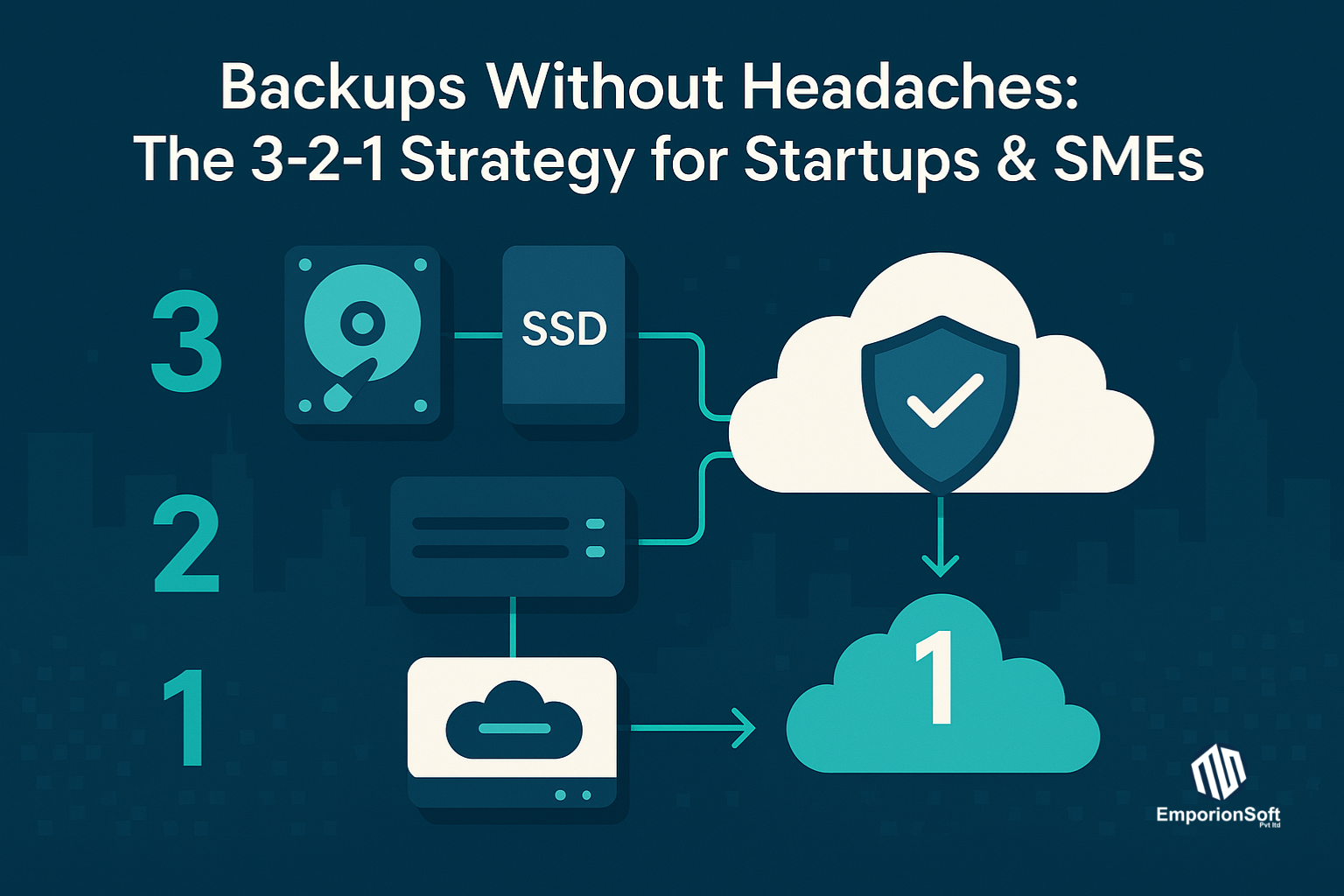

  • Core Web Vitals 2025: Simple Fixes to Speed Up Your Site (and SEO)

    Core Web Vitals 2025: Simple Fixes to Speed Up Your Site (and SEO)

    What Are Core Web Vitals 2025 (and Why They Still Matter for SEO)

    The internet has never been faster — yet users have never been less patient. In 2025, Google continues to reward websites that load instantly, feel smooth to interact with, and deliver an experience that just works. That’s where Core Web Vitals 2025 step in: Google’s evolving standard for measuring how “usable” your site really is. Whether you’re running an e-commerce platform, a SaaS dashboard, or a corporate website, these metrics determine how you rank, how users engage, and ultimately, how much you earn.


    Understanding Core Web Vitals 2025: The Foundation of Web Experience

    Core Web Vitals are Google’s key performance metrics that evaluate the speed, stability, and responsiveness of your website. They were first introduced in 2020, but the Core Web Vitals 2025 update refines how these metrics are tracked and weighted — making them even more crucial to your SEO strategy.

    Here’s a quick breakdown of what they measure:

    • Largest Contentful Paint (LCP) – how long it takes for your main content (like an image or heading) to appear. A fast LCP (under 2.5 seconds) signals that your site loads quickly and keeps users engaged.

    • First Input Delay (FID) – how long before the page responds when a user first interacts. While Google is phasing this metric out, it’s still relevant for older browsers.

    • Interaction to Next Paint (INP) – the new metric replacing FID in Core Web Vitals 2025, measuring overall responsiveness across all interactions. It’s a more realistic view of how users experience your site’s interactivity.

    • Cumulative Layout Shift (CLS) – measures visual stability. If elements jump around while your page loads, you’ll score poorly here.

    Together, these four pillars define the feel of your website — not just its technical speed. Google considers them essential signals for ranking and user satisfaction (Google Search Central).


    Why Core Web Vitals 2025 Are Critical for SEO

    In previous years, site speed was simply a technical goal. Now, it’s a business metric. Google’s ranking systems in 2025 interpret Core Web Vitals as an indicator of real-world quality. A site that loads slowly or shifts as users scroll doesn’t just frustrate visitors — it tells Google your content might not be delivering a great experience.

    A fast, stable site can reduce bounce rates, increase dwell time, and boost conversion rates. For example, improving your LCP and INP scores can directly enhance your visibility in search results and your SEO performance overall. Google has made it clear: if your competitors’ pages load faster and interact more smoothly, they’re likely to outrank you — even with similar content quality.


    EmporionSoft’s Perspective: Speed, Stability, and Strategy

    At EmporionSoft Pvt Ltd, performance isn’t an afterthought — it’s part of the development DNA. Our team ensures that every web and cloud project meets the latest Google standards for Core Web Vitals 2025, balancing design aesthetics with lightning-fast delivery. Whether it’s optimising image loads, refining frontend code, or integrating edge hosting, our solutions help you stay on top of every update.

    If you’re curious how modern infrastructure impacts these metrics, explore our guide on Cloud Providers Comparison 2025 to see how server performance shapes user experience and SEO success. For tailored performance audits and optimisations, check out our web development and SEO services.

    Core Web Vitals Update 2025 — What’s Changed Since 2023?

    If you’ve been tracking Google’s Core Web Vitals for the past few years, you’ll know the story well: speed, stability, and interactivity have been at the heart of every ranking update. But Core Web Vitals 2025 marks a pivotal shift — one that moves beyond just loading speed and into how users experience every click, tap, and scroll.

    In 2023, most websites were graded based on three metrics — Largest Contentful Paint (LCP), First Input Delay (FID), and Cumulative Layout Shift (CLS). These indicators focused on how fast your page appeared, how responsive it was to the first user interaction, and how visually stable it remained while loading. It was a strong framework, but Google knew it could be better. Enter the 2025 update, which replaces outdated signals and introduces smarter, experience-first standards.


    The Big Change: INP Replaces FID

    One of the most notable evolutions in the Core Web Vitals update 2025 is the replacement of FID (First Input Delay) with INP (Interaction to Next Paint).

    FID measured the delay of a user’s first interaction — like clicking a button or tapping a menu. The problem? It only looked at one event, ignoring what happened afterwards.

    INP, however, paints a more realistic picture. It tracks the entire journey of user interactions — clicks, taps, and keypresses — throughout the page session. Instead of focusing on the first moment of delay, INP calculates how consistent and smooth those interactions are overall.

    In short, INP evaluates “total responsiveness” rather than “first impression.” That’s a big leap forward for UX and SEO alike, as smoother user experiences correlate strongly with longer engagement and lower bounce rates.


    Core Web Vitals 2025 Calendar — The Rollout Timeline

    Google’s rollout of Core Web Vitals 2025 has followed a carefully staged calendar. Here’s a simplified view:

    Phase Timeline Key Focus
    Preview Announcement Late 2024 Google confirms INP will officially replace FID.
    Developer Rollout Q1 2025 New metrics integrated into PageSpeed Insights and Search Console.
    Global Launch Mid 2025 INP becomes an active ranking signal in Google’s algorithms.
    Performance Recalibration Q3–Q4 2025 Adjustments to thresholds and benchmarks for “Good,” “Needs Improvement,” and “Poor.”

    By now, most analytics tools and SEO dashboards have been updated to accommodate the Core Web Vitals 2025 standard, which means your development and SEO teams should already be optimising for it.


    A Snapshot: 2023 vs. 2025 Metrics

    Here’s a quick comparison to illustrate what’s changed:

    Metric 2023 Version 2025 Update
    LCP (Largest Contentful Paint) Measures how fast key content loads Still used, but stricter thresholds apply
    FID (First Input Delay) Time from first click to browser response Replaced by INP
    INP (Interaction to Next Paint) Not included New standard for responsiveness
    CLS (Cumulative Layout Shift) Layout stability metric Still key, with improved measurement accuracy
    TTFB (Time to First Byte) Optional diagnostic Now tracked more closely in reports

    This evolution signals a broader shift — from focusing purely on technical performance to optimising for real human experience.

    Google’s emphasis in 2025 is clear: if your site feels sluggish, jumpy, or inconsistent, it won’t perform well — no matter how beautiful it looks.


    The Developer Angle: Building for the New Web Standard

    For developers and tech teams, this update isn’t just about fixing metrics; it’s about rethinking web architecture. Modern frameworks, adaptive rendering, and asynchronous loading strategies are now essential tools for staying compliant with Core Web Vitals 2025.

    EmporionSoft’s team specialises in adaptive software development — a process that blends scalability, modularity, and responsiveness to ensure every interaction feels seamless. It’s a forward-thinking approach aligned with Google’s direction for long-term web performance.

    For a broader strategic view of how these changes fit into your digital roadmap, read The Software Developer’s Roadmap 2025 — an in-depth guide on where the web is heading next.


    Final Thoughts: The Experience Era of SEO

    According to Web.dev and Ahrefs Blog, Google’s ranking systems are now more experience-aware than ever. Core Web Vitals 2025 are not just numbers; they’re indicators of how your audience perceives your brand online.

    In this new SEO landscape, your site’s success depends less on keyword density and more on delivering a fast, frustration-free experience. Those who adapt now — and build their digital infrastructure accordingly — will lead the performance race well into 2026 and beyond.

    Core Web Vitals Explained — The Metrics Behind Performance

    In the modern web, user experience and SEO rankings are no longer separate conversations — they’re one and the same. Google’s latest update, Core Web Vitals 2025, solidifies that connection. The faster and smoother your site feels, the higher your chances of ranking well. Each metric within Core Web Vitals measures a key part of that experience, ensuring your website isn’t just visually appealing, but technically sound and user-friendly.

    Let’s break down the four major metrics — LCP, CLS, INP, and TTFB — and explore how they define web performance in 2025.


    Largest Contentful Paint (LCP) — The Speed Test That Matters Most

    Largest Contentful Paint (LCP) measures how long it takes for the main content of a page to load. This could be a large image, headline, or video banner — typically the first thing users see when they land on your site.

    • Good LCP: Under 2.5 seconds

    • Needs Improvement: Between 2.5 and 4 seconds

    • Poor: Above 4 seconds

    Think about a homepage where a massive hero image loads slowly. Users start scrolling before it fully appears, missing your headline entirely — that’s poor LCP in action.

    In Core Web Vitals 2025, Google tightened these thresholds to encourage faster rendering and better visual prioritisation. Sites optimised for LCP often use lazy loading, next-gen image formats (WebP/AVIF), and content delivery networks (CDNs) to ensure primary visuals appear almost instantly.

    At EmporionSoft, our Real-Time AI in Production solutions help automate these optimisations — dynamically adjusting content delivery for faster load times based on real user conditions.


    Cumulative Layout Shift (CLS) — Stability for a Frustration-Free Experience

    Cumulative Layout Shift (CLS) tracks how much elements move on the screen as the page loads. Imagine you’re about to tap a “Buy Now” button — and suddenly the layout shifts, causing you to hit “Cancel” instead. That’s CLS.

    • Good CLS: Below 0.1

    • Needs Improvement: Between 0.1 and 0.25

    • Poor: Above 0.25

    Google’s 2025 standards place heavier emphasis on visual stability — particularly for mobile users, where layout shifts are more disruptive. Developers now need to define explicit dimensions for images, ads, and embeds, ensuring the page structure remains consistent as assets load.

    At EmporionSoft, we view this as more than just a UX issue. A stable interface reflects a mature, data-driven development approach, where every pixel and component behaves predictably — a philosophy we extend across our Data-Driven Software Development practices.


    Interaction to Next Paint (INP) — Google’s New Gold Standard for Responsiveness

    Replacing First Input Delay (FID), the Interaction to Next Paint (INP) metric measures the delay between a user’s interaction (like clicking a button) and when the page visually responds.

    Instead of tracking a single click, INP evaluates all interactions during a session — giving a more accurate reflection of how responsive a page feels.

    • Good INP: Under 200ms

    • Needs Improvement: 200–500ms

    • Poor: Above 500ms

    If a user clicks a dropdown menu and it freezes for a moment before expanding, that’s poor INP. Optimising JavaScript execution, reducing main-thread work, and deferring non-critical scripts can dramatically improve responsiveness.

    The Core Web Vitals 2025 update makes INP a ranking signal, proving that smooth interactivity now carries the same weight as fast loading times.


    Time to First Byte (TTFB) — The Hidden Foundation of Speed

    While often overlooked, Time to First Byte (TTFB) measures how quickly a browser receives the first byte of data from your server. It’s a reflection of your backend efficiency, not just frontend code.

    Slow TTFB can stem from sluggish hosting, inefficient databases, or lack of caching. Improving it often means investing in better infrastructure — a conversation at the core of any enterprise-grade web strategy.

    EmporionSoft’s engineering teams optimise server responses using caching layers, edge computing, and scalable architectures — the kind that keep sites performing even under heavy global traffic.


    The 2025 Standard: Faster, Smoother, Smarter

    Google’s Core Web Vitals 2025 update raises the bar for web performance. It’s no longer enough to just load fast — your site must stay stable, react instantly, and feel effortless.

    According to insights from TheCodeV.co.uk, performance is now one of the strongest signals of digital credibility. Websites that master these metrics not only climb the rankings but build trust, reduce bounce rates, and convert more effectively.

    How to Measure and Audit Your Core Web Vitals (Free & Pro Tools)

    Understanding your Core Web Vitals 2025 scores is one thing — but knowing how to measure, interpret, and improve them is what truly separates a good website from a great one. Whether you’re a small business owner or managing enterprise-level infrastructure, regularly auditing these metrics is now essential for maintaining visibility and performance in Google Search.

    Thankfully, you don’t need to be a full-stack engineer to get started. With the right combination of free tools and professional analytics platforms, you can evaluate your Core Web Vitals and uncover exactly what’s slowing your site down.


    Step-by-Step: How to Check Your Core Web Vitals

    Let’s walk through the most reliable methods to measure and audit your site’s Core Web Vitals performance — from free browser tools to advanced enterprise platforms.

    1. Google PageSpeed Insights (Free)

    This is the most beginner-friendly tool, offering instant insights for any URL.

    Steps:

    1. Visit PageSpeed Insights.

    2. Enter your website URL and click Analyse.

    3. Review your Core Web Vitals report — LCP, CLS, and INP are listed at the top.

    4. Scroll down to “Opportunities” and “Diagnostics” for detailed improvement tips.

    Pro Tip: Focus on mobile scores first. In 2025, mobile-first indexing still dominates Google’s ranking systems.


    2. Google Lighthouse (Built into Chrome DevTools)

    Lighthouse gives a deeper look at frontend performance by simulating how real users experience your page.

    Steps:

    1. Open your website in Google Chrome.

    2. Right-click and select Inspect → Lighthouse tab.

    3. Choose “Performance” and run the audit.

    4. Review detailed timing breakdowns for LCP, INP, and CLS.

    Lighthouse is ideal for developers who want actionable debugging insights — for example, identifying which image or script is blocking the render path.


    3. Google Search Console (For Verified Domains)

    Once you verify your domain in Google Search Console, you gain access to the “Experience → Core Web Vitals” tab, showing real-user data collected from Chrome users across the globe.

    Steps:

    1. Go to Search Console.

    2. Click “Core Web Vitals.”

    3. Toggle between Mobile and Desktop to compare data.

    4. Identify URLs labelled “Poor” or “Needs Improvement.”

    Unlike Lighthouse or PageSpeed Insights (which use lab data), this tool reflects field data — the real-world performance your users experience every day.


    4. Third-Party Monitoring Tools (Free & Pro Options)

    If you need continuous, enterprise-grade visibility, consider pairing Google’s native tools with professional performance suites.

    Popular Choices:

    • GTmetrix (Free + Pro) – Great for visual reports and trend tracking.

    • Pingdom (Pro) – Ideal for uptime monitoring and global latency audits.

    • Semrush Site Audit (Pro) – Integrates SEO health with Core Web Vitals tracking.

    • Ahrefs Site Audit – Offers a performance dashboard aligned with Ahrefs Blog insights.

    • Web.dev Measure – Google’s own advanced benchmarking tool with developer-focused reports (Web.dev).

    These platforms provide detailed recommendations and allow ongoing tracking, which is essential for large or frequently updated websites.


    🧩 Core Web Vitals Audit Checklist

    Here’s a quick Core Web Vitals 2025 audit checklist you can follow each quarter:

    Analyse your site on PageSpeed Insights for both mobile and desktop.
    Run a Lighthouse audit to identify render-blocking scripts.
    Check Search Console’s Core Web Vitals tab for real-user data trends.
    Test your LCP, INP, CLS, and TTFB across multiple devices.
    Optimise heavy assets — compress images, minify CSS/JS, and enable lazy loading.
    Monitor continuously using GTmetrix or Ahrefs Site Audit.
    Re-test after every design or plugin update — even small changes can affect performance.


    Get Expert Help from EmporionSoft

    While free tools can highlight problems, fixing them often requires technical expertise — from optimising server response times to refactoring frontend code. At EmporionSoft Pvt Ltd, our engineers specialise in high-performance web development, helping businesses align their sites with Google’s Core Web Vitals 2025 standards.

    If you’d like tailored support, explore our Services for performance-focused solutions, or reach out directly via Contact Us to schedule an audit.

    Common Issues Slowing Down Your Core Web Vitals (and How to Fix Them)

    Even the most visually stunning website can fail if it loads slowly or feels unresponsive. In 2025, Core Web Vitals have become the digital equivalent of a customer satisfaction score — and Google’s algorithms take them just as seriously. Yet, many websites still struggle with performance bottlenecks caused by a handful of recurring technical issues.

    The good news? Most of them can be fixed with a mix of modern development techniques and a disciplined approach to optimisation — something EmporionSoft Pvt Ltd has perfected across its global projects.


    1. Unoptimised Images — The Silent Speed Killer

    Images remain one of the biggest contributors to slow Largest Contentful Paint (LCP) scores. High-resolution visuals look beautiful, but if they’re not compressed or properly formatted, they can stall the entire rendering process.

    The Fix:

    • Use next-gen formats such as WebP or AVIF, which retain quality at a fraction of the file size.

    • Implement lazy loading, so images load only when they appear in the viewport.

    • Use responsive images (srcset) to deliver smaller versions on mobile devices.

    At EmporionSoft, every web project includes automated image optimisation pipelines, ensuring that performance never takes a back seat to design.


    2. Render-Blocking Scripts — Delays That Users Notice

    Your CSS and JavaScript files can block the browser from displaying content until they’re fully loaded. This issue often leads to sluggish First Contentful Paint (FCP) and poor Interaction to Next Paint (INP) scores.

    The Fix:

    • Defer non-critical scripts using async or defer attributes.

    • Split large JavaScript bundles using code splitting.

    • Minify and combine smaller CSS/JS files.

    • Prioritise critical CSS inline to speed up initial render.

    These techniques align with EmporionSoft’s adaptive architecture principles, where we structure assets intelligently to reduce blocking and improve perceived performance.


    3. Poor Server Response Time — The TTFB Trap

    A slow backend can cripple your Time to First Byte (TTFB) — the time it takes for the first data to reach a user’s browser. This can stem from weak hosting, inefficient database queries, or unoptimised middleware.

    The Fix:

    • Choose high-performance hosting or use a Content Delivery Network (CDN) for global delivery.

    • Enable caching layers (server, browser, and CDN-level).

    • Optimise databases with indexing and query refinements.

    • Use lightweight frameworks and APIs for dynamic content.

    At EmporionSoft, backend optimisation is core to our engineering philosophy. You can explore examples in our Case Studies, which highlight how optimised infrastructure can improve Core Web Vitals by up to 40%.


    4. Layout Instability — The CLS Culprit

    Cumulative Layout Shift (CLS) measures how much content jumps around as your page loads. Common causes include ads, images without set dimensions, and late-loading fonts.

    The Fix:

    • Always specify width and height attributes for media elements.

    • Reserve fixed spaces for ads and embeds.

    • Use font-display: swap to prevent invisible text flashes.

    Google’s latest standards penalise unstable layouts more than ever, making this one of the easiest — yet most overlooked — fixes for improved user experience.


    5. Oversized Resources and Bloat

    Large files, unnecessary plugins, and unused code all add to page weight, dragging down LCP and INP scores.

    The Fix:

    • Audit your site using Lighthouse or Chrome DevTools to find unused CSS and JS.

    • Remove redundant frameworks or libraries.

    • Compress files with Gzip or Brotli.

    • Regularly review plugin usage — fewer is better.

    This principle ties directly to the insights from Technical Debt Explained — where EmporionSoft helps businesses eliminate code clutter that silently harms performance over time.


    Developer Best Practices from EmporionSoft

    At EmporionSoft Pvt Ltd, our development teams implement Core Web Vitals optimisation as part of the design-to-deployment lifecycle, not as an afterthought. Each project undergoes a rigorous performance review, automated testing, and version-controlled code audits to maintain top-tier speed and stability.

    By blending front-end refinement, backend tuning, and cloud scaling, EmporionSoft ensures every product meets the evolving Core Web Vitals 2025 standards — keeping clients ahead in both performance and SEO.

    For further technical guidance, explore Google’s recommendations on Search Central — the official resource outlining how site performance directly impacts visibility in search results.

    Core Web Vitals and SEO in 2025 — Why Speed = Rankings

    When it comes to Google’s search rankings in 2025, speed is no longer a luxury — it’s a necessity. Core Web Vitals sit at the heart of this transformation, blending technical performance with real-world user experience to decide which sites deserve the top spots. Google’s algorithms have evolved beyond just keyword density and backlinks; they now evaluate how fast your site loads, how stable it feels, and how smoothly it responds to interactions. In essence, user satisfaction has become the new SEO currency.


    The Link Between Core Web Vitals and Rankings

    Google’s mission has always been simple: provide users with the best possible experience. Over time, this philosophy has shaped the ranking algorithm into what it is today — a system that rewards websites delivering both relevance and responsiveness.

    In the Core Web Vitals 2025 framework, metrics like Largest Contentful Paint (LCP), Cumulative Layout Shift (CLS), and Interaction to Next Paint (INP) act as measurable proxies for user experience. If your page loads slowly, shifts unexpectedly, or lags when users interact, Google interprets it as a poor experience — even if your content is strong.

    The search engine now merges these technical indicators with behavioural signals such as:

    • Dwell time: how long users stay on your page.

    • Bounce rate: how quickly they leave after landing.

    • Engagement metrics: scroll depth, clicks, and on-page activity.

    Faster, more stable pages tend to keep users engaged longer — a positive signal that tells Google, “This content meets user intent.”


    How Speed Translates to Better SEO Performance

    Let’s imagine two websites offering similar content — one loads in 1.8 seconds, the other in 4.5 seconds. Users on the slower site are 32% more likely to abandon the page before it finishes loading. That small difference can have a huge compounding effect: lower engagement, higher bounce rates, and reduced conversions.

    Research from Ahrefs Blog shows that websites with optimised Core Web Vitals see measurable improvements in both organic rankings and click-through rates. Google’s algorithm prioritises the fastest, most stable experiences because they deliver what users expect — instant, frictionless access to information.

    The results speak for themselves:

    • E-commerce brands that improved LCP by just 1 second saw up to a 15% increase in conversion rates.

    • Media companies optimising for INP reduced bounce rates by 20–30%.

    • B2B service providers using caching and CDN optimisation achieved faster lead form submissions and higher search visibility.

    In short, speed equals satisfaction, and satisfaction equals rankings.


    User Experience Signals: The Real SEO Differentiator

    Google’s 2025 algorithm now treats Core Web Vitals as part of its Page Experience System — a holistic model that blends usability, security (HTTPS), and mobile-friendliness into one performance score.

    If your website frustrates users with slow responses or shifting layouts, they’ll leave — sending negative engagement signals to Google. Conversely, when users stay longer and interact more deeply, Google reads that as “proof” your content is worth promoting.

    This makes Core Web Vitals not just a technical metric, but a behavioural one too. The line between development and SEO has blurred; achieving top rankings now demands synergy between design, engineering, and content teams.

    At EmporionSoft Pvt Ltd, we understand this connection intimately. Our developers integrate performance audits into every project, ensuring that Core Web Vitals compliance supports long-term SEO growth rather than reacting to algorithm changes after the fact.


    Real-World Success Through Performance

    Brands that prioritised Core Web Vitals early have seen tangible gains. For instance, an online fashion retailer that implemented server-side rendering and optimised image loading achieved a 40% faster LCP — boosting both ranking positions and mobile conversions. Similarly, a tech publication using AI-driven content caching reported a 25% reduction in INP delays, resulting in higher engagement and time-on-site.

    EmporionSoft leverages similar innovations through its Future of Cloud Computing solutions, ensuring infrastructure can dynamically scale to maintain performance during peak traffic. Likewise, our AI Revolutionising Software Development approach empowers teams to automate code optimisation and detect performance regressions before they impact SEO.


    The Bottom Line: Speed Is Strategy

    In 2025, Core Web Vitals have become the ultimate intersection of technology and marketing. They reflect how well your site respects the user’s time — and Google’s algorithm rewards that respect. Fast, stable, and interactive pages don’t just attract visitors; they retain them, convert them, and build lasting trust.

    The Future of Core Web Vitals 2025 and Beyond — What Businesses Must Prepare For

    As the digital landscape continues to evolve, Core Web Vitals 2025 stand as more than just a ranking factor — they’ve become the pulse of user experience and a benchmark for digital excellence. Yet, the story doesn’t end here. Beyond 2025, we’re heading toward a future where AI-powered analytics, predictive optimisation, and sustainable web performance will redefine how businesses build and maintain their online presence.

    The core idea behind Google’s updates has always been the same: make the web faster, safer, and more user-centric. What’s changing now is how those goals are achieved — with automation, intelligent data, and a new layer of responsibility in design and engineering.


    AI-Powered Performance Analytics: The Next Frontier

    By 2026 and beyond, expect Core Web Vitals to evolve beyond static metrics into dynamic, AI-driven performance scoring systems. Artificial intelligence will analyse not only how quickly a site loads, but why it performs the way it does — automatically identifying trends, predicting bottlenecks, and suggesting precise optimisations.

    Imagine having a real-time system that adjusts your content delivery, image formats, and script priorities on the fly, based on user device, location, and behaviour. That’s where we’re heading — and it’s not far off.

    At EmporionSoft Pvt Ltd, our teams are already integrating intelligent monitoring frameworks that use AI to continuously assess performance metrics and automate improvements. This proactive approach ensures websites stay compliant with Core Web Vitals standards, even as those standards evolve.


    Merging UX, Security, and Sustainability

    Google’s long-term roadmap hints at a future where UX, security, and environmental sustainability converge into a single performance ecosystem. Speed and interactivity will remain crucial, but privacy, data protection, and carbon efficiency will increasingly influence rankings.

    • User Experience (UX): Beyond load times, metrics will expand to include emotional engagement and accessibility compliance — ensuring websites are inclusive for all users.

    • Security: Core Web Vitals will work hand-in-hand with HTTPS, data encryption, and safe browsing signals to prioritise trustworthy web environments.

    • Sustainability: As global concerns around digital energy usage grow, eco-friendly hosting and efficient code practices will play a larger role in search visibility.

    In essence, the next generation of web performance isn’t just about speed — it’s about responsibility. Businesses that design for accessibility, safety, and sustainability will not only perform better but earn greater trust from both users and search engines.


    Preparing for the Post-2025 Digital Era

    For business leaders and developers alike, the message is clear: Core Web Vitals are the foundation of every future SEO strategy. The companies that thrive in the coming years will be those that treat performance as a continuous discipline, not a one-time optimisation effort.

    To stay competitive, you’ll need to:

    • Integrate real-time performance monitoring using AI and automation.

    • Build with modular, adaptive architectures that scale globally.

    • Prioritise security and privacy as part of your performance score.

    • Embrace lightweight, sustainable development practices that align with modern web ethics.

    These are the very principles guiding our innovation at EmporionSoft Pvt Ltd, where we fuse technology, strategy, and performance into future-ready solutions for businesses worldwide.


    Let’s Build What’s Next

    The evolution of Core Web Vitals 2025 represents a shift in mindset — from viewing SEO as a marketing checklist to embracing it as a holistic user experience strategy. The web of tomorrow will reward brands that invest in meaningful, measurable improvements that make users’ lives easier, faster, and safer.

    If you’re ready to future-proof your website, now is the time to act. Partner with EmporionSoft Pvt Ltd to optimise your site’s performance, elevate your search visibility, and lead confidently into the next era of digital excellence.

    📩 Let’s start your optimisation journey today.
    Visit emporionsoft.com/contact-us or book your free consultation at emporionsoft.com/consultation.

  • WCAG 2.2 Accessibility Checklist: Make Your Website Usable for Everyone

    WCAG 2.2 Accessibility Checklist: Make Your Website Usable for Everyone

    WCAG 2.2 Accessibility Checklist: Why Inclusive Design Is No Longer Optional

    In today’s digital-first world, accessibility is not a luxury — it’s a legal, ethical, and competitive necessity. Governments across the UK, Europe, and beyond are enforcing strict digital accessibility laws, and major brands have faced public backlash and lawsuits for overlooking inclusive design. From e-commerce platforms to SaaS dashboards, the message is clear: if your website isn’t usable by everyone, it’s not truly complete.

    What Is WCAG and Why It Matters

    The Web Content Accessibility Guidelines (WCAG) are the globally recognised standards for creating accessible websites, applications, and digital content. Developed and maintained by the World Wide Web Consortium (W3C) — the same body that shapes core web technologies — these guidelines provide a structured approach to ensuring that people with disabilities can perceive, understand, navigate, and interact with the web effectively.

    WCAG was first introduced in 1999, evolving through several major versions to adapt to new technologies and user needs. The latest version, Web Content Accessibility Guidelines (WCAG) 2.2, builds upon WCAG 2.1, adding new success criteria focused on mobility, cognition, and input accessibility. In simpler terms, WCAG 2.2 ensures that every user, regardless of device, ability, or context, can experience the web without barriers.

    From 2.1 to 2.2: A Meaningful Evolution

    While WCAG 2.1 improved accessibility for mobile devices and low-vision users, WCAG 2.2 goes further. It introduces nine new success criteria designed to improve accessibility for users with cognitive disabilities and those relying on alternative input methods. Enhancements include guidelines for focus indicators, drag-and-drop functionality, and touch targets — small but vital changes that directly impact real-world usability.

    For developers and designers, understanding and applying these new principles through a structured WCAG 2.2 accessibility checklist is essential. This checklist acts as a roadmap to compliance, helping teams align their websites and apps with international accessibility standards.

    Why WCAG 2.2 AA Compliance Is Critical for Your Website

    Most organisations aim to meet WCAG 2.2 Level AA — the standard benchmark for accessibility compliance across industries. This level ensures that content is accessible to the majority of users without requiring highly specialised assistive technology.

    Beyond compliance, accessibility drives measurable business results:

    • Broader reach: Millions of users with visual, hearing, motor, or cognitive impairments gain access to your platform.

    • Improved SEO: Search engines reward accessible sites that follow structured, semantic content practices.

    • Enhanced reputation: Accessibility demonstrates corporate responsibility and inclusivity, building customer trust.

    Adhering to the WCAG Checklist 2.1 AA and 2.2 AA also reduces the risk of costly legal disputes and regulatory penalties — issues increasingly common in sectors like e-commerce, finance, and education.

    EmporionSoft’s Commitment to Inclusive Digital Experiences

    At EmporionSoft Pvt Ltd, we believe accessibility is fundamental to building ethical, future-ready digital solutions. Our team ensures every project — from enterprise applications to public-facing websites — adheres to the highest accessibility standards.

    By following the WCAG 2.2 accessibility checklist, our experts help clients create platforms that are not only compliant but also intuitive, inclusive, and user-centred. Whether you’re developing a new platform or retrofitting an existing one, accessibility should be part of your development strategy from the start — not an afterthought.

    For further guidance, consult the official W3C Web Accessibility Initiative (WAI) for detailed information on the evolving standards.

    Understanding WCAG 2.2: The Structure Behind an Accessible Web

    Creating an inclusive digital experience starts with understanding the foundation of accessibility itself — the Web Content Accessibility Guidelines (WCAG) 2.2. These guidelines, built on four fundamental principles, form the backbone of accessible web design and development. By adhering to these standards, businesses can ensure that their websites are not only compliant but genuinely usable by everyone.


    The Four Core Principles of WCAG 2.2 (POUR)

    At the heart of WCAG lies the POUR framework — an acronym representing the four key principles that guide accessible content creation. Each principle defines how users with varying abilities can effectively engage with online content.

    1. Perceivable — Information Must Be Presentable to All Senses

    Content should be perceivable by all users, regardless of their sensory abilities. This means providing text alternatives for non-text content, captions for multimedia, and ensuring colour contrast is sufficient for readability. If users can’t perceive your content, they can’t interact with it — making this the first pillar of accessibility.

    2. Operable — Functionality Must Be Usable by Everyone

    Every interactive element — from navigation menus to form inputs — must be operable by a range of input methods. For example, users should be able to navigate via keyboard alone, pause motion content, and easily identify which element currently has focus. WCAG 2.2 further strengthens this principle through success criteria such as Focus Not Obscured and Dragging Movements.

    3. Understandable — Information and Operation Must Be Clear

    Even the most accessible interface fails if users can’t understand how it works. Websites should maintain predictable layouts, clear instructions, and consistent navigation. Error messages should guide users to correct mistakes easily — particularly in forms or checkout processes.

    4. Robust — Content Must Be Compatible with Assistive Technologies

    A robust website can be interpreted reliably by screen readers, voice controls, and future assistive technologies. Proper HTML structure, ARIA labels, and consistent semantics ensure that assistive devices can read, interpret, and interact with content accurately.

    For developers, designers, and testers, the WebAIM’s WCAG 2 Checklist offers a simplified, practical reference for implementing each of these principles effectively.


    Understanding WCAG Conformance Levels (A, AA, AAA)

    The WCAG standards are divided into three conformance levels — each representing a deeper commitment to accessibility.

    • Level A: The most basic level, addressing critical barriers to access. Websites that fail Level A are generally unusable for many users with disabilities.

    • Level AA: The most widely adopted standard, balancing usability, compliance, and practicality. This level ensures accessibility for most users, including those with visual, auditory, and motor impairments.

    • Level AAA: The highest level, providing an exceptional accessibility experience. However, it’s not always feasible for all types of content or business models.

    Most organisations aim for WCAG 2.2 AA compliance, as it aligns with both legal requirements and user experience best practices. It strikes the right balance between comprehensive accessibility and sustainable implementation. For an overview, refer to “WCAG 2.2 AA: Summary and Checklist for Website Owners” — a valuable resource that simplifies complex requirements into actionable steps.


    What’s New in WCAG 2.2: Key Success Criteria

    Version 2.2 builds on WCAG 2.1 by introducing nine new success criteria, primarily focused on improving usability for people with cognitive and motor disabilities. Some of the most impactful include:

    • Dragging Movements (2.5.7): Ensures users can perform actions without complex drag gestures, allowing alternatives like simple clicks or taps.

    • Focus Not Obscured (2.4.11): Requires visible focus indicators that are never hidden by pop-ups or overlapping elements, improving keyboard navigation.

    • Target Size (Minimum) (2.5.8): Mandates adequate size and spacing for interactive elements, reducing accidental clicks on small or closely spaced buttons.

    • Accessible Authentication (3.3.7): Promotes login processes that don’t rely solely on cognitive tests like CAPTCHA or memory-based challenges.

    These refinements make WCAG 2.2 particularly valuable in modern digital contexts — especially as touch interfaces, AI-driven forms, and responsive designs become standard.


    Accessibility, Ethics, and Future-Ready Infrastructure

    Implementing accessibility is not just a compliance exercise — it’s an ethical commitment to fairness and inclusion. Businesses that embed these principles from the start reflect integrity and user empathy, values closely tied to ethical AI practices and future-ready digital infrastructure.

    Accessibility also aligns with the evolving landscape of cloud computing and modern software scalability — where inclusivity, security, and adaptability work hand in hand to shape sustainable growth.


    A Quick Reference for Implementation

    For teams seeking a concise guide on practical steps, “How to Meet WCAG (Quick Reference)” offers an excellent breakdown of each criterion, success level, and testing method. Combining this with internal design audits and professional consultation ensures that your digital products stay compliant — and more importantly, truly inclusive.

    The Business and Legal Case for Accessibility Compliance

    In an era where digital presence defines brand credibility, accessibility is no longer just an ethical consideration — it’s a business and legal imperative. The WCAG 2.2 accessibility checklist not only ensures inclusivity but also protects organisations from growing legal scrutiny while boosting overall digital performance. Forward-thinking companies now see accessibility as a strategic advantage — one that directly impacts revenue, SEO, and customer loyalty.


    Accessibility as a Legal Obligation

    Across the globe, digital accessibility is being codified into law. In the UK, the Equality Act 2010 mandates that businesses must ensure their online services are accessible to people with disabilities. Similarly, in the United States, the Americans with Disabilities Act (ADA) extends accessibility obligations to websites and mobile apps, treating them as public spaces.

    Non-compliance carries heavy risks. Numerous high-profile lawsuits have been filed against companies whose websites excluded users with disabilities. Retailers, educational institutions, and even government portals have faced financial penalties and reputational damage for failing to meet accessibility standards.

    By adopting the Web Accessibility Checklist, Based on WCAG 2.2 AA, businesses can proactively ensure compliance, avoiding legal exposure while strengthening trust among users and regulators alike.

    According to the UK Government Digital Service Accessibility Guidance, every public-facing website must meet WCAG 2.1 AA standards — a requirement expected to evolve to WCAG 2.2 in the near future. Staying ahead of compliance not only demonstrates responsibility but also positions brands as leaders in ethical digital practices.


    The SEO Advantage of Accessibility

    Accessibility and SEO go hand in hand. Search engines like Google reward websites that follow structured content principles — many of which overlap directly with WCAG guidelines.

    For example:

    • Providing alt text for images improves accessibility for screen readers and boosts image search rankings.

    • Using semantic HTML elements like <header>, <nav>, and <article> enhances both assistive technology compatibility and crawler understanding.

    • Ensuring mobile and keyboard accessibility leads to better Core Web Vitals performance, improving overall page experience scores.

    A site optimised through the WCAG Checklist – Free and simple guides to WCAG 2.2 inherently becomes more discoverable, faster, and user-friendly — leading to higher traffic and stronger engagement metrics.


    Accessibility Builds Retention and Brand Loyalty

    Beyond rankings and compliance, accessibility improves the experience for all users. Features like readable typography, predictable navigation, and clear contrast ratios make content easier to consume — whether you’re using assistive technology, browsing on a mobile device, or navigating in low light.

    Research supports this:

    The 2024 WebAIM Million Report found that over 96% of home pages still have detectable accessibility errors, leaving millions of users excluded from full participation in the digital world.

    This staggering figure highlights a market gap — and an opportunity. Companies that invest in accessible experiences can tap into a broader audience, improve customer satisfaction, and stand apart as champions of inclusion.

    By building with accessibility from day one, organisations reduce friction in user journeys, minimise bounce rates, and cultivate long-term loyalty.


    Cost Savings Through Early Accessibility Integration

    Fixing accessibility issues after launch can be costly. A reactive approach often leads to extended testing cycles, design overhauls, and patchwork fixes that disrupt scalability. In contrast, integrating accessibility during design and development ensures efficiency, lowers technical debt, and reduces rework.

    For digital transformation and software projects, accessibility aligns naturally with resilient development principles. For instance, in EmporionSoft’s guide on building resilient software and disaster recovery strategies, proactive planning is key — and the same applies to accessibility.

    Similarly, strong project management processes (as explored in EmporionSoft’s tools for tech companies) help embed accessibility milestones across sprints, ensuring accountability and measurable progress.


    A Competitive Advantage for the Modern Web

    Accessibility is no longer just a compliance checkbox — it’s a mark of innovation. Businesses that embrace the Web Accessibility Checklist, Based on WCAG 2.2 AA future-proof their platforms, reduce risk, and create a more inclusive online experience that aligns with user expectations and global ethical standards.

    In a world increasingly defined by trust and transparency, accessible design doesn’t just protect your business — it amplifies it.

    For detailed implementation advice, businesses can explore the UK Government Digital Service’s accessibility framework or use WebAIM’s resources to integrate accessibility testing seamlessly into their workflow.

    WCAG 2.2 AA Checklist: A Practical, Actionable Guide for Every Website

    Achieving accessibility doesn’t have to be overwhelming. The WCAG 2.2 accessibility checklist provides a clear roadmap that web designers, developers, and content creators can follow to ensure that digital experiences are inclusive and compliant. Below is a simplified, actionable breakdown — based on the WCAG Checklist: A Simplified Guide to WCAG 2.2 AA and insights from WebAIM’s WCAG 2 Checklist — covering the four foundational principles: Perceivable, Operable, Understandable, and Robust.

    Each section includes practical guidance and highlights what’s new in WCAG 2.2, helping you transform accessibility from a compliance task into a design standard.


    1. Perceivable — Make Content Visible and Understandable to All

    Your website’s information should be presented in ways that all users can perceive, regardless of visual, auditory, or cognitive ability.

    Actionable items:

    • Provide text alternatives (alt attributes) for all non-text content, including images, charts, and icons.

    • Add captions and transcripts for videos and audio files to support users with hearing impairments.

    • Ensure sufficient colour contrast between text and background (minimum ratio 4.5:1 for normal text).

    • Allow adaptable layouts, so users can resize text or use screen magnifiers without losing content or functionality.

    • Avoid using colour alone to convey information — always pair it with a label or symbol.

    New in WCAG 2.2:

    • Improved support for low-vision users by refining colour contrast and focus visibility criteria.

    • Expanded guidance for non-text alternatives, ensuring adaptable design for new device types and AR/VR contexts.

    Accessible, perceivable design is not just good practice — it’s good business. EmporionSoft integrates these principles in all web development and software design services to ensure that accessibility starts at the foundation.


    2. Operable — Ensure Functionality for Everyone

    Every user must be able to navigate and interact with your website using their preferred input method — whether that’s a keyboard, touchscreen, or assistive device.

    Actionable items:

    • Keyboard Accessibility: All functionality must be available via keyboard navigation without requiring a mouse.

    • Visible Focus Indicators: Ensure that links and buttons show a clear visual outline when selected.

    • Time Limits: Give users options to extend or disable time limits on forms or dynamic content.

    • Avoid Content That Triggers Seizures: Don’t use flashing content exceeding three flashes per second.

    • Provide Skip Links: Allow users to bypass repetitive navigation sections.

    New in WCAG 2.2:

    • Focus Not Obscured (2.4.11): The focused element must remain visible even when overlays or sticky headers are present.

    • Dragging Movements (2.5.7): Actions should have alternatives to dragging (e.g., tap or click).

    • Target Size (Minimum) (2.5.8): Interactive elements like buttons and icons must meet a minimum target size of 24×24 pixels for easier touch input.

    These updates enhance usability for mobile and touch users, improving accessibility and overall user experience.


    3. Understandable — Create Predictable, Readable, and Consistent Experiences

    A website should be easy to read, intuitive to navigate, and predictable in behaviour. This helps users of all literacy levels and cognitive abilities.

    Actionable items:

    • Readable Text: Use simple language and consistent terminology. Avoid unnecessary jargon.

    • Predictable Navigation: Keep menu structures and layouts consistent across all pages.

    • Clear Labels and Instructions: Ensure form fields, buttons, and links have descriptive names.

    • Error Prevention and Feedback: Provide clear error messages and suggestions for correction.

    • Avoid unexpected changes: Actions like submitting forms or opening new windows should not occur without user awareness.

    New in WCAG 2.2:

    • Accessible Authentication (3.3.7): Avoid login systems that rely solely on memory or cognitive tasks. Provide password managers, copy-paste support, or alternative authentication methods like biometric login.

    These practices not only make websites more accessible but also reduce user frustration — key to higher conversions and retention.


    4. Robust — Ensure Compatibility with Assistive Technologies

    Accessibility is incomplete without robust technical implementation. Websites must work consistently across different browsers, operating systems, and assistive tools like screen readers.

    Actionable items:

    • Use Semantic HTML: Elements such as <header>, <main>, and <footer> provide structure that assistive tools can interpret.

    • Implement ARIA Attributes Thoughtfully: Use ARIA labels, roles, and landmarks to improve screen reader compatibility.

    • Validate Code: Ensure HTML and ARIA syntax is valid to prevent misinterpretation.

    • Avoid Reliance on Specific Devices: Design with flexibility so content remains functional across platforms.

    • Test with Assistive Tools: Regularly test with screen readers (NVDA, JAWS, VoiceOver) and automated validators.

    What’s New in 2.2:
    While the robust principle remains largely unchanged, WCAG 2.2 strengthens interoperability with modern frameworks and emerging assistive technologies, promoting smoother integration with mobile and AI-driven interfaces.


    Implementing the Checklist: A Streamlined Approach

    To make this practical, the WCAG Checklist: A Simplified Guide to WCAG 2.2 AA divides accessibility testing into manageable phases:

    1. Design Phase: Incorporate inclusive UI patterns and readable content structure.

    2. Development Phase: Validate code, implement ARIA roles, and test focus order.

    3. QA Phase: Use tools such as WAVE, Axe, or Lighthouse to identify compliance gaps.

    4. Post-Launch: Gather feedback and perform periodic audits.

    At EmporionSoft Pvt Ltd, we apply this structured approach to ensure that accessibility is woven into every development milestone — from concept to deployment.

    For teams seeking expert guidance, WebAIM remains one of the most trusted authorities, offering free, detailed checklists and testing tools to help organisations stay compliant and user-centric.

    Tools and Techniques to Evaluate WCAG 2.2 Compliance

    Accessibility testing is no longer a one-time checkbox — it’s an ongoing commitment woven into the software development lifecycle. With the evolution of digital standards, tools now allow developers, QA teams, and designers to evaluate compliance efficiently, identify issues early, and maintain inclusive experiences at scale. Whether you’re following the WCAG Checklist 2.1 AA and 2.2 AA or referencing How to Meet WCAG (Quick Reference), a combination of automated and manual testing ensures accuracy, depth, and long-term compliance.


    Automated Accessibility Testing Tools

    Automated tools serve as the first line of defence in accessibility compliance. They rapidly scan pages, identify obvious violations, and generate reports aligned with the Web Content Accessibility Guidelines (WCAG) 2.2 framework. Here are some of the most widely used tools in modern web development:

    1. WAVE (Web Accessibility Evaluation Tool)

    Developed by WebAIM, WAVE provides a visual representation of accessibility issues directly on your web pages. It identifies missing alt text, colour contrast errors, heading structure issues, and ARIA implementation problems. WAVE’s browser extensions make it an ideal first step for developers and content managers testing live environments.

    2. axe DevTools

    Created by Deque Systems, axe DevTools is a professional-grade accessibility testing extension integrated into browser developer tools. It runs automated audits, categorises errors by severity, and provides step-by-step remediation guidance. Axe also offers premium enterprise integrations that fit seamlessly into developer workflows, ensuring continuous accessibility monitoring.

    3. Lighthouse Accessibility Audit

    Built into Google Chrome DevTools, Lighthouse audits pages against WCAG criteria and reports accessibility scores alongside SEO, performance, and best practices. Its accessibility audits are particularly useful for catching issues like insufficient contrast, missing form labels, or non-descriptive link text. When integrated into development environments, Lighthouse promotes a culture of accessible design from the start.

    4. Pa11y and Accessibility Insights

    For teams automating compliance testing, Pa11y provides a command-line interface to test large web projects, while Accessibility Insights by Microsoft offers guided manual and automated testing flows. Both tools help validate WCAG 2.1 AA and 2.2 AA conformance across complex applications.


    Manual Testing: The Human Perspective

    While automated tools are efficient, they typically catch only 30–40% of accessibility issues. Manual testing bridges that gap, providing real-world context and human validation.

    Best practices for manual evaluation include:

    • Keyboard-only navigation: Ensures all interactive elements (buttons, menus, forms) are fully operable without a mouse.

    • Screen reader testing: Use NVDA, JAWS, or VoiceOver to confirm that content is properly announced and navigable.

    • Visual inspection: Check focus indicators, colour contrast, and responsive behaviour across devices.

    • Cognitive usability testing: Involve users with disabilities to provide authentic feedback on real-world accessibility barriers.

    Deque University provides comprehensive training for professionals aiming to master both automated and manual testing, offering WCAG-aligned certifications and hands-on courses.


    Integrating Accessibility into CI/CD Pipelines

    To maintain compliance in fast-paced development environments, accessibility testing should be automated within Continuous Integration and Continuous Deployment (CI/CD) pipelines. This ensures that accessibility checks occur with every code commit, pull request, or deployment — preventing regressions before they reach production.

    Here’s how teams can integrate accessibility testing effectively:

    1. Embed automated testing tools (axe-core, Pa11y, Lighthouse CI) within build processes.

    2. Set accessibility thresholds — failing a build if critical WCAG errors exceed a defined limit.

    3. Automate reporting — export accessibility metrics to dashboards for continuous monitoring.

    4. Schedule manual audits — perform deeper checks at major release milestones.

    EmporionSoft’s experience in real-time AI-driven production systems demonstrates how automation and intelligence can co-exist to maintain performance and compliance simultaneously. Similarly, the principles of LLMOps for large-scale AI applications — monitoring, continuous evaluation, and optimisation — apply directly to accessibility assurance pipelines.


    A Hybrid Approach to Sustainable Accessibility

    The most effective strategy combines automation, manual testing, and AI-driven analysis to create a continuous feedback loop. By pairing automated tools like WAVE or axe DevTools with human insights and CI/CD integration, development teams can detect and resolve accessibility gaps early — ensuring alignment with both WCAG 2.1 AA and WCAG 2.2 AA standards.

    For ongoing reference, WebAIM’s WCAG 2 Checklist and How to Meet WCAG (Quick Reference) remain essential companions for maintaining compliance, quality, and inclusivity across projects.

    Designing Accessible Interfaces: Practical Strategies for Developers and UX Teams

    Creating a beautiful interface is one thing — making it usable for everyone is another. Accessibility-driven design bridges this gap, ensuring that every visitor, regardless of ability or device, can interact with your website seamlessly. The Web Content Accessibility Guidelines (WCAG) 2.2 provide a clear framework for achieving this balance through smart design and development practices.

    Whether you’re building an enterprise-grade platform or a mobile-first application, implementing the Web Accessibility Checklist, Based on WCAG 2.2 AA, helps create inclusive, future-ready digital experiences that align with both user needs and global standards.


    1. Colour Contrast and Visual Clarity

    One of the most common accessibility pitfalls in web design is insufficient colour contrast. Users with low vision or colour blindness often struggle to read text or distinguish interface elements.

    Best practices include:

    • Maintain a minimum contrast ratio of 4.5:1 for normal text and 3:1 for large text (18pt+).

    • Avoid relying on colour alone to convey information. Use labels, icons, or textures for reinforcement.

    • Test your design with tools like Contrast Checker or WebAIM’s simulator to ensure compliance.

    • Choose high-contrast, brand-aligned palettes that remain readable across devices and screen brightness levels.

    A visually clear design not only improves accessibility but also enhances overall readability and engagement.


    2. Logical Focus Order and Keyboard Navigation

    A website should be fully navigable using only a keyboard — essential for users with mobility impairments or those relying on assistive technology.

    To ensure smooth focus management:

    • Establish a logical focus order, following the natural reading flow (left to right, top to bottom).

    • Use visible focus indicators — such as outlines or highlights — to show where the user is on the page.

    • Avoid removing focus outlines in CSS; instead, customise them for brand consistency.

    • Include “Skip to Content” links to let users bypass repetitive menus and reach main content quickly.

    Following WCAG 2.2 AA: Summary and Checklist for Website Owners, focus management is now reinforced with new criteria like Focus Not Obscured — ensuring that focused elements remain visible even when modals or sticky headers are active.


    3. Alt Text and Descriptive Media

    Visual and multimedia content must be equally accessible to screen reader users. Every image, video, and infographic should have clear, contextual alternatives.

    Implementation tips:

    • Write meaningful alt text describing an image’s purpose, not just its appearance.

      • Example: “Chart showing revenue growth of 40% in 2024” is better than “bar chart.”

    • Use empty alt attributes for decorative images (alt="") to prevent distraction.

    • Provide captions and transcripts for video and audio content.

    • For complex diagrams, include long-form descriptions or data tables to support understanding.

    EmporionSoft’s adaptive software development approach ensures that accessibility principles like proper labelling and alternative text are embedded in the design system itself, not added later as fixes.


    4. ARIA Labels and Semantic HTML

    ARIA (Accessible Rich Internet Applications) attributes enhance the meaning of web elements for assistive technologies like screen readers — but they must be used carefully.

    Practical ARIA strategies:

    • Use ARIA roles only when native HTML elements don’t suffice. For instance, <button> is preferable to <div role="button">.

    • Add aria-label or aria-labelledby to clarify button or input purposes when visual text is absent.

    • Define landmarks (role="navigation", role="main", role="contentinfo") for structural clarity.

    • Avoid redundant ARIA — using it incorrectly can reduce accessibility.

    Combining ARIA with semantic HTML ensures your interface is both machine-readable and human-friendly.


    5. Forms, Validation, and Error Feedback

    Forms are often the most interactive — and problematic — parts of websites. Good form accessibility improves usability for everyone.

    WCAG-aligned tips for form design:

    • Associate labels with inputs using the for attribute.

    • Provide real-time error feedback with clear, descriptive messages (e.g., “Please enter a valid email address”).

    • Ensure all input fields are navigable via keyboard and screen reader.

    • Use ARIA live regions for dynamic updates or form validations.

    • Avoid relying solely on colour for errors; include icons or text cues.

    Accessible forms increase completion rates, reduce frustration, and build trust — especially for users relying on assistive devices.


    6. Responsive and Mobile Accessibility

    With mobile traffic dominating the web, accessibility must extend beyond desktop screens. The Web Content Accessibility Guidelines (WCAG) 2.2 introduces enhanced criteria for touch interactions, ensuring inclusive mobile experiences.

    Key recommendations:

    • Maintain a minimum target size of 24×24 pixels for clickable elements (as per Target Size (Minimum)).

    • Prevent drag-only interactions — include tap or button alternatives (Dragging Movements).

    • Use scalable layouts that respond gracefully to zooming or text enlargement.

    • Keep content structured with readable typography and adaptive breakpoints.

    EmporionSoft’s article on How AI is Revolutionizing Software Development explores how AI tools can now assist in automatically detecting accessibility flaws, further improving responsive and inclusive design workflows.


    7. Inclusive Interaction Design: Designing for All Users

    Inclusive design considers edge cases as standard, not exceptions. Accessibility is not just about disability — it’s about designing for real-world diversity.

    Best practices for inclusivity:

    • Offer multiple input methods (keyboard, touch, voice).

    • Support dark mode and high-contrast themes.

    • Keep animations subtle and allow users to disable motion effects.

    • Avoid auto-playing sound or video content.

    • Provide meaningful feedback for all user actions.

    An excellent reference is TheCodeV.co.uk — a software company known for its commitment to modern, accessible web design principles that blend creativity with compliance.


    Bringing It All Together

    The Web Accessibility Checklist, Based on WCAG 2.2 AA empowers teams to make accessibility part of their design DNA. By combining thoughtful colour choices, logical focus order, strong ARIA implementation, and responsive principles, developers can build interfaces that are not only compliant but genuinely user-centric.

    EmporionSoft continues to lead in delivering accessible digital experiences through adaptive, AI-driven, and ethically grounded development practices — ensuring that every line of code contributes to a more inclusive web.

    Maintaining Accessibility Over Time: A Continuous Compliance Strategy

    Accessibility isn’t a milestone — it’s a mindset. While many organisations approach the WCAG 2.2 accessibility checklist as a one-time task to meet compliance, true accessibility requires continuous monitoring, testing, and evolution. The digital landscape is constantly changing, and with it, the expectations of users, technologies, and regulatory standards. Businesses that adopt accessibility as an ongoing process not only remain compliant but also foster trust, inclusivity, and innovation.


    Accessibility as a Living Commitment

    The Web Content Accessibility Guidelines (WCAG) 2.2 are not static documents; they evolve to address new challenges in technology and user behaviour. For example, WCAG 2.2 introduced additional success criteria focusing on touch targets, focus visibility, and simplified authentication — reflecting how digital interaction patterns have shifted over time.

    To stay aligned with these ongoing developments, teams must treat accessibility as a core part of continuous improvement rather than a single deliverable. This means integrating accessibility reviews into every stage of the software lifecycle — from design to deployment, and from updates to maintenance.

    Key steps to maintain accessibility compliance include:

    • Regular Accessibility Audits: Schedule quarterly or biannual audits using both automated tools and manual testing.

    • User Feedback Loops: Encourage users, especially those with disabilities, to report issues and suggest improvements.

    • Accessibility Statements: Publicly outline your organisation’s commitment to accessibility, listing conformance levels (e.g., WCAG 2.2 AA) and contact options for users needing assistance.

    • Policy Integration: Make accessibility a recurring agenda item in internal training, development sprints, and QA processes.

    A living accessibility policy not only meets compliance expectations but signals transparency and care — two attributes that greatly enhance user trust and brand reputation.


    Adapting to Emerging Technologies: AI, VR, and Voice Interfaces

    As technology advances, so do accessibility challenges. The rapid rise of artificial intelligence (AI), virtual reality (VR), and voice-based interfaces introduces entirely new interaction models — each requiring fresh thinking around inclusivity.

    • AI-Powered Systems: AI tools can both help and hinder accessibility. While AI enables automated captioning, predictive text, and personalised UX, it can also create bias if not trained on inclusive datasets. EmporionSoft’s research on practical blockchain applications for startups highlights how transparent and ethical frameworks — similar to blockchain — can ensure fairer, more accountable AI-driven accessibility solutions.

    • Virtual and Augmented Reality (VR/AR): These immersive environments must consider spatial audio, haptic feedback, and intuitive controls for users with disabilities. Designing accessible VR experiences requires new approaches to sensory input and environmental feedback.

    • Voice Interfaces: With digital assistants becoming mainstream, ensuring that voice commands, pronunciation recognition, and language diversity are inclusive is now essential.

    The W3C WAI Updates regularly expand guidance for these emerging technologies, making it vital for businesses to revisit their accessibility strategy regularly to keep pace.


    Building Accessibility into the Future of Cloud and Scalable Software

    Modern software development increasingly depends on distributed, cloud-based architectures. Integrating accessibility into such systems ensures that inclusive experiences are consistent across devices, platforms, and environments.

    EmporionSoft’s insights in the future of cloud computing highlight how scalable, modular infrastructures can embed accessibility testing directly into continuous integration (CI/CD) workflows. For example, accessibility validators can be automated in build pipelines, and accessibility performance metrics can be monitored alongside uptime or latency.

    This convergence of accessibility and scalability ensures that inclusivity doesn’t degrade as systems evolve — it strengthens with every iteration.


    Continuous Improvement Through Data and Feedback

    Accessibility thrives on iteration. Gathering analytics on how users interact with digital content provides valuable insight into friction points, navigation barriers, and improvement opportunities.

    Best practices for continuous improvement include:

    • Tracking accessibility metrics alongside user engagement.

    • Using session replays or heatmaps (in compliance with privacy laws) to analyse how users interact with content.

    • Collecting structured feedback through accessibility surveys.

    • Benchmarking progress using frameworks like How to Meet WCAG (Quick Reference) to track compliance milestones.

    As technology evolves, the concept of accessibility extends beyond disability inclusion — it becomes a measure of quality, usability, and empathy.


    The Long-Term Benefits of Ongoing Accessibility

    Embedding accessibility as a continuous process yields long-term benefits:

    • Legal and Ethical Compliance: Staying ahead of evolving regulations protects your organisation from penalties and lawsuits.

    • Trust and Brand Loyalty: Users are more likely to engage with platforms that value inclusivity and transparency.

    • Innovation Enablement: Accessibility drives design creativity — leading to cleaner UI, better UX, and more efficient codebases.

    In the digital future, accessibility equals adaptability. Businesses that align with the WCAG 2.2 accessibility checklist and remain agile in adopting updates will be better positioned to innovate, scale, and serve diverse global audiences effectively.

    Building an Inclusive Digital Future with EmporionSoft

    In today’s connected world, accessibility is not just a compliance checkbox — it’s a reflection of a brand’s integrity, empathy, and innovation. As digital experiences become central to everyday life, ensuring that everyone can participate equally online has become a moral, legal, and business necessity. The WCAG 2.2 accessibility checklist empowers businesses to make this inclusion a reality, bridging the gap between technology and humanity.


    Why Accessibility Matters More Than Ever

    Accessibility drives impact on multiple fronts.

    • Ethically, it represents a commitment to equal opportunity — ensuring that no user is excluded from accessing your content or services.

    • Legally, it protects organisations under regulations like the UK Equality Act 2010 and the Americans with Disabilities Act (ADA), reducing litigation risks.

    • Commercially, it unlocks new markets, enhances SEO performance, and strengthens brand trust.

    By aligning with the Web Content Accessibility Guidelines (WCAG) 2.2, businesses future-proof their platforms, create better user experiences, and demonstrate social responsibility. Inclusive design isn’t about ticking boxes — it’s about building digital ecosystems that everyone can access, use, and enjoy without limitation.


    EmporionSoft: Your Partner in Inclusive Software Innovation

    At EmporionSoft Pvt Ltd, accessibility is embedded into every stage of development — from design thinking to deployment. As a UK-based software partner working with clients worldwide, EmporionSoft specialises in building inclusive, compliant, and future-ready digital solutions that meet both technical and human expectations.

    Whether you’re developing a website, mobile app, or enterprise software system, our team ensures full alignment with WCAG 2.2 AA standards, guided by empathy, precision, and technical excellence. Our accessibility-driven approach enhances usability for all users — while empowering your brand to lead with responsibility and trust.

    Explore how our development practices blend innovation with inclusion by visiting our Insights and Case Studies pages, showcasing real-world examples of businesses transforming through accessible technology.


    Start Your Accessibility Journey Today

    If your digital presence isn’t yet fully accessible, there’s no better time to begin. A single audit can uncover simple improvements that drastically expand your audience and compliance readiness. EmporionSoft offers free accessibility consultations and project reviews to help businesses identify gaps, align with WCAG 2.2 standards, and build inclusive platforms from the ground up.

    👉 Book your free consultation today:


    Shaping Tomorrow’s Inclusive Web

    The future of technology is inclusive — a space where design, code, and creativity unite to serve every human being. As AI, blockchain, and cloud computing evolve, accessibility will define the next frontier of ethical and scalable software development.

    By following the WCAG 2.2 accessibility checklist, we take one step closer to a web that welcomes everyone — regardless of ability, device, or circumstance. Together, through collaboration and responsibility, we can build a digital world that reflects the best of what technology can achieve.